Midnight
 82
82

Midnight
Jacqueline Wilson's *Midnight* offers a poignant, if at times unsettling, portrayal of sibling dynamics refracted through the lens of a child's imagination. The strength of the novel lies in its unflinching depiction of Violet's internal world, a space where the fantastical intersects with the very real anxieties stemming from her brother Will's increasingly erratic behavior. Wilson’s characteristic empathy shines through in her portrayal of Violet’s coping mechanisms. However, the narrative occasionally feels constrained by its focus, with the external plot points sometimes feeling less developed than Violet's internal retreat. The introduction of Jasmine, a new schoolmate, offers a potential bridge between Violet's fantasy and reality, though this arc could have been further explored. A particularly effective passage is Violet's description of her fairy characters as extensions of her own unspoken feelings about Will's unpredictable nature. Ultimately, *Midnight* is a compelling character study on the resilience of a child’s spirit.
📝 Description
82
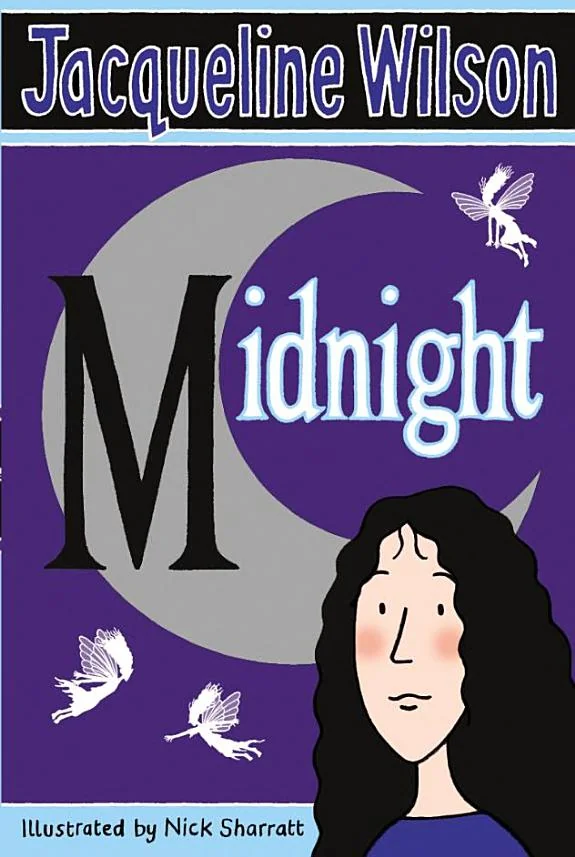
Jacqueline Wilson's 2008 novel, Midnight, centers on a young girl who finds refuge in fairy tales.
Midnight, published in 2008, follows Violet, a girl who feels overshadowed by her charismatic but troubled brother, Will. When Will faces a difficult revelation about his past, Violet retreats into the fantastical world of Casper Dream's fairies. This imagined realm offers her an escape from the complex family dynamics and emotional struggles she is experiencing.
The novel is suited for young readers and those interested in contemporary children's literature. It addresses themes of sibling rivalry, the use of escapism as a coping strategy, and how children navigate challenging family situations. Violet's reliance on fantasy highlights how imagination can act as a sanctuary when confronted with unsettling family secrets and emotional turmoil. Readers who enjoy stories that blend fantastical elements with realistic interpersonal conflicts will find this book engaging.
While seemingly a contemporary children's novel, Midnight engages with the esoteric tradition of using imaginative worlds as a means of psychological refuge. Violet's immersion in the fairy realm, inspired by Casper Dream's fictional works, parallels historical accounts of individuals seeking solace or alternative realities through myth and folklore. This reflects a long-standing human tendency to create and inhabit inner worlds when the external environment proves overwhelming or distressing. The book touches upon how constructed narratives, whether personal or drawn from literary traditions, can serve as a bulwark against harsh realities.
💡 Why Read This Book?
• You will learn how a child's imagination can be a powerful tool for coping with familial distress, exemplified by Violet's retreat into the fairy world inspired by Casper Dream. • You will gain insight into the complex relationship between siblings when one member faces a profound personal crisis, as seen with Will's shocking secret and its impact on Violet. • You will explore how fictional narratives and authors can serve as a sanctuary and a means of processing difficult emotions, mirroring Violet's engagement with her favorite author's work.
⭐ Reader Reviews
Honest opinions from readers who have explored this book.
❓ Frequently Asked Questions
What is the central theme of Jacqueline Wilson's *Midnight*?
The central theme of *Midnight* revolves around escapism and coping mechanisms, particularly how a young protagonist named Violet uses her rich imagination and the fictional world of fairies to deal with family secrets and her brother Will's disturbing behavior.
Who is Casper Dream in *Midnight*?
Casper Dream is a fictional author within *Midnight*. Violet is an avid reader of his books, and his fairy characters and stories form the basis of the fantasy world Violet retreats into as a way to cope with her difficult reality.
What secret does Will discover in *Midnight*?
The book does not explicitly detail the specific 'shocking secret' Will learns about his past in a way that is fully revealed to the reader within the narrative's immediate scope. It's presented as a catalyst for his escalating behavior.
What role does Jasmine play in the story?
Jasmine is a new girl at Violet's school who enters Violet's life. Her arrival is significant as she represents a potential connection to the real world and an external influence that might draw Violet out of her fantasy.
What is the typical age range for readers of *Midnight*?
*Midnight* is generally aimed at middle-grade readers, typically aged 9-13, who are familiar with Jacqueline Wilson's previous works and can engage with themes of family dynamics, sibling relationships, and imaginative coping strategies.
When was *Midnight* first published?
*Midnight* by Jacqueline Wilson was first published on October 9, 2008.
🔮 Key Themes & Symbolism
Sibling Dynamics Under Stress
The novel keenly examines the complex relationship between Violet and her brother Will. Will's volatile nature and the shadow of a disturbing secret he uncovers create a tense atmosphere. Violet’s reliance on fantasy is a direct response to the emotional strain imposed by Will’s behavior, highlighting how familial crises impact a child’s sense of security and their coping mechanisms.
Imagination as a Sanctuary
Violet’s immersion in the world of Casper Dream’s fairies serves as a powerful metaphor for escapism. This fantasy realm is not merely an idle pastime but a critical psychological space where she can process anxieties and find solace unavailable in her everyday life. The book illustrates how imagination can be a vital refuge when reality becomes overwhelming.
The Impact of Hidden Truths
The 'shocking secret' about Will's past acts as a destabilizing force within the family. Its unrevealed nature amplifies the tension and drives Violet’s withdrawal. This theme underscores how unspoken or concealed truths, particularly within a family unit, can profoundly affect individual well-being and interpersonal relationships, forcing characters to construct alternative realities.
Authorship and Fictional Worlds
The presence of Casper Dream and his fairy stories is significant. It highlights the role of authors and their creations in shaping a reader's worldview and providing comfort. Violet’s engagement with these fictional narratives demonstrates how literature can offer a framework for understanding complex emotions and situations, even if those situations are far removed from the book's own world.
💬 Memorable Quotes
Direct passages from the work, attributed to the author.
“Violet retreats further into her fantasy world built around the fairy characters created by her favourite author, Casper Dream.”
— This sentence captures Violet's primary coping mechanism. Her deep engagement with Casper Dream's fairy tales is not just reading; it's an active construction of an alternative reality designed to shield her from the unsettling revelations affecting her brother, Will.
“Will -- by turns delightful and terrifying.”
— This phrase succinctly captures the bipolar nature of Will's personality as perceived by Violet. It suggests an unpredictable and potentially dangerous presence in her life, making her need for escape and stability through fantasy all the more understandable.
“Now that Will has learned a shocking secret about his own past, things seem to be getting worse.”
— This highlights the narrative's central conflict catalyst. The revelation of Will's secret doesn't resolve issues but exacerbates them, creating a palpable sense of escalating tension and foreboding within the family unit.
“Violet has always been in the shadow of her mesmerizing, controlling brother Will.”
— This sets up the core dynamic between the siblings. Violet's subordinate position and Will's 'mesmerizing, controlling' influence establish the power imbalance that fuels Violet's internal struggles and her desire for an independent, imaginative space.
“The arrival of Jasmine, a new girl at school, who immediately be[gins to...]”
— This introduces a key external element. Jasmine's appearance signifies a potential shift in Violet's isolation, representing an outside force that could draw her back into social reality from her self-imposed fairy world.
🌙 Esoteric Significance
Tradition
While *Midnight* is not explicitly an esoteric text, its themes of escapism and the power of imagination align with certain psychological and philosophical currents that touch upon esoteric concepts. It can be viewed through a lens of Jungian psychology, particularly regarding the archetype of the child and the use of fantasy as a means of individuation or integration of the shadow self, concepts explored by thinkers like Carl Jung himself.
Symbolism
The primary symbolism revolves around the fairy realm as a representation of the subconscious or an idealized inner world. Fairies, often depicted as ethereal beings, symbolize the intangible aspects of the psyche—desires, fears, and unprocessed emotions. Will's 'shocking secret' can be interpreted as the surfacing of repressed material or a 'shadow aspect' that disrupts the perceived reality, forcing Violet to confront the darker, more hidden elements of her family life.
Modern Relevance
In contemporary discourse, *Midnight*'s exploration of escapism appeals to discussions around mental health in young people and the role of digital versus imaginative play. The book's portrayal of a child using fantasy to cope with trauma or family instability is relevant to modern therapeutic approaches that acknowledge the importance of narrative and imaginative processing in healing and self-understanding.
👥 Who Should Read This Book
• Young readers aged 9-13 who enjoy stories about family, siblings, and the power of imagination, particularly those who have experienced feelings of being overshadowed or overwhelmed by family issues. • Parents and educators seeking literature that explores complex emotional themes like sibling rivalry, coping mechanisms, and the impact of secrets in an accessible way for pre-teens. • Fans of Jacqueline Wilson's previous works, who appreciate her direct and empathetic approach to contemporary childhood experiences and her ability to blend realism with elements of fantasy.
📜 Historical Context
Published in 2008, Jacqueline Wilson's *Midnight* arrived during a flourishing period for children's literature that increasingly tackled mature themes. The early 21st century saw authors like J.K. Rowling achieving global success with fantasy narratives that still grappled with real-world issues, influencing the landscape. Wilson, already a celebrated author with a strong following, continued her tradition of addressing challenging subjects relevant to young readers. While not directly engaging with esoteric traditions in an academic sense, the book taps into a broader cultural interest in fantasy and the psychological interiority of young characters, a trend also explored by authors such as Philip Pullman. The reception of Wilson's work generally lauded her ability to connect with young readers on sensitive topics, though some traditionalists might have viewed the exploration of such complex family dynamics as pushing boundaries for the age group.
📔 Journal Prompts
Violet's fairy world as an alternative reality.
The impact of Will's secret on Violet's perception.
Jasmine's arrival as a bridge between worlds.
The dual nature of Will: delightful and terrifying.
Casper Dream's narratives as a coping framework.
🗂️ Glossary
Escapism
The tendency to seek distraction and relief from unpleasant realities, especially by engaging in fantasy or imagination. In *Midnight*, Violet uses her imagined fairy world as a form of escapism.
Sibling Rivalry
Competition or antagonism between siblings. The book explores a complex dynamic where Violet feels overshadowed and intimidated by her brother Will, going beyond typical rivalry.
Shadow Self
In Jungian psychology, the 'shadow' is the unconscious aspect of the personality that the conscious ego does not identify in itself. Will's secret and behavior may represent a manifestation of his shadow.
Archetype
A recurring symbol or motif in literature, art, or mythology that represents universal patterns of human nature. The 'child' and the 'trickster' could be seen as archetypes at play in the characters.
Individuation
A concept in Jungian psychology referring to the process by which an individual becomes a whole, integrated self. Violet's journey could be seen as a nascent stage of individuation through confronting her reality.
Protagonist
The leading character or one of the major characters in a drama, movie, novel, or other fictional text. In *Midnight*, Violet is the primary protagonist.
Catalyst
An event or person that causes or precipitates a great change. Will's discovery of his secret acts as a catalyst for the escalating tension in the story.
This book appears in 1 collection
🔮 Readers Also Liked
Browse all →








From the “Fairies” Collection
View all →





More Free Occult Philosophy Books
View all →