The Scorch Trials
 75
75

The Scorch Trials
The Scorch Trials, while a necessary escalation from its predecessor, often feels like a protracted middle chapter, more concerned with moving pieces into position for the finale than standing on its own. Dashner’s prose remains propulsive, making the grueling trek across the titular wasteland a kinetic experience. However, the plot relies heavily on manufactured peril and convenient discoveries, particularly regarding the mysterious Group B. The introduction of new characters, while intended to add complexity, can feel somewhat perfunctory, serving the plot more than organic development. The constant sense of being manipulated by WICKED, while central to the series' appeal, occasionally borders on repetitive. Yet, the relentless pace and the raw survival element, particularly the encounters with Cranks, lend the narrative a visceral urgency. The work explores the psychological toll of constant threat effectively. Ultimately, The Scorch Trials functions best as a bridge, successfully increasing the stakes even if its own narrative architecture shows strain.
📝 Description
75
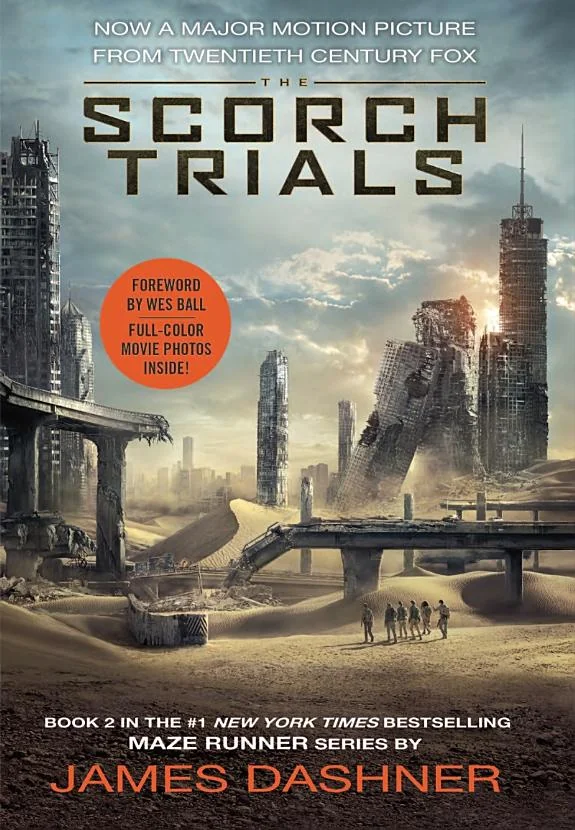
Published in 2015, The Scorch Trials thrusts survivors into a deadly desert.
The second novel in James Dashner's Maze Runner series, The Scorch Trials continues the story of Thomas and the Gladers. They are forced from the relative safety of the Maze into a desolate, sun-scorched landscape known as the Scorch. This new environment presents immediate dangers: extreme heat, mutated creatures called Cranks, and a deadly plague. WICKED, the organization that put them in the Maze, claims they are part of a cure experiment, forcing the Gladers to undertake a perilous journey across the wasteland. Their only hope is to reach a supposed safe haven, but trust is scarce, and WICKED's true motives remain unclear.
The narrative escalates the stakes established in the first book. The Gladers must not only survive the physical challenges of the Scorch but also contend with betrayal and the psychological toll of constant danger. The book examines the blurred lines between scientific necessity and moral compromise as WICKED pushes the subjects to their limits. Thomas grapples with his growing doubts about WICKED's agenda and his own role within their plans.
While presented as young adult dystopian fiction, The Scorch Trials engages with themes that resonate in esoteric traditions concerning humanity's relationship with technology and environmental catastrophe. The Scorch itself can be read as a manifestation of collective karmic consequence or the result of hubristic scientific ambition, a common trope in speculative fiction that echoes Gnostic ideas of a fallen or corrupted material world. WICKED's experiments, aiming to engineer a cure and control human behavior, touch upon alchemical pursuits and the dangerous quest for forbidden knowledge, raising questions about the true nature of salvation and the price of mastery over life itself.
💡 Why Read This Book?
• Gain insight into the brutal realities of survival post-apocalypse, specifically through the harsh environmental challenges and monstrous encounters detailed in The Scorch Trials, offering a visceral understanding of desperation. • Understand the complex, morally ambiguous methods of WICKED, as their experiments and manipulations are central to the plot, revealing the extreme measures taken in the name of a cure. • Experience the thematic exploration of trust and betrayal among the Gladers and new allies encountered during their perilous journey across the Scorch, highlighting the psychological strains of their ordeal.
⭐ Reader Reviews
Honest opinions from readers who have explored this book.
❓ Frequently Asked Questions
When was The Scorch Trials published?
The Scorch Trials was published in 2015, serving as the second book in the Maze Runner series.
What is the primary setting for The Scorch Trials?
The primary setting is a vast, dangerous desert wasteland known as the Scorch, a post-apocalyptic landscape ravaged by solar flares.
Who is the antagonist organization in The Scorch Trials?
The primary antagonist organization is WICKED (World In Ignorance, Experimentation, and Control), which is conducting experiments on the teenagers.
What is the 'Flare' in The Scorch Trials?
The Flare is a deadly disease that has ravaged the world's population, and WICKED claims to be seeking a cure for it, which is the purported reason for their experiments.
Does The Scorch Trials include an excerpt from The Death Cure?
Yes, the original publication of The Scorch Trials includes an excerpt from the third book in the series, The Death Cure, which was published later.
What are the 'Cranks' in The Scorch Trials?
Cranks are humans who have been driven mad by the Flare virus, often exhibiting extreme aggression and physical deterioration.
🔮 Key Themes & Symbolism
Survival Against Extreme Odds
The Scorch Trials intensifies the survival narrative established in the first book. Characters are thrust into a hostile desert environment, the titular Scorch, where the sun's intensity, lack of resources, and mutated creatures pose constant threats. This theme moves beyond mere physical endurance, exploring the psychological toll of relentless danger and the desperate measures individuals take to stay alive, questioning the very definition of humanity when pushed to its limits.
The Morality of Experimentation
Central to the plot is the organization WICKED and its clandestine experiments on adolescents. The book forces readers to confront the ethical quandaries of sacrificing a few for the potential salvation of many. WICKED's rationalizations for their cruel methods—seeking a cure for the Flare virus—are constantly juxtaposed with the suffering of the subjects, creating a profound tension between utilitarian goals and individual rights.
Trust and Betrayal
As Thomas and his companions work through the treacherous Scorch, their relationships are continually tested. They encounter new groups of survivors, some offering aid, others posing a threat. The narrative explores the difficulty of discerning allies from enemies in a world where deception is rampant and survival often depends on one's ability to read intentions, leading to constant suspicion and the erosion of trust.
The Nature of Reality and Control
The characters' journey is a relentless pursuit of answers, only to find themselves further enmeshed in a web of manipulation. The Scorch Trials emphasizes the theme that their reality is constructed by WICKED, designed to elicit specific responses and behaviors. This raises questions about free will versus determinism, and whether true freedom lies in escaping control or understanding the nature of the cage.
💬 Memorable Quotes
Direct passages from the work, attributed to the author.
“The world was a mess. It was a disaster. It was a wreck.”
— A stark assessment of the post-apocalyptic setting. This simple, direct statement conveys the devastation wrought by the Flare and the solar events, setting the stage for the desperate fight for survival that defines the characters' existence.
“Maybe there was no cure. Maybe there was only… this.”
— This reflects a moment of profound despair and resignation, questioning the very premise of WICKED's mission. It suggests the possibility that the world is irredeemably broken and that the fight for a cure might be futile, leaving only the struggle for survival.
“Trust is a dangerous thing. It can get you killed.”
— This reflects the harsh reality of the Scorch environment and the manipulative tactics of WICKED. In a world rife with deception, forming bonds and relying on others becomes a significant risk, forcing characters to constantly evaluate who they can depend on.
“Fear was a tool. It was a weapon.”
— This interpretation underscores how fear is deliberately used by WICKED to control and manipulate the Gladers. It acknowledges that fear itself can be wielded as a powerful instrument, both by external forces and as an internal barrier to clear thinking and action.
💡 Key Ideas
Editorial paraphrase of the work's core concepts — not direct quotes.
They were going to make him pay. He knew that. But he didn't know what for.
This quote captures the pervasive sense of impending consequence and undeserved punishment that plagues Thomas. It highlights the mystery surrounding his role and the overarching narrative of WICKED's machinations, where actions and repercussions often seem arbitrary to the subjects.
🌙 Esoteric Significance
Tradition
While not explicitly tied to a single esoteric tradition, The Scorch Trials engages with Gnostic themes of a flawed creator/demiurge (WICKED) and the struggle of the trapped soul (the Gladers) to attain knowledge and escape illusion. The world is presented as a corrupted creation, and the characters' quest for truth mirrors the Gnostic pursuit of gnosis—direct spiritual knowledge—to liberate themselves from ignorance and the material prison.
Symbolism
The Scorch itself functions as a potent symbol of the material world or a fallen state, a desolate wasteland where true life is scarce and survival is a constant battle against destructive forces. WICKED represents the archontic powers or a deceptive system that claims to offer salvation but perpetuates enslavement through ignorance and control. The Flare virus can be interpreted as a manifestation of spiritual decay or the 'deadness' that permeates a world disconnected from true light.
Modern Relevance
Contemporary discussions around bioethics, technological control, and the nature of reality in an increasingly mediated world resonate with The Scorch Trials' themes. Thinkers and practitioners exploring transhumanism, simulation theory, and critiques of governmental or corporate power structures can find parallels in WICKED's absolute authority and the protagonists' fight for autonomy and truth.
👥 Who Should Read This Book
• Young adult readers seeking high-stakes adventure and survival narratives that explore moral complexities under duress. • Fans of dystopian fiction who appreciate fast-paced plots and mysteries with a science-fiction edge. • Readers interested in exploring themes of control, manipulation, and the fight for individual agency against powerful, opaque organizations.
📜 Historical Context
The Scorch Trials, published in 2015, emerged during a period of intense popularity for young adult dystopian fiction. This genre, exemplified by Suzanne Collins' The Hunger Games (which began publication in 2008), often explored themes of societal collapse, oppressive regimes, and adolescent rebellion. James Dashner's Maze Runner series carved out its niche by focusing more on scientific experimentation and post-apocalyptic survival than overt political commentary. While authors like Veronica Roth (Divergent, 2011) presented distinct societal structures, Dashner's work leaned into bio-engineering and the mystery surrounding a global plague, the Flare. The series' success indicated a sustained reader interest in high-stakes survival narratives within bleak futures. Reception was generally positive, with critics noting the fast pacing and escalating tension, although some pointed to narrative reliance on established genre tropes. The series competed directly with a crowded market, solidifying its place through a blend of action, mystery, and a relentless sense of urgency.
📔 Journal Prompts
The Gladers' desperate journey across the Scorch and its relation to WICKED's control.
Thomas's internal conflict regarding trust and the potential betrayal by new allies.
The symbolic meaning of the Scorch environment as a crucible for character development.
WICKED's justification for their actions and the ethical dilemmas presented.
Reflections on the nature of 'cure' versus 'survival' in the context of the Flare.
🗂️ Glossary
The Scorch
A vast, desolate, and extremely dangerous desert wasteland that the characters must traverse. It is characterized by intense heat, lack of resources, and mutated creatures, representing a harsh post-apocalyptic environment.
WICKED
An acronym for World In Ignorance, Experimentation, and Control. This organization claims to be working towards a cure for the Flare virus but subjects teenagers to dangerous experiments and trials.
The Flare
A deadly, widespread disease that has devastated the human population, causing extreme aggression and eventual death. It is the central crisis driving WICKED's supposed mission.
Cranks
Humans infected with the Flare virus who have succumbed to its madness. They are often depicted as violent, physically deteriorated, and driven by primal urges.
Group B
A group of female subjects, similar to the original Gladers, who are also undergoing WICKED's trials. Their appearance introduces new dynamics and potential alliances or conflicts.
The Right Arm
A group of rebels who are actively fighting against WICKED and seeking to protect the immune teenagers from their experiments.
The Last City
A rumored safe haven or destination that the characters hope to reach, believed to be one of the last bastions of humanity untouched by the Flare.
This book appears in 1 collection
🔮 Readers Also Liked
Browse all →







From the “Telepathy” Collection
View all →



More Free Occult Philosophy Books
View all →