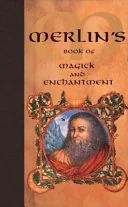
Merlin's Book of Magick and Enchantment
 79
79

Merlin's Book of Magick and Enchantment
Nevill Drury's Merlin's Book of Magick and Enchantment offers a structured approach to elemental magick that feels both traditional and grounded. Drury avoids the sensationalism that often plagues such texts, instead presenting a clear, almost workmanlike, guide to invoking the powers associated with the five elements and their symbolic tools. The section detailing the circle, sword, wand, disc, and cup is particularly well-executed, offering practical insights into their ritualistic application. However, the book's strength in direct instruction is also its limitation; it rarely ventures beyond the practical to explore the deeper philosophical underpinnings or historical evolution of these practices. The spell formulae, while specific, occasionally lack the nuanced contextualization that might elevate them beyond mere recipe. Nevertheless, for the practitioner seeking a straightforward manual for elemental ritual, Drury provides a solid, if unadventurous, resource. It serves as a functional grimoire for those already familiar with the basic tenets of Western magick.
📝 Description
79
Nevill Drury's Merlin's Book of Magick and Enchantment, published in May 2001, offers a practical guide to Western esoteric traditions.
This book serves as a practical manual for Western esoteric traditions, concentrating on elemental correspondences and ritualistic practices. Author Nevill Drury, a recognized figure in occult studies, compiled this work to provide accessible methods for interacting with magical forces. The text details the primary elements of earth, water, fire, air, and spirit, along with their associated symbolic tools: the circle, sword, wand, disc, and cup.
It functions as a grimoire, containing specific formulae for various magical objectives. The content is intended for individuals interested in practical ceremonial magick and spellcraft, especially those drawn to archetypal figures like Merlin. Practitioners seeking to understand and apply the five classical elements in their rituals will find this useful. Students of comparative mythology and folklore may also appreciate its examination of Merlin's lasting legacy. The book includes specific instructions for those interested in spirit evocation, love spells, prosperity magic, or divination.
Published in 2001, Drury's book arrived during a time of growing public interest in esotericism, partly driven by the internet and a renewed focus on pre-Christian European traditions. The work connects to a long history of European magical texts, from medieval grimoires to the ceremonial magick revival of the late 19th and early 20th centuries. Unlike purely academic analyses of magic, Drury's text provides direct ritualistic instruction. This reflects a continuous thread in occult literature that prioritizes experiential practice over theoretical discussion.
💡 Why Read This Book?
• Gain practical instruction on elemental magick, learning to work with Earth, Air, Fire, Water, and Spirit as detailed in the book's foundational chapters, offering a tangible method for spiritual engagement. • Understand the ritualistic significance of key magical tools like the circle, sword, wand, disc, and cup, as explained by Drury, enabling a deeper appreciation for symbolic implements in ceremony. • Explore specific spell formulations for common magical aims, such as attracting good fortune or ensnaring affection, providing concrete techniques derived from the text's practical approach to enchantment.
⭐ Reader Reviews
Honest opinions from readers who have explored this book.
❓ Frequently Asked Questions
When was Merlin's Book of Magick and Enchantment first published?
Merlin's Book of Magick and Enchantment was first published in May 2001. This places it within a contemporary resurgence of interest in esoteric and occult literature.
What are the five classical elements discussed in the book?
The book discusses the five classical elements central to many esoteric traditions: Earth, Water, Fire, Air, and Spirit. These are presented as fundamental forces for magical work.
What are the five magickal symbols mentioned in the blurb?
The five magickal symbols detailed are the circle, sword, wand, disc, and cup. Each is associated with specific elemental energies and ritualistic functions.
Does the book offer spells for specific purposes?
Yes, the book provides secret formulae for various magical aims, including calling spirits, ensnaring a lover, attracting good fortune, and predicting future events.
Who is the author, Nevill Drury?
Nevill Drury is a respected author and scholar in the fields of occultism, esotericism, and witchcraft, known for his extensive research and numerous publications on these subjects.
Is this book suitable for beginners in magick?
The book's direct approach to elemental magick and symbolic tools makes it accessible for beginners interested in practical spellcraft, though a basic understanding of esoteric concepts is beneficial.
🔮 Key Themes & Symbolism
Elemental Correspondences
The work meticulously details the five classical elements—Earth, Water, Fire, Air, and Spirit—as foundational energies within the practice of magick. Drury outlines how each element corresponds to specific ritualistic tools, magical intentions, and even states of consciousness. This systematic approach allows practitioners to build spells and rituals by consciously invoking and directing these elemental forces, moving beyond abstract concepts to practical application. The book serves as a guide to understanding the inherent power attributed to each element in Western esoteric traditions.
Symbolic Ritual Tools
Central to the book's methodology is the exploration of five primary symbolic tools: the circle, sword, wand, disc, and cup. Drury explains their significance not merely as physical objects but as conduits for magical energy and intent. The circle represents the sacred space and cosmic order, the sword embodies will and assertion, the wand directs spiritual forces, the disc relates to material manifestation, and the cup signifies intuition and emotional reception. Understanding these symbols is presented as crucial for effective spellcasting and ritual construction.
Practical Spellcraft
Merlin's Book of Magick and Enchantment functions as a practical grimoire, offering specific formulae for achieving various desired outcomes. The text provides instructions for engaging with spiritual entities, influencing romantic relationships, enhancing financial prosperity, and practicing divination. These formulae are rooted in the previously discussed elemental and symbolic frameworks, encouraging a methodical and disciplined approach to spellcasting. The emphasis is on actionable techniques rather than purely theoretical discussions of magickal principles.
The Merlin Archetype
The book draws upon the enduring archetype of Merlin, the legendary wizard of Arthurian lore, to frame its teachings on magick and enchantment. By invoking Merlin, Drury connects the presented practices to a deep-seated cultural understanding of wisdom, power, and mystical knowledge. This association lends an air of ancient authority and potent possibility to the spells and rituals described, positioning the book as a conduit to a lineage of powerful sorcery.
💬 Memorable Quotes
Direct passages from the work, attributed to the author.
“Here are the elements of earth, water, fire, air, and spirit—and the magickal symbols of the circle, sword, wand, disc and cup.”
— This foundational statement clearly outlines the core components of the magical system presented in the book, establishing the elemental framework and the primary ritual tools that practitioners will engage with.
“Here are the secret formulae for calling the spirits, ensnaring your lover, attracting good fortune and predicting what will come to pass.”
— This phrase directly communicates the practical, results-oriented nature of the book's content, promising specific, actionable spells for a range of common desires and esoteric pursuits.
“The circle, sword, wand, disc, and cup are not mere objects but instruments of will and connection.”
— This interpretation highlights the symbolic depth of the ritual tools, emphasizing that their power lies not in their material form but in their function as extensions of the practitioner's intent and their connection to unseen forces.
“Spirit is the fifth element, binding the others and animating the practitioner's intent.”
— This concept underscores the crucial role of Spirit as the unifying and animating force in the elemental system, suggesting that true magical efficacy arises from the integration of all five elements.
“Each formula is a key, unlocking specific potentials within the fabric of reality.”
— This metaphor frames the book's spells as precise mechanisms designed to access and manipulate specific energies or outcomes, suggesting a universe governed by discoverable laws and accessible through ritual.
🌙 Esoteric Significance
Tradition
This work aligns with the Western Esoteric Tradition, particularly drawing from Hermeticism and ceremonial magick. It employs the classical five-element system (Earth, Air, Fire, Water, Spirit), a core part of Hermetic philosophy and its derivatives. Drury's approach emphasizes ritualistic practice and the use of symbolic implements, consistent with the lineage of grimoires and magical textbooks that have circulated for centuries, aiming to provide practical tools for spiritual development and manipulation of subtle energies.
Symbolism
The book prominently features the symbolism of the five classical elements and five key ritual tools: the circle (sacred space, cosmos), sword (will, intellect), wand (invocation, direction), disc (materiality, manifestation), and cup (intuition, emotion). These symbols function as archetypal anchors, representing fundamental forces and aspects of the magician's being and their interaction with the world. Their proper understanding and application are presented as essential for the efficacy of the spells and enchantments detailed.
Modern Relevance
Contemporary practitioners of eclectic witchcraft, neo-Hermeticism, and modern ceremonial magick often find value in Drury's clear, foundational approach to elemental work and ritual structure. His emphasis on the five elements and symbolic tools provides a accessible framework for those seeking to build their own magical systems or deepen their understanding of traditional Western practices. The book continues to serve as a reference for individuals interested in practical spellcraft and the symbolic language of magick.
👥 Who Should Read This Book
• Aspiring practitioners of Western ceremonial magick: Individuals new to ritualistic magic will find a structured introduction to elemental forces and the use of symbolic tools, providing a solid foundation for their practice. • Students of esoteric traditions: Those studying Hermeticism, witchcraft, or comparative religion can gain insight into practical applications of elemental theory and ritual symbolism as presented in a modern grimoire format. • Seekers of practical spellcraft: Individuals interested in learning specific techniques for spirit evocation, love spells, fortune attraction, or divination will find actionable formulae and instructions within the text.
📜 Historical Context
Published in May 2001, Merlin's Book of Magick and Enchantment arrived during a period of significant public engagement with occult and esoteric literature, amplified by the burgeoning internet. Nevill Drury's work emerged in a landscape where popular interest in witchcraft, Neo-Paganism, and ceremonial magick was growing, often drawing from the traditions revived by figures like Aleister Crowley and the Hermetic Order of the Golden Dawn in the late 19th and early 20th centuries. While academic discourse on the history of magic continued with scholars like Owen Davies examining its social impact, Drury's book represented the practical, instructional side of the tradition. It offered direct methods for ritual, contrasting with more theoretical or historical analyses. Its publication predates the widespread availability of digitized historical grimoires, making such practical guides valuable resources for a generation of self-directed occult students seeking hands-on experience.
📔 Journal Prompts
The elemental correspondences of Earth, Water, Fire, Air, and Spirit: how do they manifest in your daily life?
Reflect on the symbolic meaning of the sword and the cup in your personal aspirations.
Consider the structure of a ritual circle: what boundaries do you wish to establish or maintain?
Analyze a past experience of attracting good fortune through the lens of elemental magick.
How can the principle of 'calling the spirits' be applied to internal aspects of your psyche?
🗂️ Glossary
Elements
The classical components of nature—Earth, Water, Fire, Air, and Spirit—understood in esoteric traditions as fundamental forces influencing the material and spiritual realms.
Magickal Symbols
Objects or forms (e.g., circle, sword, wand, disc, cup) imbued with symbolic meaning and used in ritual to represent specific energies, intentions, or divine principles.
Formulae
Specific sets of instructions, incantations, or ritual steps designed to produce a desired magical effect, such as calling spirits or attracting fortune.
Spirit Evocation
The practice of calling forth or summoning spiritual entities or forces, often through ritualistic means, for communication, assistance, or other magical purposes.
Enchantment
The act of casting spells or performing rituals intended to influence events, people, or objects, often through the manipulation of subtle energies or spiritual forces.
Divination
The practice of seeking knowledge of the future or the unknown by supernatural means, such as through specific rituals or the interpretation of omens.
Archetype
A recurring symbol, character, or pattern of circumstances found universally in literature and mythology, such as the figure of Merlin, representing fundamental human experiences or concepts.
This book appears in 1 collection
🔮 Readers Also Liked
Browse all →








From the “Enchantment” Collection
View all →


More Free Occult Philosophy Books
View all →