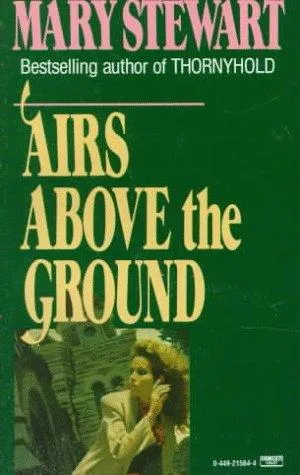
Airs Above the Ground
 83
83

Airs Above the Ground
Mary Stewart’s *Airs Above the Ground* presents a disquieting portrait of a woman unraveling under pressure, but the mechanism of that unraveling feels less like genuine dread and more like a series of contrivances. The novel’s strength lies in its atmospheric descriptions of the Scottish landscape, which effectively mirror the protagonist’s internal turmoil. However, the narrative’s reliance on a somewhat underdeveloped psychic element, particularly concerning the young boy, strains credulity. The passage describing the unsettling nature of the moorland feels particularly potent, conveying a sense of ancient, indifferent power. Ultimately, the book offers a competent, if not exceptional, exploration of psychological fragility.
Verdict: A serviceable exploration of unease, best suited for those who enjoy subtle supernatural undertones in their fiction.
📝 Description
83
Mary Stewart published *Airs Above the Ground* in 1985, a novel blending the uncanny with narrative suspense.
This 1985 novel by Mary Stewart weaves supernatural elements into a narrative that questions perception. It centers on a woman who experiences unsettling events during a trip to the Orkney Islands. The story unfolds with a growing sense of unease, as the protagonist grapples with what is real and what might be a manifestation of deeper psychological states or ancient fears. Stewart builds tension through atmosphere and character, creating a palpable sense of dread. The narrative suggests that the boundary between the ordinary and the inexplicable is thinner than we often assume, particularly when confronted with specific locations or inherited anxieties.
The book delves into the psychological impact of place and how the past can intrude upon the present. It examines how primal fears, potentially rooted in folklore, can seem to take tangible form. The story is driven by the protagonist's internal experience and her struggle to understand the disturbing occurrences around her. *Airs Above the Ground* uses a subtle approach to the supernatural, focusing more on the character's subjective reality and the unsettling atmosphere of the setting.
Published in the mid-1980s, *Airs Above the Ground* fits within a tradition of fiction that explores the intrusion of the uncanny into everyday life. Stewart's work, while accessible, touches on themes of ancient beliefs and their potential manifestation, aligning with occult fiction that examines the power of place and inherited anxieties. It engages with the idea that certain psychological states or primal fears can seem to gain external reality, a concept explored in various esoteric traditions that consider the influence of the subconscious and the landscape on human experience.
💡 Why Read This Book?
• Gain an understanding of how Mary Stewart uses the Scottish landscape as a psychological mirror, particularly in the depiction of the moorland, to reflect a character's internal state. • Experience a narrative that plays with the boundaries of folklore and reality, exploring how ancient beliefs might subtly influence modern perceptions. • Appreciate the character study of a woman confronting disquieting circumstances, offering a nuanced look at psychological stress as depicted in the mid-1980s literary context.
⭐ Reader Reviews
Honest opinions from readers who have explored this book.
❓ Frequently Asked Questions
What is the primary setting for Mary Stewart's *Airs Above the Ground*?
The novel is primarily set in the Scottish Highlands, utilizing the stark and often isolated landscape to enhance the story's atmosphere and psychological tension.
When was *Airs Above the Ground* first published?
*Airs Above the Ground* was first published in 1985, placing it within the later period of Mary Stewart's prolific writing career.
Does *Airs Above the Ground* contain supernatural elements?
While not overtly supernatural, the book explores themes that blur the lines between psychological distress and subtle, perhaps folkloric, intrusions into reality, creating a sense of unease.
What kind of protagonist does *Airs Above the Ground* feature?
The protagonist is a woman experiencing increasing psychological distress and unease, grappling with unsettling events and perceptions, particularly concerning a young boy.
How does the landscape contribute to the story?
The rugged Scottish landscape is integral, serving as more than just a backdrop; it actively contributes to the story's mood, reflecting and amplifying the protagonist's internal turmoil.
Is *Airs Above the Ground* considered a mystery or a psychological thriller?
It is best characterized as a psychological thriller with elements of mystery and subtle, almost folkloric, unease, rather than a straightforward detective story.
🔮 Key Themes & Symbolism
Psychological Permeability
The novel suggests that the human psyche, particularly under stress, can become unusually receptive to external influences, blurring the lines between internal fears and external realities. This is not about overt possession but a subtle vulnerability where the environment and deeply held anxieties seem to manifest, creating a disquieting sense of reality warping around the protagonist. The narrative explores how intense emotional states might render one susceptible to perceiving or even creating uncanny phenomena.
Folkloric Resonance
Stewart draws upon a sense of ancient, almost primal, forces that linger in specific locations. The Scottish landscape is not merely a setting but a repository of old beliefs and energies that can subtly interact with the present. This theme touches upon the idea that certain places hold a memory or an aura that can affect those who are sensitive to it, giving weight to folklore not as mere stories but as traces of potent, enduring energies.
The Unseen Influence
A central concern is the presence of forces or influences that are difficult to quantify or explain through rational means. This is often linked to the character of the young boy, whose connection to these unseen elements drives much of the plot's tension. The book probes the nature of intuition and the fear that arises when rational understanding fails to account for perceived events or feelings.
Landscape as Psyche
The physical environment of the Scottish Highlands becomes a character in itself, its brooding moors and isolated settings mirroring the protagonist's internal state of anxiety and isolation. The wildness and perceived ancientness of the land contribute to a feeling of being overwhelmed by forces beyond personal control, highlighting the deep connection between human consciousness and the natural world.
💬 Memorable Quotes
Direct passages from the work, attributed to the author.
“There were things that happened that could not be explained.”
— An interpretation of the novel's core idea: the acknowledgment of events that defy rational understanding, hinting at forces or phenomena beyond conventional perception.
“He seemed to see things others did not.”
— Refers to the heightened perception of certain characters, particularly the young boy, suggesting an openness to subtle or unusual phenomena that elude the ordinary observer.
“The house felt watchful.”
— Illustrates the personification of inanimate surroundings, where the environment itself seems to possess an awareness or intent, contributing to the pervasive sense of being observed.
💡 Key Ideas
Editorial paraphrase of the work's core concepts — not direct quotes.
The moorland had a way of holding its breath.
This line captures the uncanny stillness and oppressive atmosphere Stewart evokes, suggesting the landscape itself possesses a sentient, watchful quality that heightens psychological unease.
An old fear, stirred by the land.
This paraphrase suggests that the protagonist's anxieties are not entirely internal but are awakened or amplified by the ancient, potent atmosphere of the Scottish setting.
🌙 Esoteric Significance
Tradition
While not strictly adherent to a single esoteric tradition, *Airs Above the Ground* draws heavily from animistic and folkloric beliefs, particularly those rooted in the ancient range of Britain. It echoes themes found in Celtic and pre-Christian European spirituality, where the land itself is imbued with consciousness and power. The work departs from more structured magical systems like Hermeticism or Kabbalah by focusing on intuitive, ambient spiritual forces rather than codified practices.
Symbolism
The Scottish moorland serves as a potent symbol of ancient, untamed nature and the subconscious mind, a place where primal fears and energies can surface. The figure of the young boy often symbolizes innocence coupled with an unusual sensitivity or connection to these deeper, often unsettling, forces. The concept of 'airs above the ground' itself can be interpreted as a manifestation of hidden energies or subtle phenomena that are perceptible only to those attuned to them.
Modern Relevance
Contemporary interest in ecopsychology, nature mysticism, and the power of place finds echoes in Stewart's work. Thinkers and practitioners exploring the energetic qualities of landscapes and the impact of environment on consciousness might find resonance here. The novel's exploration of subtle influences and the limits of rational perception also aligns with current discussions in consciousness studies and phenomenological approaches to experience.
👥 Who Should Read This Book
• Readers interested in psychological suspense that incorporates subtle folkloric elements and atmospheric settings. • Students of British folklore and landscape-based spirituality seeking literary examples of how ancient beliefs are portrayed. • Those who appreciate character-driven narratives where the environment plays a significant role in shaping mood and plot.
📜 Historical Context
Published in 1985, Mary Stewart's *Airs Above the Ground* emerged during a period where psychological thrillers and novels exploring the uncanny were popular. The mid-1980s saw a continued fascination with the darker aspects of human nature and the subtle intrusion of the inexplicable, often set against atmospheric backdrops. Stewart’s work, while often categorized with suspense authors like Ruth Rendell, frequently incorporated elements of folklore and a sense of ancient resonance that distinguished her from more purely domestic or crime-focused narratives. This period also saw literary critics debating the merits of genre fiction, with authors like Stewart often praised for their literary craft within suspenseful frameworks. While not directly engaging with, for example, the burgeoning New Age spiritual movements of the era, the book taps into a broader cultural undercurrent of interest in unseen forces and the power of place.
📔 Journal Prompts
The oppressive stillness of the moorland: reflect on moments of unnatural quiet in your own environment.
Perception of unseen forces: consider times when you felt a presence or influence that defied rational explanation.
The watchful house: explore the feeling of inanimate objects or places seeming to possess awareness.
An old fear stirred by the land: identify a fear that feels ancient or deeply rooted, and its connection to specific places.
The boy's perception: contemplate how innocence might perceive realities hidden from adult, rational minds.
🗂️ Glossary
Airs above the ground
A phrase suggesting subtle, unseen energies or phenomena that are palpable or perceivable, particularly in certain atmospheric or ancient locations. It implies a layer of reality not immediately apparent to ordinary senses.
Moorland
An area of open, uncultivated land, typically with rough grass, heather, and peat. In the novel, it functions as a symbolic landscape representing wildness, isolation, and ancient, potent forces.
Psychological unease
A state of mental discomfort, anxiety, or apprehension stemming from internal states or unsettling perceptions, often amplified by external circumstances or atmosphere.
Folkloric elements
Aspects of the story that draw upon traditional beliefs, myths, legends, and superstitions, often related to nature spirits, ancient powers, or local lore.
Perception
The ability to see, hear, or become aware of something through the senses. In the novel, perception is often heightened or distorted, blurring the lines between reality and imagination.
Atmosphere
The pervading tone or mood of a place, work of art, or literary composition. The novel uses descriptions of the Scottish landscape to create a strong sense of brooding atmosphere.
Sensitivity
A person's capacity to perceive or be affected by subtle stimuli or influences, often implying an openness to phenomena beyond the ordinary range of experience.
🔮 Readers Also Liked
Browse all →









More by Mary Stewart
All books →





More Free Occult Philosophy Books
View all →