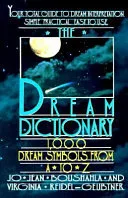
The Dream Dictionary
 79
79

The Dream Dictionary
Jo Jean Boushahla and Virginia Reidel-Geubtner's *The Dream Dictionary* functions less as a scholarly treatise and more as a practical, albeit somewhat generalized, reference guide. Its strength lies in its straightforward categorization of dream types and its accessibility for those new to the subject. However, the work sometimes leans towards a prescriptive interpretation, which can limit the nuance of individual dream experiences. A notable passage discusses "anxiety dreams" as direct reflections of waking stress, a concept that, while intuitive, might oversimplify the complex origins of such nocturnal disturbances. The book's utility is undeniable for initial exploration, but seasoned dream analysts may find its interpretations lacking depth.
Ultimately, this dictionary offers a functional starting point for understanding personal dream symbolism.
📝 Description
79
Published in 1992, The Dream Dictionary offers a systematic guide to dream interpretation.
The Dream Dictionary provides a structured method for understanding dream symbols. Authors Jo Jean Boushahla and Virginia Reidel-Geubtner present dreams as valuable tools for self-knowledge, offering advice applicable to personal growth, relationships, health, and financial goals. The book aims to make dream insights clear and accessible.
This guide is for anyone interested in learning more about themselves through analyzing dreams. It suits those who want to uncover the meanings in their dreams, whether they are new to dream interpretation or have some prior experience and need a reference. It functions as a practical resource for personal development.
The Dream Dictionary was published in 1992, a time when interest in psychological and esoteric studies of the subconscious continued. Building on Carl Jung's work with dream symbols and the collective unconscious, this book aimed to make those ideas more widely available. It joined a larger conversation about psychoanalysis and personal development common in Western thought during the late 20th century.
💡 Why Read This Book?
• Gain practical methods for identifying specific dream archetypes like the "wish-fulfillment dream," enabling a structured approach to understanding personal subconscious messages. • Learn to interpret symbols that directly relate to "physical health and material success," offering concrete guidance for improving tangible aspects of your waking life. • Understand the foundational principles of dream research as presented in 1992, providing context for the book's enduring relevance in the field of self-discovery.
⭐ Reader Reviews
Honest opinions from readers who have explored this book.
❓ Frequently Asked Questions
When was The Dream Dictionary first published?
The Dream Dictionary was first published in 1992, positioning it within the late 20th-century wave of popular psychology and self-help literature.
Who are the primary authors of The Dream Dictionary?
The primary authors are Jo Jean Boushahla and Virginia Reidel-Geubtner. V. Reidel-Geubtner is also credited.
What is the main purpose of The Dream Dictionary?
Its main purpose is to serve as a guide for self-knowledge and life improvement by teaching readers how to interpret their dreams.
What types of dreams does the book discuss?
The book discusses various dream types, including wish-fulfillment dreams, prophetic dreams, and anxiety dreams, among others.
How does the book view the role of dreams?
The book views dreams as effective tools for self-discovery, acting as guides to the inner self, relationships, health, and material success.
Is The Dream Dictionary suitable for beginners?
Yes, the book is described as an easy-to-use handbook, making it suitable for individuals beginning their journey into dream interpretation.
🔮 Key Themes & Symbolism
Dreams as Guides
The work posits dreams as essential guides for navigating life's complexities. They are presented not as random neural firings, but as deliberate messages from the subconscious, offering direction concerning personal development, relational dynamics, and even practical matters like career and finances. This perspective elevates dream interpretation from a passive curiosity to an active tool for self-improvement and problem-solving.
Self-Knowledge Through Symbolism
A central theme is the revelation of the inner self through dream symbolism. The book suggests that by deciphering the personal lexicon of one's dreams—the recurring images, scenarios, and emotions—individuals can gain clear insights into their deepest desires, fears, and motivations. This introspective process is framed as a pathway to enhanced self-awareness and psychological integration.
Categorization of Dream Experiences
The text provides a framework for understanding different categories of dreams, such as "wish-fulfillment" dreams, "prophetic" dreams, and "anxiety" dreams. This classification helps readers to contextualize their dream experiences, recognizing patterns and understanding the potential underlying causes or messages associated with each type, thereby clarifying the often-chaotic nature of the dream world.
Practical Life Applications
Beyond psychological exploration, the book emphasizes the tangible benefits of dream analysis for improving one's waking life. It suggests that understanding dream content can lead to better relationship management, improved physical health awareness, and greater success in material pursuits. Dreams are thus presented as a practical resource for actionable life adjustments.
💬 Memorable Quotes
Direct passages from the work, attributed to the author.
“Dreams serve as a guide to the inner self, to relationships, to physical health and material success.”
— This statement captures the book's core premise: dreams are not mere nocturnal phantoms but valuable indicators offering direction and insight across various life domains.
“Recognize the wish-fulfillment dream, the prophetic dream, the anxiety dream, and other types.”
— This highlights the book's structured approach, aiming to equip readers with the ability to classify their dreams, thereby facilitating a more analytical and less overwhelming interpretation process.
“Dreams are among the most effective tools for self-discovery.”
— This emphasizes the book's utilitarian view of dreams, positioning them as practical instruments for personal growth and uncovering hidden aspects of one's psyche.
“An easy-to-use, useful handbook.”
— This descriptor points to the book's intended audience and function: a accessible resource designed to enlighten readers about the significance of their dreams.
“Make the journey to improved self-knowledge and an improved life.”
— This articulates the ultimate goal the authors set forth for their readers, framing dream interpretation as a transformative process leading to tangible life enhancements.
🌙 Esoteric Significance
Tradition
While not strictly adhering to a single esoteric lineage, *The Dream Dictionary* draws heavily from the psychological tradition influenced by figures like Carl Jung, which itself has strong roots in Gnosticism and Hermeticism through its exploration of the psyche's depths and symbolic language. It translates these profound concepts into accessible terms for a modern audience seeking self-understanding.
Symbolism
The work engages with archetypal symbols common in esoteric thought, though often secularized. For instance, recurring motifs like "falling" can be interpreted through Jungian psychology as representing loss of control or ego dissolution, concepts familiar in mystical traditions concerning ego death and surrender. Similarly, "flying" dreams might symbolize spiritual ascension or a desire for transcendence.
Modern Relevance
Contemporary practices in mindfulness, lucid dreaming, and even certain therapeutic modalities continue to explore the practical applications of dream analysis. Thinkers and practitioners interested in Jungian psychology, archetypal studies, and integrative approaches to mental wellness often reference foundational works like this for accessible insights into the symbolic field of the human mind.
👥 Who Should Read This Book
• Individuals new to dream interpretation seeking a structured and accessible reference guide to understand common dream symbols and categories. • Those interested in Jungian psychology and archetypal symbolism who want practical applications for personal growth and self-awareness. • Readers of self-help literature looking for tools to enhance their understanding of relationships, health, and personal success through subconscious exploration.
📜 Historical Context
Published in 1992, *The Dream Dictionary* emerged within a cultural landscape still heavily influenced by the psychological explorations of the mid-20th century, particularly the works of Carl Jung and Sigmund Freud. While Jungian archetypes and the concept of the collective unconscious remained potent, the late 20th century saw a popularization and diversification of dream analysis. Books like this one aimed to make complex psychological theories accessible to a general audience, moving beyond purely clinical applications. It arrived at a time when New Age thought and self-help movements were gaining significant traction, offering practical tools for personal development. While not directly engaging with academic critiques of dream interpretation, it implicitly contributed to the ongoing popular discourse on the subconscious, differentiating itself from more esoteric or purely spiritual traditions by grounding its interpretations in psychological principles.
📔 Journal Prompts
Reflect on the "wish-fulfillment dream" category: What recent dream might fit this description, and what does it reveal about your current desires?
Analyze an "anxiety dream" you've experienced. What specific symbols or scenarios appeared, and how might they relate to waking life pressures?
Consider the concept of dreams as guides. How have your dreams in the past offered direction, even if it wasn't immediately apparent?
Explore the "prophetic dream" aspect. Document any dreams that seemed to foreshadow events, and analyze their symbolic content.
Document a recurring dream symbol. What does this symbol represent to you personally, beyond the dictionary's interpretation?
🗂️ Glossary
Wish-fulfillment dream
A dream where subconscious desires, often repressed or unfulfilled in waking life, are symbolically realized or expressed.
Prophetic dream
A dream that appears to foretell future events, often interpreted as a glimpse into potential outcomes or intuitive insights.
Anxiety dream
Dreams characterized by feelings of fear, stress, or unease, typically reflecting subconscious worries or unresolved conflicts from waking life.
Self-discovery
The process of gaining deeper understanding of one's own character, motivations, and potential through introspection and external experiences.
Inner self
The core essence of an individual's personality, consciousness, and subconscious, often considered the source of intuition and true desires.
Symbolism
The use of images, figures, or colors to represent abstract ideas or concepts, particularly significant in dream interpretation.
Dream research
The scientific and psychological study of dreams, their origins, functions, and interpretations.