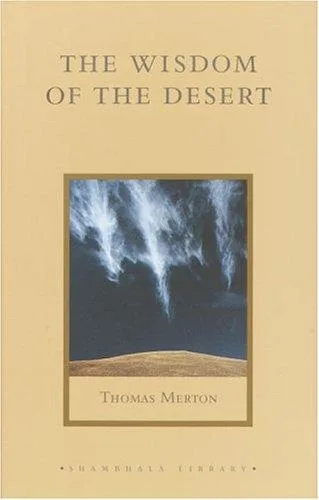
The Wisdom of the Desert
 78
78

The Wisdom of the Desert
Thomas Merton's "The Wisdom of the Desert" offers a compelling glimpse into the lives of ascetics whose existence seems almost alien to modern sensibilities. Merton’s strength lies in his ability to translate the stark realities and potent teachings of figures like St. Antony the Great into accessible language without diluting their radicality. He effectively highlights how their deliberate withdrawal from society was not an escape but a profound engagement with the self and the divine. A limitation, however, is that at times, Merton’s own contemplative lens can overlay his interpretation, occasionally presenting a unified doctrine where historical nuance might exist. The passage discussing the monk's battle against demons, framing them as internal psychological states, is particularly insightful. Ultimately, this work serves as a potent reminder of the austere foundations of Christian contemplation.
📝 Description
78
Thomas Merton published his study of the Desert Fathers and Mothers in 1988.
In "The Wisdom of the Desert," Thomas Merton examines the lives and teachings of the early Christian ascetics of Egypt and Syria. Published in 1988, the book goes beyond mere biography to consider the radical simplicity and intense spiritual focus that defined these figures. Merton aimed to uncover the lasting principles behind their solitary existence, which took root primarily between the 4th and 5th centuries CE.
Merton's work appeals to readers interested in contemplative spirituality outside mainstream religious discussion. It is suited for those who want to understand the origins of asceticism and the psychological and philosophical bases for extreme spiritual pursuits. Anyone curious about the paradoxes of solitude, achieving inner calm under difficult circumstances, and the historical development of Christian mysticism will find this book valuable.
The book appeared during a time of renewed interest in contemplative practices, both inside and outside organized religion. Merton, a Trappist monk, offered a unique perspective from within the monastic world, yet his writing also engaged a wider audience seeking meaning in a less religious era. His study of these early monks coincided with scholarly work on Gnosticism and other early Christian groups.
This book engages with a tradition of Christian mysticism rooted in the early desert hermits. These figures sought direct experience of the divine through asceticism and contemplation, often in isolation. Their practices aimed at purifying the soul and achieving a state of inner stillness, influencing subsequent monasticism and contemplative prayer throughout Christian history. Merton's work situates these ancient practices within a broader context of spiritual seeking, connecting their experiences to enduring human questions about existence and meaning.
💡 Why Read This Book?
• Gain insight into the practice of *kenosis* as demonstrated by the Desert Fathers, learning how deliberate self-emptying can lead to spiritual liberation, a core concept explored throughout their lives. • Understand the historical significance of the Scetis desert community (established c. 330 CE) and its role in shaping early Christian monasticism, providing a concrete anchor for the development of ascetic practices. • Explore the concept of *apatheia*, not as emotional numbness, but as a state of inner stillness achieved through rigorous discipline, offering a practical model for managing internal turmoil.
⭐ Reader Reviews
Honest opinions from readers who have explored this book.
❓ Frequently Asked Questions
When was Thomas Merton's "The Wisdom of the Desert" first published?
Thomas Merton's "The Wisdom of the Desert" was first published in 1988, several years after his death in 1968.
Who were the Desert Fathers and Mothers?
The Desert Fathers and Mothers were early Christian ascetics who lived in the deserts of Egypt, Syria, and Palestine, primarily from the 3rd to the 5th centuries CE, seeking spiritual purification through solitude and contemplation.
What is the concept of 'apatheia' as discussed in the book?
'Apatheia' refers to a state of inner peace and freedom from disturbing passions or emotions, cultivated through spiritual discipline and detachment, as practiced by the desert ascetics.
What does 'kenosis' mean in the context of Merton's work?
Kenosis, meaning self-emptying, is a central theme where ascetics shed worldly desires and ego to make space for divine presence, a concept Merton extrapolates from their lives.
Does the book focus on specific historical figures?
Yes, the book frequently references prominent figures such as St. Antony the Great (c. 251-356 CE), often considered the father of monasticism, and his teachings.
What geographical region is most associated with the Desert Fathers?
The Egyptian desert, particularly areas like the Wadi Natrun where the monastic center of Scetis flourished, is the primary geographical region associated with the Desert Fathers and Mothers.
🔮 Key Themes & Symbolism
Radical Simplicity and Solitude
The text examines the intentional embrace of solitude and material austerity by the Desert Fathers and Mothers. This wasn't mere isolation but a strategic withdrawal to confront inner demons and cultivate direct communion with the divine. Merton highlights how their lives, often lived in harsh desert environments from the 4th century onward, exemplified a radical rejection of societal norms in favor of an intense inner focus. This theme explores how external stripping down facilitates internal spiritual growth and self-knowledge.
The Battle Against Logismoi
A significant focus is placed on the internal struggles faced by these ascetics, termed 'logismoi' or evil thoughts/passions. Merton explains this concept as the internal adversaries that monks fought in the silence of the desert. The book illustrates the rigorous mental and spiritual discipline required to identify, resist, and ultimately transcend these inner disturbances. This theme underscores the psychological depth of early Christian monasticism and its emphasis on self-mastery as a path to spiritual freedom.
The Desert as Crucible
Merton presents the desert not just as a physical location but as a potent symbol and spiritual crucible. It represents a space stripped bare of distractions, forcing an encounter with one's true self and the presence of God. The harshness of the environment mirrored the ascetic's internal purification process. This theme explores how extreme conditions can paradoxically foster profound spiritual insight and transformation, making the desert a sacred space for divine encounter.
Contemplative Practice and Prayer
Central to the work is the exploration of early contemplative prayer forms and their efficacy. Merton examines how the Desert Fathers and Mothers developed unique methods of sustained prayer, often characterized by simplicity and repetition, such as the Jesus Prayer (though not explicitly named as such in this context, the practice is present). This theme illuminates the practical application of their spiritual philosophy, showcasing how disciplined prayer became the central to their ascetic lives.
💬 Memorable Quotes
Direct passages from the work, attributed to the author.
“The monk is separated from all men, so that he may be united to all men.”
— This paradoxical statement captures the essence of monastic withdrawal as described by Merton. By isolating themselves, the ascetics aimed to achieve a higher state of spiritual connection, not just for themselves, but for the benefit of all humanity.
“The desert is a place where the monk learns to listen to God in the silence.”
— This highlights the desert's role as a space conducive to deep spiritual listening. Stripped of worldly noise, the ascetic could perceive the divine voice more clearly, making silence a vital tool for spiritual discernment.
“Evil thoughts are like invisible enemies that must be fought with vigilance.”
— This reflects Merton's discussion of *logismoi*. It emphasizes the internal nature of spiritual battles and the constant watchfulness required to maintain inner purity and focus.
“True freedom is found not in possessions, but in detachment.”
— This interpretation speaks to the ascetic ideal of *apatheia*. By releasing attachment to material goods and worldly concerns, the monks sought a profound inner liberty from external influences.
💡 Key Ideas
Editorial paraphrase of the work's core concepts — not direct quotes.
To empty oneself is to make room for God.
This paraphrase captures the concept of *kenosis*. By shedding ego, desires, and self-will, the ascetic creates an inner space that can be filled by divine grace and presence.
🌙 Esoteric Significance
Tradition
This work engages deeply with the early Christian ascetic tradition, which forms a foundational layer for many Western esoteric paths, including Hermeticism and Christian Kabbalah, particularly in their mystical and contemplative branches. While not strictly esoteric in the sense of secret initiations, the Desert Fathers' practices of inner purification, direct divine encounter, and symbolic interpretation of scripture laid groundwork for later mystical developments. Merton’s interpretation highlights the Gnostic-like emphasis on achieving gnosis (knowledge) through rigorous self-discipline and inner transformation, departing from more dogmatic interpretations.
Symbolism
The desert itself is a primary symbol, representing a void pregnant with divine potential, a place of stripping away the ego to reveal the true self. Water, often scarce, symbolizes divine grace and spiritual sustenance. The demonic figures encountered by the monks represent the *logismoi*, or internal passions and negative thought patterns, which become tangible adversaries to be overcome. The cell or cave signifies the inner sanctuary of the soul, the space for profound prayer and self-confrontation.
Modern Relevance
Contemporary mindfulness practices, contemplative prayer movements (like Centering Prayer, influenced by Merton), and psychological approaches to self-awareness echo the core principles found in the Desert Fathers' lives. Thinkers and practitioners interested in radical simplicity, digital detox, and intentional living draw inspiration from their ascetic models. The work remains relevant for those seeking practical methods for cultivating inner peace and discerning spiritual truths amidst the noise of modern life, bridging ancient wisdom with current existential concerns.
👥 Who Should Read This Book
• Individuals exploring the historical roots of Christian mysticism and contemplative prayer, seeking to understand the origins of practices like solitude and asceticism. • Seekers of profound spiritual insight interested in psychological self-mastery, learning how the Desert Fathers battled internal 'logismoi' (passions). • Readers fascinated by the interplay of extreme environment and spiritual development, examining how the Egyptian desert (c. 300-500 CE) became a crucible for transformation.
📜 Historical Context
Thomas Merton’s "The Wisdom of the Desert," published in 1988, emerged in an era marked by a resurgence of interest in spiritual traditions beyond mainstream Western religion. The mid-to-late 20th century saw scholars and seekers alike turning towards Eastern philosophies, mysticism, and early Christian contemplative practices. Merton, already a renowned figure for his own monastic writings and his engagement with thinkers like D.T. Suzuki on Zen Buddhism, brought his unique perspective to the ancient Desert Fathers and Mothers. Their asceticism, flourishing particularly in Egypt around the 4th and 5th centuries CE, offered a stark counterpoint to the growing secularization and materialism of the post-World War II era. This period also witnessed increasing academic study of Gnosticism and other early Christian heterodoxies, providing a broader context for understanding diverse spiritual impulses within Christianity's formative centuries. While Merton's work was widely respected, it existed alongside popularizations of Eastern spirituality, creating a diverse landscape for those exploring alternative paths to meaning.
📔 Journal Prompts
The desert as a crucible for the self: how does external stripping foster internal growth?
Reflections on the *logismoi*: identifying and confronting personal inner adversaries.
The practice of *kenosis*: how can self-emptying lead to greater spiritual capacity?
The paradox of solitude: finding unity with others through separation.
The silence of the desert: what truths emerge when external noise is removed?
🗂️ Glossary
Desert Fathers
Early Christian monks and ascetics, primarily from the 4th and 5th centuries in Egypt and Syria, renowned for their wisdom, spiritual discipline, and eremitic (solitary) lives.
Desert Mothers
Female counterparts to the Desert Fathers, who also lived ascetic lives in the desert, demonstrating profound spiritual wisdom and dedication.
Logismoi
Greek term for evil thoughts, passions, or sinful impulses that early Christian ascetics actively fought against in their spiritual battles.
Kenosis
A Greek term meaning 'self-emptying,' central to Christian theology and ascetic practice, involving the shedding of ego and worldly desires to make space for divine presence.
Apatheia
A state of inner peace, tranquility, and freedom from disturbing passions or emotions, achieved through spiritual discipline and detachment from worldly concerns.
Scetis
An important early monastic center established in the Egyptian desert (Wadi Natrun) around 330 CE, home to many prominent Desert Fathers.
Asceticism
A practice of severe self-discipline and abstention from all forms of indulgence, typically for religious or spiritual reasons.
🔮 Readers Also Liked
Browse all →









More by Thomas Merton
All books →




More Free Occult Philosophy Books
View all →