The Tibetan Book of the Dead
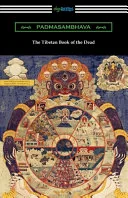
 73
73

The Tibetan Book of the Dead
Padmasambhava's "The Tibetan Book of the Dead" presents a starkly different view of the post-mortem journey than Western traditions typically offer. Its strength lies in its unflinching exploration of consciousness as a landscape populated by the mind's own projections, both terrifying and beatific. The detailed descriptions of the bardo states, particularly the appearance of wrathful deities, are not mere theological constructs but potent psychological metaphors. A limitation, however, is the text's inherent density; without proper guidance or a strong background in Tibetan Buddhist philosophy, readers may find the cosmology overwhelming and the instructions difficult to contextualize. The passage detailing the "wrathful deities, like Mahakala and Yamantaka, arising from one's own mindstream" is a powerful, albeit challenging, illustration of this internal projection. This work is essential for understanding the Tibetan approach to death and consciousness, though it demands significant reader engagement.
📝 Description
73
Revealed in the 14th century, the Bardo Thodol guides the deceased through the intermediate state between death and rebirth.
The Bardo Thodol, or The Tibetan Book of the Dead, is a significant text from the Nyingma school of Tibetan Buddhism. It is not a narrative but a practical guide for those who have died, detailing the experiences and consciousness shifts that occur in the bardo, the period between death and reincarnation. The text describes visions and encounters one might have during this transitional phase. Its teachings are attributed to Padmasambhava, an important figure in 8th-century Tibetan Buddhism, and were revealed by Karma Lingpa in the 14th century as part of a larger collection of teachings known as the "Profound Dharma of Self-Liberation through the Intention of the Peaceful and Wrathful Ones."
This guide is for individuals interested in the Tibetan Buddhist views on death, consciousness, and what follows. It will interest students of religion, meditators seeking to understand advanced mind concepts, and anyone studying non-Western philosophies. Those curious about consciousness outside typical Western thought will find its cosmology and psychological descriptions notable.
Emerging from 14th-century Tibet, the Bardo Thodol is rooted in the Nyingma school, the oldest tradition of Tibetan Buddhism. Its attribution to Padmasambhava connects it to the foundational period of Buddhism in Tibet. The text addresses complex doctrines about liberation and the nature of reality, common within traditions that seek direct experience of the mind's workings. It reflects a system where spiritual practice aims to recognize the mind's true nature, even in altered states of consciousness like the bardo.
💡 Why Read This Book?
• Gain an understanding of the Tibetan Buddhist concept of the 'bardo,' the intermediate state between death and rebirth, as detailed in the text's descriptions of the post-mortem experience. • Learn about the "Profound Dharma of Self-Liberation through the Intention of the Peaceful and Wrathful Ones," a larger corpus of teachings attributed to Padmasambhava, offering a glimpse into the Nyingma school's unique doctrines. • Explore the unique cosmology of Tibetan Buddhism, where deities encountered after death are understood as manifestations of one's own consciousness, a perspective distinct from many other spiritual traditions.
⭐ Reader Reviews
Honest opinions from readers who have explored this book.
❓ Frequently Asked Questions
Is The Tibetan Book of the Dead a religious text or a psychological guide?
It functions as both. Primarily, it's a spiritual text within Tibetan Buddhism, intended as a guide for the deceased during the intermediate state (bardo) after death. However, its detailed descriptions of consciousness and mental phenomena are also seen by many as a profound psychological map.
Who is Padmasambhava and what is his connection to this book?
Padmasambhava, also known as Guru Rinpoche, is a revered Indian Buddhist master credited with establishing Buddhism in Tibet in the 8th century. This text is believed to be part of teachings revealed by him, forming the "Profound Dharma of Self-Liberation."
What is the 'bardo' described in The Tibetan Book of the Dead?
The 'bardo' refers to the intermediate or transitional state experienced after death and before rebirth. The text outlines several types of bardo, including the bardo of dying and the bardo of reality-as-it-is (dharmata).
Are the deities mentioned in the book real beings?
Within the Tibetan Buddhist framework presented, the deities, both peaceful and wrathful, are understood as manifestations of one's own mind or consciousness. Recognizing them as such is key to liberation during the bardo.
When was The Tibetan Book of the Dead first published?
While its spiritual revelations are attributed to the 8th century and it was revealed by Karma Lingpa in the 14th century, this specific edition was first published on February 21, 2023.
What is the significance of the Nyingma school mentioned in relation to this text?
The Nyingma school is the oldest of the four major schools of Tibetan Buddhism. The "Bardo Thodol" is considered a significant work within Nyingma literature, representing its unique philosophical and meditative traditions.
🔮 Key Themes & Symbolism
The Intermediate State (Bardo)
The core of the text is the detailed exploration of the bardo, the transitional period between death and rebirth. It describes distinct phases, including the moment of death, the experience of reality-as-it-is (dharmata), and the process of becoming. The text guides the consciousness through these stages, emphasizing that these experiences are not external but are projections of one's own mind, offering opportunities for liberation from the cycle of suffering (samsara).
Manifestations of Consciousness
A central tenet is the understanding that the myriad visions encountered in the bardo, from radiant lights to wrathful deities, are not external entities but emanations of the individual's own consciousness. This includes figures like Mahakala and Yamantaka. Recognizing these manifestations as self-created is crucial for avoiding delusion and achieving enlightenment, transforming potentially terrifying encounters into pathways to spiritual realization.
Path to Liberation
The "Bardo Thodol" functions as a practical manual for achieving liberation, or moksha, from the cycle of rebirth. By providing instructions on how to recognize the nature of bardo experiences and the deities encountered, it aims to prevent the consciousness from being swept away by karmic forces. The ultimate goal is to achieve a state of non-attachment and profound understanding, leading to union with the ultimate reality.
Nyingma Teachings
As a key text within Nyingma literature, the "Bardo Thodol" expresses the distinctive philosophical and meditative traditions of this oldest school of Tibetan Buddhism. Its teachings are rooted in the "Profound Dharma of Self-Liberation," believed to have been transmitted by Padmasambhava, offering insights into Dzogchen principles and the nature of the mind's innate purity.
💬 Memorable Quotes
Direct passages from the work, attributed to the author.
“The bardo of dharmata is the moment of pure reality, clear and radiant.”
— This refers to a specific phase in the intermediate state where the consciousness directly confronts the nature of reality, unclouded by delusion or attachment. It is described as a luminous and profound experience, a critical opportunity for recognition and liberation.
“Be not afraid of the wrathful deities; they are the manifestations of your own wisdom.”
— This encourages the practitioner not to fear terrifying visions, such as those of wrathful deities like Yamantaka, but to recognize them as expressions of one's own enlightened wisdom, transforming fear into understanding.
“The cycle of samsara is the result of ignorance and grasping.”
— This statement points to the root causes of suffering and continued rebirth within the cycle of existence (samsara). Ignorance of the true nature of reality and the tendency to grasp at impermanent phenomena perpetuate this cycle.
“Recognize these visions as thine own mind.”
— This is a recurring instruction throughout the text, emphasizing the importance of self-awareness and the understanding that all perceived phenomena, whether pleasant or terrifying, originate from within the individual's own mental continuum.
💡 Key Ideas
Editorial paraphrase of the work's core concepts — not direct quotes.
From one's own mind arise the peaceful and wrathful deities.
This passage highlights a fundamental concept in Tibetan Buddhism: that the seemingly external forms and experiences encountered, particularly after death, are actually internal projections of one's own consciousness, offering a radical reinterpretation of reality.
🌙 Esoteric Significance
Tradition
As a prominent work within the Nyingma tradition of Tibetan Buddhism, the "Bardo Thodol" aligns with the Vajrayana path, emphasizing direct experience and the transformation of consciousness. It departs from more scholastic approaches by offering a practical, experiential guide to the post-mortem state, deeply integrated with tantric practices and the concept of mind's inherent luminosity, a hallmark of Nyingma Dzogchen teachings.
Symbolism
The text is replete with potent symbolism. The "bardo" itself symbolizes any transitional state, not just death, representing moments of opportunity and potential danger. The "peaceful and wrathful deities" symbolize the dualistic manifestations of consciousness—both the enlightened aspects (wisdom, compassion) and the deluded, fear-inducing aspects (anger, attachment)—all arising from the same source.
Modern Relevance
Contemporary thinkers and practitioners across various disciplines, including psychology, consciousness studies, and comparative religion, draw heavily on the "Bardo Thodol." Its intricate mapping of the mind's journey through altered states offers valuable frameworks for understanding near-death experiences, dream yoga, and the nature of subjective reality, influencing modern contemplative practices and therapeutic approaches.
👥 Who Should Read This Book
• Students of Tibetan Buddhism: Those studying the Nyingma school or comparative Buddhist philosophy will find this text offers essential insights into their doctrines on death and consciousness. • Explorers of consciousness: Individuals interested in the nature of the mind, altered states, and non-Western models of consciousness will appreciate its detailed descriptions of post-mortem experiences. • Practitioners of meditation: Those seeking to deepen their understanding of mind and reality beyond conventional frameworks may find its teachings on self-liberation and the recognition of mental projections beneficial.
📜 Historical Context
The "Bardo Thodol," or The Tibetan Book of the Dead, emerged from the rich spiritual and intellectual milieu of 14th-century Tibet, a period marked by the consolidation of distinct Buddhist traditions. Its roots are deeply embedded in the Nyingma school, the oldest lineage, and it is attributed to the legendary 8th-century master Padmasambhava. This text is part of a larger body of esoteric teachings known as the "Profound Dharma of Self-Liberation." At a time when Tibetan Buddhism was flourishing, with competing philosophical schools like the Sakya, Kagyu, and Gelug developing their own unique approaches, texts like the "Bardo Thodol" served to preserve and transmit the Nyingma's distinctive doctrines regarding consciousness and liberation. The dissemination of such texts was crucial for maintaining lineage continuity and providing practitioners with detailed instructions for advanced spiritual practice and understanding the death process.
📔 Journal Prompts
The wrathful deities as projections of wisdom.
Working through the bardo of dharmata.
Transforming grasping into non-attachment.
The role of ignorance in the cycle of samsara.
Recognizing the mind's luminous clarity.
🗂️ Glossary
Bardo
An intermediate state or transitional period, most famously referring to the state between death and rebirth in Tibetan Buddhism. The text details several types of bardo experiences.
Dharmata
The ultimate nature of reality; the true state of things as they are, free from conceptual elaboration. In the context of the bardo, it refers to the luminous clarity of reality experienced after death.
Nyingma
The oldest of the four major schools of Tibetan Buddhism, known for its emphasis on Dzogchen teachings and its unique lineage of tantric practices and scriptures.
Padmasambhava
An 8th-century Indian Buddhist master, also known as Guru Rinpoche, who played a key role in establishing Buddhism in Tibet and is credited with revealing many tantric teachings.
Samsara
The cycle of birth, death, and rebirth, characterized by suffering and impermanence, from which practitioners seek liberation within Buddhist traditions.
Peaceful and Wrathful Deities
Manifestations of consciousness encountered in the bardo. The peaceful deities represent enlightened aspects, while the wrathful deities represent the terrifying, yet ultimately wisdom-filled, aspects of the mind.
Karma Lingpa
A Tibetan tertön (treasure revealer) believed to have discovered and revealed the "Bardo Thodol" texts in the 14th century, making them accessible to a wider audience.
This book appears in 1 collection
🔮 Readers Also Liked
Browse all →








From the “Reincarnation” Collection
View all →


More Free Occult Philosophy Books
View all →