I Ching
 71
71

I Ching
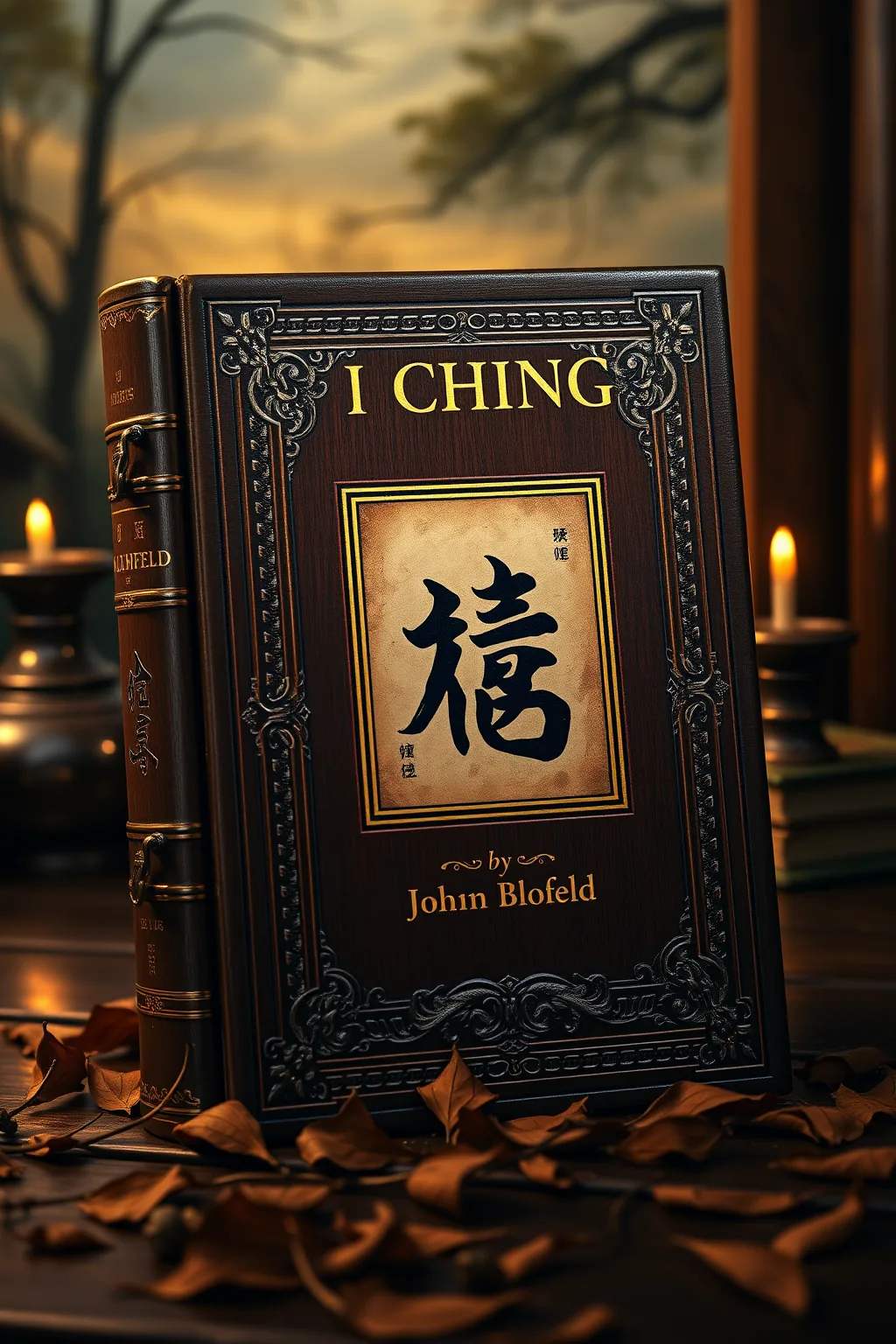
John Blofeld's edition of the I Ching, first published in 1991, offers a sober yet insightful entry into one of humanity's most enduring texts. Blofeld, known for his extensive work on Chinese Buddhism and Taoism, approaches the Book of Changes with a scholar's precision and a practitioner's respect. His translation and commentary, while not as extensive as some academic editions, are commendably clear, particularly in explaining the foundational trigrams and hexagrams. A significant strength lies in his consistent emphasis on the I Ching not merely as a tool for divination, but as a profound philosophical guide to living in accordance with natural patterns. However, readers accustomed to more esoteric or Jungian interpretations might find Blofeld’s approach somewhat understated. The original blurb’s promise of freedom from anxiety and becoming helpfully companionable is well-supported by the text's focus on balance and timely action. The enduring wisdom found in the advice associated with hexagrams like 'The Creative' (Qian) and 'The Receptive' (Kun) remains potent. Blofeld’s edition serves as a solid, accessible introduction for those seeking to understand the I Ching's philosophical depth.
📝 Description
71
The I Ching, a Chinese classic, uses 64 hexagrams to map existence's dynamics.
The I Ching, or Book of Changes, is an ancient Chinese text structured around 64 hexagrams. Each hexagram, built from combinations of eight trigrams (three lines each, broken or unbroken), symbolizes fundamental patterns of change. This system offers a way to understand life's constant flux, positing that all things are interconnected and move through predictable cycles.
This work is for serious students of Chinese philosophy, divination, and comparative religion. It provides a structured approach to introspection and decision-making, going beyond simple advice. Those interested in the philosophical roots of ancient Chinese thought, particularly yin and yang and the Tao, will find it a rich source. The book also suits individuals seeking personal growth who are willing to invest time and careful study.
Attributed to legendary figures and compiled over millennia, the I Ching's earliest strata date to the Western Zhou dynasty. Later commentaries, the Ten Wings, are traditionally linked to Confucius and his disciples. This layered history shows its evolution within Chinese thought, influencing Confucianism and Taoism. It became a cornerstone of Chinese civil service examinations and later influenced Western esoteric traditions, offering a unique system for understanding cosmic order and personal destiny.
💡 Why Read This Book?
• Gain a practical framework for understanding life's inherent flux, as exemplified by the 64 hexagrams, allowing for more adaptive decision-making. • Explore the philosophical underpinnings of yin and yang, the fundamental forces described in the text, to better grasp ancient Chinese cosmology. • Learn to consult the I Ching not just for prediction, but as a method for introspection, drawing wisdom from its ancient commentaries and judgments.
⭐ Reader Reviews
Honest opinions from readers who have explored this book.
❓ Frequently Asked Questions
What is the I Ching and what is its primary purpose?
The I Ching, or Book of Changes, is an ancient Chinese classic comprising 64 hexagrams. Its primary purpose is to provide a system for analyzing patterns of change in life and offering guidance through understanding these dynamics, often used for divination and philosophical reflection.
Who was John Blofeld and what is his contribution to this edition?
John Blofeld was a prominent British writer and translator specializing in Chinese Buddhism, Taoism, and esoteric traditions. In this 1991 edition of the I Ching, he provides a clear translation and commentary, emphasizing its philosophical depth beyond mere fortune-telling.
How are the hexagrams in the I Ching formed?
The 64 hexagrams are formed by combining two trigrams. Each trigram consists of three lines, which can be either solid (yang) or broken (yin). The arrangement of these lines creates unique symbolic representations of different states and processes.
Is the I Ching only used for divination?
While the I Ching is widely used for divination, its original purpose and enduring value lie in its philosophical teachings. It offers a profound system for understanding the natural laws of change and applying this wisdom to ethical living and self-cultivation.
What are the 'Ten Wings' mentioned in relation to the I Ching?
The 'Ten Wings' are a collection of commentaries traditionally attributed to Confucius and his disciples, added to the I Ching over centuries. They provide essential interpretations of the hexagrams and the underlying philosophy, greatly influencing the text's reception.
What is the significance of the yin and yang concept in the I Ching?
Yin and yang represent the fundamental, complementary forces of the universe – darkness and light, passivity and activity, femininity and masculinity. Their dynamic interplay is seen as the driving force behind all change and transformation within the I Ching's cosmology.
🔮 Key Themes & Symbolism
The Immutable Law of Change
The I Ching posits that change is the only constant, governed by an underlying, immutable law. This principle, central to its philosophy, suggests that all events and situations are part of a continuous cycle of transformation. Understanding these patterns, symbolized by the 64 hexagrams, allows individuals to act in harmony with natural processes, fostering wisdom and reducing the impact of unpredictable fortune. The text guides practitioners to recognize the opportune moments for action or stillness, aligning personal will with cosmic rhythms.
Yin and Yang Dynamics
The interplay of yin (passive, dark, feminine) and yang (active, light, masculine) is the fundamental mechanism driving change within the I Ching. These forces are not opposing but complementary, constantly interacting and transforming into one another. The broken (yin) and solid (yang) lines of the trigrams and hexagrams visually represent this dynamic balance. Recognizing the ebb and flow of these energies in personal life and external circumstances is key to navigating challenges and making informed decisions according to the book's principles.
Divination as Introspection
While known as a divinatory text, the I Ching's deeper function is to serve as a tool for self-reflection and philosophical inquiry. Consulting its judgments and images prompts users to examine their situations from multiple perspectives, encouraging a deeper understanding of their own motivations and the forces at play. The goal is not simply to predict the future, but to cultivate inner clarity and wisdom, enabling one to respond to life's circumstances with greater awareness and ethical consideration.
Harmony and Adaptation
A core teaching of the I Ching is the importance of adapting to changing circumstances and maintaining inner harmony. The hexagrams offer counsel on how to act appropriately within specific situations, emphasizing balance and moderation. By studying these archetypal patterns, individuals can learn to flow with events rather than resist them, thereby reducing anxiety and fostering a more peaceful and effective engagement with the world. This proactive adaptation is presented as the path to a more fulfilling life.
💬 Memorable Quotes
Direct passages from the work, attributed to the author.
“The I Ching provides a system of knowledge that makes it possible to analyze the patterns of changes in life governed by the Immutable Law of Change.”
— This highlights the book's primary function: not mere fortune-telling, but a profound framework for understanding the underlying order and cyclical nature of all phenomena, enabling a more conscious engagement with life's transformations.
“Whether we use the I Ching for divination or to study the principles involved with it, if we allow ourselves to be governed by its teachings, we shall enrich the content of our lives.”
— This emphasizes the transformative potential of the I Ching. It suggests that by applying its wisdom, whether through consultation or contemplation, one can achieve a richer, more meaningful existence beyond superficial gains.
“free ourselves from anxiety, and become harmless or even intelligently helpful to others and pleasant companions to ourselves.”
— This aspirational outcome underscores the ethical and psychological benefits of engaging with the I Ching. It points towards a state of inner peace and beneficial interaction with the world, achieved through understanding and aligning with natural principles.
“The work explores the principles involved with it, if we allow ourselves to be governed by its teachings.”
— This suggests that the I Ching's value lies in its underlying principles, which, when adopted as a guide for living, can lead to personal enrichment and improved well-being. It's about internalizing its wisdom.
“The I Ching, probably the oldest book in existence, provides a system of knowledge...”
— This statement points to the immense antiquity and foundational nature of the I Ching, framing it as a primary source of wisdom and a systematic approach to understanding the universe's fundamental workings.
🌙 Esoteric Significance
Tradition
The I Ching holds a unique position, bridging ancient Chinese cosmology, philosophy, and divination. While not strictly Hermetic, Gnostic, or Kabbalistic, it shares with these traditions a concern for cosmic order, symbolic language, and the potential for human insight into universal patterns. Its emphasis on the dynamic interplay of forces (yin/yang) and cyclical change aligns with many esoteric concepts of creation and manifestation. It functions as a primary text within Taoist contemplative practices and has been adopted by various modern esoteric movements seeking archetypal frameworks for understanding reality.
Symbolism
Key symbols include the unbroken line (yang, heaven, active) and the broken line (yin, earth, receptive), which form the trigrams and 64 hexagrams. These are not mere abstract elements but represent the fundamental dualities and their combinations that structure all phenomena. The trigrams themselves, such as K'an (water, danger) and Li (fire, clarity), embody archetypal situations and energies. The hexagrams, like 'The Creative' (Qian) and 'The Receptive' (Kun), serve as symbolic narratives of cosmic and human processes, offering profound commentary on balance, transformation, and appropriate action.
Modern Relevance
Contemporary thinkers and practitioners across diverse fields draw upon the I Ching. Carl Jung famously explored its archetypal psychology, seeing the hexagrams as reflecting unconscious processes. Modern Taoist practitioners continue to use it for spiritual guidance and understanding the Tao. Esotericists and students of comparative mysticism worldwide consult it for its sophisticated symbolic language and its insights into cyclical patterns of existence. Its principles inform various forms of modern divination, mindfulness practices, and philosophical inquiries into order and chaos.
👥 Who Should Read This Book
• Students of comparative religion and ancient philosophy seeking to understand foundational texts of Eastern thought, particularly Chinese cosmology. • Individuals interested in divination practices who desire a system with deep philosophical roots and a focus on ethical guidance beyond simple fortune-telling. • Practitioners of self-cultivation and personal development looking for a structured method to gain insight into life's changes and improve decision-making.
📜 Historical Context
The I Ching's compilation and commentary represent a vast historical sweep within Chinese intellectual traditions. While its earliest strata are rooted in the Western Zhou dynasty (c. 1046–771 BCE), its philosophical development accelerated during the Spring and Autumn (771–476 BCE) and Warring States periods (475–221 BCE). This era saw intense philosophical ferment, with the rise of major schools like Confucianism and Taoism, both of which deeply engaged with and interpreted the I Ching. The 'Ten Wings,' crucial commentaries that shaped the text's philosophical interpretation, are largely attributed to scholars of the late Warring States or early Han Dynasty (206 BCE–220 CE), a period marked by the consolidation of imperial power and the synthesis of earlier philosophical thought. The I Ching became a core part of the Chinese elite's education and was integral to the civil service examinations, solidifying its canonical status. Its influence extended far beyond China, impacting East Asian cultures and, much later, Western esoteric and philosophical circles.
📔 Journal Prompts
The Immutable Law of Change as reflected in the 64 hexagrams: How does this concept apply to a current challenge?
Reflecting on the yin and yang dynamics within a recent decision.
How can the guidance within hexagrams be interpreted as a form of ethical self-cultivation?
The concept of harmony and adaptation: Where in my life can I practice more fluidity?
Analyzing the symbolism of a chosen trigram in relation to personal aspirations.
🗂️ Glossary
Hexagram
A symbol composed of six stacked horizontal lines, each either solid (yang) or broken (yin). There are 64 unique hexagrams in the I Ching, representing fundamental archetypes of situations and processes in the universe.
Trigram
A symbol composed of three stacked lines, each either solid (yang) or broken (yin). There are eight basic trigrams (Pa Kua), which are combined to form the 64 hexagrams.
Yin
In I Ching philosophy, one of the two fundamental, complementary forces. Yin represents the passive, dark, receptive, feminine, and contracting aspects of existence.
Yang
The complementary force to yin. Yang represents the active, light, creative, masculine, and expanding aspects of existence.
The Ten Wings
A set of commentaries traditionally attributed to Confucius and his disciples, which elaborate on the philosophy and structure of the I Ching, significantly influencing its interpretation.
Immutable Law of Change
The core principle of the I Ching, asserting that change is constant and predictable, governed by underlying natural laws. Understanding these laws allows for wiser action.
Divination
The practice of seeking knowledge about the future or the unknown through supernatural means. In the context of the I Ching, it involves consulting the hexagrams for guidance.