The Mayan Ouroboros
 80
80

The Mayan Ouroboros
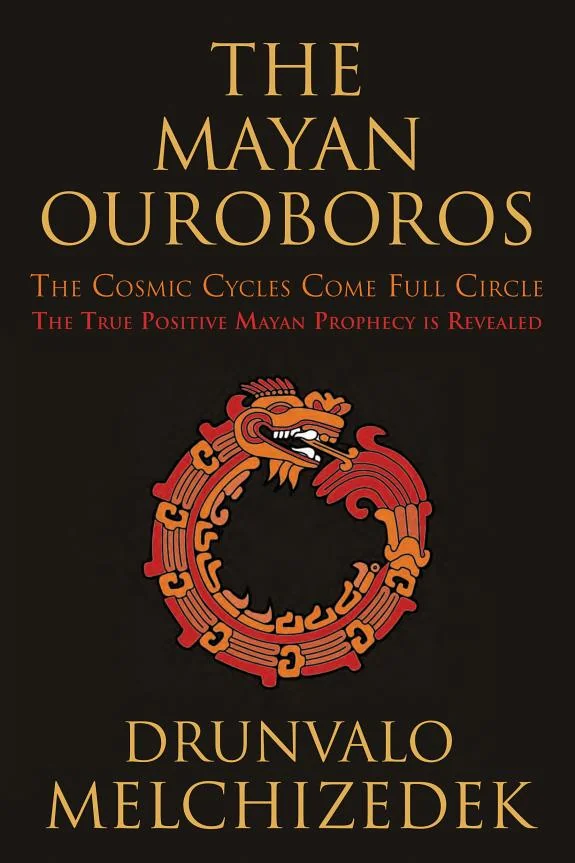
Melchizedek's 'The Mayan Ouroboros' attempts to demystify the 2012 phenomenon by presenting a narrative derived from supposed Mayan elder teachings. The strength lies in its effort to connect with ancient wisdom traditions and offer a non-apocalyptic framework for understanding cyclical time. However, the reliance on channeled or directly conveyed, unverified elder statements makes critical assessment difficult. A particularly interesting section discusses the Ouroboros symbol's relevance to Mayan cyclical cosmology, suggesting a cosmic serpent devouring its tail as a metaphor for the universe's renewal rather than destruction. The limitation is the inherent subjectivity and lack of external validation for the core revelations. It’s a book for those already aligned with Melchizedek’s approach, offering comfort and guidance through esoteric interpretation.
📝 Description
80
Drunvalo Melchizedek's 2012 book interprets Mayan calendar cycles beyond popular speculation.
The Mayan Ouroboros, published in 2012, presents an esoteric view of the Mayan calendar's end cycle. Melchizedek claims to relay insights from Mayan elders, moving past common fears about the 2012 phenomenon. The book focuses on spiritual and energetic shifts expected during this transitional time. It is written for those interested in alternative cosmologies, ancient civilizations, and spiritual transformation. Readers seeking a deeper understanding of Mayan prophecies, particularly those familiar with Melchizedek's prior works, will find this perspective unique. It addresses esoteric knowledge and personal readiness for perceived global changes.
The work emerged during a period of significant public interest in Mayan prophecies surrounding 2012. While media often focused on apocalyptic interpretations, Melchizedek's book offers what it describes as an insider's view, channeling information purportedly from Mayan elders. This era also saw growing interest in pre-Columbian cultures and New Age interpretations of ancient calendars. The book contrasts the Mayan understanding of cyclical time with Western linear perceptions. It frames the 'Mayan End Time' as a significant energetic transition rather than a literal conclusion.
This book fits within the New Age tradition's engagement with ancient Mesoamerican cultures, particularly the Maya. It follows a pattern of reinterpreting calendrical systems and prophecies through a spiritual lens, often seeking hidden meanings beyond conventional historical or archaeological understanding. Melchizedek's work draws on channeling and direct communication claims with indigenous elders, a common trope in esoteric literature aiming to authenticate its teachings. The focus on energetic frequencies and consciousness shifts aligns with broader New Age concepts of transformation occurring around specific temporal markers, like the end of a Mayan calendar cycle.
💡 Why Read This Book?
• Learn specific Mayan perspectives on the 2012 transition, moving beyond popular media speculation to understand the concept of cyclical time as presented by Mayan elders. • Discover unique interpretations of ancient symbols like the Ouroboros, connecting them to energetic shifts and consciousness evolution discussed in the text. • Gain practical guidance for personal spiritual preparation, as outlined by Melchizedek, to navigate perceived global transitions detailed in the book's framework.
⭐ Reader Reviews
Honest opinions from readers who have explored this book.
❓ Frequently Asked Questions
What is the Mayan Ouroboros about in relation to the 2012 prophecies?
The book interprets the 'Mayan End Time' of 2012 not as an apocalypse, but as a significant energetic and spiritual transition, based on alleged teachings from Mayan elders.
Who is Drunvalo Melchizedek and what is his background?
Drunvalo Melchizedek is a spiritual teacher and author known for his work on consciousness, sacred geometry, and ancient traditions, including his previous bestseller 'Serpent of Light'.
Does the book offer practical advice for readers?
Yes, 'The Mayan Ouroboros' provides guidance on how individuals can spiritually prepare for and integrate the energetic shifts associated with the 2012 transitional period.
What makes this book different from other 2012 interpretations?
It claims to offer direct insights from Mayan elders, presented by Melchizedek, offering a perspective distinct from mainstream or purely academic interpretations of Mayan prophecies.
What esoteric traditions does 'The Mayan Ouroboros' draw upon?
The book engages with Mayan cosmology, concepts of cyclical time, and sacred geometry, framing them within a broader esoteric understanding of consciousness and universal cycles.
When was 'The Mayan Ouroboros' first published?
The book was first published on November 1, 2012, placing it directly within the period of intense public focus on Mayan prophecies for that year.
🔮 Key Themes & Symbolism
Cyclical Time vs. Linear Perception
The work contrasts the Mayan understanding of time as cyclical, marked by grand epochs and renewal, with the dominant Western linear view. Melchizedek posits that the 2012 cycle completion represented a shift in consciousness, a 'birth canal' into a new era, rather than an end. This perspective challenges conventional notions of progress and history, framing existence as a series of unfolding cosmic cycles, each with unique energetic signatures and evolutionary potentials for humanity.
The Ouroboros Symbolism
The Ouroboros, the serpent devouring its own tail, is presented as a potent symbol for the cyclical nature of existence and cosmic renewal. In the context of Mayan cosmology, it represents the universe's continuous process of creation, dissolution, and rebirth. Melchizedek interprets this ancient symbol as a key to understanding the transitionary period around 2012, signifying not an end, but the self-contained completion and subsequent regeneration of a cosmic age.
Spiritual Preparedness for Transition
A central theme is the practical aspect of preparing oneself for significant energetic shifts. The book offers guidance derived from Mayan elders on how to align one's consciousness with higher frequencies purportedly accompanying the 2012 transition. This involves internal work, understanding sacred geometry, and fostering a connection with the Earth's energy field, enabling individuals to work through the perceived changes with greater awareness and stability.
Mayan Elder Wisdom
Melchizedek positions 'The Mayan Ouroboros' as a conduit for direct wisdom from contemporary Mayan elders, differentiating it from speculative interpretations. The book emphasizes that the elders' message was not one of doom, but of transformation and the potential for humanity to evolve consciously. This narrative framing lends authority and authenticity to the presented concepts, positioning the work as an esoteric transmission.
💬 Memorable Quotes
Direct passages from the work, attributed to the author.
“The Ouroboros signifies the universe consuming itself to be reborn.”
— This captures the essence of the Ouroboros symbol as presented in the book: a representation of cosmic cycles where endings are intrinsically linked to beginnings, embodying perpetual renewal.
“Prepare your heart and mind for the new frequencies.”
— This interpretation highlights the book's practical advice, urging readers to cultivate inner readiness—both emotional and mental—to harmonize with the energetic shifts predicted around the 2012 period.
“Time is a spiral, not a straight line.”
— This interpretation conveys the book's fundamental view of temporality, suggesting that time, particularly in cosmic and spiritual contexts, operates through recurring patterns and cycles rather than a simple, unidirectional progression.
💡 Key Ideas
Editorial paraphrase of the work's core concepts — not direct quotes.
The Mayan calendar is not an end, but a doorway.
This paraphrased concept suggests that the much-discussed 'end' of the Mayan calendar cycle in 2012 should be understood as a threshold—a point of transition into a new phase of existence rather than a definitive conclusion.
Mayan elders spoke of a shift in consciousness, not global destruction.
This paraphrased concept emphasizes the core message attributed to Mayan elders in the book: that the 2012 event heralded a significant evolution of human awareness, countering apocalyptic predictions.
🌙 Esoteric Significance
Tradition
The work draws heavily from Mesoamerican cosmology, particularly Mayan calendrics and mythology, interpreting them through a modern esoteric and New Age framework. It aligns with traditions that view history as cyclical and emphasize consciousness transformation. While rooted in specific indigenous traditions, its presentation synthesizes these with concepts common in Theosophy and other 20th-century esoteric movements, focusing on energetic shifts and spiritual evolution.
Symbolism
Key symbols include the Ouroboros, representing cyclical completion and renewal, and the Mayan calendar itself, viewed not as a mere timekeeping device but as a map of cosmic epochs. The serpent motif, prevalent in many ancient cultures including Mayan art, is re-contextualized to signify the continuous, self-consuming and self-regenerating nature of universal cycles and consciousness.
Modern Relevance
Contemporary spiritual seekers interested in consciousness studies, sacred geometry, and alternative views of time and history often engage with Melchizedek's work. His emphasis on energetic shifts and personal transformation speaks to practices in modern shamanism, energy healing modalities, and various forms of New Age spirituality that explore humanity's evolving relationship with the cosmos.
👥 Who Should Read This Book
• Students of Mayan cosmology and ancient prophecy seeking interpretations beyond common apocalyptic narratives. • Practitioners of esoteric traditions interested in the symbolic meaning of cyclical time and transformation. • Individuals preparing for personal spiritual growth who are drawn to channeled wisdom and concepts of energetic shifts.
📜 Historical Context
Published in late 2012, 'The Mayan Ouroboros' arrived at the crescendo of global fascination with the Mayan calendar's supposed end date. This period saw a proliferation of books, documentaries, and media discussions, often leaning towards apocalyptic interpretations, exemplified by works like '2012: The World on the Brink' by Pat Robertson. Melchizedek's contribution positioned itself as an alternative, channeling a message purportedly from Mayan elders that emphasized spiritual transition over cataclysm. The book emerged within the New Age movement, which frequently reinterpreted ancient indigenous prophecies through a lens of consciousness evolution. While mainstream archaeology and Mayan scholars largely dismissed the doomsday predictions, the cultural impact of the 2012 phenomenon was significant, creating a receptive audience for esoteric explanations.
📔 Journal Prompts
The Mayan Ouroboros's concept of cyclical time: how does it contrast with your personal experience of time?
Reflection on the Ouroboros symbol: what does its cyclical nature suggest about endings and beginnings in your life?
Mayan elder wisdom: what aspect of spiritual preparation for transition resonates most with you?
The 'Mayan End Time' as a doorway: what new beginnings might this perspective unlock?
Connecting with new frequencies: how can you consciously cultivate inner readiness for change?
🗂️ Glossary
Mayan End Time
A period associated with the completion of a significant cycle within the Mayan Long Count calendar, often interpreted esoterically as a time of profound energetic and consciousness transition.
Ouroboros
An ancient symbol depicting a serpent or dragon eating its own tail, representing cyclicality, renewal, and the eternal return. In this context, it symbolizes the universe's self-consumption and rebirth.
Cyclical Time
A concept of time perceived as recurring patterns and cycles, as opposed to a linear progression. The Mayan calendar is a prime example of a cyclical time system.
Energetic Shifts
Changes in the vibrational frequencies of consciousness or the environment, believed by some esoteric traditions to occur during significant cosmic or planetary transitions.
Consciousness Evolution
The idea that human consciousness progresses through stages of development, expanding its awareness and understanding, often accelerated during periods of global transition.
Mayan Elders
Individuals considered spiritual authorities or knowledge keepers within Mayan communities, whose wisdom regarding cosmology and time is presented in the book.
Sacred Geometry
The study of geometric forms and patterns believed to hold symbolic, spiritual, or mystical significance, often seen as the underlying structure of creation.
This book appears in 1 collection
🔮 Readers Also Liked
Browse all →









From the “Flower of Life” Collection
View all →






More Free Occult Philosophy Books
View all →