Light on prāṇāyāma

 71
71

Light on prāṇāyāma
B. K. S. Iyengar's 'Light on Prāṇāyāma' is an exhaustively detailed exploration of yogic breathwork, a formidable undertaking that demands serious attention from its readers. Iyengar's strength lies in his unparalleled clarity regarding technique; the precise anatomical and physiological explanations for each prāṇāyāma are astonishingly thorough, making the often-subtle art of breath control tangible. A particularly striking section details the physiological impact of Ujjayi pranayama, breaking down the subtle constriction in the larynx and its resultant effect on breath flow and internal heat. However, the book's sheer density can be its limitation. For those without a robust foundation in yoga or a high tolerance for technical instruction, the text might feel overwhelming, bordering on prescriptive. It is a manual for mastery, not a gentle invitation. Ultimately, 'Light on Prāṇāyāma' stands as an indispensable, albeit challenging, reference for dedicated practitioners seeking profound technical understanding of yogic breath.
📝 Description
71
B. K. S. Iyengar's 1985 book, Light on Prāṇāyāma, details the science and practice of yogic breathing.
Published in 1985, Light on Prāṇāyāma systematically details the science and practice of yogic breathing techniques, known as prāṇāyāma. Iyengar provides detailed instructions, anatomical explanations, and philosophical context for each method. His approach centers on precision, correct alignment, and the integration of breath control with physical postures (āsana). This book functions as both a practical manual for dedicated practitioners and an academic study of a key yogic component.
This text is for serious yoga students, especially those familiar with āsana who want to deepen their practice. Yoga teachers looking to improve their knowledge and instruction of prāṇāyāma will find it valuable. Individuals interested in the physiological and psychological effects of controlled breathing, including those studying somatic practices or the connection between breathwork and consciousness, will find significant content. It is not an introductory text but a focused study for committed practitioners.
Light on Prāṇāyāma emerges from the broader tradition of Hatha Yoga, which emphasizes physical practices to prepare the body for deeper spiritual work. Prāṇāyāma, the control of vital life force through breath, is a central pillar of this tradition. Iyengar's work grounds these practices in detailed physiological understanding, making explicit the energetic and mental effects described in classical yogic texts. It connects the physical manipulation of breath to its role in cultivating awareness and directing consciousness, a common goal in yogic philosophy.
💡 Why Read This Book?
• Gain precise instructions for regulating vital life force (prāṇa) through specific breathing techniques, moving beyond superficial breath awareness as detailed in Chapter 2's exploration of Nadi Shodhana. • Understand the physiological mechanics and subtle energetic effects of various prāṇāyāma, such as the detailed explanations of Kumbhaka (breath retention) and its impact on the nervous system. • Cultivate disciplined yogic practice by learning the preparatory āsana and bandha required for safe and effective prāṇāyāma, as outlined in the initial sections of the book.
⭐ Reader Reviews
Honest opinions from readers who have explored this book.
❓ Frequently Asked Questions
What is the primary focus of B. K. S. Iyengar's 'Light on Prāṇāyāma'?
The book's primary focus is the systematic exploration and detailed instruction of prāṇāyāma, the yogic science of breath control. It delves into the techniques, physiological effects, and philosophical underpinnings of these practices, as first published in 1985.
Is 'Light on Prāṇāyāma' suitable for absolute beginners in yoga?
No, this book is best suited for practitioners who have a solid foundation in yoga āsana and a desire to deepen their understanding of breathwork. It offers advanced instruction and requires a degree of physical and mental preparedness.
What makes Iyengar's approach to prāṇāyāma unique?
Iyengar's approach is characterized by its meticulous attention to detail, anatomical accuracy, and the integration of prāṇāyāma with physical postures (āsana) and energy locks (bandha), providing a rigorous and systematic method for practice.
How does 'Light on Prāṇāyāma' relate to 'Light on Yoga'?
'Light on Prāṇāyāma' is a focused sequel to 'Light on Yoga' (1966). While 'Light on Yoga' covered a broad range of yogic subjects, this book specifically isolates and deeply explores the complex subject of breath control techniques.
What are some key benefits of practicing prāṇāyāma as described in the book?
The book outlines benefits such as improved respiratory function, enhanced mental clarity, regulation of the nervous system, and the cultivation of prāṇa (life force), essential for overall well-being and spiritual development.
Can this book be used for self-study of prāṇāyāma?
Yes, due to its comprehensive nature and detailed instructions, it can serve as a valuable self-study guide for dedicated practitioners. However, initial guidance from a qualified teacher is recommended for safety and proper technique.
🔮 Key Themes & Symbolism
The Science of Breath Control
This work meticulously dissects prāṇāyāma not merely as a spiritual practice but as a sophisticated physiological and psychological discipline. Iyengar details the mechanics of inhalation (pūṛaka), exhalation (recaka), and retention (kumbhaka), illustrating how precise control over breath directly influences the nervous system, mental states, and overall vitality. The book emphasizes the scientific underpinnings, making the subtle energies of prāṇa accessible through rigorous practice and understanding, moving beyond anecdotal claims to demonstrable effects.
Integration of Āsana and Prāṇāyāma
A central tenet explored is the indispensable link between physical postures (āsana) and breath control. Iyengar argues that a stable, flexible body, cultivated through āsana, is a prerequisite for safe and effective prāṇāyāma. The book dedicates significant attention to preparatory postures and the correct alignment necessary to support the demanding practices of breath retention and regulation. This integration ensures that the body is prepared to handle the increased energy and heightened awareness that prāṇāyāma cultivates.
Subtle Body and Consciousness
Beyond the physical, the text studies how prāṇāyāma directly impacts the subtle body and consciousness. Iyengar explains the concept of nāḍīs (energy channels) and how breathwork purifies them, facilitating the free flow of prāṇa. The regulation of breath is presented as a direct pathway to calming the mind, enhancing concentration, and ultimately, facilitating deeper states of meditation and self-awareness. The book maps the transition from physical control to mental and spiritual expansion.
The Art of Kumbhaka
A significant portion of the book is dedicated to the practice of kumbhaka, or breath retention. Iyengar provides detailed instructions and crucial warnings regarding this advanced technique. He elucidates the different types of kumbhaka, their specific physiological effects, and the importance of mastering simpler breath control before attempting prolonged retention. The careful exposition of kumbhaka highlights the power and potential risks involved, underscoring the need for discipline and expert guidance.
💬 Memorable Quotes
Direct passages from the work, attributed to the author.
“The practice of āsana purifies the body, while the practice of prāṇāyāma purifies the mind.”
— This statement highlights the complementary roles of physical postures and breath control in yogic development. It suggests that āsana addresses physical blockages and prepares the body, creating a stable foundation for prāṇāyāma to then work on the subtler, mental and energetic aspects.
“Prāṇa is the vital energy that sustains life; its control is the control of life itself.”
— This emphasizes the profound significance of prāṇāyāma. It posits that by learning to regulate one's breath, one gains mastery over the fundamental life force, influencing health, consciousness, and the very essence of existence.
“A student must master the art of breathing before attempting prolonged breath retention (kumbhaka).”
— This underscores Iyengar's methodical approach. It warns against rushing into advanced techniques like kumbhaka without first establishing a solid understanding and consistent practice of basic breathing exercises, ensuring safety and efficacy.
“The lungs are the twin seats of prāṇa.”
— This anatomical and energetic observation points to the central role of the respiratory system in housing and circulating the vital life force. It underscores why focusing on breath is fundamental to prāṇāyāma practice.
“Controlled breathing calms the nervous system and stills the fluctuations of the mind.”
— This interpretation links the physical act of regulated breathing to its profound effects on mental well-being. It explains how techniques taught in the book can lead to reduced stress, increased focus, and mental tranquility.
🌙 Esoteric Significance
Tradition
While rooted in the classical yogic traditions of India, Iyengar's approach to prāṇāyāma can be seen as an applied science within the broader framework of Raja Yoga. It departs from purely devotional or strictly scriptural interpretations by emphasizing empirical observation, anatomical accuracy, and systematic progression. This work fits within the lineage of yogic masters who sought to codify and transmit practices for widespread benefit, making advanced techniques accessible through clear instruction rather than solely relying on esoteric transmission.
Symbolism
The primary symbols in this work are inherently tied to the practice itself. Prāṇa, the vital life force, is often symbolized by breath, representing the invisible energy that animates all beings. The nāḍīs, or energy channels, are conceptualized as a network through which prāṇa flows, akin to a subtle circulatory system. Their purification through prāṇāyāma aims to clear energetic blockages, symbolized by the removal of obstructions to allow for unimpeded flow and heightened consciousness.
Modern Relevance
Iyengar's detailed methodology for prāṇāyāma continues to influence contemporary yoga practices globally. Modern yoga studios and teachers often draw directly from his precise instructions for breathwork, integrating them into their classes. Furthermore, the book's emphasis on the mind-body connection and the physiological impact of controlled breathing speaks to current trends in mindfulness, stress reduction, and somatic therapies, bridging ancient yogic science with modern wellness approaches.
👥 Who Should Read This Book
• Dedicated yoga practitioners seeking to move beyond basic āsana and systematically study the profound art of yogic breath control, understanding its physiological and energetic dimensions. • Yoga teachers aiming to enhance their instructional capabilities in prāṇāyāma, ensuring safe, effective, and anatomically informed guidance for their students. • Individuals interested in the science of breathwork, somatic practices, and the direct impact of controlled respiration on mental clarity, nervous system regulation, and overall vitality.
📜 Historical Context
Published in 1985, 'Light on Prāṇāyāma' emerged at an important moment in yoga's Western trajectory. The preceding decades had seen yoga, particularly āsana, gain significant traction, often presented through simplified or Westernized lenses. B. K. S. Iyengar, however, consistently championed a rigorous, detailed, and anatomically precise approach. His 1966 book, 'Light on Yoga,' had already established his methodical style. 'Light on Prāṇāyāma' followed, focusing intensely on the often-overlooked or superficially taught discipline of breath control. It arrived when interest in yoga's deeper aspects was growing, yet many instructors lacked comprehensive training in prāṇāyāma. Iyengar's work directly addressed this gap, offering a systematic, encyclopedic guide that stood in contrast to more philosophical or esoteric interpretations prevalent in some circles. Its reception solidified Iyengar's position as a paramount authority on yogic pedagogy, influencing generations of teachers and practitioners seeking depth and precision.
📔 Journal Prompts
The meticulous sequencing of prāṇāyāma techniques, as presented in Chapter 5, and its relation to building breath capacity.
The physiological descriptions of Kumbhaka (breath retention) and its perceived effects on internal states.
The preparatory Āsana outlined for safe practice of Prāṇāyāma, and how they support breath control.
The concept of Prāṇa as described in the introductory chapters and its distinction from ordinary breath.
The stated benefits of Nadi Shodhana prāṇāyāma for mental clarity and energetic balance.
🗂️ Glossary
Prāṇāyāma
Literally 'life-force extension' or 'breath control'. It is the yogic practice of regulating breath, involving conscious control over inhalation, exhalation, and retention to influence vital energy (prāṇa).
Āsana
Physical postures or poses in yoga, typically practiced to prepare the body for deeper meditative states by improving strength, flexibility, and stability.
Kumbhaka
The practice of breath retention in prāṇāyāma, involving holding the breath after inhalation (ābhyantara kumbhaka) or exhalation (bāhya kumbhaka).
Nadī Shodhana
Alternate nostril breathing. A prāṇāyāma technique designed to purify the energy channels (nāḍīs) and balance the flow of prāṇa, promoting mental calm.
Ujjayi
A specific type of prāṇāyāma characterized by a gentle constriction in the throat, producing a soft audible sound. It is often called 'victorious breath' or 'oceanic breath'.
Bandha
Energy locks or muscular contractions used in advanced prāṇāyāma and āsana to direct and contain the flow of prāṇa within the body.
Prāṇa
The vital life force or universal energy that permeates all existence. In yoga, it is primarily associated with breath but extends to all forms of energy and consciousness.
🔮 Readers Also Liked
Browse all →









More by B. K. S. Iyengar
All books →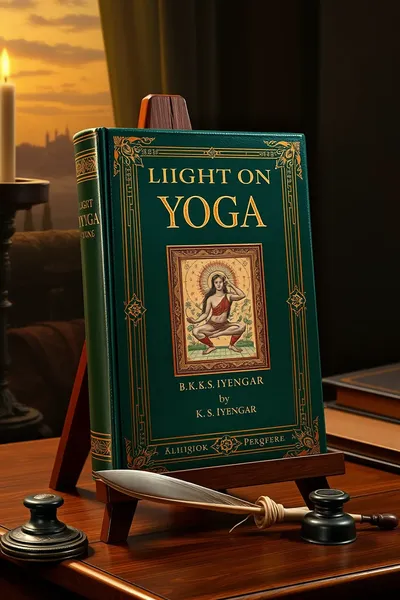





More Free Occult Philosophy Books
View all →