Zen Classics
 83
83

Zen Classics
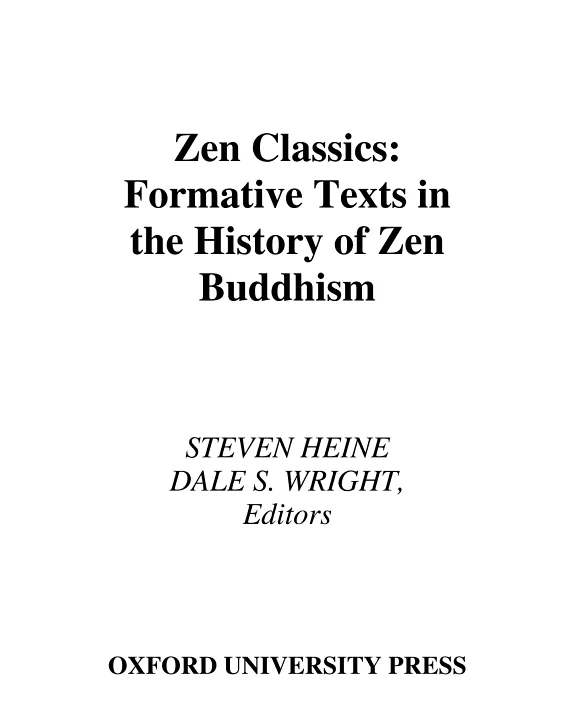
Steven Heine and Dale S. Wright's 'Zen Classics' provides an essential, if academically rigorous, exploration of the Korean and Japanese texts that solidified Zen Buddhism. The strength of this collection lies in its meticulous selection and presentation of primary source material, offering scholars and dedicated students direct access to the writings that codified Zen practice. Its focus on the Korean and Japanese traditions, often less emphasized in Western introductions, is particularly commendable. However, the book's academic density may present a barrier for casual readers; it demands a certain familiarity with Buddhist terminology and historical context. A notable passage might be the examination of how early Korean masters transmitted Chan teachings, laying groundwork for later Japanese developments, demonstrating the cross-cultural flow of ideas. Ultimately, 'Zen Classics' is an indispensable scholarly resource for understanding Zen's foundational textual history.
📝 Description
83
Zen Classics, published in 2006, compiles foundational Korean and Japanese Zen Buddhist texts.
Steven Heine and Dale S. Wright's 2006 compilation, Zen Classics, gathers key scriptures that shaped Korean and Japanese Zen Buddhism. This volume focuses on writings instrumental in the tradition's development and maturation in East Asia, presenting a concentrated study of texts that brought Zen to its classical form. It follows earlier works by the editors, such as 'The Koan' and 'The Zen Canon'.
The book is intended for serious students of Zen, comparative religion scholars, and those interested in East Asian intellectual history. It is particularly useful for readers who have already engaged with introductory Zen literature and seek a deeper textual understanding of the tradition's formative period. Academic researchers and practitioners aiming to ground their understanding in original sources will find significant value here.
Zen Buddhism, evolving from Chinese Chan, saw significant development in Korea and Japan from the 12th century. This period involved intense philosophical inquiry and the codification of practices defining Zen for centuries. The texts in Zen Classics represent the culmination of these efforts, connecting earlier Buddhist philosophies with the distinct meditative and koan-focused practices of Zen. The work contextualizes writings by figures like Dōgen and Hakuin within this lineage.
💡 Why Read This Book?
• Gain direct textual engagement with the formative writings of Korean and Japanese Zen, moving beyond secondary interpretations. Understanding the specific transmission of Chan to Korea in the 12th century provides crucial context not found in general overviews. • Explore the development of key Zen practices and philosophical concepts as articulated by masters like those featured in the texts, offering a concrete understanding of satori and the koan system. • Appreciate the historical and cultural factors that shaped Zen's unique identity in East Asia, as detailed by the specific scholarship within the 2006 compilation.
⭐ Reader Reviews
Honest opinions from readers who have explored this book.
❓ Frequently Asked Questions
What is the primary focus of Zen Classics regarding geographical origin?
Zen Classics concentrates primarily on texts originating from Korea and Japan. These regions were instrumental in bringing the Zen tradition to its classical fruition, and the book highlights scriptures and writings from these areas.
Who are the editors of Zen Classics and when was it first published?
The book was edited by Steven Heine and Dale S. Wright and was first published in 2006. It functions as a companion volume to their earlier works on Zen.
What kind of reader would benefit most from Zen Classics?
This book is best suited for serious students of Zen Buddhism, scholars of comparative religion, and those interested in East Asian intellectual history who seek a deep textual understanding of Zen's development.
Does Zen Classics include texts from China?
While Zen originated in China (as Chan Buddhism), this specific volume, Zen Classics, focuses on the texts from Korea and Japan that represent the tradition's maturation and codification in those regions.
How does Zen Classics relate to 'The Koan' and 'The Zen Canon'?
Zen Classics is a companion volume to 'The Koan' and 'The Zen Canon'. It complements these works by concentrating on a specific subset of foundational texts, particularly those from Korea and Japan.
What are some of the core concepts explored in Zen Classics?
The book explores core Zen concepts such as enlightenment (satori), the master-disciple relationship, and the use of koans. It also examines the transmission of Buddhist teachings across cultures.
🔮 Key Themes & Symbolism
Textual Transmission
This volume meticulously traces the lineage of Zen Buddhist thought through its key written documents. It emphasizes how scriptures and commentaries, originating from China, were adapted, translated, and further developed in Korea and Japan. The work highlights the specific textual innovations and interpretations that occurred during the 12th century and beyond, illustrating the dynamic process of knowledge transfer and the establishment of distinct national Zen traditions. Understanding this transmission is crucial for grasping the evolution of Zen philosophy and practice.
Codification of Practice
Zen Classics looks at the specific writings that formalized Zen practices, distinguishing them from other Buddhist schools. Central to this is the role of the koan, a paradoxical riddle or question used to break down intellectual barriers and foster direct insight. The book examines how masters employed these methods and how their teachings were recorded, providing a textual basis for understanding the meditative and experiential dimensions of Zen as it matured in East Asia.
Korean and Japanese Zen
The primary focus on Korean and Japanese texts distinguishes this compilation. It showcases how Zen, initially Chan Buddhism from China, took root and evolved uniquely within these distinct cultural landscapes. By presenting foundational materials from these regions, the book allows readers to appreciate the specific contributions of Korean and Japanese masters to the broader Zen tradition and understand the historical forces that shaped its classical form.
Enlightenment and Insight
Central to Zen is the concept of enlightenment, or satori, a direct, non-conceptual realization of reality. Zen Classics explores this theme through the texts that explicate its nature and the methods for its attainment. The writings often detail the master-disciple dialogue, the sudden nature of insight, and the practical application of awakened understanding in daily life, offering a textual window into the ultimate aims of Zen practice.
💬 Memorable Quotes
Direct passages from the work, attributed to the author.
“Texts from Korea and Japan that brought the Zen tradition to fruition.”
— This concise statement frames the book's core objective: to present the essential writings that defined Zen Buddhism in its classical East Asian context, emphasizing its mature development in these specific cultural spheres.
“A companion volume to 'The Koan' and 'The Zen Canon'.”
— This positioning highlights the book's role within a larger scholarly project, suggesting it offers a specialized focus that complements broader explorations of Zen literature and core practices like koan study.
“Concentrates primarily on texts from Korea and Japan.”
— This clarifies the specific geographical and textual scope, signaling that the collection is not a general overview of all Zen literature but a focused study on the formative contributions from these two influential regions.
“The Zen tradition brought to fruition.”
— This phrase suggests the book contains material representing the peak or most developed stage of Zen Buddhism as it manifested in East Asia, focusing on texts from its classical period.
“Companion volume focusing on texts that crystallized Zen.”
— This emphasizes the book's function in supporting other works on Zen, while specifically highlighting its content as crucial documents that solidified the tradition's philosophical and practical frameworks.
🌙 Esoteric Significance
Tradition
While Zen Buddhism itself is not typically categorized within Western esoteric traditions like Hermeticism or Kabbalah, its emphasis on direct, non-conceptual realization and the cultivation of inner awareness aligns with certain mystical and contemplative lineages. This work fits within the broader esoteric interest in achieving altered states of consciousness and understanding ultimate reality beyond empirical or rational frameworks. It departs from dogmatic religious structures by focusing on personal experience and the immediate apprehension of truth.
Symbolism
Key symbols within Zen literature often relate to the mind and its potential. The 'empty mind' (mushin) is a potent concept representing a state free from discursive thought and attachment, crucial for insight. The 'moon' is frequently used as a metaphor for the enlightened mind, with the ripples on the water representing the disturbances of ordinary consciousness. The 'ox' in the Zen ox-herding pictures symbolizes the practitioner's journey toward enlightenment and their eventual integration with the true nature of reality.
Modern Relevance
Contemporary mindfulness practices, secularized meditation techniques, and certain branches of transpersonal psychology draw heavily on Zen principles and texts. Thinkers and practitioners interested in non-dual awareness, the nature of consciousness, and the potential for profound personal transformation continue to find relevance in the classical Zen literature presented here. The emphasis on direct experience over dogma appeals to modern seekers looking for practical methods of self-cultivation and spiritual insight.
👥 Who Should Read This Book
• Students of East Asian religions: Researchers and scholars seeking to understand the specific textual foundations and historical development of Korean and Japanese Zen Buddhism beyond general overviews. • Contemplative practitioners: Individuals engaged in meditation and mindfulness practices who wish to explore the historical roots and textual sources of Zen's emphasis on direct experience and insight. • Comparative philosophy enthusiasts: Readers interested in tracing the evolution of Buddhist thought and how distinct schools like Zen emerged through textual transmission and adaptation across cultures.
📜 Historical Context
Zen Buddhism's trajectory from its Chinese Chan origins to its distinct Korean and Japanese forms represents a significant intellectual and spiritual migration. By the 12th century, Korean Buddhism was grappling with the integration of Chan, a process that would later be mirrored and amplified in Japan. 'Zen Classics', published in 2006, situates itself within this historical arc by focusing on the texts from the 12th century onwards that codified Zen practice and philosophy in Korea and Japan. This era saw the rise of influential masters whose writings would become canonical. The work implicitly engages with the broader field of East Asian Buddhism, showing how Zen diverged from other schools through its emphasis on meditation and direct experience. Unlike the more scholastic traditions, Zen's formative texts often prioritized experiential insight, a characteristic that distinguished it. The compilation serves to illuminate this specific development, building upon earlier scholarship that mapped Zen's broader transmission.
📔 Journal Prompts
The transmission of Chan teachings to Korea and Japan.
Koan use as a method for breaking down intellectual barriers.
The concept of 'mushin' or empty mind in Zen practice.
The master-disciple relationship within classical Zen texts.
The symbolic representation of enlightenment in Zen literature.
🗂️ Glossary
Satori
A Japanese Buddhist term for enlightenment or awakening. It refers to a deep, intuitive understanding or direct experience of the true nature of reality, often achieved suddenly.
Koan
A paradoxical anecdote or riddle used in Zen Buddhism to provoke enlightenment or to demonstrate the inadequacy of logical reasoning. It is a central tool in Rinzai Zen practice.
Chan Buddhism
The Chinese precursor to Zen Buddhism. Chan emphasizes meditation and direct experience of enlightenment, often transmitted from master to disciple outside of scripture study.
Mushin
A Japanese Zen term meaning 'no mind' or 'mind without mind'. It describes a state of consciousness where the mind is free from discursive thought, ego, and emotional disturbance, allowing for spontaneous and intuitive action.
Rinzai Zen
One of the two major schools of Zen Buddhism in Japan (the other being Sōtō). Rinzai Zen is known for its emphasis on koan study and sudden enlightenment.
Dōgen
A Japanese Buddhist monk and philosopher (1200–1253) who founded the Sōtō school of Zen in Japan. He is known for his profound writings on meditation and the nature of reality.
Hakuin Ekaku
An influential Japanese Zen Buddhist monk (1686–1769) of the Rinzai school, credited with reviving the practice of koan study and profoundly shaping modern Zen.
This book appears in 1 collection
🔮 Readers Also Liked
Browse all →









From the “Zen Buddhism” Collection
View all →








More Free Occult Philosophy Books
View all →




![Reiki - Manual Original del Dr. Mikao Usui [Spanish]](/img/thumb/reiki-manual-original-del-dr-mikao-usui-spanish-f-arjava-petter-551356.webp)