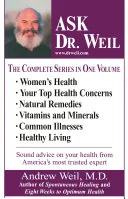
Ask Dr. Weil Omnibus #1
 73
73

Ask Dr. Weil Omnibus #1
Andrew Weil's "Ask Dr. Weil Omnibus #1" presents a broad spectrum of his early thought on integrative health, distilled from his widely popular online query-and-answer sessions. The strength lies in its accessibility; Weil translates complex medical ideas and alternative healing modalities into digestible advice for the general public. He consistently champions the body's innate healing capabilities, a concept he also explored in his 1995 bestseller, *Spontaneous Healing*. A notable limitation, however, is the inherent fragmentation of an omnibus format derived from distinct online entries, which can lead to some repetition and a lack of deep dives into single topics. For instance, the recurring emphasis on botanical remedies, while practical, sometimes feels more like a catalog of suggestions than a thorough exploration of their mechanisms or contraindications within a specific ailment.
The collection offers a valuable snapshot of the burgeoning integrative medicine movement in the late 1990s. It serves as a practical, if somewhat unsystematic, guide to adopting healthier lifestyle habits. Ultimately, this omnibus functions as a foundational text for those new to Weil's philosophy, providing a wide-ranging overview of his approach to natural healing.
📝 Description
73
Andrew Weil, M.D.'s early "Ask Dr. Weil" Q&A series is compiled in this 1998 omnibus.
This omnibus gathers the initial "Ask Dr. Weil" books, which began as a popular online Q&A on HotWired Network in 1998. It serves as a broad guide to integrative health. Weil draws on his medical training and his study of traditional and unconventional healing methods. The book addresses many health issues, blending standard medical knowledge with alternative and complementary ideas. It is for people who want a wider view of health beyond standard Western medicine. The book appeals to those interested in self-care, natural treatments, and understanding the body's own healing power. Readers familiar with Weil's earlier books like "Spontaneous Healing" will find practical advice here.
The "Ask Dr. Weil" series appeared in the late 1990s, a time of rising public interest in alternative and complementary medicine in the US. Weil was a key figure in popularizing these ideas, promoting an "integrative" approach that merged the best of conventional and alternative therapies. His work gained significant attention and his website became a major health resource. This collection focuses on self-healing, highlighting the body's natural capacity for balance. It discusses how lifestyle, diet, stress, and natural remedies contribute to health. Weil's approach emphasizes prevention and encourages individuals to actively manage their own well-being.
Published in the late 1990s, this collection emerged as the public's interest in alternative and complementary medicine grew. Andrew Weil was instrumental in popularizing these concepts, advocating for an "integrative" approach that combined conventional medical understanding with traditional and unconventional healing practices. His work offered a counterpoint to purely allopathic models, emphasizing the body's innate intelligence and the role of lifestyle in promoting wellness. This was part of a broader cultural shift towards holistic health and personal empowerment in healthcare decisions.
💡 Why Read This Book?
• Gain actionable strategies for harnessing your body's natural healing abilities, as detailed in the discussions stemming from Dr. Weil's 1998 online platform, demonstrating practical self-care. • Understand the foundational principles of integrative medicine as popularized by Dr. Weil, a key figure who began disseminating this approach widely in the 1990s, offering a historical perspective. • Discover practical advice on a wide range of health topics, from diet to stress management, informed by Dr. Weil's extensive research into both conventional and traditional healing systems, providing concrete lifestyle adjustments.
⭐ Reader Reviews
Honest opinions from readers who have explored this book.
❓ Frequently Asked Questions
What is the origin of the "Ask Dr. Weil" series?
The "Ask Dr. Weil" series originated from a popular online Q&A column launched by Dr. Andrew Weil on the HotWired Network in 1998, responding to significant reader interest following his bestselling books.
What is the primary focus of "Ask Dr. Weil Omnibus #1"?
This omnibus focuses on integrative health, emphasizing the body's self-healing capacity and offering advice that combines conventional medicine with alternative and complementary therapies.
When was the "Ask Dr. Weil" content first published?
The content compiled in this omnibus was first published starting in 1998, reflecting health advice and discussions from that era.
Does the book cover specific medical conditions?
Yes, the book addresses a wide range of common health concerns and questions submitted by readers, providing Dr. Weil's perspective on managing them.
Is "Ask Dr. Weil Omnibus #1" suitable for medical professionals?
While offering valuable insights into integrative health, its primary audience is the general public seeking to understand and apply these principles to their own well-being.
What makes Dr. Weil's approach 'integrative'?
Dr. Weil's approach is 'integrative' because it seeks to combine the best of conventional Western medicine with evidence-based alternative and complementary therapies, prioritizing a holistic view of health.
🔮 Key Themes & Symbolism
The Body's Innate Healing
A central tenet of Weil's philosophy, this theme posits that the human body possesses a remarkable, inherent ability to heal itself when provided with the right conditions. The omnibus explores how lifestyle, diet, and stress management can either support or impede this natural process. It encourages readers to view symptoms not just as problems to be suppressed but as signals from the body, guiding them toward a more balanced state. This perspective shifts the focus from external intervention to empowering the individual's internal resources for recovery and sustained wellness.
Integrative Medicine Principles
This collection serves as an early popularizer of integrative medicine, a field that combines conventional medical treatments with complementary and alternative therapies. Weil advocates for a holistic approach, considering physical, mental, emotional, and spiritual aspects of health. The Q&A format allows for discussions on diverse topics, from nutrition and exercise to the use of herbs and mind-body techniques, presenting a unified view of health that transcends traditional disciplinary boundaries.
Empowerment Through Knowledge
By answering a multitude of reader questions, the "Ask Dr. Weil" series aims to clarify health and wellness, empowering individuals with practical knowledge. Weil breaks down complex medical information and explains the rationale behind various natural healing strategies. This emphasis on education encourages readers to become active participants in their healthcare decisions, fostering a sense of agency and responsibility for their own well-being, moving away from passive reliance on medical authority.
Lifestyle as Medicine
The omnibus consistently highlights the lasting impact of daily habits on health outcomes. Topics range from the importance of specific dietary choices, such as incorporating more whole foods, to the benefits of regular physical activity and effective stress-reduction techniques like meditation. Weil presents these lifestyle factors not as mere adjuncts to medical care but as potent forms of 'medicine' in themselves, capable of preventing illness and promoting robust health.
💬 Memorable Quotes
Direct passages from the work, attributed to the author.
“Integrative medicine combines the best of conventional and alternative approaches.”
— This interpretation reflects Weil's foundational principle of drawing from diverse healing modalities to create a comprehensive and personalized approach to patient care.
“Dietary choices significantly impact overall health and disease prevention.”
— This statement highlights the emphasis placed on nutrition within Weil's framework, suggesting that food is a primary tool for both maintaining wellness and combating illness.
“Natural remedies can complement conventional medical treatments.”
— This reflects Weil's pragmatic approach, suggesting that traditional or natural therapies have a role to play alongside standard medical interventions when used appropriately.
💡 Key Ideas
Editorial paraphrase of the work's core concepts — not direct quotes.
The body has a remarkable capacity for self-healing.
This paraphrased concept captures Weil's core belief that our physiology is inherently designed to repair and maintain itself, provided we create optimal internal and external conditions.
Stress can negatively affect the body's ability to heal.
This paraphrased concept points to the mind-body connection central to Weil's philosophy, underscoring the importance of managing psychological states for physical recovery.
🌙 Esoteric Significance
Tradition
While not strictly belonging to a single esoteric lineage, Weil's work draws heavily from the principles found in vitalist philosophies and traditional healing systems worldwide, which have often been considered esoteric. His emphasis on the body's inherent life force and its capacity for self-regulation echoes concepts found in Hermeticism (like the principle of 'As Above, So Below' applied to internal balance) and various forms of folk medicine and shamanism. He bridges these ancient understandings with modern scientific inquiry, creating a unique secularized approach to natural healing that appeals to a broad audience.
Symbolism
The primary 'symbol' within Weil's work is the body itself, viewed not just as a biological machine but as a complex, intelligent organism capable of profound self-correction. The concept of 'balance' is also a key motif, representing homeostasis in physiological terms and harmony in a broader sense, aligning with the alchemical pursuit of equilibrium. Furthermore, the 'natural world' – including plants, food, and clean environments – functions symbolically as a source of healing and vitality, representing a return to primal, restorative forces.
Modern Relevance
Dr. Weil's foundational work in popularizing integrative health continues to influence contemporary wellness trends and practices. Modern proponents of functional medicine, naturopathy, and holistic health coaching owe a debt to his early advocacy. Thinkers and practitioners focusing on gut health, the microbiome, mind-body interventions, and the use of adaptogenic herbs often build upon the groundwork laid by Weil's accessible explanations. His approach remains relevant for individuals seeking to proactively manage their health through lifestyle and natural means in an increasingly complex healthcare landscape.
👥 Who Should Read This Book
• Individuals new to integrative health practices seeking a foundational understanding of Dr. Weil's philosophy and practical advice on self-care. • Readers who enjoyed Dr. Weil's earlier books like *Spontaneous Healing* and want a comprehensive compilation of his initial online guidance. • Anyone interested in exploring the connection between lifestyle, diet, and natural healing beyond the scope of conventional Western medicine.
📜 Historical Context
The "Ask Dr. Weil" series emerged in the late 1990s, a period marked by a significant surge in public interest in alternative and complementary medicine. This era saw a growing dissatisfaction with the perceived limitations of conventional Western medicine and a desire for more holistic and patient-centered approaches. Dr. Andrew Weil, already a recognized voice through books like *Spontaneous Healing* (1995), became a leading popularizer of these ideas. His online platform, launched in 1998 on HotWired, tapped into this burgeoning demand. This movement was often viewed with skepticism by the established medical community, which sometimes criticized such approaches as unproven or pseudoscientific. However, Weil's work gained widespread acceptance, influencing public health discourse and contributing to the legitimization of integrative medicine. He engaged with a public eager for information beyond the standard medical paradigm, contrasting with purely pharmaceutical-driven solutions.
📔 Journal Prompts
Reflecting on the body's self-healing capacity, what is one small change you can implement to better support it?
Consider the concept of 'integrative medicine'; how might you apply its principles to a current health concern?
Analyze the role of stress in your life, drawing parallels to Dr. Weil's discussions on its impact on healing.
Identify one dietary recommendation from the 'Ask Dr. Weil' content that you can realistically incorporate this week.
Evaluate your current approach to wellness: how much is reactive versus proactive, based on the book's themes?
🗂️ Glossary
Integrative Medicine
A healing-oriented approach to healthcare that takes account of the whole person (body, mind, spirit, and environment) and makes use of all appropriate therapeutic approaches, healthcare professionals, and disciplines to achieve optimal health and healing.
Self-Healing
The innate ability of the human body to repair itself and maintain health through its own biological processes, often supported by appropriate lifestyle choices and natural therapies.
Alternative Medicine
Health treatments used instead of standard medical treatments, such as using a special diet to treat cancer instead of chemotherapy.
Complementary Medicine
Health treatments used together with standard medical treatments, such as using aromatherapy along with standard pain medication.
Holistic Approach
A philosophy of healthcare that emphasizes the interconnectedness of all aspects of a person's being—physical, mental, emotional, and spiritual—in relation to their health and well-being.
Vital Force
A concept found in various historical and philosophical traditions, referring to an animating energy or inherent power within living organisms that drives growth, healing, and vitality.
Botanical Remedies
Medicines or health-promoting substances derived from plants, including herbs, flowers, roots, and seeds, used for therapeutic purposes.
This book appears in 1 collection
🔮 Readers Also Liked
Browse all →









From the “Sound Healing” Collection
View all →








More Free Occult Philosophy Books
View all →