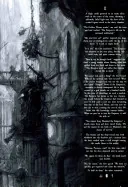
Za predelami zhizni i smerti

 71
71

Za predelami zhizni i smerti
William Walker Atkinson’s "Za predelami zhizni i smerti" offers a systematic exploration of post-mortem existence and spiritual continuity. Atkinson, a keen synthesizer of occult thought, presents complex ideas with a clarity that belies their challenging nature. The strength of the work lies in its methodical approach, dissecting the concept of life beyond death into digestible components, from the nature of the astral body to the mechanics of spiritual planes. A notable limitation, however, is the text's reliance on the prevailing metaphysical assumptions of the early 20th century, which may feel dated to contemporary readers less familiar with New Thought paradigms. The discussion on the "Law of Vibration" as a principle governing these realms, while central to Atkinson’s framework, requires significant prior conceptual engagement. Ultimately, this is a valuable, if historically situated, examination of enduring questions about life's ultimate trajectory.
📝 Description
71
William Walker Atkinson's 2004 work examines consciousness beyond physical life and death.
This book investigates the nature of consciousness and existence beyond the limits of physical life and death. It addresses the soul, the afterlife, and the potential for spiritual growth apart from the physical body. The text considers various states of being and the ways consciousness might continue or change after biological death.
Readers interested in philosophical questions about consciousness, comparative religion, and perennial philosophy will find this book valuable. It is suitable for those seeking to grasp metaphysical ideas about death, rebirth, and non-physical dimensions. Individuals studying esoteric traditions or looking for a way to think about life's ultimate questions can benefit from its methodical structure.
Atkinson, writing in the early 20th century, covered New Thought, occultism, and mental science extensively. His books, often under pseudonyms, became popular during a time of strong interest in spiritualism and alternative philosophies. This work adds to that intellectual discussion with a structured view on spiritual continuity.
This book belongs to the early 20th-century wave of interest in spiritualism and occult philosophy, influenced by movements like Theosophy and Theosophy. Atkinson's engagement with New Thought and mental science placed him within a broader intellectual current exploring consciousness and the unseen. His work sought to systematize these ideas, often drawing on concepts like the astral plane and subtle bodies, which were common in esoteric circles of the time.
💡 Why Read This Book?
• Understand the mechanics of the astral body as described by Atkinson, providing a concrete model for non-physical exploration beyond biological death. • Grasp the "Law of Vibration" as applied to consciousness, offering a specific energetic framework for understanding post-mortem states and spiritual progression. • Examine Atkinson's early 20th-century perspective on spiritual evolution, providing historical context for contemporary esoteric thought on life after death.
⭐ Reader Reviews
Honest opinions from readers who have explored this book.
❓ Frequently Asked Questions
What is the primary focus of William Walker Atkinson's "Za predelami zhizni i smerti"?
The book primarily focuses on the nature of consciousness beyond physical life and death, exploring concepts such as the astral body, spiritual planes, and the continuity of the soul.
When was "Za predelami zhizni i smerti" first published?
The original publication date for this work by William Walker Atkinson is 2004, though his prolific writing career spanned the early 20th century.
Does the book discuss specific afterlife realms?
Yes, the work explores various 'planes of existence' and the conditions of consciousness within them, as theorized within early 20th-century esoteric thought.
Is this book suitable for beginners in esoteric studies?
It is suitable for beginners interested in philosophical explorations of consciousness and death, provided they are open to metaphysical concepts and historical esoteric frameworks.
What is the "Law of Vibration" as presented by Atkinson in this context?
In this book, the Law of Vibration is presented as a fundamental principle governing consciousness and the various planes of existence, suggesting that different states of being correspond to different vibrational frequencies.
Are there practical exercises in the book?
While primarily theoretical and philosophical, the book lays conceptual groundwork that can inform personal contemplation and spiritual practice regarding life and death.
🔮 Key Themes & Symbolism
Continuity of Consciousness
The central theme examines how consciousness persists independently of the physical body. Atkinson posits that the "I AM" consciousness is not solely a product of the brain but an eternal principle capable of existing in various states. This explores the idea that death is merely a transition, not an end, allowing for continued awareness and experience on non-physical levels.
The Astral Body
This concept details a subtle, non-physical counterpart to the physical body, often referred to as the 'astral body' or 'etheric double.' The work explains its function as a vehicle for consciousness during sleep, dreams, and crucially, after physical death, enabling movement and perception in the unseen realms.
Planes of Existence
Atkinson outlines a multi-layered cosmology, describing various 'planes' or dimensions of reality beyond the physical. Each plane is characterized by specific vibrational frequencies and corresponds to different states of consciousness, ranging from the material to the purely spiritual, influencing the nature of existence after death.
The Law of Vibration
This fundamental principle asserts that everything in the universe, including consciousness, exists as vibration. The book applies this to explain how different states of being, from the physical to the spiritual, are differentiated by their specific vibratory rates, influencing interaction and perception across planes.
💬 Memorable Quotes
Direct passages from the work, attributed to the author.
“The "I AM" is the real self, the consciousness that persists.”
— This highlights Atkinson's core belief in an enduring, essential self that transcends the physical form. It suggests that our true identity is not tied to our biological existence but is a fundamental aspect of consciousness itself.
“Death is but the shedding of a worn-out garment.”
— This metaphor illustrates the transitional nature of death as presented in the book. It frames the physical body as a temporary covering, implying that the essential self (consciousness) continues its journey unimpeded.
“The astral body serves as the link between the physical and higher realms.”
— This statement defines the crucial role of the astral body within Atkinson's framework. It acts as a bridge, enabling the consciousness to navigate and experience realities beyond the material plane.
“Each plane of existence has its own laws and conditions.”
— This interpretation emphasizes the structured nature of the cosmos as envisioned by Atkinson. It suggests that different dimensions of reality operate under distinct principles, requiring adaptation and understanding for those who traverse them.
“Thought is a form of energy that can manifest across planes.”
— This points to the power of thought as an active force in Atkinson's philosophy. It suggests that mental constructs possess tangible energetic properties that can influence or be perceived in various spiritual dimensions.
🌙 Esoteric Significance
Tradition
This work falls squarely within the Western Esoteric tradition, particularly influenced by New Thought and Theosophy. Atkinson synthesizes concepts related to the soul, reincarnation, and subtle bodies, drawing parallels with Hermetic principles of correspondence and vibration. It departs from strict religious dogma by emphasizing personal experience and mental science as pathways to understanding these phenomena, aligning with the broader trend of individualistic spiritual seeking.
Symbolism
The 'astral body' serves as a key symbol, representing the vehicle of consciousness that persists after physical death, echoing ancient Egyptian concepts of the Ba and Ka. The notion of 'planes of existence' functions symbolically as a map of consciousness, with each plane representing a distinct vibratory state or level of spiritual awareness, akin to stages in a spiritual ascent.
Modern Relevance
Atkinson's exploration of consciousness continuity and subtle bodies remains relevant to contemporary discussions in consciousness studies, transpersonal psychology, and modern occultism. Thinkers and practitioners in fields like energy healing, astral projection, and lucid dreaming often draw upon or are indirectly influenced by the foundational concepts Atkinson articulated regarding non-physical states of being.
👥 Who Should Read This Book
• Students of early 20th-century metaphysical literature seeking to understand the roots of New Thought and its perspectives on life after death. • Individuals exploring comparative cosmology and the concept of multiple planes of existence across various spiritual traditions. • Seekers interested in the nature of consciousness and the potential for its continued existence and evolution beyond the physical body.
📜 Historical Context
William Walker Atkinson penned "Za predelami zhizni i smerti" during a period of fervent spiritual exploration in the late 19th and early 20th centuries. This era saw widespread interest in Theosophy, Spiritualism, and New Thought, movements that challenged Victorian materialism. Atkinson, writing prolifically and often under pseudonyms like Yogi Ramacharaka, synthesized these diverse currents. His work engaged with the ideas of figures such as Helena Blavatsky and the Theosophical Society, offering a more accessible, psychologically-oriented interpretation of metaphysical principles. While not explicitly censored, the widespread circulation of such works on the nature of consciousness and the afterlife occurred alongside more traditional religious doctrines, creating a vibrant intellectual debate. The book emerged as part of a broader cultural conversation about what lies beyond the veil of mortality, reflecting a collective yearning for understanding in a rapidly changing world.
📔 Journal Prompts
The concept of the astral body and its function.
The Law of Vibration as applied to consciousness.
Distinguishing the 'I AM' self from the physical form.
The nature of different planes of existence.
Personal reflections on the transition of death.
🗂️ Glossary
Astral Body
A subtle, non-physical body composed of finer matter, believed to be the vehicle of consciousness and emotions, which persists after physical death.
Planes of Existence
Distinct levels or dimensions of reality, each characterized by specific vibrational frequencies and corresponding states of consciousness, extending beyond the physical realm.
Law of Vibration
A principle stating that all matter and consciousness exist as vibrations, with differences in frequency determining the nature of phenomena and states of being.
The "I AM"
Refers to the essential, eternal self or core consciousness, distinct from the personality or physical body, believed to be the true, enduring identity.
Thought-form
A conceptual construct or psychic entity created by focused thought, possessing a degree of independent existence and energy within the mental or astral realms.
Etheric Double
Often used synonymously with the astral body or as a life-force vehicle, it is considered a subtle energetic copy of the physical body, vital for physical existence and communication between planes.
Spiritual Evolution
The process of growth and development of the soul or consciousness through various experiences and across different planes of existence, aiming towards higher states of being.
🔮 Readers Also Liked
Browse all →






More by William Walker Atkinson
All books →
More Free Occult Philosophy Books
View all →