Bees
 72
72

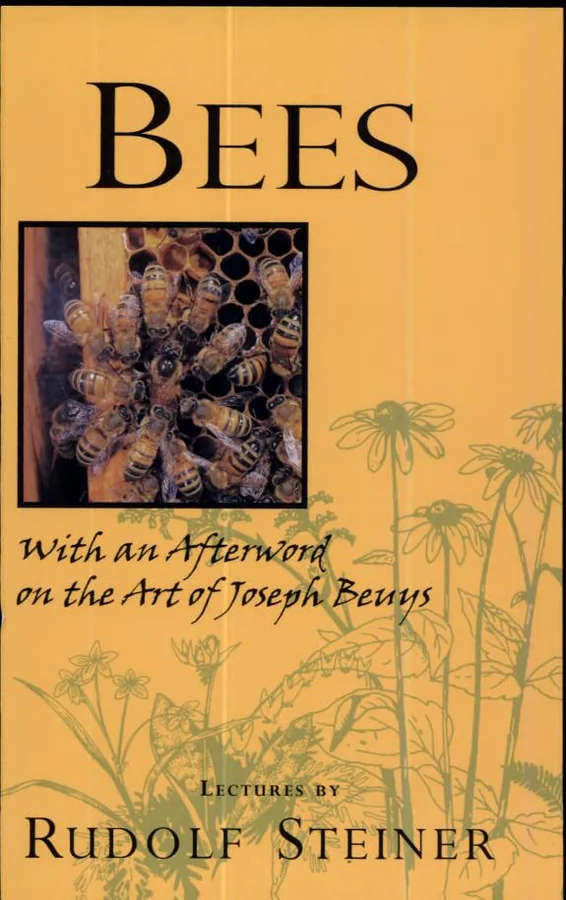
Bees
Rudolf Steiner's "Bees" is less a scientific treatise and more a visionary interpretation of the hive's activity. Steiner argues for the colony as a unified spiritual-etheric organism, a concept far removed from conventional entomology. He connects bee behavior to cosmic forces, positing their work as a crucial element in planetary evolution. The strength lies in its radical re-framing of nature, inviting readers to perceive hidden energetic realities. However, its abstract language and reliance on Anthroposophical terminology can be a significant barrier for those unfamiliar with Steiner's cosmology. A passage discussing the 'etheric body' of the hive illustrates his unique approach, linking collective consciousness to unseen vital forces. This work offers a singular, albeit challenging, perspective on the bee.
📝 Description
72
Rudolf Steiner wrote "Bees" in 1923, focusing on the colony's spiritual nature.
Rudolf Steiner's "Bees" presents a spiritual scientific view of the bee colony. He argues that the bee is more than an insect; it represents cosmic forces and serves as a model for the etheric body. The book examines the collective consciousness of the hive, its connection to earthly energies, and the bee's spiritual role in planetary development.
This work offers a way to understand the hidden life and energetic processes within the hive. It is for those involved in Anthroposophy or anyone interested in Steiner's unique perspective on the natural world. Readers who seek deeper spiritual meaning in physical forms and processes, and who are comfortable with complex, abstract ideas, will find this text valuable. It addresses the esoteric interpretation of natural phenomena, particularly insect societies.
Published in 1923, "Bees" comes from the early 20th century's spiritual science movement. Steiner, a figure distinct from Theosophy though sometimes linked, founded Anthroposophy. This era saw thinkers looking beyond materialism for spiritual understandings of nature. Steiner's work on nature, including "Bees," stood apart from common scientific views and was part of a larger European intellectual current aiming for holistic cosmic comprehension.
💡 Why Read This Book?
• Gain insight into Steiner's concept of the 'etheric body' as applied to social insects, offering a view of collective consciousness beyond biological determinism, as presented in his lectures from the early 20th century. • Understand the bee colony's role in planetary evolution according to Anthroposophy, learning how Steiner perceived their work as a spiritual task impacting earthly forces. • Explore the symbolic meaning of the bee within Steiner's spiritual science, moving beyond zoology to grasp its function as a carrier of cosmic energies and consciousness.
⭐ Reader Reviews
Honest opinions from readers who have explored this book.
❓ Frequently Asked Questions
What is Rudolf Steiner's core argument about bee colonies?
Steiner argues that a bee colony is not merely a collection of individual insects but a unified, super-organic entity possessing a collective consciousness and an 'etheric body' animated by spiritual forces.
When was Rudolf Steiner's 'Bees' first published?
The first publication of Rudolf Steiner's work on bees, derived from his lectures, was in 1998, though the lectures themselves date from the early 20th century.
What is the 'etheric body' in Steiner's view of bees?
In Steiner's Anthroposophy, the 'etheric body' is a vital, energetic life force that animates organisms. For bees, he describes a collective etheric body for the entire hive, responsible for its unified activity.
Does Steiner's work on bees have practical applications for beekeeping?
While Steiner's perspective is primarily spiritual-scientific, some biodynamic beekeepers seek to align their practices with the energetic principles he describes, aiming for a more harmonious relationship with the hive's perceived spiritual nature.
What is Anthroposophy?
Anthroposophy is a spiritual philosophy founded by Rudolf Steiner, seeking to understand the spiritual nature of the human being and the cosmos through methods of spiritual perception.
How does Steiner connect bees to planetary evolution?
Steiner suggests that the bees' transformation of nectar into honey and their role in pollination are vital processes that contribute to the ongoing spiritual and material evolution of the Earth.
🔮 Key Themes & Symbolism
The Bee as a Spiritual Organism
Steiner presents the bee colony not as a biological aggregate but as a singular, living entity governed by forces beyond the purely physical. He conceptualizes an 'etheric body' for the hive, a area of vital energy that orchestrates the collective actions of individual bees. This perspective invites readers to view the hive's intricate organization and productivity as manifestations of a higher, spiritual intelligence, deeply connected to the earth's own life forces and cosmic rhythms.
Cosmic Forces and the Hive
The work explores how cosmic polarities, such as Ahrimanic and Luciferic influences, are perceived to manifest within the bee colony's life processes. Steiner suggests these spiritual forces shape the bees' metabolism, their reproductive cycles, and their fundamental relationship to the plant world. Understanding these interactions offers a framework for interpreting the bee's 'spiritual task' in transforming earthly substances and contributing to the planet's evolutionary path.
The Energetic Nature of the Hive
Central to Steiner's analysis is the idea that the hive operates through energetic, or 'etheric,' currents. This goes beyond the physical hive structure or the chemical processes of honey-making. He describes a dynamic interplay of forces that bind the colony together, enabling its remarkable collective intelligence and efficiency. This view encourages a perception of nature teeming with unseen life and consciousness.
Bees and Earthly Evolution
Steiner posits that the specific activities of bees—their gathering, transformation, and pollination—are integral to the Earth's ongoing spiritual and material development. The bee's work is framed as a vital service to the planet, facilitating the life processes of plants and influencing the very substance of the Earth. This elevates the bee from a mere insect to a key player in a grand cosmic-terrestrial drama.
💬 Memorable Quotes
Direct passages from the work, attributed to the author.
“The bee is an organism that has outlived itself.”
— This provocative statement suggests that the bee's current physical form and activity represent a stage of evolution that is spiritually advanced, perhaps even a remnant of an earlier, more potent cosmic phase, indicating its unique and perhaps transitional role.
“The bee colony is a single, living being.”
— This expresses Steiner's core idea that the hive should be understood not as a collection of individuals but as a unified, conscious entity, a macro-organism functioning with a collective intelligence and will.
“Bees are instruments of cosmic forces.”
— This interpretation highlights Steiner's view that bees are not acting solely on instinct but are conduits through which higher, spiritual energies from the cosmos engage with the earthly realm, particularly through their metabolic processes.
“The etheric body of the hive organizes its life.”
— This points to the central role of the 'etheric body' – a vital life force – in Steiner's cosmology. It's presented as the invisible energetic structure that directs the complex, coordinated activities observed within the bee colony.
“The bee's work is essential for the Earth's transformation.”
— This emphasizes the grander significance Steiner attributes to bees, positioning their labor not just as biological necessity but as a critical contribution to the spiritual and material evolution of the planet itself.
🌙 Esoteric Significance
Tradition
Steiner's work on bees falls squarely within the Western Esoteric tradition, particularly Anthroposophy, which he founded. It draws upon and reinterprets elements found in Gnosticism, Hermeticism, and Kabbalah, focusing on a spiritual cosmology and the evolution of consciousness. Unlike traditional Theosophy, which often focused on Eastern philosophies, Steiner developed a uniquely European spiritual path rooted in the Christ impulse, viewing natural phenomena through this lens.
Symbolism
The bee itself is a potent symbol. Within Steiner's framework, it represents the industrious, collective consciousness, a bridge between the earthly and cosmic realms. The transformation of nectar into honey symbolizes spiritual alchemy – the refinement of base matter into a substance imbued with light and life force. The hive structure can be seen as an archetype of the organized, living community, animated by an unseen, unifying principle.
Modern Relevance
Contemporary biodynamic agriculture and beekeeping practices often reference Steiner's insights, seeking to work in harmony with the perceived energetic and spiritual qualities of the hive. Thinkers and practitioners within Anthroposophical circles continue to explore his cosmology, applying it to environmental issues and a deeper understanding of living systems. His work remains influential for those seeking a non-materialistic view of nature.
👥 Who Should Read This Book
• Students of Anthroposophy seeking to understand Steiner's specific views on the spiritual nature of insects and social organisms. • Researchers in comparative esotericism interested in how early 20th-century spiritual scientists interpreted natural phenomena beyond biology. • Individuals drawn to holistic or spiritual perspectives on nature who wish to explore interpretations that connect the bee colony to cosmic forces and planetary evolution.
📜 Historical Context
Rudolf Steiner's discourse on bees emerged from his development of Anthroposophy in the early 20th century, a period rich with spiritual and philosophical inquiry into nature. Following his departure from Theosophy, Steiner established his own distinct path, emphasizing a 'spiritual science' accessible through disciplined inner development. His lectures on subjects like bees were part of a broader effort to imbue the modern scientific worldview with a spiritual dimension, often in direct contrast to prevailing materialistic explanations. While specific contemporary critiques or direct engagements with other authors on the subject of bees are not the focus of this particular work, Steiner's overall approach positioned itself against purely biological or Darwinian interpretations of life, offering a holistic, spiritual-evolutionary perspective.
📔 Journal Prompts
The bee colony as a singular organism: What does this concept imply for collective consciousness?
Reflecting on the 'etheric body' of the hive: How might unseen energetic forces shape observable behavior?
Steiner's view of the bee's spiritual task: Consider its role in Earth's evolution.
The symbolism of honey transformation: Explore its alchemical significance in Steiner's thought.
Connecting cosmic forces to earthly life: How does this perspective alter your view of nature?
🗂️ Glossary
Anthroposophy
A spiritual philosophy founded by Rudolf Steiner, aiming to understand the spiritual nature of the human being and the cosmos through methods of spiritual perception and cognition.
Etheric Body
In Steiner's cosmology, a vital life force or energetic body distinct from the physical, responsible for growth, reproduction, and the organization of life processes.
Ahrimanic
Refers to a spiritual influence in Steiner's cosmology associated with hardening, materialism, intellect without heart, and the forces that bind beings solely to the physical earth.
Luciferic
Refers to a spiritual influence in Steiner's cosmology associated with spiritual pride, illusion, fantasy, and forces that pull beings away from earthly reality into abstract spiritual realms.
Spiritual Science
Steiner's term for his method of investigating the spiritual world through developed faculties of perception and cognition, distinct from traditional religious dogma or empirical science.
Super-organic
A concept suggesting an organizational principle or entity that transcends the individual biological units composing it, implying a collective life or consciousness.
Spiritual Task
In Anthroposophy, the idea that specific beings or processes have a predetermined role within the broader spiritual evolution of the Earth and humanity.
🔮 Readers Also Liked
Browse all →









More by Rudolf Steiner
All books →



More Free Occult Philosophy Books
View all →