Numerology
 74
74

Numerology
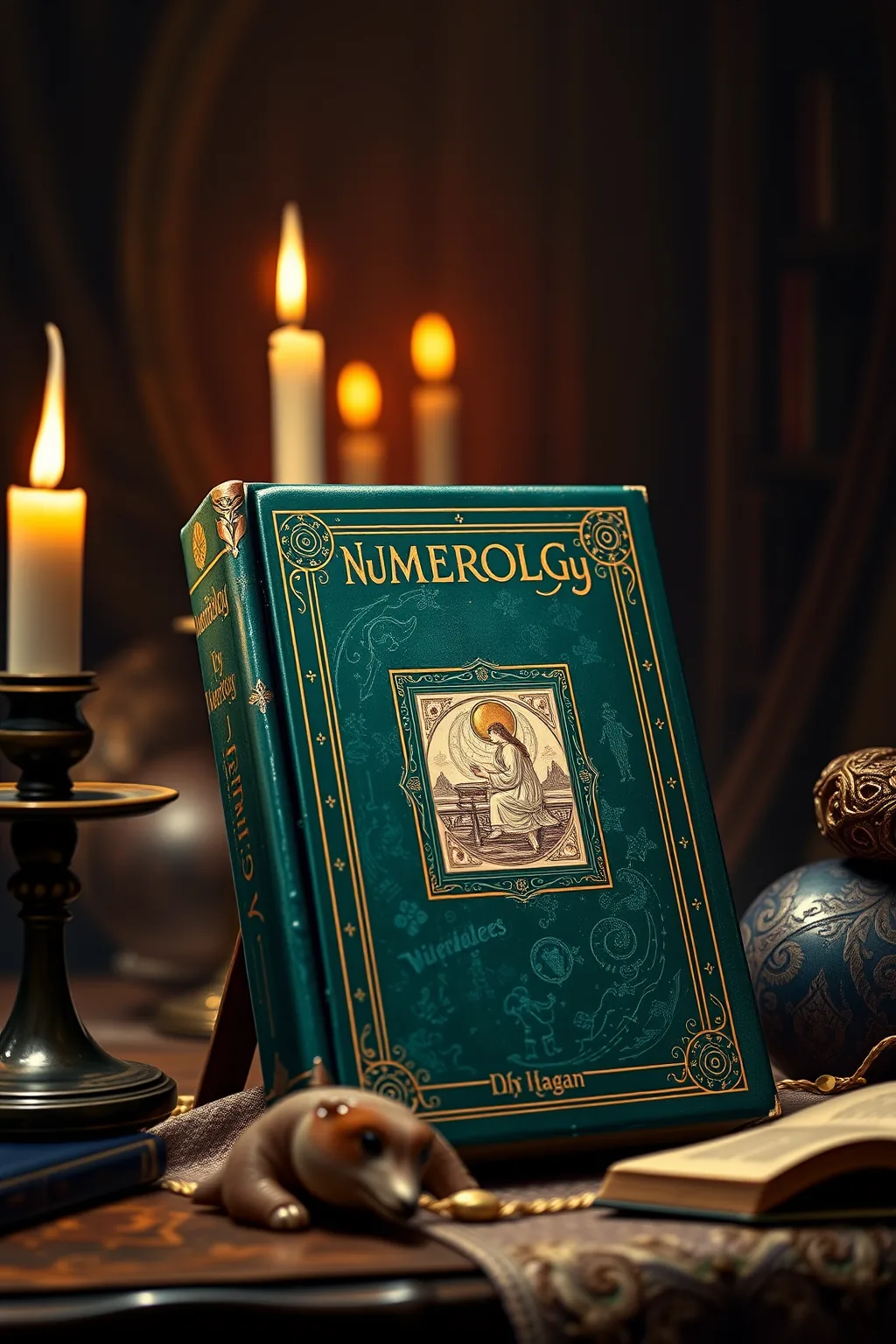
Virginia Loh-Hagan’s *Numerology* offers a competent, if somewhat dry, introduction to a subject often shrouded in mysticism. The book's strength lies in its clear delineation of the Pythagorean and Chaldean systems, a crucial distinction for any serious student. Loh-Hagan’s commitment to accessibility, evident in the simplified pronunciations in the glossary, is commendable. However, this very focus on a lower reading level occasionally sacrifices depth, leaving the exploration of the deeper implications of number symbolism feeling somewhat superficial. For instance, the discussion around the 'Master Numbers' feels more like a definition than an exploration of their esoteric weight. While it provides a solid foundation, it stops short of truly igniting the reader's curiosity about the more profound philosophical underpinnings of numerology. It serves as a functional primer, but not a transformative guide.
📝 Description
74
Virginia Loh-Hagan's 2020 book explains the Pythagorean and Chaldean systems of numerology.
This volume examines numerology, tracing its historical roots and core principles. It contrasts the Pythagorean and Chaldean systems, two main approaches to assigning meaning to numbers. The book aims to clarify how numerical values relate to personality traits, life paths, and universal energies.
Designed for individuals seeking self-understanding through esoteric frameworks, this book suits readers who may find traditional academic texts difficult. Its clear language and structured approach are appropriate for younger readers or those new to personality assessment theories, including psychology and astrology. A table of contents, glossary with pronunciations, and index assist readers who benefit from clear organization.
The work situates numerology within a larger discourse on personality assessment, which became popular in the early 20th century. It acknowledges popular theories like astrology and psychological assessments as related fields. The book's 2020 publication date places it in a time when interest in esoteric knowledge continues to grow, often alongside scientific psychology.
Numerology, the belief that numbers hold symbolic meaning and influence human lives, has roots stretching back to ancient civilizations. While often associated with figures like Pythagoras, its practice and interpretation vary across different traditions. This book engages with the historical development of numerology, particularly focusing on the distinct methodologies of the Pythagorean and Chaldean systems. It presents numerology as a tool for self-discovery, connecting numerical calculations based on names and birth dates to insights about an individual's character and life trajectory.
💡 Why Read This Book?
• Understand the foundational differences between the Pythagorean and Chaldean numerological systems, a key distinction not always clarified in introductory texts, allowing for a more precise personal analysis. • Discover how to calculate your Life Path number using the method detailed in the book, providing a tangible tool for immediate self-exploration and insight into your inherent potentials. • Gain practical knowledge about interpreting number sequences as presented in the book’s framework, enabling you to apply numerological principles to everyday life for enhanced self-awareness.
⭐ Reader Reviews
Honest opinions from readers who have explored this book.
❓ Frequently Asked Questions
What are the main numerology systems discussed in Loh-Hagan's book?
The book primarily focuses on two major numerological systems: the Pythagorean system, which is widely used in Western numerology, and the Chaldean system, an older and more complex method originating from ancient Babylon.
Is this book suitable for beginners in numerology?
Yes, *Numerology* is specifically designed for beginners and struggling readers. It uses considerate text with a lower reading level while maintaining a higher maturity level, and includes aids like a glossary with pronunciations.
When was Virginia Loh-Hagan's 'Numerology' first published?
The book 'Numerology' by Virginia Loh-Hagan was first published on May 21, 2020, as part of the 'Who Are You?' series.
What is the 'Who Are You?' series about?
The 'Who Are You?' series explores various personality theories, including star charts (astrology), numerology, and psychology assessments, to help readers understand themselves better.
Does the book explain how to calculate numerology numbers?
Yes, the book explains the historical basis of numerology and how numbers are derived from names and birth dates, providing readers with the tools to calculate their own numerological charts.
What makes the glossary in this book unique?
The glossary in *Numerology* includes simplified pronunciations for esoteric terms, making it more accessible for readers who may be unfamiliar with the pronunciation of certain words related to numerology and its history.
🔮 Key Themes & Symbolism
Pythagorean vs. Chaldean Systems
The work meticulously dissects the two dominant numerological frameworks: Pythagorean and Chaldean. It highlights their differing origins and methodologies for assigning numerical values to letters and dates. Understanding these distinctions is crucial for appreciating the nuances within numerological interpretation and recognizing which system might offer more resonant insights for personal analysis.
Self-Discovery Through Numbers
Fundamentally, the book positions numerology as a tool for self-awareness and personal growth. By calculating and interpreting numbers derived from one's birth date and name, individuals are encouraged to uncover latent talents, understand life challenges, and identify their unique purpose or 'life path'.
Historical Roots of Numerology
Loh-Hagan situates numerology within its historical context, acknowledging its ancient origins and evolution. The text traces the development of these numerical systems, providing a foundation for understanding their enduring appeal and application across different cultures and eras, even as modern psychology offers alternative frameworks.
Accessible Esoteric Knowledge
A significant theme is the book's commitment to making esoteric subjects accessible. It employs a lower reading level with considerate text, supported by features like a glossary with simplified pronunciations, making complex ideas in numerology understandable for a broader audience, including younger readers or those new to the topic.
💬 Memorable Quotes
Direct passages from the work, attributed to the author.
“The book contrasts the Pythagorean and Chaldean systems.”
— This straightforward statement highlights the book's primary structural element, focusing on the comparative analysis of two key numerological methodologies as a core educational component for the reader.
“Numerology takes a closer look at the history of numerology.”
— This emphasizes the historical research embedded within the text, positioning the book not just as a 'how-to' guide but also as an exploration of the origins and evolution of numerical symbolism.
“This series takes a closer look at the most popular personality theories.”
— This contextualizes the book within a larger comparative framework, suggesting that numerology is presented alongside other methods like astrology and psychology, inviting readers to see connections and differences.
“This hi-low title uses considerate text written at a higher maturity level with a lower reading level.”
— This highlights the pedagogical approach, indicating the book's deliberate design to engage readers who might struggle with complex vocabulary or sentence structure without compromising the intellectual substance of the topic.
“A table of contents, glossary with simplified pronunciations, and index all support the reader.”
— This points to the practical features designed to enhance comprehension and usability, underscoring the book's commitment to reader support and clarity for those new to esoteric studies.
🌙 Esoteric Significance
Tradition
This work fits within the broader Western esoteric tradition, particularly its modern manifestations focused on practical divination and self-knowledge. While not strictly Hermetic or Kabbalistic, it draws upon number symbolism that has been integrated into various mystical systems. Its accessible approach positions it as an entry point, bridging popular interest with foundational esoteric principles.
Symbolism
The core symbolism revolves around the intrinsic meaning assigned to numbers. Each digit (1-9) and sometimes compound numbers (like Master Numbers 11, 22) represents distinct energies, archetypes, and potentials. The book explores how these symbols, derived from a birth date or name, serve as a symbolic blueprint for an individual's life experiences and character.
Modern Relevance
Contemporary interest in numerology, as reflected by this book, connects with modern self-help movements, mindfulness practices, and the ongoing quest for personal meaning. Thinkers and practitioners in fields ranging from alternative wellness to personal coaching often incorporate numerological insights into their work, seeking to provide clients with frameworks for understanding their life path.
👥 Who Should Read This Book
• Individuals new to esoteric studies seeking a clear, foundational understanding of numerology's basic principles and historical systems. • Students of comparative personality theories who wish to explore numerology alongside astrology and psychological assessments as presented in the 'Who Are You?' series. • Readers who appreciate structured learning aids like glossaries with pronunciations and indexes, making the exploration of numerical symbolism more accessible.
📜 Historical Context
Published in 2020, *Numerology* emerges in an era marked by a resurgence of interest in esoteric knowledge, often pursued alongside or as an alternative to empirical psychology. The early 20th century saw a significant popularization of numerology, particularly through figures like L. Dow Balliett and Julia Seton, who disseminated various systems. Loh-Hagan’s work engages with this lineage by focusing on the Pythagorean and Chaldean traditions, two foundational schools. While the book doesn't explicitly cite contemporaries or specific reception events, its existence highlights the continued appeal of numerology as a system of self-understanding, contrasting with the rise of more scientifically validated personality assessments.
📔 Journal Prompts
The significance of your Life Path number and its connection to your birth date.
Comparing the core attributes of the Pythagorean and Chaldean systems.
How the number 7 might manifest in your personal year cycle.
Reflecting on the historical development of numerology as a personality theory.
Exploring the potential influence of your Destiny Number based on your name.
🗂️ Glossary
Chaldean Numerology
An ancient system of numerology originating from Babylon, known for its complex calculations and assignment of vibrational values to letters.
Life Path Number
A core numerological calculation derived from a person's birth date, believed to represent their life's purpose, challenges, and opportunities.
Pythagorean Numerology
A widely used system of numerology, often attributed to the Greek philosopher Pythagoras, that assigns numerical values to letters based on their alphabetical order.
Destiny Number
A number calculated from the letters in a person's full birth name, thought to reveal their potential talents and the path they are destined to follow.
Personal Year Cycle
A repeating nine-year cycle in numerology, where each year is associated with a specific number and its corresponding energies, influencing events and personal growth.
Vibration
In numerology, the unique energetic quality or frequency associated with each number, influencing its interpretation and significance.
Master Numbers
In numerology, particularly prominent numbers like 11, 22, and sometimes 33, which are believed to carry a higher potential for both spiritual attainment and significant challenges.