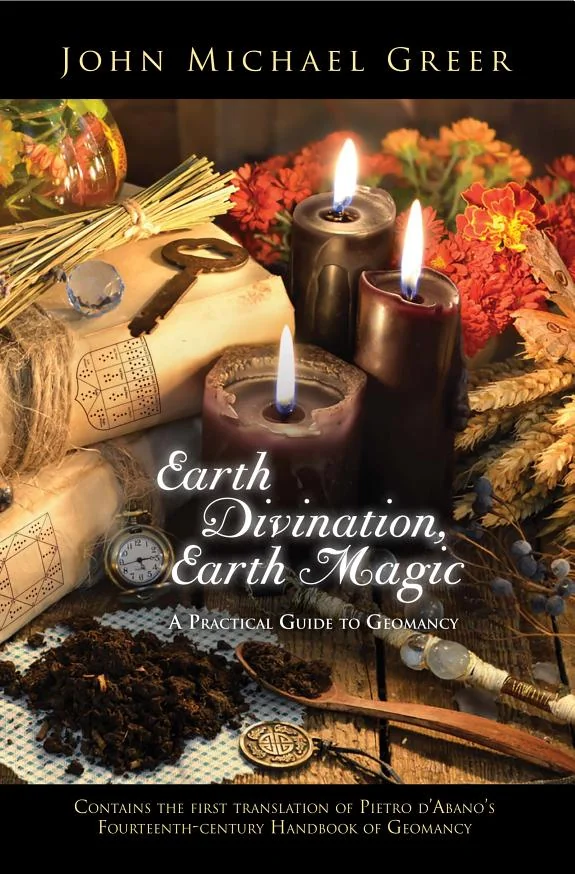
Earth Divination, Earth Magic
 82
82

Earth Divination, Earth Magic
John Michael Greer's "Earth Divination, Earth Magic" offers a welcome and thorough reintroduction to geomancy, a divinatory art often overshadowed by its more popular cousins. Greer's strength lies in his clear exposition of the system's mechanics and its historical grounding, particularly its place within the Western magical tradition. He skillfully demystifies the generation of the sixteen figures, making the practice seem less arcane than its reputation suggests. A notable passage details the derivation of the figure 'Conjunctio', illustrating the logical, albeit symbolic, progression from initial points to complex patterns. However, while the historical context is robust, the practical application section, though detailed, occasionally feels more like a technical manual than an invitation to intuitive exploration. The book's primary limitation is its academic tone, which, while informative, might deter some readers seeking a more immediately experiential guide. Nevertheless, for those willing to engage with its systematic approach, this work provides an essential foundation for understanding and practicing geomancy.
📝 Description
82
John Michael Greer's 2009 book examines geomancy as a symbolic system, not just a fortune-telling method.
Earth Divination, Earth Magic presents geomancy as a sophisticated symbolic language and a system of cosmic correspondence, going beyond its common perception as a simple fortune-telling tool. The book traces the history and development of this practice through different eras and cultures, arguing that geomancy is an important, often overlooked, part of the Western magical tradition. Greer demonstrates its effectiveness as a direct and quick way to find answers to difficult questions.
This work is for serious students of esoteric subjects, especially those interested in divination and Western ceremonial magic. It offers a divinatory method that beginners can access, while also providing enough depth for experienced practitioners looking to add to their skills beyond tarot or astrology. Researchers of magical history, comparative religion, and ancient knowledge systems will also find the historical and theoretical sections valuable. The text details the sixteen basic geomantic figures, their generation, and their interpretation as symbols of celestial and terrestrial forces.
Geomancy, as explored in this book, was a significant divinatory art during the Middle Ages and Renaissance, popular across Europe and the Islamic world. It was integrated into various magical and philosophical frameworks, including Hermeticism, and held a place alongside other major systems like astrology and scrying. Greer positions it as a unique method due to its accessibility and directness, highlighting its historical importance within esoteric traditions.
💡 Why Read This Book?
• Learn the systematic creation and interpretation of the 16 geomantic figures, a core component of Western magical tradition since the Middle Ages, enabling you to generate direct answers to specific questions. • Understand geomancy's historical position alongside other divinatory arts like astrology and scrying, appreciating its unique methodology as explored through its medieval and Renaissance contexts. • Discover how to construct a geomantic chart and interpret its various houses, a practical skill Greer outlines step-by-step, allowing for detailed readings on personal and external matters.
⭐ Reader Reviews
Honest opinions from readers who have explored this book.
❓ Frequently Asked Questions
What is the historical significance of geomancy as presented in Earth Divination, Earth Magic?
The book highlights geomancy's prominence during the Middle Ages and Renaissance, when it was a widely respected divinatory art integrated into scholarly and magical practices across Europe and the Islamic world.
How does Earth Divination, Earth Magic explain the generation of geomantic figures?
Greer details the process of generating the 16 symbolic figures, each formed from four lines of one or two points, explaining their symbolic derivation and arrangement.
Is this book suitable for beginners in divination?
Yes, the book provides a clear, step-by-step guide to the theory and practice of geomancy, making it accessible for newcomers to the art, while also offering depth for experienced practitioners.
What makes geomancy different from other divination methods like tarot?
Geomancy is presented as a quick, direct system based on symbolic patterns derived from a specific generation process, offering a unique method for obtaining answers compared to image-based systems.
Does the book discuss the symbolic meaning of the geomantic figures?
Absolutely. The work explores the rich symbolism of each of the 16 figures, interpreting them as reflections of cosmic and earthly influences and their interplay.
Who is John Michael Greer and what is his background?
John Michael Greer is a prolific author and scholar of the esoteric, known for his extensive writings on magic, ecology, and philosophy. He has authored numerous books on these subjects.
🔮 Key Themes & Symbolism
The Sixteen Geomantic Figures
At the heart of Greer's work are the 16 geomantic figures, the fundamental building blocks of the divinatory system. The book meticulously details their creation through a process involving pairs of points (single or double) arranged in four columns, and explains the symbolic meaning attributed to each figure, such as 'Via' (The Way) or 'Puer' (The Boy). These figures are presented not just as random patterns but as potent symbols reflecting celestial and terrestrial forces, offering a structured language for interpretation and divination. Understanding these figures is presented as the primary key to unlocking geomantic insights.
Geomancy as Western Magic
Greer firmly situates geomancy within the historical and theoretical framework of Western esotericism. He emphasizes its role as one of the major divinatory arts that flourished alongside Hermeticism, Kabbalah, and ceremonial magic, particularly during the Middle Ages and Renaissance. The book argues that geomancy, with its systematic approach and symbolic depth, is an integral part of this tradition, offering a unique method for accessing hidden knowledge and divine guidance. It contrasts with other divinatory methods by its perceived directness and reliance on specific calculational principles.
The Practice of Earth Divination
Beyond theory, the book serves as a practical manual for performing geomantic readings. It outlines the steps involved in casting a chart, from the initial generation of figures to their arrangement within the twelve houses of the geomantic wheel. Greer explains how to interpret the resulting patterns in response to specific questions, covering aspects like relationship, finance, and future events. The emphasis is on geomancy's speed and clarity, providing readers with a tangible method to consult this ancient oracle for everyday guidance and deeper understanding.
Symbolic Correspondences
A significant aspect explored is the rich network of symbolic correspondences associated with geomancy. Each figure is linked to planetary rulers, zodiac signs, elements, and even specific qualities or archetypes. The book details how these layers of meaning contribute to a comprehensive reading. For instance, understanding the elemental composition of a figure or its planetary association provides crucial context for interpreting its message. This intricate web of associations elevates geomancy from a simple prediction tool to a complex system of symbolic language.
💬 Memorable Quotes
Direct passages from the work, attributed to the author.
“One of the major divination systems that are part of the Western magical tradition.”
— This statement positions geomancy historically and culturally, asserting its significance within the broader range of esoteric practices. It highlights the book's aim to reintegrate this art into its rightful place among other well-known magical disciplines.
“The 16 symbolic figures formed of single and double points.”
— This is a concise description of the fundamental elements of geomancy. It points to the visual and structural basis of the art, emphasizing the patterns created by simple binary units (points) as the source of divinatory meaning.
“During the Middle Ages and Renaissance, geomancy was used by [various groups].”
— This phrase, likely part of a longer sentence in the original text, serves to establish the historical prevalence and application of geomancy. It underscores that the practice was not obscure but was a common tool employed by many strata of society.
“The lost art of geomancy - one of the major divination systems...”
— The phrase 'lost art' suggests that geomancy has fallen out of common practice, implying a need for rediscovery and revival. This framing justifies the book's purpose as a guide to reclaiming this significant divinatory tradition.
💡 Key Ideas
Editorial paraphrase of the work's core concepts — not direct quotes.
Geomancy is simple, quick, and direct—anyone can get answers to any question in a matter of moments by learning how to read the patterns revealed by the 16 symbolic figures.
This quote expresses the core appeal of geomancy as presented by Greer: its accessibility and efficiency. It suggests that the perceived complexity of the system dissolves with understanding, making clear insights available to all practitioners.
🌙 Esoteric Significance
Tradition
Geomancy is deeply embedded within the Western Hermetic and astrological traditions. Its system of the 16 figures, their planetary rulerships, elemental associations, and symbolic meanings aligns with the principles of correspondence that underpin Hermetic philosophy. It functions as a practical application of the 'As Above, So Below' maxim, translating celestial patterns into earthly queries. While not strictly Kabbalistic, its systematic structure and symbolic language share affinities with the ordered cosmology found in Kabbalistic thought, offering a method for divination that complements other Western esoteric practices.
Symbolism
The core symbolism lies in the 16 geomantic figures themselves, each representing archetypal forces and influences. For instance, 'Fortuna Major' (Great Fortune) is often seen as a highly auspicious figure indicating success and good luck, while 'Laetitia' (Joy) signifies happiness and fulfillment. The pairing of single and double points creates a binary language that is then interpreted through astrological and elemental correspondences, providing layers of meaning related to planets, signs, and elements, thus transforming simple patterns into a rich symbolic vocabulary.
Modern Relevance
Contemporary practitioners of Western esotericism, particularly those interested in traditional magic, divination, and comparative occult studies, continue to engage with geomancy. Schools focusing on ceremonial magic and traditional astrology often incorporate geomancy into their curriculum. Thinkers and authors in the modern occult revival, such as members of the Golden Dawn lineage or independent scholars of magical history, draw upon Greer's work and the foundational texts of geomancy to practice and teach this art, recognizing its enduring utility and symbolic depth.
👥 Who Should Read This Book
• Students of Western Esotericism and Magical History: Individuals seeking to understand the development and practice of divination systems within historical magical traditions, particularly the Middle Ages and Renaissance. • Aspiring Diviners: Those looking to add a powerful, systematic, and historically significant method of divination to their repertoire, offering a unique alternative to tarot or astrology. • Comparative Religion Scholars: Researchers interested in ancient and medieval systems of knowledge, symbolism, and divination across different cultures and belief systems.
📜 Historical Context
Geomancy achieved widespread renown in Europe and the Islamic world from the 11th century onwards, becoming a prominent divinatory art during the high Middle Ages and flourishing further through the Renaissance. Its systematic nature and perceived accuracy made it a favored tool among scholars, mystics, and even rulers. Contemporaries like Cornelius Agrippa, in his influential 'Three Books of Occult Philosophy' (published 1531), discussed and integrated geomantic principles within the broader framework of Renaissance magic. While other forms of divination existed, geomancy's unique method of generation from simple points offered a distinct, calculational approach. Its presence in numerous grimoires and occult treatises from figures like Johannes Trithemius demonstrates its integration into the period's esoteric currents, contrasting with more intuitive methods like dream interpretation or direct scrying. Reception was generally positive within occult circles, though its systematic nature sometimes placed it at odds with more purely philosophical or theological explorations of divinity.
📔 Journal Prompts
The derivation of the 16 geomantic figures: Reflect on the process of generating these patterns from simple points.
The symbolism of 'Fortuna Major': How might this auspicious figure manifest in a personal reading?
Geomancy's place in the Western magical tradition: Consider its historical context alongside astrology and Hermeticism.
The directness of geomantic answers: How does this compare to the interpretive nuance required in other divinatory arts?
Interpreting the houses of a geomantic chart: Practice mapping a generated figure onto a specific life question.
🗂️ Glossary
Geomancy
An ancient form of divination involving the interpretation of figures generated from random points, considered a major art within the Western magical tradition.
Geomantic Figures
The sixteen primary symbolic patterns (e.g., 'Via', 'Fortuna Major') generated in geomancy, each composed of four lines of one or two points, carrying specific meanings.
Points
The basic units in geomancy, represented as single (odd) or double (even) dots, used to construct the geomantic figures.
Shield
A complete geomantic chart, consisting of the generated figures arranged in the twelve houses, used to answer a specific question.
Houses
The twelve divisions within a geomantic shield, analogous to the houses in astrology, each representing a specific area of life or inquiry (e.g., Self, Possessions, Siblings).
Western Magical Tradition
A broad term encompassing esoteric beliefs and practices originating in Western cultures, including Hermeticism, Kabbalah, astrology, alchemy, and various forms of ceremonial magic.
Correspondence
The principle in esoteric thought that links different levels of reality (e.g., celestial, terrestrial, human), where symbols, planets, elements, and events are seen as interconnected.