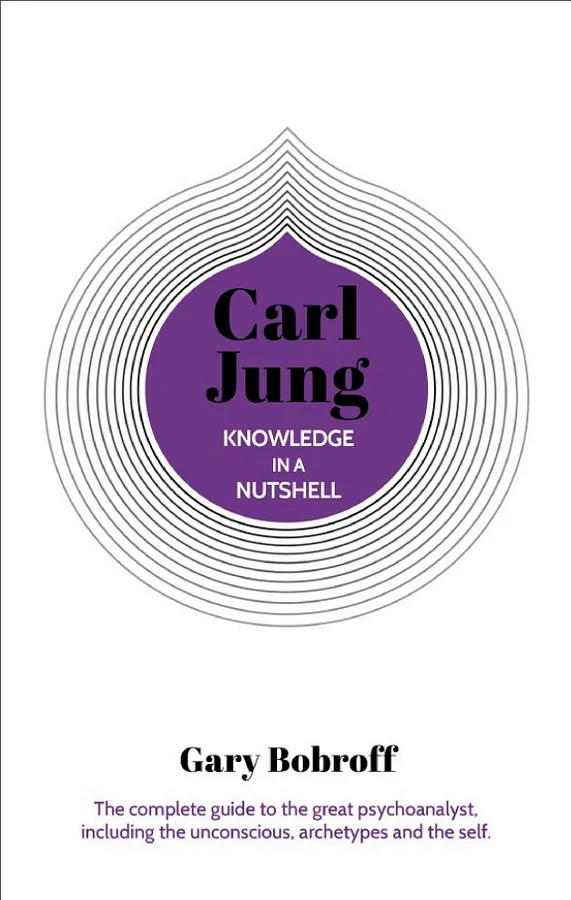
Knowledge in a Nutshell: Carl Jung
 76
76

Knowledge in a Nutshell: Carl Jung
Gary Bobroff's "Knowledge in a Nutshell: Carl Jung" offers a welcome distillation of a vast intellectual terrain. Its strength lies in its clarity, presenting Jung's core ideas without succumbing to academic jargon. The section on individuation, for instance, effectively conveys the process of psychological integration. However, the book's brevity, while its primary asset, occasionally sacrifices nuance. For example, the exploration of Jung's concept of synchronicity feels somewhat abbreviated, leaving the reader with a basic understanding but perhaps not the full speculative weight of the idea. The inclusion of Jung's engagement with Eastern mysticism, a crucial aspect of his work, is handled competently. This is a useful primer, particularly for those initiating their study of Jung. It succeeds in its aim of providing a foundational overview, even if it cannot capture the full depth of Jung's later writings.
📝 Description
76
Gary Bobroff's 2017 book simplifies Carl Jung's complex ideas for a modern audience.
Gary Bobroff's "Knowledge in a Nutshell: Carl Jung" offers a direct introduction to the core concepts of analytical psychology. The book condenses the major theories developed by Carl Jung, a figure who reshaped psychological thinking. Bobroff covers Jung's examination of the human mind, connecting it to his study of various cultural and spiritual traditions.
This guide is written for anyone wanting an easy way into Jungian ideas, especially newcomers. It is useful for students of psychology, philosophy, and comparative religion, as well as general readers curious about the origins of terms like archetypes and the collective unconscious. Readers who struggle with dense academic texts should find its approach clear.
Jung's theories appeared in the mid-20th century, a time of significant intellectual change. His ideas developed alongside Sigmund Freud's, but Jung took a different path, emphasizing spirituality and wider cultural influences. His interest in Eastern mysticism and myths made his work a link between Western psychology and older spiritual practices, which was unusual at the time.
Carl Jung's work sits at the intersection of psychology and esoteric traditions. He drew heavily from alchemy, Gnosticism, and Eastern religions, viewing these as vital expressions of the psyche's unconscious dynamics. His concept of the collective unconscious, populated by archetypes, mirrors patterns found in myths and spiritual systems across cultures. Bobroff's book highlights this connection, showing how Jung saw these ancient symbols and practices as crucial for understanding the individual's psychological development and spiritual life, bridging empirical psychology with a broader worldview.
💡 Why Read This Book?
• Gain a clear understanding of Carl Jung's pivotal concept of 'individuation,' presented in a way that clarifies the personal journey of psychological wholeness, a core tenet of analytical psychology. • Grasp the significance of Jung's integration of 'Eastern mysticism and mythology' into his psychological theories, revealing how ancient wisdom informs modern understanding of the psyche. • Learn about the foundational concept of the 'collective unconscious' and its role in shaping human experience, offering a unique perspective beyond personal biography.
⭐ Reader Reviews
Honest opinions from readers who have explored this book.
❓ Frequently Asked Questions
When was Carl Jung's 'Knowledge in a Nutshell' first published?
Gary Bobroff's 'Knowledge in a Nutshell: Carl Jung' was first published on April 1, 2020. This edition aims to make Jung's complex ideas accessible to a contemporary audience.
What are the main Jungian concepts covered in the book?
The book covers key Jungian concepts such as archetypes, the collective unconscious, individuation, and the persona. It also touches upon Jung's use of dream analysis and mythology.
Is this book suitable for someone with no prior knowledge of psychology?
Yes, the book is specifically designed as a primer, making it an excellent starting point for individuals new to Carl Jung's work or psychology in general. Its clear explanations are beneficial for beginners.
How does this book relate to Carl Jung's original work?
This book distills Carl Jung's foundational theories into an accessible format. It interprets and explains his core ideas, drawing from his extensive writings and psychological framework developed in the early to mid-20th century.
What is the significance of Carl Jung's approach to the human psyche?
Carl Jung revolutionized the approach to the human psyche by incorporating elements like spirituality, mythology, and dream analysis, moving beyond purely biological or Freudian interpretations. His work emphasizes the individual's journey toward wholeness.
Does the book discuss Jung's engagement with Eastern philosophies?
Yes, the book highlights Carl Jung's significant engagement with Eastern mysticism and mythology as integral components that informed his psychological theories. This integration offered a broader perspective on the human psyche.
🔮 Key Themes & Symbolism
Archetypes and the Collective Unconscious
The work explores Carl Jung's seminal concept of the collective unconscious, a shared reservoir of human experience and imagery inherited across generations. Within this, archetypes manifest as universal patterns or images, such as the Anima/Animus, the Shadow, and the Wise Old Man. Bobroff's primer illuminates how these primordial structures influence individual behavior and societal narratives, offering a framework for understanding universal human motivations and symbolic expressions.
Individuation as a Path to Wholeness
Central to Jungian psychology is the process of individuation, the lifelong journey of psychological development and self-realization. This book outlines how individuation involves integrating conscious and unconscious aspects of the self, including the challenging Shadow archetype. It describes this process not as a static achievement but as a dynamic unfolding, essential for achieving psychological completeness and aligning one's unique potential with the broader human experience.
Mythology and Dream Analysis
Gary Bobroff details Carl Jung's innovative use of mythology and dream analysis as key tools for understanding the psyche. Jung believed that myths provided a symbolic language for collective psychological truths, mirroring the dynamics observed in individual dreams. The book explains how examining these narratives and dream imagery can unlock unconscious patterns and offer guidance on the path of individuation.
Eastern Mysticism's Influence
The work highlights Carl Jung's deep engagement with Eastern mysticism, particularly Hindu and Buddhist philosophies. This influence is presented as a crucial element in shaping his psychological theories, offering parallels to concepts like the collective unconscious and the search for inner peace. Bobroff's explanation shows how Jung saw these traditions as providing ancient wisdom that complemented and expanded Western psychological understanding.
💬 Memorable Quotes
Direct passages from the work, attributed to the author.
“Jung proposed many ideas which are still influential today, including...”
— This highlights the enduring legacy of Carl Jung's psychological framework, suggesting that his theories on the psyche, archetypes, and individuation continue to offer valuable perspectives on human nature and consciousness.
“Drawing on Eastern mysticism, mythology and dream analysis to develop his theories...”
— This points to Jung's eclectic approach, synthesizing diverse wisdom traditions and introspective methods to build a comprehensive model of the human psyche that transcended purely Western scientific paradigms.
“Carl Jung was the founder of analytical psychology who revolutionized the way we approached the human psyche.”
— This emphasizes Jung's foundational role in establishing a distinct school of psychological thought and his significant departure from prior models, particularly Freud's, in his understanding of consciousness and the unconscious.
“One of the best introductions to Jung's psychology!”
— This recommendation underscores the book's effectiveness as a gateway into Jung's thought, praising its clarity and comprehensiveness as an introductory text for students and enthusiasts alike.
💡 Key Ideas
Editorial paraphrase of the work's core concepts — not direct quotes.
An excellent primer on Jungian concepts.
This quote suggests the book's success in simplifying complex Jungian ideas, making them accessible and understandable for readers new to analytical psychology and its core theories.
🌙 Esoteric Significance
Tradition
Jung's work sits at the nexus of depth psychology and esoteric traditions, particularly Hermeticism and Gnosticism, due to his focus on inner transformation and symbolic language. He engaged deeply with alchemy, astrology, and Eastern philosophies, seeing them not as primitive superstitions but as profound expressions of the human psyche's quest for meaning. His concept of individuation echoes alchemical processes of integration and purification, while his exploration of the collective unconscious appeals to Gnostic ideas of a shared spiritual source.
Symbolism
Key symbols in Jungian thought, as presented here, include the Shadow, representing the repressed or unacknowledged aspects of the self; the Anima/Animus, embodying the contrasexual element within the psyche; and archetypes like the Great Mother or the Wise Old Man, which manifest in dreams and myths. These symbols are not mere intellectual constructs but dynamic psychic realities that guide the individuation process, offering pathways to greater self-awareness and integration of the personality.
Modern Relevance
Contemporary thinkers and practitioners in areas such as transpersonal psychology, archetypal astrology, and Jungian-inspired art therapy continue to draw heavily on Jung's concepts. His emphasis on the integration of the unconscious, the importance of myth, and the search for meaning in a secular age finds resonance with those exploring spirituality outside traditional religious dogma. Modern movements focused on psychological wholeness and self-discovery often reference Jung's foundational work.
👥 Who Should Read This Book
• Beginners interested in the foundations of analytical psychology, seeking an accessible introduction to Carl Jung's major concepts like archetypes and the collective unconscious. • Students of comparative religion and mythology who wish to understand how ancient narratives and spiritual traditions inform psychological theory and human experience. • Individuals exploring personal growth and self-discovery, looking for frameworks that address the deeper layers of the psyche beyond surface-level behaviors.
📜 Historical Context
Carl Jung's theories emerged in the early to mid-20th century, a period marked by significant shifts in scientific and philosophical thought. His work, analytical psychology, developed in parallel with, and often in direct contrast to, Sigmund Freud's psychoanalysis. While Freud focused on repressed sexuality, Jung expanded the scope to include spirituality, mythology, and the collective unconscious. His engagement with Eastern mysticism, a less common practice among Western psychologists of his era, positioned him as a bridge between disciplines. Contemporaries like Alfred Adler also developed distinct psychological schools, but Jung's emphasis on archetypes and the transcendent aspects of the psyche set him apart. Jung's ideas faced both acclaim and skepticism, particularly his more esoteric explorations, yet they profoundly influenced fields beyond psychology, including literature, art, and religious studies.
📔 Journal Prompts
Reflect on the concept of the collective unconscious and potential archetypal influences in your own life.
Consider the persona you present to the world versus your inner experience.
Explore the process of individuation as a lifelong journey.
Analyze a recurring symbol or theme in your dreams.
How does Jung's integration of Eastern mysticism inform your view of psychological well-being?
🗂️ Glossary
Analytical Psychology
The school of psychology founded by Carl Jung, emphasizing the integration of conscious and unconscious elements, archetypes, and the process of individuation.
Archetype
Universal, archaic patterns and images that derive from the collective unconscious and are the psychic conditions of the human experience.
Collective Unconscious
A part of the unconscious mind derived from ancestral experience and inheritance, common to all humankind. It contains the archetypes.
Individuation
The psychological process of integrating the conscious and unconscious aspects of the self to achieve wholeness and self-realization.
Persona
The social mask or role that an individual presents to the world, often concealing their true nature or inner feelings.
Shadow
The unconscious or repressed aspect of the personality, often containing primitive instincts and qualities that the conscious ego does not identify with.
Synchronicity
The occurrence of two or more events at the same time in a meaningful manner, without an apparent causal relationship.
This book appears in 1 collection
🔮 Readers Also Liked
Browse all →







From the “Collective Unconscious” Collection
View all →





More Free Occult Philosophy Books
View all →