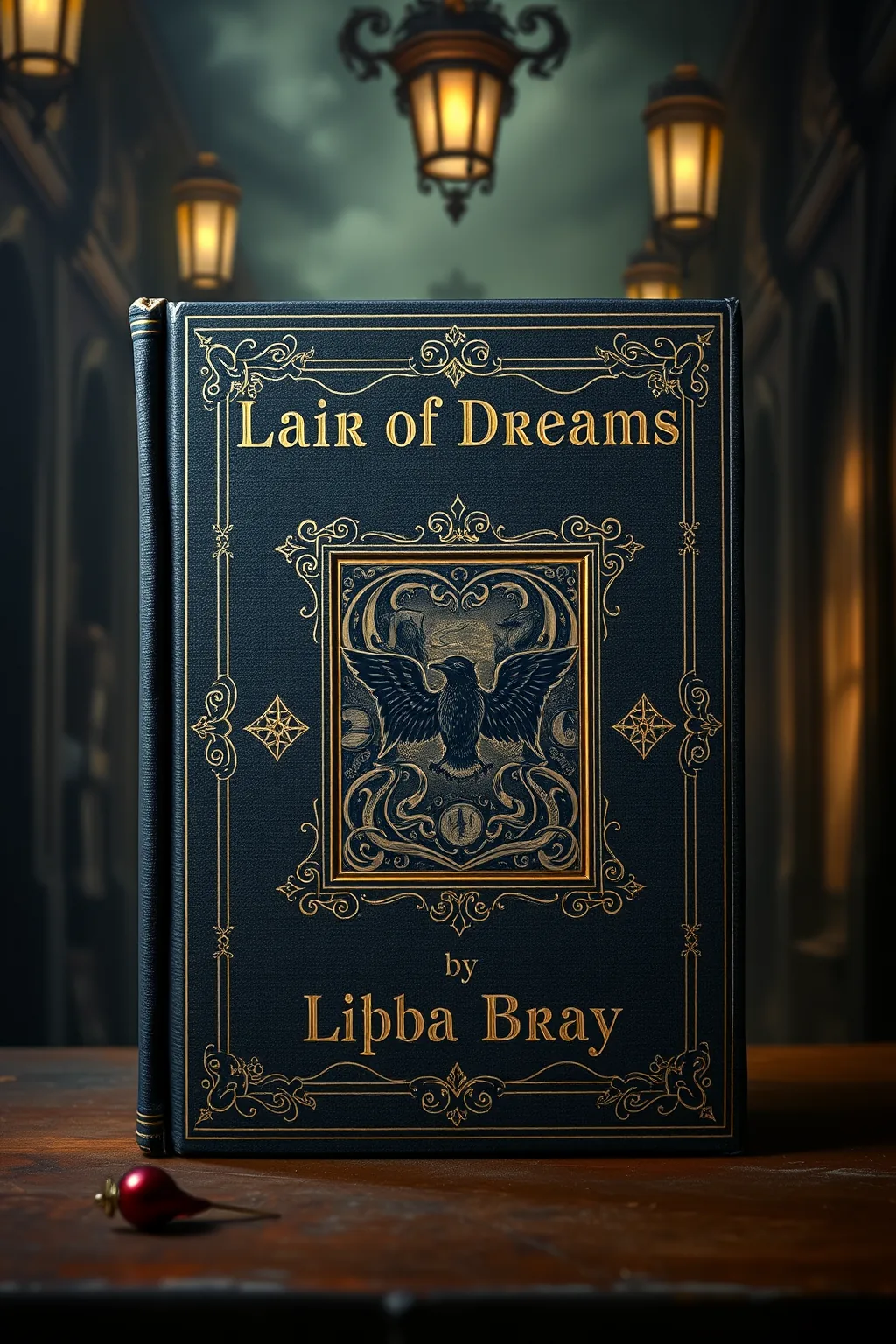
Pheryllt

 72
72

Pheryllt
Joshua Free’s Pheryllt attempts a bold reconstruction of a lost Druidic tradition, positing a spiritual lineage far older than commonly accepted. The work’s strength lies in its audacious synthesis of obscure historical references and Iolo Morganwg's highly contested mythology, presenting a compelling, if speculative, counter-narrative to academic dismissal. However, the speculative leaps sometimes outpace the evidence, leaving the reader to navigate complex arguments that rely heavily on foundational assumptions about the authenticity of sources like Morganwg's bardic traditions. A particularly striking section explores the supposed transmission of knowledge through 'Bardic Chairs,' a concept central to the Pheryllt system that challenges conventional understandings of esoteric learning. Ultimately, Pheryllt offers a provocative, if contentious, re-imagining of ancient Celtic wisdom for the modern esoteric practitioner.
📝 Description
72
Pheryllt challenges prevailing interpretations of Druidic texts and traditions.
This book examines ancient texts and traditions attributed to the Druids, questioning established academic and neodruidic viewpoints. It proposes a complex, pre-Flood esoteric system, aiming to trace a spiritual and philosophical lineage that predates much of Western occultism. The authors draw upon scattered historical accounts and speculative reconstructions to build their case. The work is intended for dedicated students of Western esotericism, especially those interested in pre-Christian European traditions and the origins of Druidry. It will appeal to researchers who are skeptical of standard narratives and willing to consider less conventional theories regarding ancient wisdom. It is not suited for readers looking for simple introductions to Celtic mythology.
The concept of "Books of Pheryllt" or "Writings of Hu" originates with figures such as Iolo Morganwg, an 18th-century Welsh bard. Morganwg created the Third Bardic Order of Glamorgan, a system he claimed held ancient Welsh traditions. His work, though influential, is largely considered a romantic invention by mainstream scholarship. Nevertheless, it influenced later esoteric movements, including aspects of modern Druidry, and writers like Ignatius Donnelly who mentioned these 'ancient books' in his writings on Atlantis.
The book engages with the historical and mythical foundations of Druidry, specifically through the lens of the "Pheryllt" texts. It positions itself against modern, often simplified, understandings of Celtic paganism by positing a deeper, ancient esoteric tradition. The authors connect these ideas to figures like Iolo Morganwg, who is known for constructing elaborate systems of Welsh lore, and his alleged preservation of knowledge predating major historical events like the biblical flood. This approach situates the work within discussions of historical reconstruction and the nature of esoteric knowledge transmission in Western traditions.
💡 Why Read This Book?
• Gain an understanding of the 'Pheryllt' concept as presented by Joshua Free, which posits a pre-Flood esoteric tradition attributed to Druidic sources, a perspective distinct from standard academic interpretations of Celtic history. • Explore the controversial legacy of Iolo Morganwg, a key figure whose fabricated bardic traditions are central to the Pheryllt framework, offering insight into the construction of esoteric lineages. • Examine the argument for a preserved esoteric knowledge system that predates the biblical flood, challenging modern neodruidic circles to reconsider their engagement with ancient wisdom.
⭐ Reader Reviews
Honest opinions from readers who have explored this book.
❓ Frequently Asked Questions
What are the 'Books of Pheryllt' mentioned in the book?
The 'Books of Pheryllt' are theorized ancient texts or traditions attributed to the Druids, supposedly containing writings of Hu Gadarn. Ignatius Donnelly and Joshua Free reference them as evidence of a pre-Flood esoteric knowledge system.
Who was Iolo Morganwg and why is he important to Pheryllt?
Iolo Morganwg (1745-1826) was a Welsh bard and antiquarian whose fabricated traditions, particularly the Third Bardic Order of Glamorgan, form a significant basis for the Pheryllt concept presented in the book.
Is Pheryllt a historical account of Druidry?
Pheryllt is presented as a reconstruction of a speculative, ancient esoteric tradition attributed to the Druids, rather than a direct historical account. It draws heavily on Iolo Morganwg's writings and challenges modern interpretations.
What does the book criticize about modern neodruidism?
The book criticizes modern neodruidic circles for what it perceives as closed-mindedness and a failure to engage with the deeper, potentially older, esoteric traditions represented by the Pheryllt concept.
What is Hu Gadarn's role in the Pheryllt tradition?
Hu Gadarn is a mythical figure associated with the Pheryllt tradition, whose 'writings' are considered part of this ancient esoteric knowledge that the book seeks to explore and reconstruct.
Where does the 2014 publication date for Pheryllt come from?
The 2014 date refers to the first published edition of Joshua Free's work on Pheryllt, building upon earlier ideas and the historical context provided by figures like Iolo Morganwg and Ignatius Donnelly.
🔮 Key Themes & Symbolism
The Books of Pheryllt
This theme centers on the hypothesized ancient texts and traditions attributed to the Druids, particularly the 'Writings of Hu.' The work posits these as remnants of a pre-Flood esoteric knowledge system, challenging conventional historical and archaeological views of Celtic spirituality and occult history. It suggests a continuity of wisdom far older than typically acknowledged by scholars or even modern esoteric practitioners.
Iolo Morganwg's Legacy
The book critically engages with the contributions of Iolo Morganwg, the 18th-century Welsh antiquarian whose fabricated bardic traditions, like the Third Bardic Order, are central to the Pheryllt concept. It examines how his work, though controversial, became a reference for later esoteric interpretations of Welsh heritage and Druidry, highlighting the complex relationship between invention and tradition.
Critique of Modern Esotericism
A significant theme is the critique leveled against contemporary neodruidic circles. The authors argue that many modern groups, despite claims of open-mindedness, have become insular, failing to grasp the profound, ancient esoteric principles they believe are represented by the Pheryllt tradition. This theme calls for a re-evaluation of how esoteric knowledge is preserved and transmitted.
Hu Gadarn and Pre-Flood Wisdom
The mythical figure Hu Gadarn is presented as a key progenitor of the Pheryllt esoteric system. This theme explores the idea that Hu's teachings represent a form of primordial wisdom that survived ancient cataclysms, including the Great Flood. The work connects this to broader esoteric concepts of lost golden ages and the cyclical nature of knowledge.
💬 Memorable Quotes
Direct passages from the work, attributed to the author.
“For two decades a modern movement of neodruids influenced by modern Pher...”
— This fragment suggests a critique of contemporary neodruidic practice, implying that despite being 'influenced' by ideas related to Pheryllt, the movement has failed to grasp or embody its core principles, highlighting a perceived disconnect between theory and practice.
“It is now even more controversial to speak of the Pheryllt in neodruid circles - supposed rings of open minds that remain closed in reality.”
— This statement directly addresses the resistance encountered when discussing the Pheryllt tradition within modern Druidic communities. It frames this resistance as a sign of intellectual rigidity, contrasting the outward appearance of open-mindedness with an inner reality of closed perspectives.
“The writings of Hu.”
— This concise phrase refers to the purported ancient source material within the Pheryllt tradition. It signifies a body of esoteric knowledge attributed to a mythical figure, Hu Gadarn, representing a primordial wisdom that the book aims to explore.
“Hundreds of years of diverse academic and philosophical debate await the Seeker on their look back.”
— This observation frames the study of Druidry and related esoteric traditions as a complex and lengthy undertaking, marked by significant scholarly and philosophical disagreement. It prepares the reader for the contentious nature of the material discussed in Pheryllt.
💡 Key Ideas
Editorial paraphrase of the work's core concepts — not direct quotes.
The Druids believed in books more ancient than the flood. They styled them the 'Books of Pheryllt' and the writings of Hu.
This quote, attributed to Ignatius Donnelly, serves as a foundational assertion for the book's premise. It directly links the concept of Pheryllt to a highly ancient, possibly pre-diluvian, esoteric tradition within Druidry, setting the stage for the work's speculative reconstruction.
🌙 Esoteric Significance
Tradition
Pheryllt positions itself within the broad current of Western Esotericism that seeks to recover pre-Christian European wisdom traditions. It draws implicitly from traditions that value Gnosis and ancient origins, attempting to reconstruct a lineage that predates later Hermetic and Kabbalistic systems. The work departs from more formalized traditions by focusing on a highly speculative, bardic-rooted esoteric framework attributed to figures like Hu Gadarn.
Symbolism
The concept of the 'Bardic Chair' is central, symbolizing not just a seat of honor but a nexus for the transmission of sacred knowledge and esoteric understanding within the Pheryllt system. Another motif is the idea of 'ancient books' predating the biblical flood, representing primordial wisdom and a lost golden age that the book seeks to re-establish or re-interpret for modern practitioners.
Modern Relevance
Contemporary practitioners of various Pagan and esoteric paths who are interested in deeper, more ancient roots of Western spirituality may find resonance. Thinkers exploring the philosophical implications of lost knowledge and alternative historical narratives, as well as those critical of established academic discourse in occult history, might draw upon Pheryllt's arguments.
👥 Who Should Read This Book
• Researchers of Western Esotericism interested in the construction and transmission of esoteric lineages, particularly those focusing on Celtic and pre-Christian European traditions. • Students of Iolo Morganwg and his influence on modern occultism, seeking to understand how his fabricated bardic system informs later esoteric concepts. • Neodruids and practitioners of Celtic-inspired spiritual paths who are open to challenging established interpretations and exploring controversial theories about ancient wisdom.
📜 Historical Context
The work emerges from a lineage of esoteric thought that grapples with the historical reconstruction of pre-Christian European traditions, particularly Celtic ones. Its foundation rests heavily on the controversial output of Iolo Morganwg, a Welsh antiquarian of the late 18th and early 19th centuries. Morganwg claimed to have revived ancient bardic traditions, including the Third Bardic Order of Glamorgan, a system largely considered his own invention by mainstream academia. However, his writings profoundly influenced subsequent esoteric movements and figures like Ignatius Donnelly, who referenced the 'Books of Pheryllt' in his own speculative works. This book engages with the debate surrounding Morganwg, positioning his fabrications not as mere errors but as potential conduits to a deeper, albeit obscured, esoteric truth. It implicitly contrasts this approach with the more cautious, empirical methodologies of Celtic studies, a competing school of thought that largely dismisses such foundational claims.
📔 Journal Prompts
The 'Books of Pheryllt' as a concept: What does this idea represent in terms of lost knowledge?
Reflecting on Iolo Morganwg's influence on esoteric traditions.
The perceived 'closed-mindedness' of modern neodruidic circles.
Hu Gadarn's role as a keeper of primordial wisdom.
The challenge of reconstructing esoteric lineages from fragmented or contested sources.
🗂️ Glossary
Pheryllt
A term referring to ancient Druidic texts or traditions, considered by the work's authors to contain esoteric knowledge predating the biblical flood. It is linked to the 'Writings of Hu'.
Hu Gadarn
A mythical figure in Welsh tradition, associated with the Pheryllt concept. His 'writings' are believed to represent a primordial esoteric wisdom passed down through ancient times.
Iolo Morganwg
An 18th-century Welsh antiquarian and poet whose fabricated bardic traditions, such as the Third Bardic Order, form a significant basis for the Pheryllt concept explored in the book.
Neodruidism
Modern movements and practices that draw inspiration from historical and mythical Druidry. The book critiques certain aspects of this movement for perceived insularity.
Bardic Chair
A concept within the Pheryllt framework, representing a locus or instrument for the transmission of sacred and esoteric knowledge, beyond a mere physical seat.
Pre-Flood Texts
Texts or traditions believed to have existed before the biblical Great Flood. The Books of Pheryllt are categorized as such, implying immense antiquity and foundational esoteric significance.
Ignatius Donnelly
An American writer and politician (1831-1901) known for his books on Atlantis and other speculative theories. He is cited in the work for referencing the Books of Pheryllt.
This book appears in 1 collection
🔮 Readers Also Liked
Browse all →







From the “Druidism” Collection
View all →






More Free Occult Philosophy Books
View all →