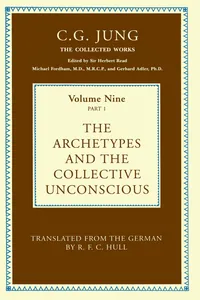
The Collected Works of C.G. Jung
 80
80

The Collected Works of C.G. Jung
Jung's Collected Works is not a casual read; it’s an intellectual expedition into the architecture of the human soul. The sheer breadth of material, from detailed case studies to abstract theoretical treatises, is formidable. A particular strength lies in his meticulous examination of symbols and myths across cultures, revealing their psychic roots. For instance, his analysis of the Gnostic texts in 'Aion' offers a novel lens through which to view the historical development of consciousness. However, the density of his prose and the reliance on specialized terminology can present a significant barrier to entry for newcomers. The book demands sustained attention and a willingness to grapple with concepts that challenge conventional Western thought. Ultimately, this collection is an unparalleled resource for understanding the foundations of analytical psychology and its profound connections to the spiritual and mythological dimensions of human existence.
📝 Description
80
Carl Jung's Collected Works gather his writings from 1902 to 1961.
This multi-volume collection assembles the complete published writings, lectures, and research of Carl Gustav Jung. It spans his entire career, documenting his development of analytical psychology. The works detail his significant contributions to understanding the human psyche, including his theories on dream analysis, archetypes, and the collective unconscious. It also covers his concepts of psychic energy and the process of individuation. The compilation efforts were largely completed by the mid-20th century, making these texts a comprehensive resource.
This collection is primarily for those with a serious interest in Jungian psychology, whether academic or personal. It offers detailed insight into his theoretical structures and their practical applications in therapy and self understanding. Readers exploring the connections between psychology, mythology, religion, and various esoteric traditions will find extensive material here. It is particularly valuable for advanced students and researchers engaging with the depths of psychological inquiry.
Jung's work engaged directly with historical esoteric traditions, including alchemy and Gnosticism. He saw these systems not as mere superstition, but as expressions of the collective unconscious and the human drive toward psychic wholeness. His analysis of alchemical symbolism, for example, revealed parallels with the individuation process he described. These volumes place his psychological theories in dialogue with a long history of mystical and symbolic thought, demonstrating how ancient ideas continue to resonate within the modern psyche.
💡 Why Read This Book?
• You will gain a comprehensive understanding of Jung's unique concept of the collective unconscious, differentiating it from Freud’s personal unconscious, which is foundational to analytical psychology. • You will explore the archetypes of the collective unconscious, such as the Shadow and the Anima/Animus, and their manifestation in myths and individual lives, as detailed in works like 'The Archetypes and the Collective Unconscious'. • You will learn about the process of individuation, Jung's term for psychological development and self-realization, as he outlines it across his various essays and lectures.
⭐ Reader Reviews
Honest opinions from readers who have explored this book.
❓ Frequently Asked Questions
When did C.G. Jung develop his key psychological theories?
C.G. Jung developed his foundational theories, including the collective unconscious and archetypes, primarily in the early to mid-20th century, with significant works appearing after his break with Sigmund Freud around 1913.
What is the difference between Jung's collective unconscious and Freud's unconscious?
Freud's unconscious is primarily personal, containing repressed memories and desires. Jung's collective unconscious is a deeper, inherited layer shared by all humanity, containing universal archetypes and instincts.
What are archetypes in Jungian psychology?
Archetypes are innate, universal psychic dispositions that form the structure of the collective unconscious. They manifest as primordial images and patterns in myths, dreams, and behavior, such as the Hero, the Mother, or the Trickster.
How does Jung's concept of individuation relate to self-realization?
Individuation, for Jung, is the lifelong process of becoming a psychologically whole individual. It involves integrating conscious and unconscious aspects of the psyche, including the shadow and anima/animus, to achieve the realization of the Self.
What influence did alchemy and Gnosticism have on Jung's work?
Jung saw alchemical symbolism and Gnostic cosmology as expressions of the collective unconscious and archetypes, providing a historical framework and symbolic language for understanding the process of individuation and the transformation of the psyche.
Are Jung's Collected Works suitable for beginners in psychology?
While foundational, Jung's Collected Works are dense and often require prior knowledge. Beginners might benefit from introductory texts on Jungian psychology before tackling the original writings, which were first compiled in the mid-20th century.
🔮 Key Themes & Symbolism
The Collective Unconscious
This foundational concept posits a psychic layer inherited by all humans, distinct from the personal unconscious. It is a reservoir of latent memory traces, instinctual behaviors, and primordial images known as archetypes. Jung argued that these universal patterns shape human experience and perception, manifesting across cultures in myths, religions, and dreams. The Collected Works meticulously details how this shared psychic inheritance influences individual and collective behavior, providing a framework for understanding commonalities in human consciousness and the symbolic language that binds us.
Archetypes and Their Manifestations
Archetypes are the structural components of the collective unconscious, representing universal patterns of psychic experience. The Collected Works explores numerous archetypes, including the Persona (social mask), the Shadow (repressed aspects of the self), the Anima (feminine in the male psyche), the Animus (masculine in the female psyche), and the Self (wholeness). Jung examines their symbolic representations in mythology, fairy tales, and religious imagery, demonstrating how they emerge in dreams and influence personality development and psychological distress.
Individuation as a Psychological Goal
The process of individuation is central to Jung's therapeutic and philosophical vision. It describes the lifelong journey of psychological development wherein an individual becomes fully themselves, integrating conscious and unconscious aspects of the psyche to achieve wholeness. The Collected Works traces this path, highlighting the challenges and transformations involved in confronting one's shadow, understanding the anima/animus, and ultimately realizing the Self. This process is depicted not as a destination but as an ongoing dynamic of psychological growth and differentiation.
Synchronicity and Meaningful Coincidence
Jung's concept of synchronicity, explored within these works, describes acausal connecting principles or meaningful coincidences between inner psychic states and outer events. It moves beyond simple causality to suggest an underlying order or interconnectedness in the universe. Jung posited synchronicity as evidence for the reality of the collective unconscious and archetypal patterns, suggesting that these events carry significant psychological meaning for the individual experiencing them, often occurring during times of psychic transformation.
💬 Memorable Quotes
Direct passages from the work, attributed to the author.
“One can never know enough about the psyche.”
— This statement underscores Jung's lifelong dedication to exploring the depths of the human mind. It reflects his belief that the psyche is infinitely complex and that continuous study and investigation are necessary to approach a fuller understanding of its mysteries.
“The shoe that fits one man pinches another.”
— This aphorism highlights Jung's emphasis on individual psychological uniqueness. It cautions against applying universal theories or solutions without considering the specific psychological makeup and life circumstances of the individual, advocating for a personalized approach to understanding the psyche.
“Shadow is the man’s own invisible ghost.”
— This interpretation of the Shadow archetype emphasizes its deeply personal nature. It represents the parts of ourselves that we disown or repress, often projected onto others, but which remain an integral, albeit hidden, part of our psychological reality.
“One should not identify with the archetype, but rather make conscious the fact that one is influenced by it.”
— This highlights a crucial aspect of Jungian individuation: recognizing the influence of archetypes without becoming possessed by them. It is about understanding their power and role in one's life, rather than losing oneself to their pattern.
💡 Key Ideas
Editorial paraphrase of the work's core concepts — not direct quotes.
The experience of the numinous is a direct experience of the transcendent.
Jung used 'numinous' to describe the experience of the divine or the sacred, often encountered in religious or mystical phenomena. This quote suggests that such encounters are direct apprehensions of realities beyond the ordinary empirical world, pointing to the spiritual dimension of the psyche.
🌙 Esoteric Significance
Tradition
Jung's work serves as a crucial bridge between modern depth psychology and ancient esoteric traditions, particularly Hermeticism, Gnosticism, and alchemy. He did not merely study these traditions but saw them as living expressions of the collective unconscious and archetypal patterns. His exploration of alchemical symbolism, for instance, was not for historical curiosity but as a symbolic language for the process of psychological transformation. He reinterpreted these ancient paths as maps for individuation, aligning his psychological theories with the initiatory structures found in Western esotericism.
Symbolism
Key symbols recurring in Jung's work and its esoteric interpretations include the Ouroboros, representing the cyclical nature of time, eternal return, and the integration of opposites; the Philosopher's Stone, symbolizing the perfected Self or the goal of individuation; and Mandalas, geometric configurations representing wholeness and the Self, often found in Tantric Buddhism and also as spontaneous creations in Western individuals undergoing psychological integration.
Modern Relevance
Contemporary thinkers in depth psychology, mythology studies, and Jungian analysis continue to draw heavily from Jung's Collected Works. His concepts are influential in fields like ecopsychology, trauma studies, and consciousness research. Furthermore, contemporary esoteric practitioners, particularly those engaged with Hermeticism, alchemy, and ceremonial magic, frequently reference Jung's interpretations of symbols and psychological processes as complementary to their own practices, seeing his work as a modern articulation of perennial wisdom.
👥 Who Should Read This Book
• Students of analytical psychology and depth psychology seeking to understand the foundational texts of C.G. Jung's theories, including the collective unconscious and archetypes. • Scholars of comparative religion, mythology, and cultural studies interested in Jung's groundbreaking connections between ancient symbols, religious experiences, and the human psyche. • Individuals engaged in personal development and spiritual exploration looking for a psychological framework to understand the process of individuation and the deeper layers of consciousness.
📜 Historical Context
C.G. Jung's Collected Works emerged in the mid-20th century, a period marked by profound shifts in global thought following two World Wars. His ideas, initially developed in the early decades of the century after his controversial separation from Sigmund Freud's psychoanalytic movement in 1913, offered a distinct perspective on the unconscious. While Freud focused on the personal, repressed unconscious, Jung expanded this to include the collective unconscious and its archetypes, drawing heavily on mythology, comparative religion, and alchemy. This divergence placed Jung in intellectual dialogue with, and often in opposition to, prevailing Freudian orthodoxy and burgeoning existentialist thought. His work on Gnosticism and Eastern religions also positioned him outside mainstream academic psychology, leading to a complex reception. Some contemporaries, like Erich Fromm, engaged critically with his ideas, while others, such as Mircea Eliade, found common ground in their study of religious symbolism.
📔 Journal Prompts
The Shadow archetype's presence in your personal experience.
Reflecting on the Anima/Animus projection in relationships.
Identifying archetypal patterns in current world events.
The concept of Synchronicity and its personal manifestations.
The journey of Individuation and its current stage.
🗂️ Glossary
Collective Unconscious
A hypothesized universal layer of the human psyche, inherited and shared by all people, containing archetypes and instincts.
Archetype
Universal, archaic patterns and images that derive from the collective unconscious and are the psychic counterpart of instinct.
Individuation
The psychological process by which a person becomes an individual, a whole, integrated self, through the conscious integration of unconscious elements.
Persona
The social mask or role that an individual presents to the world, often concealing their true nature.
Shadow
The unconscious or repressed aspects of the personality, often perceived as negative or unacceptable.
Anima/Animus
The unconscious feminine aspect in the male psyche (Anima) and the unconscious masculine aspect in the female psyche (Animus).
Synchronicity
Meaningful coincidences between psychic events and physical events that are not causally related.