Lord of Chaos
 75
75

Lord of Chaos
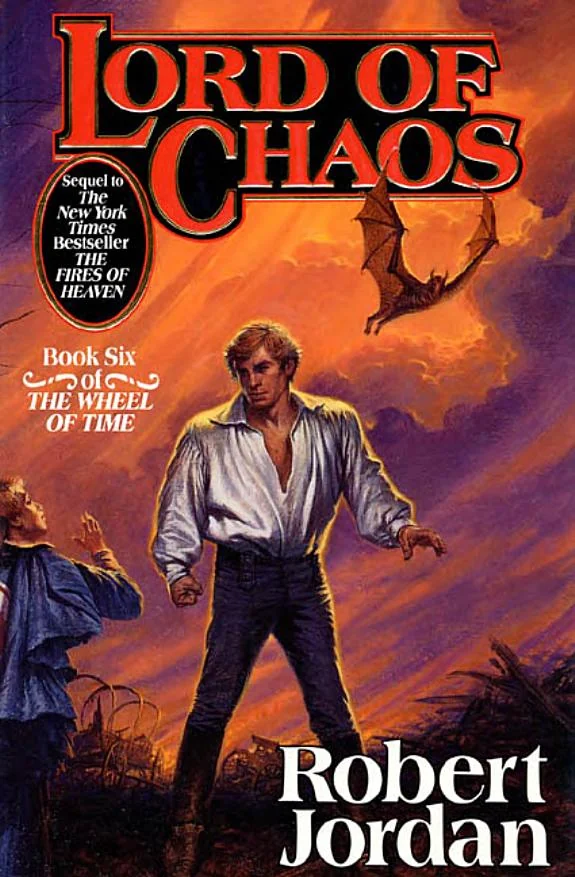
The sheer scale of Robert Jordan's world-building in Lord of Chaos continues to astound, particularly in how he juxtaposes the grand political maneuverings in Caemlyn with the stark, unsettling atmosphere of Shayol Ghul. The sequence detailing Rand’s ascent to the throne, culminating in his confrontation with the Dark One, is a masterclass in building existential dread and the terrifying weight of prophecy. However, the novel occasionally falters under its own ambition; the pacing can become uneven, with certain subplots feeling protracted, detracting from the central momentum. The exploration of the White Tower's internal politics, while necessary, sometimes bogs down the narrative's forward thrust. Still, Jordan’s ability to imbue even minor characters with a sense of history and consequence is remarkable. Lord of Chaos remains a pivotal, if sometimes sprawling, entry in the Wheel of Time saga.
📝 Description
75
Published in 1994, Lord of Chaos escalates the Wheel of Time saga with brutal war and personal destiny.
Lord of Chaos, the sixth book in Robert Jordan's Wheel of Time series, was published in 1994. The narrative continues following multiple protagonists as they face immense power, political intrigue, and the encroaching Shadow. This installment significantly raises the stakes, depicting the harsh realities of war and the individual toll exacted by destiny.
The book is recognized for its detailed world-building and a large cast of characters. Readers invested in the prophecies surrounding the Dragon Reborn and the conflict with the Dark One will find this volume a significant progression in the overall story. It appeals to those who enjoy expansive fantasy narratives filled with deep lore, complex political situations, and character development that unfolds over many books. Those interested in detailed magic systems and intricate plots will also find much to appreciate.
Within the broader tradition of epic fantasy that draws on archetypal narratives, Lord of Chaos engages with themes of cyclical destruction and rebirth. The concept of the Dragon Reborn, a figure destined to save the world but also to potentially break it, echoes savior myths found in various spiritual traditions. The struggle between the Shadow and the forces of light reflects dualistic cosmologies, while the complex magic system and the intricately woven prophecies hint at a structured, almost alchemical, approach to the supernatural.
💡 Why Read This Book?
• Understand the profound psychological toll of leadership as Rand Al'Thor grapples with the burden of being the Dragon Reborn, a concept central to the series' mythos. • Witness the intricate machinations of the White Tower in exile in Salidar, and how their political divisions mirror larger conflicts. • Experience the stark symbolism of Shayol Ghul, a place where the very fabric of reality is presented as alien and inimical to life.
⭐ Reader Reviews
Honest opinions from readers who have explored this book.
❓ Frequently Asked Questions
What is the significance of Shayol Ghul in Lord of Chaos?
Shayol Ghul is depicted as the prison of the Dark One, a place where the 'myrddraal swords are forged.' Its unnatural sky signifies a realm fundamentally opposed to the natural order, serving as a potent symbol of the encroaching Shadow.
Who are the main protagonists in Lord of Chaos?
The primary protagonists include Rand Al'Thor, the Dragon Reborn, holding the throne in Caemlyn, and Perrin Goldeneyes, whose storyline also progresses significantly. Other key characters like Mat Cauthon and Egwene al'Vere are also central to the unfolding events.
What major event occurs for Rand Al'Thor in this book?
In Lord of Chaos, Rand Al'Thor ascends to the throne of the Sun King in Caemlyn. This event is pivotal, forcing him to confront his destiny and the immense power he wields, leading to a significant confrontation.
When was Lord of Chaos by Robert Jordan first published?
Lord of Chaos was first published on October 15, 1994, marking a significant point in the acclaimed Wheel of Time series.
How does Lord of Chaos build on The Fires of Heaven?
Lord of Chaos directly follows The Fires of Heaven, continuing the narrative threads established in its predecessor. It escalates the conflicts and personal journeys of the characters, particularly Rand's path and the White Tower's political schisms.
What is the role of the White Tower in exile in this book?
The White Tower, now in exile in Salidar, is depicted preparing an embassy to Caemlyn. Their internal divisions and political maneuvering are a significant subplot, highlighting the fragmentation of the Aes Sedai.
🔮 Key Themes & Symbolism
The Weight of Prophecy
Lord of Chaos intensely examines the burden placed upon Rand Al'Thor as the prophesied Dragon Reborn. The work portrays prophecy not as a gentle guide but as an inescapable, often brutal, destiny. Rand's internal struggle against the foretold path and the immense personal cost highlights the esoteric concept of predestination versus free will, questioning whether fulfilling destiny is a triumph or a tragedy.
The Nature of Chaos
The novel presents chaos not merely as destruction but as a fundamental force of existence, often intertwined with creation. The encroaching Shadow, led by the Dark One, embodies a destructive aspect of chaos, while the struggle against it necessitates embracing a different kind of order. This duality is explored through the political fragmentation and the use of the One Power, suggesting that balance, not absolute victory, is the true esoteric goal.
The Corrupting Influence of Power
The acquisition and wielding of power, particularly the One Power, are shown to have profound corrupting influences. The White Tower's internal politics and the actions of various characters demonstrate how ambition and the desire for control can lead to division and moral compromise. This theme serves as a cautionary exploration of power dynamics, relevant to many esoteric traditions that warn against unchecked ambition.
Fragmented Authority
The political field of Lord of Chaos is marked by fractured authority, most notably with the White Tower in exile in Salidar. This division reflects a breakdown in established structures and the struggle to maintain order amidst widespread conflict. The narrative questions the efficacy of centralized power when faced with existential threats, showing how disparate factions must either unite or perish.
💬 Memorable Quotes
Direct passages from the work, attributed to the author.
“The Wheel of Time turns, and Ages come and pass, leaving memories that become legend. Legend fades to myth, and even myth is long forgotten when the Age that gave it birth comes again.”
— This cyclical view of history and destiny is a foundational concept in the Wheel of Time. It frames the narrative within a cosmic timeline where events are destined to repeat, emphasizing the enduring nature of the struggle between Light and Shadow across vast epochs.
“Asha'man, kill!”
— This stark command, uttered by Rand Al'Thor, signifies his embrace of a new, potentially dark, power. It marks a turning point where he begins to utilize forces previously considered beyond the pale, highlighting his willingness to use any means necessary.
“The world turns, and the Wheel of Time spins through the hands of heroes and villains alike.”
— This reflects the idea that destiny is not solely shaped by 'good' individuals. Both protagonists and antagonists are seen as instruments of the larger cosmic cycle, their actions contributing to the inevitable turning of the ages.
“To the pure all things are pure, but to the corrupted, all things are corrupted.”
— This proverb speaks to the subjective nature of perception and morality. It suggests that one's inner state dictates how they interpret and interact with the world, a concept relevant to understanding character motivations and the influence of external forces.
“Power attracts the corruptible. It always has and always will.”
— This interpretation highlights a central theme: the dangerous allure of power. It suggests an inherent flaw in those who seek or wield significant influence, positing that such ambition often leads to moral decay, a recurring motif in the novel.
🌙 Esoteric Significance
Tradition
While not explicitly aligned with a single esoteric tradition, Lord of Chaos draws heavily on archetypal narratives found in Hermeticism and Gnosticism, particularly the concept of a cosmic struggle between a benevolent creator/order and a malevolent force (the Dark One). The cyclical nature of time echoes concepts in Eastern philosophies and some interpretations of Kabbalah. The idea of a chosen one destined to confront ultimate evil is a recurring motif across many spiritual traditions.
Symbolism
The 'Wheel of Time' itself is a potent symbol of cyclical existence, karma, and the unfolding of destiny, reminiscent of Dharmic traditions. Shayol Ghul, the prison of the Dark One, functions as a Gnostic 'kenoma' or void, a place of anti-creation and primal darkness. The 'Dragon Reborn' embodies the archetype of the savior figure, a common symbol across various mythologies and esoteric paths, representing potential for both immense good and terrible destruction.
Modern Relevance
Contemporary fantasy authors continue to explore themes of epic struggle, chosen ones, and the consequences of power, often echoing Jordan's scale and character depth. Discussions within online communities and academic circles still analyze Jordan's world-building, his handling of magic systems, and his exploration of leadership and destiny, showing its lasting impact on speculative fiction and its conceptual frameworks.
👥 Who Should Read This Book
["• Dedicated fans of The Wheel of Time series seeking the next installment in the overarching narrative, particularly those invested in Rand Al'Thor's journey.", '• Readers of epic fantasy who appreciate intricate world-building, complex political landscapes, and extensive character development spanning multiple volumes.', "• Students of narrative structure and mythological archetypes interested in examining the evolution of the 'chosen one' trope within a modern fantasy context."]
📜 Historical Context
Published in 1994, Lord of Chaos arrived at a zenith for epic fantasy. The genre, revitalized by authors like J.R.R. Tolkien and further developed by contemporaries such as Terry Brooks and Stephen R. Donaldson, was a significant market force. Robert Jordan’s Wheel of Time series, initiated in 1990, distinguished itself with its unprecedented scope and intricate magic system. Unlike the more mythic or archetypal approaches of some predecessors, Jordan’s work studied complex political structures and a vast ensemble cast. The reception of Lord of Chaos was strong, cementing its place as a bestseller and contributing to the growing demand for lengthy, immersive fantasy worlds. It occupied a space between the classic heroism of earlier fantasy and the emerging grittier narratives, like those soon to be exemplified by George R.R. Martin’s A Song of Ice and Fire.
📔 Journal Prompts
The nature of Rand Al'Thor's ascent to the throne in Caemlyn.
The significance of the White Tower's exile in Salidar.
Perrin Goldeneyes' evolving role and responsibilities.
The symbolic meaning of the unnatural sky over Shayol Ghul.
Reflections on the balance between destiny and free will as depicted for Rand.
🗂️ Glossary
Dragon Reborn
The prophesied reincarnation of Lews Therin Telamon, destined to fight the Dark One. Rand Al'Thor is the current incarnation, burdened by immense power and a foretold tragic destiny.
Myrddraal
Fearsome, eyeless creatures serving the Dark One. They are also known as 'Draghkar,' and in Lord of Chaos, the text mentions their swords being forged in unusual circumstances related to Shayol Ghul.
Aes Sedai
Women who can channel the One Power. They are figures of great influence and fear, with the White Tower serving as their central organization, though it becomes fractured in this novel.
One Power
The fundamental magical force of the world, divided into the male 'saidin' and female 'saidar' halves. Channeling it requires immense discipline and carries significant risks.
Shayol Ghul
A desolate island fortress in the Blight, serving as the prison of the Dark One. It is depicted as a place of profound evil and unnatural phenomena.
Salidar
A town in the Two Rivers region where the White Tower in exile has established its base of operations, attempting to organize against the encroaching Shadow.
Asha'man
Men who can channel the male half of the One Power, 'saidin.' Initially rare and feared, Rand begins to gather and train them as a new force.
This book appears in 1 collection
🔮 Readers Also Liked
Browse all →








From the “Prophecy” Collection
View all →




More Free Occult Philosophy Books
View all →