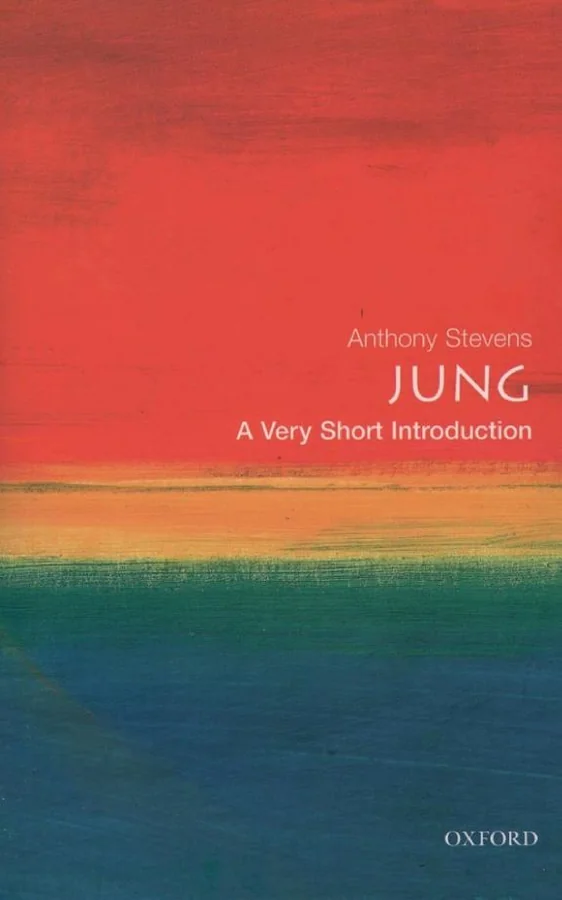
Jung: A Very Short Introduction
 79
79

Jung: A Very Short Introduction
Anthony Stevens’ *Jung: A Very Short Introduction* tackles the formidable task of rendering Carl Jung’s sprawling theoretical landscape comprehensible. Its strength lies in its disciplined focus on core concepts, presenting the collective unconscious, archetypes, and individuation with commendable clarity. Stevens’ explanation of the Anima/Animus complex, for instance, is particularly well-articulated, offering a concise window into Jung's understanding of psychological projection in relationships. However, the book’s brevity, while an asset for accessibility, occasionally sacrifices the depth needed to fully grasp the implications of Jung’s more esoteric speculations, such as synchronicity. The treatment of alchemy, while present, feels somewhat compressed. Stevens succeeds in demystifying Jung, but the sheer richness and often paradoxical nature of Jung’s thought are inevitably somewhat muted. It is a solid primer, offering a reliable map of Jungian terrain, even if it cannot convey the full atmospheric experience of exploring it firsthand.
📝 Description
79
Anthony Stevens' 2001 book clarifies Carl Jung's complex theories for a general audience.
Anthony Stevens' *Jung: A Very Short Introduction*, published by Oxford University Press in 2001, distills the core ideas of Carl Gustav Jung for readers unfamiliar with his work. The book aims to make Jung's psychological theories, which hold considerable sway in depth psychology and various esoteric traditions, more approachable than his original writings. Stevens structures the content to clarify concepts that might otherwise seem daunting, offering a concise entry point into Jungian thought.
This volume is an excellent starting point for those interested in the foundations of modern depth psychology and its influence on Western culture. It is especially useful for students of psychology, philosophy, and comparative religion who need a clear explanation of Jungian concepts. Readers drawn to the connections between psychology, mythology, and spirituality will also find this introduction beneficial. It is designed for individuals who wish to grasp the fundamental principles of Jungian analysis without undertaking extensive study of primary texts.
Carl Jung's analytical psychology emerged in the early 20th century, a period marked by significant intellectual shifts and a growing interest in the non-rational aspects of the psyche. Jung's work engaged deeply with mythology, alchemy, and religious symbolism, bridging the gap between academic psychology and esoteric traditions. His theories on the collective unconscious and archetypes provided a framework for understanding universal patterns of human experience that resonated with esoteric thought. This introduction situates Jung's ideas within that broader context, showing how his psychological concepts offered new ways to interpret ancient symbols and spiritual quests.
💡 Why Read This Book?
• Gain a clear understanding of Jung’s core concepts like the collective unconscious and archetypes, distinguishing his theories from Freudian psychoanalysis, as explored in chapters discussing these foundational ideas. • Grasp the process of individuation as Jung envisioned it – the path to psychological wholeness – as detailed in Stevens' explanation of this central life goal. • Understand the psychological relevance Jung found in subjects like myth and alchemy, offering a unique lens through which to view these ancient traditions, as presented in the book's examinations.
⭐ Reader Reviews
Honest opinions from readers who have explored this book.
❓ Frequently Asked Questions
What is the difference between Jung's collective unconscious and Freud's unconscious?
Jung's collective unconscious is a transpersonal layer of the psyche containing inherited, universal patterns (archetypes) shared by all humanity, distinct from Freud's focus on repressed personal memories and experiences.
Who was Carl Jung and why is he important?
Carl Jung (1875-1961) was a Swiss psychiatrist and psychoanalyst who founded analytical psychology. He is significant for his concepts of archetypes, the collective unconscious, and individuation, influencing psychology, literature, and spirituality.
What are Jung's archetypes?
Archetypes are universal, archaic patterns and images that derive from the collective unconscious and are the psychic counterpart of instinct. Key examples include the Shadow, Persona, Anima, and Animus.
What is the concept of individuation in Jungian psychology?
Individuation is Jung's term for the lifelong psychological process of differentiating the self, integrating conscious and unconscious elements to achieve wholeness and self-realization.
Does Anthony Stevens' book cover Jung's ideas on synchronicity?
Yes, the book addresses Jung's concept of synchronicity, which refers to meaningful coincidences that are not causally related but are experienced as significant by the observer.
What is the significance of alchemy in Jung's work?
Jung saw alchemy not just as a proto-chemistry but as a symbolic representation of the individuation process, a psychological transformation mirroring the alchemical transmutation of base metals into gold.
🔮 Key Themes & Symbolism
The Collective Unconscious
Stevens explains Jung's revolutionary concept of the collective unconscious as a transpersonal psychic inheritance shared by all humans. This deep layer of the psyche contains archetypes, which are innate, universal predispositions to perceive, experience, and respond to the world in certain ways. It suggests that our individual minds are connected to a vast, ancient psychic heritage, bridging the personal and the universal. This idea profoundly impacts how we understand human nature, myth, and culture, hinting at underlying patterns in human experience across diverse societies.
Archetypes and the Psyche
The book clarifies Jung's archetypes – fundamental psychic structures like the Shadow, Persona, Anima, and Animus. These archetypes manifest in myths, dreams, and art, shaping our perceptions and behaviors. The Shadow represents the darker, unacknowledged aspects of the self, while the Persona is the social mask we wear. The Anima (in men) and Animus (in women) represent the contrasexual aspects of the psyche. Understanding these archetypes is crucial for comprehending Jung's model of psychological development and interpersonal dynamics.
Individuation and the Self
Central to Jungian psychology is the concept of individuation: the lifelong process of becoming a whole, integrated individual by reconciling conscious and unconscious elements of the psyche. Stevens outlines this journey towards realizing the Self, the archetype of wholeness and the totality of the personality. It is not about perfection but about embracing all aspects of oneself, leading to greater psychological maturity and a unique sense of purpose. This process is often facilitated by confronting one's complexes and integrating archetypal energies.
Synchronicity and Meaning
Stevens introduces Jung’s concept of synchronicity, defined as meaningful coincidences that appear to be related without a direct causal link. Jung saw these events as evidence of acausal connecting principles in the universe, often occurring during times of psychological transformation. This idea bridges the gap between the inner psychic world and outer events, suggesting a deeper, underlying order or interconnectedness. It invites contemplation on how external occurrences can hold profound personal significance.
💬 Memorable Quotes
Direct passages from the work, attributed to the author.
“The collective unconscious, a psychic inheritance common to all mankind.”
— This highlights Jung's concept of a shared, inherited psychic structure that transcends individual experience and culture, forming the basis for universal human patterns.
“Archetypes are primordial images or patterns of thought.”
— This defines archetypes as fundamental, universal templates of experience and behavior that originate from the collective unconscious and manifest in various forms.
“Individuation is the process of becoming a complete human being.”
— This succinctly captures Jung's central idea of psychological development as a journey toward wholeness, integrating all aspects of the personality.
“The Shadow is the dark side of our personality.”
— This interpretation identifies the Shadow archetype with the repressed, disowned, or negative aspects of the self that individuals often project onto others.
“Synchronicity: meaningful coincidence.”
— This brief definition points to Jung's theory of acausal connecting principles, where seemingly random events carry profound subjective significance for the individual.
🌙 Esoteric Significance
Tradition
Jungian psychology, particularly its emphasis on archetypes and the collective unconscious, has become a starting point for many modern esoteric traditions. It provides a psychological framework for understanding universal symbolic language found in Gnosticism, Hermeticism, and Neoplatonism. Jung's exploration of alchemy as a symbolic path to individuation directly connects his work to Hermetic and alchemical traditions, reinterpreting their ancient practices through a psychological lens.
Symbolism
Key symbols in Jungian thought, such as the Mandalas, the Dragon, and the Alchemical Marriage, are central to esoteric symbolism. Mandalas represent the Self and the striving for wholeness. The Dragon often symbolizes the chaotic, untamed unconscious or primal energy that must be confronted. The Alchemical Marriage signifies the union of opposites within the psyche, a crucial stage in the individuation process that mirrors ancient Hermetic ideals of coniunctio.
Modern Relevance
Contemporary esotericists, depth psychologists, and spiritual seekers frequently draw upon Jungian concepts. Schools of Jungian analysis continue to explore his ideas, while practices like active imagination and dream analysis remain vital. Thinkers in areas like transpersonal psychology and archetypal astrology build directly on his work. His concepts offer a sophisticated language for exploring consciousness, symbolism, and the perennial quest for meaning in a secularizing world.
👥 Who Should Read This Book
• Aspiring psychologists and therapists seeking an accessible entry into Jungian theory, providing foundational knowledge of key concepts like archetypes and the collective unconscious. • Students of comparative religion and mythology interested in understanding the psychological underpinnings of ancient stories and symbols, offering a framework for interpreting universal themes. • Individuals on a personal growth path looking for tools to understand their inner world and the process of self-realization, as explained through the concept of individuation.
📜 Historical Context
Carl Jung's work emerged from the fertile intellectual ground of early 20th-century Europe, a period marked by radical shifts in understanding the human psyche. Developing analytical psychology in parallel with, and often in divergence from, Sigmund Freud's psychoanalysis, Jung was also influenced by figures like Alfred Adler. His theories, particularly the concept of the collective unconscious and archetypes, offered an alternative to the more biologically deterministic views prevalent at the time. While Freud emphasized personal repressed sexuality, Jung expanded the scope to include universal psychic structures rooted in myth and ancient symbolism. His engagement with alchemy and Eastern philosophies positioned him outside the mainstream scientific consensus, leading to both fascination and significant criticism from contemporaries. Jung's ideas, however, found resonance with thinkers exploring mythology, religion, and art, bridging the gap between academic psychology and more esoteric or spiritual explorations.
📔 Journal Prompts
The archetype of the Shadow and its manifestation in personal life.
Reflections on the Persona: When does it serve, and when does it conceal?
Archetypal patterns observed in personal dreams or significant life events.
The process of individuation: Identifying personal steps toward psychological wholeness.
Synchronicity: Documenting meaningful coincidences and exploring their potential significance.
🗂️ Glossary
Collective Unconscious
A shared, inherited reservoir of psychic material common to all humanity, containing archetypes and instincts that influence human experience and behavior.
Archetype
Universal, archaic patterns and images that derive from the collective unconscious. They are innate predispositions to perceive, experience, and respond to the world in certain ways.
Shadow
The unconscious, repressed, or disowned aspects of the personality, often seen as the 'dark side' of the ego. Integration of the Shadow is vital for wholeness.
Persona
The social mask or role that an individual adopts to interact with the external world. It is how one wishes to appear to others.
Anima/Animus
The contrasexual aspect of the psyche. The Anima is the feminine aspect in the male psyche; the Animus is the masculine aspect in the female psyche.
Individuation
The lifelong psychological process of differentiation of the self, integrating conscious and unconscious aspects of the personality to achieve wholeness and self-realization.
Self
The archetype of wholeness and the totality of the personality, encompassing both the conscious and unconscious. It is the goal of the individuation process.
Synchronicity
The occurrence of two or more events that appear meaningfully related but lack a discernible causal connection; a concept exploring acausal connecting principles.
This book appears in 1 collection
🔮 Readers Also Liked
Browse all →








From the “Collective Unconscious” Collection
View all →




More Free Occult Philosophy Books
View all →