Karma and Rebirth
 78
78

Karma and Rebirth
The Calgary Conference's output on Karma and Rebirth offers a valuable, if somewhat academic, snapshot of scholarly discourse in the early 1980s. Its strength lies in its broad geographical scope, encompassing not only the expected Indian subcontinent but also significant sections on Tibetan, Chinese, and Japanese traditions, alongside a nascent Western engagement. The contributors generally avoid simplistic generalizations, instead presenting nuanced analyses of specific cultural adaptations. However, the collection occasionally suffers from the inherent limitations of conference proceedings: unevenness in depth and accessibility across essays. A particularly insightful section, for instance, details the subtle distinctions in how karma is perceived in Theravada Buddhism versus Mahayana traditions. While valuable for its scholarly rigor, the volume might prove dense for readers seeking a more narrative or devotional exploration of these profound concepts. It serves best as a resource for those already familiar with the basic tenets, offering them deeper comparative perspectives.
📝 Description
78
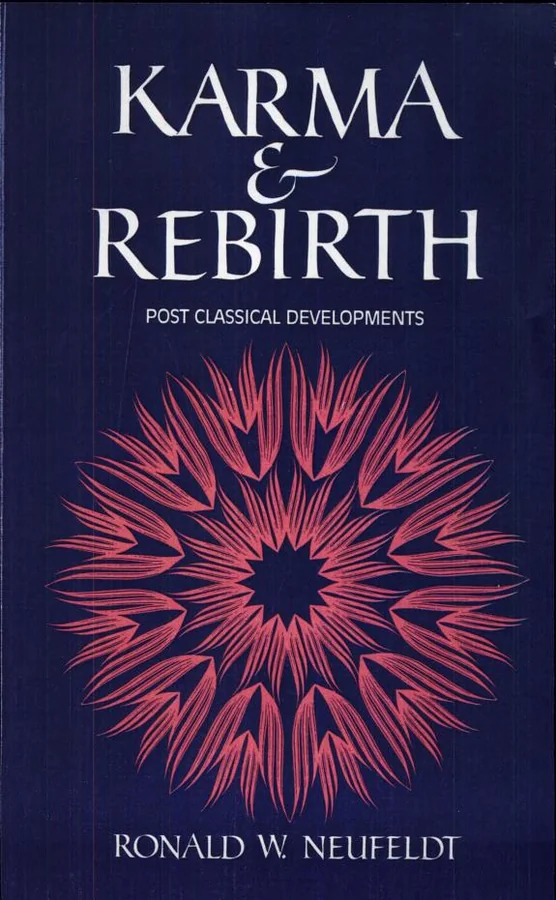
The 1982 Calgary Conference on Karma and Rebirth produced scholarly articles examining post-classical developments of these doctrines.
This volume collects academic essays that originated from the 1982 Calgary Conference on Karma and Rebirth. It examines the philosophical and religious ideas of karma and rebirth as they appear in various Asian societies and Western thought. The collection moves past basic introductions to analyze current understandings and ongoing shifts in these core beliefs.
The book is suited for students and academics in religious studies, comparative philosophy, and Asian history. Researchers interested in how older concepts are viewed today, especially within Indian, Sri Lankan, Southeast Asian, Tibetan, Chinese, Japanese, and Western traditions, will find it useful. It also speaks to those studying the effect of religious ideas on society. The publication in 1986 coincided with growing academic interest in Eastern religions and philosophies in the West. Scholars were working to translate, analyze, and understand these traditions, moving away from earlier approaches. The focus on post-classical developments shows an emphasis on how these concepts adapted in the modern period, rather than solely historical or theological accounts.
This collection addresses concepts central to many Eastern spiritual traditions, particularly Hinduism, Buddhism, and Jainism. Karma, the law of cause and effect, and rebirth, the transmigration of the soul or consciousness, are fundamental to understanding these systems. The book's focus on 'post-classical developments' suggests it examines how these ancient doctrines were adapted, reinterpreted, or integrated into later philosophical discourse and practice, moving beyond foundational scriptural exegesis into more contemporary and comparative analyses.
💡 Why Read This Book?
• Gain a nuanced understanding of how karma and rebirth are interpreted in diverse Asian cultures, moving beyond generalized notions, as explored in the sections on Sri Lanka and Southeast Asia. • Analyze the evolution of these concepts in the Western world during the late 20th century, a period of significant cross-cultural philosophical exchange, as detailed in the book's Western context discussions. • Appreciate the scholarly methodologies applied to religious studies, exemplified by the conference's focus on post-classical developments and contemporary practice, offering a critical lens for understanding religious phenomena.
⭐ Reader Reviews
Honest opinions from readers who have explored this book.
❓ Frequently Asked Questions
When was the Calgary Conference on Karma and Rebirth held?
The conference that led to this book was held in 1982 at the University of Calgary, with the book itself first published in 1986.
What does 'post-classical developments' refer to in the book's title?
It signifies the book's focus on how the concepts of karma and rebirth have been understood and practiced in more recent times, beyond their ancient origins and classical interpretations.
Which geographical regions are covered in the book?
The book examines karma and rebirth across India, Sri Lanka, Southeast Asia, Tibet, China, Japan, and the Western world, highlighting diverse contemporary understandings.
Is this book suitable for beginners to Eastern philosophy?
While informative, the book is geared towards academic and serious students of religion and philosophy. Beginners might find its scholarly approach dense compared to introductory texts.
Who were the contributors to the Calgary Conference?
The volume features articles by various scholars who participated in the 1982 conference, representing contemporary academic perspectives on karma and rebirth.
What is the primary focus of the book?
The book's primary focus is on the religious concepts of karma and rebirth, exploring their contemporary understanding and practice in various global traditions.
🔮 Key Themes & Symbolism
Karma's Societal Impact
This work dissects how the principle of karma, understood as action and consequence, actively shapes social structures and ethical norms across diverse Asian societies. It moves beyond a simple cause-and-effect explanation to demonstrate its role in maintaining social order, justifying hierarchies, and influencing personal conduct in regions like modern India and Sri Lanka. The articles explore the nuanced ways this doctrine is integrated into daily life and religious practice, impacting everything from individual choices to community expectations.
Rebirth Across Traditions
The volume provides a comparative analysis of the concept of rebirth as it manifests in distinct religious and philosophical lineages. It examines how the cyclical nature of existence and consciousness is understood differently in Theravada Buddhism, Mahayana traditions, Tibetan Buddhism, and even within certain Western interpretations. The focus is on the post-classical adaptations, revealing how these traditions engage with and reinterpret rebirth in contemporary contexts, often challenging or refining earlier scholastic definitions.
Western Engagement with Eastern Concepts
A significant aspect of the book is its exploration of how karma and rebirth have been received and reinterpreted within the Western world. It charts the intellectual currents that led to the incorporation of these ideas into Western philosophical and religious discourse, particularly from the mid-20th century onwards. The articles investigate how Western scholars and practitioners engage with these doctrines, often translating them through existing philosophical frameworks or adapting them for new spiritual movements.
Contemporary Religious Practice
This collection emphasizes the living nature of religious concepts, focusing on contemporary understanding and practice rather than solely historical or theological exegesis. It illustrates how ancient doctrines of karma and rebirth remain relevant and dynamic forces in the modern world. By examining their application in places like Japan and Tibet, the book underscores their enduring influence on individual spiritual paths and collective cultural identities, showcasing their adaptability to evolving societal landscapes.
💬 Memorable Quotes
Direct passages from the work, attributed to the author.
“Karma and rebirth are central to Asian philosophy, religion, and society.”
— This foundational statement frames the entire work, asserting the pervasive influence of these doctrines not merely as abstract theological points but as integral components of cultural and social fabric across Asia.
“The contributors look not only at the understanding of karma and rebirth in modern India, but also in Sri Lanka and Southeast Asia, Tibet, China, Japan, and the Western world.”
— This highlights the book's ambitious comparative scope, demonstrating a commitment to exploring the global diffusion and varied interpretations of these core concepts beyond their origins.
“The work presents articles representative of contemporary understanding and practice.”
— This indicates the volume's focus on current perspectives and lived religious experience, distinguishing it from purely historical or textual analyses of karma and rebirth.
“Post-Classical Developments are explored.”
— This specific focus signifies an examination of how these ancient doctrines have evolved and been adapted in more recent times, reflecting changing philosophical and social landscapes.
“The broad treatment underscores that karma and rebirth have become part of religious history and contemporary intellectual discourse globally.”
— This emphasizes the universal relevance and ongoing engagement with these concepts, acknowledging their integration into both historical narratives and current scholarly debates worldwide.
🌙 Esoteric Significance
Tradition
While not strictly aligned with a single Western esoteric lineage like Hermeticism or Kabbalah, this work significantly informs the comparative study of doctrines that underpin many esoteric paths. Its focus on karma and rebirth directly engages concepts central to Theosophy, Anthroposophy, and various New Age movements that synthesized Eastern philosophies. The scholarly approach provides a critical grounding for esoteric practitioners seeking to understand the historical and cultural variations of these fundamental principles, distinguishing academic analysis from devotional interpretation.
Symbolism
The core concepts of karma (action, consequence, causality) and rebirth (cycle of existence, transmigration) function as potent symbols themselves. Karma can be seen as the cosmic law of cause and effect, a universal moral calculus. Rebirth represents the soul's journey through successive lives, a process of purification or learning. While the book focuses on philosophical and religious interpretations, these concepts inherently carry symbolic weight, representing spiritual evolution, karmic debt, and the potential for liberation from cyclical suffering within many mystical traditions.
Modern Relevance
Contemporary thinkers and movements in mindfulness, integral spirituality, and comparative mysticism frequently draw upon nuanced understandings of karma and rebirth. Authors exploring consciousness studies, transpersonal psychology, and secularized Buddhist practices often reference the historical and diverse cultural interpretations examined in this volume. The work's exploration of Western engagement with these concepts is particularly relevant for understanding the roots of modern spiritual syncretism and the ongoing dialogue between Eastern and Western philosophical thought.
👥 Who Should Read This Book
• Comparative religion scholars researching the evolution of core doctrines across cultures. • Students of Asian philosophy seeking detailed analyses of karma and rebirth beyond introductory texts. • Practitioners of Eastern-inspired spiritual paths interested in the academic context and diverse interpretations of their foundational beliefs.
📜 Historical Context
The Calgary Conference on Karma and Rebirth, held in 1982 and published in 1986, emerged during a period of intense academic and public interest in Eastern religions. Western scholarship on Asian traditions was moving beyond earlier, often romanticized, Orientalist frameworks towards more critical and comparative methodologies. Scholars like Wendy Doniger O'Flaherty were actively publishing influential works on karma and Indian religions around this time, contributing to a vibrant intellectual milieu. This conference volume specifically addressed 'post-classical developments,' signaling a departure from purely historical analyses to engage with how these doctrines were understood and practiced in the late 20th century. Its multi-regional approach, including Tibet, China, and Japan alongside India, reflected a growing desire for comprehensive cross-cultural studies. The reception likely contributed to the ongoing academic integration of Asian religious studies into mainstream university curricula.
📔 Journal Prompts
The concept of karma's manifestation in Southeast Asian societies.
Rebirth as understood in Tibetan Buddhism versus Japanese traditions.
The Western reception of karma and rebirth in the late 20th century.
How societal structures are justified through karmic principles.
The dynamic relationship between religious doctrine and contemporary practice.
🗂️ Glossary
Karma
In many Indian religions, the principle of cause and effect where actions (karma) determine future consequences, influencing one's present life and subsequent rebirths.
Rebirth
The concept, prevalent in Indian religions, that consciousness or a soul transmigrates from one life form to another after death, driven by karmic accumulation.
Post-Classical Developments
Refers to the evolution and adaptation of religious concepts like karma and rebirth in periods subsequent to their initial classical formulations, particularly in modern times.
Theravada Buddhism
The 'School of the Elders,' an early branch of Buddhism prevalent in Sri Lanka and Southeast Asia, emphasizing the original teachings of the Buddha.
Mahayana Buddhism
A major branch of Buddhism originating in India, characterized by its emphasis on the bodhisattva ideal and compassion, prevalent in East Asia and Tibet.
Samsara
The cycle of death and rebirth, a fundamental concept in Indian religions, from which liberation (moksha or nirvana) is sought.
Doctrine
A set of beliefs held and taught by a church, political party, or other group; in this context, referring to the tenets of karma and rebirth.
This book appears in 2 collections
🔮 Readers Also Liked
Browse all →









From the “Reincarnation” Collection
View all →









More Free Sacred Texts & Gnosticism Books
View all →