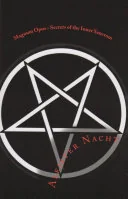
Magnum Opus - Secrets of the Inner Sanctum
 74
74

Magnum Opus - Secrets of the Inner Sanctum
Aleister Nacht's Magnum Opus - Secrets of the Inner Sanctum offers a dense, systematic presentation of esoteric progression that, while commendable in its rigor, occasionally suffers from its own internal logic. Nacht's strength lies in his meticulous outlining of internal states and external practices, particularly the section detailing the stages of alchemical transformation as applied to the self. However, the prose can become somewhat arid, lacking the evocative language that often aids in grasping abstract metaphysical concepts. The repeated emphasis on a singular, albeit complex, path risks alienating those who might find value in more varied approaches to spiritual attainment. Ultimately, it is a challenging but potentially rewarding text for the dedicated occultist.
📝 Description
74
Aleister Nacht's Magnum Opus - Secrets of the Inner Sanctum was first published in 2010.
This book is a practical manual for esoteric development, not a historical overview. It details specific stages and disciplines designed for inner transformation. Nacht intends the text for dedicated practitioners of occult principles.
The work addresses serious students of Western Esotericism who already have a basic understanding of occultism. It demands self-examination and disciplined practice. Those seeking introductory or superficial knowledge will find it too demanding. The ideal reader possesses intellectual curiosity and a desire for direct spiritual experience.
Published in 2010, Magnum Opus appeared during a resurgence of interest in traditional occultism. Unlike many texts of this era that engaged in broad syncretism or reprinted older works, Nacht's book focuses on a specific, codified system. It implicitly addresses the legacy of figures like Aleister Crowley and the Thelema movement, though its methodology is distinct.
💡 Why Read This Book?
• Learn the specific stages of internal alchemical transformation as outlined by Nacht, providing a concrete framework for self-development beyond theoretical understanding. • Gain insight into the symbolic language of the Great Work, as presented in Chapter 4, enabling you to decode esoteric imagery in other texts and practices. • Understand the disciplined approach required for advanced esoteric work, as detailed in the practical exercises section, offering a clear roadmap for consistent spiritual effort.
⭐ Reader Reviews
Honest opinions from readers who have explored this book.
❓ Frequently Asked Questions
What is the 'Magnum Opus' as presented by Aleister Nacht?
In Nacht's 'Magnum Opus - Secrets of the Inner Sanctum', the term refers to the Great Work of spiritual and alchemical transformation, a process of inner purification and the attainment of higher consciousness.
Is 'Magnum Opus - Secrets of the Inner Sanctum' suitable for beginners in occult studies?
No, the book is intended for serious practitioners with a foundational understanding of esoteric principles, as it requires rigorous self-examination and disciplined practice.
When was 'Magnum Opus - Secrets of the Inner Sanctum' first published?
The book was first published on October 27, 2010, positioning it within the contemporary revival of esoteric literature.
What esoteric tradition does this book primarily draw from?
It draws heavily from the Western Esoteric Tradition, particularly from alchemical symbolism and Hermetic philosophy, adapting them for personal spiritual development.
Does the book offer practical exercises for the reader?
Yes, 'Magnum Opus - Secrets of the Inner Sanctum' includes detailed practical exercises and disciplines designed to guide the practitioner through various stages of inner transformation.
Who is Aleister Nacht?
Aleister Nacht is the author of 'Magnum Opus - Secrets of the Inner Sanctum,' known for his systematic approach to occult philosophy and esoteric practice.
🔮 Key Themes & Symbolism
The Great Work as Inner Alchemy
Nacht frames the Main work not as a literal alchemical process but as a profound metaphor for internal transformation. This involves the purification of the self, akin to the alchemical separation and distillation of elements, leading to the attainment of a higher spiritual state. The book meticulously details stages that mirror the alchemical progression, from the Nigredo (blackening) of confronting the shadow self, through the Albedo (whitening) of purification, to the Rubedo (reddening) of spiritual completion.
Disciplined Esoteric Practice
A core tenet of the book is the necessity of rigorous and consistent practice. Nacht emphasizes that esoteric development is not achieved through passive contemplation alone but requires active engagement with specific disciplines. These include mental exercises, symbolic meditations, and potentially ritualistic actions designed to reshape the practitioner's consciousness and align them with higher principles.
Symbolic Frameworks
The work is rich with symbolic language drawn from alchemical and Hermetic traditions. Understanding these symbols is presented as crucial for working through the internal journey. Nacht interprets common alchemical symbols, such as the Philosopher's Stone or the Prima Materia, as representations of spiritual potentials and stages within the individual psyche.
Attainment of Higher Consciousness
The ultimate goal described is the achievement of a transformed state of consciousness, often referred to as gnosis or spiritual illumination. This state is portrayed as a direct experience of the divine or ultimate reality, accessible through the systematic application of the principles and practices outlined in the book.
💬 Memorable Quotes
Direct passages from the work, attributed to the author.
“The internal stages mirror the external art.”
— This statement suggests that the alchemical processes described in historical texts are not merely physical transformations but allegorical representations of psychological and spiritual development within the practitioner.
“Purification precedes transmutation.”
— This aphorism highlights a fundamental principle in many esoteric systems: that the practitioner must first cleanse themselves of impurities, both physical and mental, before they can achieve a higher spiritual state or transformation.
“The Prima Materia lies within.”
— This points to the idea that the raw potential for spiritual realization is inherent in every individual, waiting to be discovered and refined through dedicated practice.
“The adept masters the inner elements.”
— This concept implies that true mastery in esoteric practice involves gaining control and understanding over one's internal forces, emotions, and mental faculties, rather than external phenomena.
“The path is one of solitary ascent.”
— This emphasizes the deeply personal and individual nature of the spiritual journey described in the book, suggesting that while guidance may be sought, the ultimate work is performed alone.
🌙 Esoteric Significance
Tradition
This work is firmly rooted in the Western Esoteric Tradition, drawing heavily from Hermeticism and, most notably, Alchemy. It adapts classical alchemical symbolism and concepts, such as the Great Work (Main work), to represent a process of psychological and spiritual self-transformation. Nacht's approach is less about historical alchemical practice and more about using its framework as a map for inner development, aligning with modern interpretations of Hermetic principles.
Symbolism
Key symbols include the Philosopher's Stone, representing the ultimate goal of spiritual perfection or enlightenment; the Prima Materia, symbolizing the unrefined potential within the practitioner; and the stages of Nigredo, Albedo, and Rubedo, which denote phases of confronting darkness, purification, and ultimate spiritual realization respectively. These symbols are presented not as external objects but as internal states and processes to be mastered.
Modern Relevance
Contemporary practitioners of Hermeticism, ceremonial magic, and depth psychology often engage with Nacht's systematic approach. His detailed mapping of internal stages provides a valuable reference for those seeking a structured path to self-mastery. The work's emphasis on disciplined practice and the internal application of alchemical symbolism speaks to modern occultists who seek to integrate esoteric knowledge into their daily lives and personal development.
👥 Who Should Read This Book
• Serious students of Hermeticism and Alchemy seeking a structured, systematic guide to personal spiritual development. • Practitioners of Western Esotericism who wish to understand the symbolic language of the Great Work and its application to inner transformation. • Advanced occultists looking for a challenging text that demands rigorous self-reflection and disciplined practice beyond introductory concepts.
📜 Historical Context
Aleister Nacht's Main work - Secrets of the Inner Sanctum, published in 2010, arrived during a resurgence of interest in Western Esotericism. This period, often characterized by widespread internet access to previously obscure texts and ideas, saw a diverse range of authors contributing to occult literature. Nacht's work can be seen as a continuation of the Hermetic and alchemical revival that gained momentum in the late 20th century, implicitly engaging with the lineage of figures like Aleister Crowley and the Thelemic movement, though Nacht's methodology appears more codified. Unlike some popular New Age syntheses of the 1980s and 90s, Nacht's text focuses on a structured, systematic approach, distinguishing it from more eclectic or Gnostic-leaning spiritualities prevalent at the time. The reception of such works in the early 21st century often involved online communities and specialist publishers, a departure from the more mainstream academic or occult press of earlier decades.
📔 Journal Prompts
The internal stages mirroring the external art: how does this concept apply to your current life challenges?
Reflect on the concept of the Prima Materia as your own inherent potential for spiritual growth.
Detail your personal 'Nigredo' phase: what inner darkness are you confronting, and how?
Analyze the necessity of purification before transmutation in your own spiritual journey.
Consider the solitary ascent: what aspects of your path are uniquely your own?
🗂️ Glossary
Main work
Latin for 'Great Work,' referring in esoteric contexts to the process of spiritual transformation, self-realization, or the attainment of higher consciousness.
Prima Materia
The fundamental, unrefined substance or potential from which all things are created, often interpreted esoterically as the raw potential within the individual for spiritual development.
Nigredo
The first stage of alchemical transformation, symbolized by blackening or putrefaction; esoterically, it represents the confrontation with the shadow self and the dissolution of old structures.
Albedo
The second stage of alchemy, symbolized by whitening or purification; esoterically, it signifies the cleansing of the self and the emergence of clarity after the dissolution of the Nigredo.
Rubedo
The final stage of alchemy, symbolized by reddening; esoterically, it represents the attainment of spiritual perfection, wholeness, or the realization of the Philosopher's Stone.
Philosopher's Stone
The legendary alchemical substance capable of transmuting base metals into gold; esoterically, it symbolizes spiritual perfection, enlightenment, or the ultimate goal of the Great Work.
Inner Elements
Refers to the fundamental constituents of the practitioner's psyche and consciousness, analogous to the classical elements (earth, air, fire, water) or alchemical principles, which must be understood and mastered.
This book appears in 1 collection
🔮 Readers Also Liked
Browse all →






From the “Magnum Opus” Collection
View all →









More Free Sacred Texts & Gnosticism Books
View all →