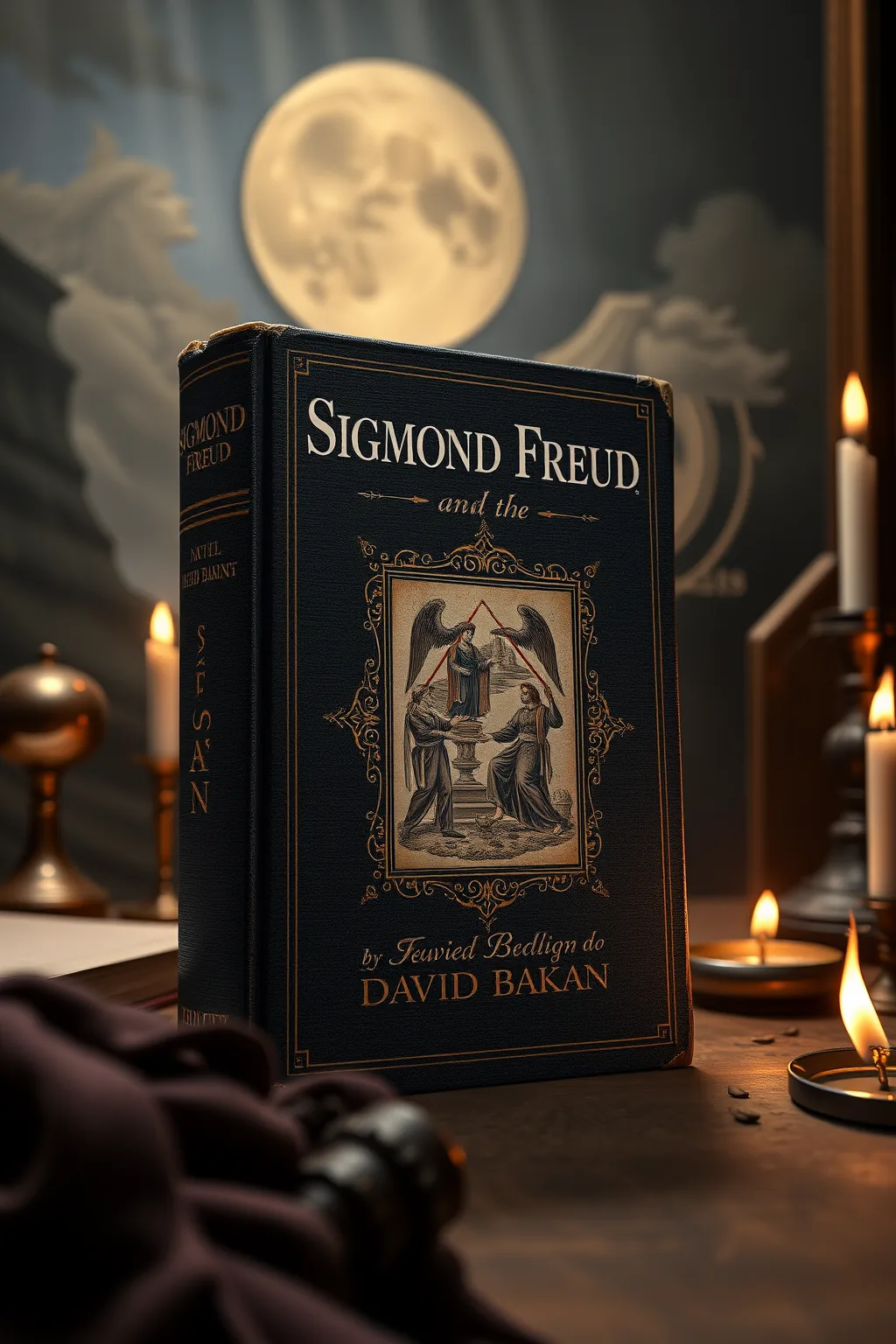
Sigmond Freud and the Jewish mystical tradition
 62
62

Sigmond Freud and the Jewish mystical tradition


Aurelia Blackwood (Occult Philosophy Critic) — David Bakan's seminal work, 'Sigmund Freud and the Jewish Mystical Tradition,' is an indispensable cornerstone for anyone seeking to bridge the perceived chasm between empirical psychology and esoteric spiritualism. Bakan's meticulous scholarship illuminates the profound, often overlooked, continuities between Freudian concepts and Kabbalistic thought. He demonstrates with compelling clarity how psychoanalysis can be understood as a modern manifestation of ancient quests for self-knowledge and spiritual liberation. This book is a revelation, offering esoteric insights into the very fabric of the human mind, and is essential reading for scholars, practitioners, and seekers alike who are drawn to the deeper currents of consciousness and spiritual heritage.
📝 Description
62
David Bakan's 1958 book connects Sigmund Freud's psychoanalytic theories to Jewish mysticism.
In 1958, David Bakan published "Sigmund Freud and the Jewish Mystical Tradition." The book proposes that Freud's psychoanalytic ideas did not emerge in a vacuum but were deeply influenced by his Jewish heritage and the esoteric traditions within it. Bakan argues that concepts like the unconscious mind, dream interpretation, and primal drives find parallels in Kabbalistic thought and symbolism.
He suggests that Freud's work can be understood as a modern articulation of ancient spiritual ideas about the human psyche. The book examines how figures and concepts from Jewish mysticism, such as archetypes and the idea of a collective spiritual unconscious, resonate with Freud's theories on the Oedipus complex and the death drive. Bakan aims to show a continuity between these seemingly disparate fields, positioning Freud's discoveries as echoing older, perhaps divinely inspired, understandings of human nature.
This work places psychoanalysis within a lineage of esoteric thought, specifically the Kabbalistic tradition of Jewish mysticism. It moves beyond a purely psychological interpretation of Freud's theories to situate them within a broader spiritual and symbolic framework. The book suggests that the intense focus on the hidden depths of the psyche in psychoanalysis reflects a long-standing human endeavor, found in various mystical systems, to understand inner reality through symbolic language and archetypal narratives. It bridges the modern scientific study of the mind with ancient contemplative practices.
💡 Why Read This Book?
Uncover the hidden mystical roots of psychoanalysis and witness how ancient Kabbalistic wisdom foreshadows Freud's revolutionary theories on the unconscious. This book is essential for seekers of esoteric knowledge, scholars of comparative religion and psychology, and practitioners interested in the spiritual dimensions of the human psyche. It offers a profound, unifying perspective on the enduring quest for self-understanding.
⭐ Reader Reviews
Honest opinions from readers who have explored this book.
❓ Frequently Asked Questions
Does this book argue Freud was a practicing Kabbalist?
No, Bakan argues for an unconscious influence and shared conceptual landscape rather than direct, conscious adherence to Kabbalistic practices. He posits that Freud's ideas resonate with and can be illuminated by Kabbalistic concepts.
Is this book accessible to someone new to Kabbalah?
While it assumes some familiarity with Freudian concepts, Bakan's writing is clear and aims to bridge the gap. Readers new to Kabbalah may benefit from introductory resources alongside this text.
What is the primary connection Bakan draws between Freud and mysticism?
Bakan highlights the shared exploration of the unconscious, symbolic interpretation of dreams, the concept of primal drives, and archetypal themes as key points of convergence between Freud's psychoanalysis and Jewish mystical traditions.
Is this book about Freud's personal religious beliefs?
While Freud's Jewish heritage is central, the book focuses more on the philosophical and symbolic parallels between his psychological theories and mystical ideas, rather than his personal religious convictions.
What esoteric traditions are most prominent in this analysis?
The primary focus is on the Kabbalistic tradition within Judaism, exploring its rich symbolic language, mystical cosmology, and psychological insights into the human soul.
🔮 Key Themes & Symbolism
The Unconscious as a Mystical Realm
Bakan posits that Freud's exploration of the unconscious mind mirrors the Kabbalistic concept of hidden spiritual realms and the 'divine spark' within. Both traditions explore depths beyond ordinary perception, seeking to understand primal urges, repressed desires, and the archetypal forces that shape human behavior. This theme emphasizes the shared human impulse to map the inner landscape, revealing the unconscious as a sacred space of profound, often veiled, truths that hold the keys to both psychological integration and spiritual awakening.
Symbolism and Dream Interpretation
A central tenet of both psychoanalysis and Jewish mysticism is the profound significance of symbolism, particularly within dreams. Bakan illustrates how Freud's method of dream analysis, seeking latent meanings beneath manifest content, finds a potent parallel in the Kabbalistic interpretation of scriptural narratives and mystical visions. Both systems view symbols not as mere decoration, but as a divine language or a psychic code, capable of revealing hidden truths about the self, the divine, and the cosmos. This theme underscores the universal power of symbolic representation in accessing deeper layers of consciousness.
Archetypes and the Collective Psyche
The book draws compelling connections between Freudian archetypes, such as the Oedipus complex, and the recurring figures and narratives found within Jewish mystical literature and lore. Bakan suggests that these archetypes are not solely individual psychological constructs but can be seen as expressions of a collective unconscious, deeply rooted in humanity's spiritual heritage. This theme explores how ancient myths and mystical cosmologies provide a framework for understanding the enduring patterns of human experience and the universal quest for meaning and connection.
💬 Memorable Quotes
Direct passages from the work, attributed to the author.
“The primal horde, the primal father, the primal scene.”
— These Freudian concepts resonate with ancient narratives of origin and transgression found in Kabbalistic lore, suggesting universal patterns of human conflict and development.
“The essence of man is his relationship to the divine.”
— This statement, while not directly from Freud, reflects a core mystical tenet that Bakan posits as underlying the human drive for self-understanding and connection, explored through both psychology and spirituality.
“The hidden light within.”
— A common mystical metaphor for the soul's divine essence, this phrase aligns with the psychological pursuit of self-discovery and the integration of the unconscious.
💡 Key Ideas
Editorial paraphrase of the work's core concepts — not direct quotes.
The unconscious is the true source of psychic energy.
This quote highlights the foundational idea that the deeper meaning of the mind, much like the mystical realms, are the origin of our drives and motivations, influencing our conscious lives profoundly.
Dreams are the royal road to the unconscious.
Emphasizing the symbolic language of the night, this quote suggests dreams are a direct, albeit veiled, channel to accessing suppressed thoughts and desires, akin to mystical visions.
🌙 Esoteric Significance
Tradition
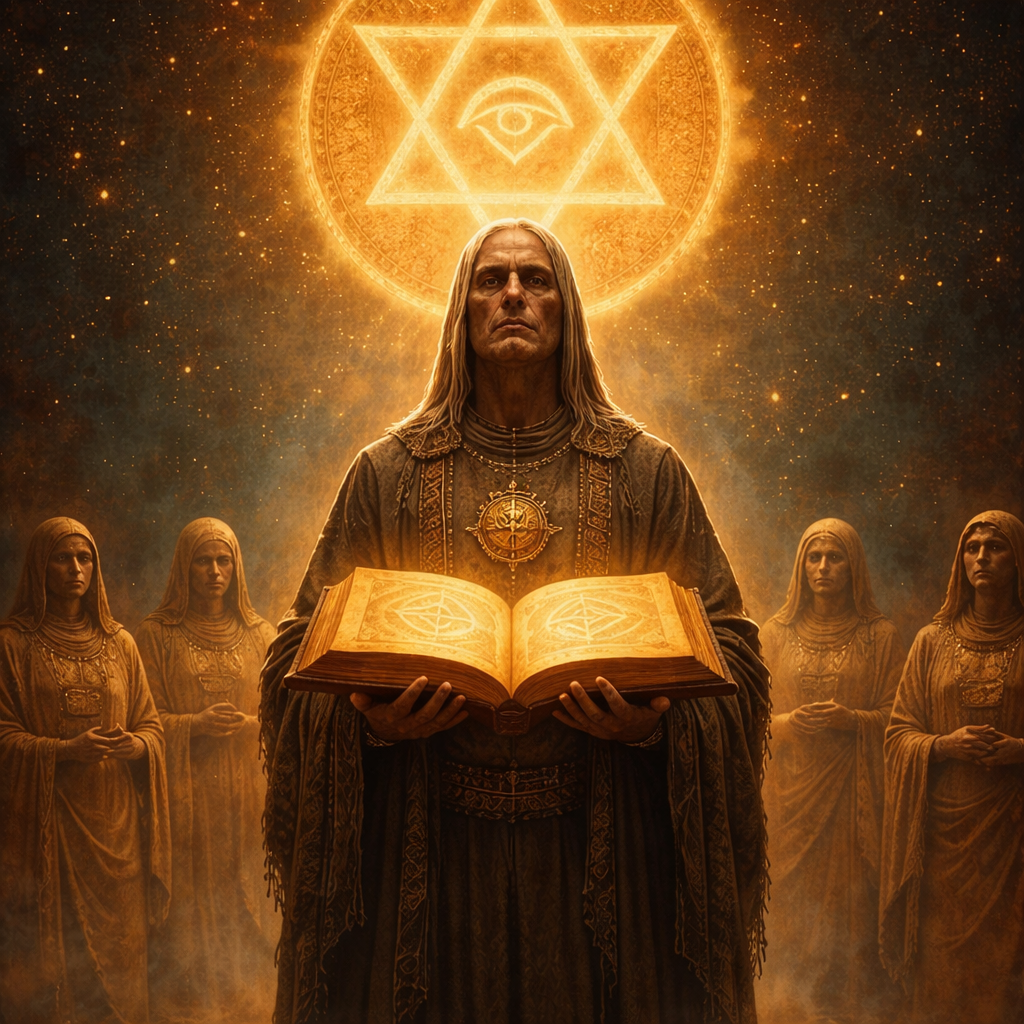
The primary esoteric tradition explored is Kabbalah, a complex system of Jewish mysticism that examines the nature of God, creation, and the human soul. Bakan highlights Kabbalistic concepts such as the Sefirot (divine emanations), the Golem (artificial human), and the concept of the divine spark within humanity as resonant with Freudian ideas about psychic structure, archetypes, and the striving for self-realization.
Symbolism
The book meticulously examines the shared reliance on symbolism. In Kabbalah, letters, numbers, and cosmic diagrams hold profound meaning. In psychoanalysis, dreams, slips of the tongue, and neuroses are seen as symbolic expressions of unconscious processes. Bakan illustrates how both traditions decode these symbolic languages to access hidden truths about the human condition and its connection to the divine or the primordial.
Modern Relevance
In an era often characterized by fragmentation and a perceived disconnect between science and spirituality, Bakan's work offers a powerful synthesis. It suggests that the tools of psychoanalysis, when viewed through a mystical lens, can lead to a more holistic understanding of the self and its place in the cosmos. This is crucial for modern seekers looking to integrate psychological well-being with spiritual growth, finding deeper meaning in their personal journeys.
👥 Who Should Read This Book
This book is a treasure for several distinct groups. For the **psychoanalytic scholar**, it offers a provocative re-evaluation of Freud's intellectual lineage, revealing potential esoteric influences. **Students of Kabbalah and Jewish mysticism** will find a fascinating contemporary application of their tradition, illuminated through a modern psychological framework. **Spiritual seekers** yearning to bridge the gap between the rational and the mystical will discover profound connections and a deeper understanding of the human psyche's deeper meaning. **Practitioners** of depth psychology or contemplative traditions may find new avenues for exploration and integration, realizing the ancient roots of their modern practices.
📜 Historical Context
Written in the mid-20th century, David Bakan's 'Sigmund Freud and the Jewish Mystical Tradition' emerged during a period of intense intellectual ferment. The post-World War II era saw a resurgence of interest in psychoanalysis and a growing recognition of its wide impact on Western thought. Simultaneously, there was a burgeoning scholarly and popular fascination with existentialism, spirituality, and the rediscovery of ancient wisdom traditions. Bakan's work tapped into this zeitgeist, offering a novel perspective that challenged the prevailing secular interpretation of Freud. By connecting Freud's theories to the wide range of Jewish mysticism, particularly the Kabbalah, Bakan provided a bridge between the scientific and the spiritual, suggesting that the quest for understanding the human psyche was an ancient, ongoing spiritual endeavor, not solely a modern scientific one.
📔 Journal Prompts
Reflect on a recurring dream you've had. What symbolic meanings might it hold, and how do these relate to your current waking life challenges or desires?
Consider the concept of the 'unconscious' as a mystical realm. What are its 'hidden landscapes' and 'primal urges' within your own psyche?
How does the idea of archetypes, as explored by Freud and echoed in ancient myths, manifest in your personal relationships or life path?
Explore a personal struggle or complex emotion. Can you find parallels or insights within the symbolic language of either psychoanalysis or Jewish mysticism?
If the unconscious is a 'royal road,' what messages might it be trying to convey to your conscious self about your deepest needs or spiritual aspirations?
🗂️ Glossary
Kabbalah
A system of Jewish mysticism that seeks to understand the nature of God, creation, and the human soul through esoteric interpretations of scripture and divine emanations.
Psychoanalysis
A therapeutic approach developed by Sigmund Freud, focusing on exploring the unconscious mind to understand and treat psychological disorders and human behavior.
Unconscious Mind
The part of the mind of which one is not aware and which influences one's behavior and feelings, containing repressed thoughts, memories, and desires.
Archetype
A universally understood symbol, character, or theme that recurs in different cultures and time periods, often appearing in dreams and myths.
Sefirot
In Kabbalah, the ten divine emanations or attributes through which God manifests and interacts with the created universe.
This book appears in 1 collection
🔮 Readers Also Liked
Browse all →





More by David Bakan
All books →From the “Kabbalah” Collection
View all →








More Free Kabbalah & Jewish Mysticism Books
View all →