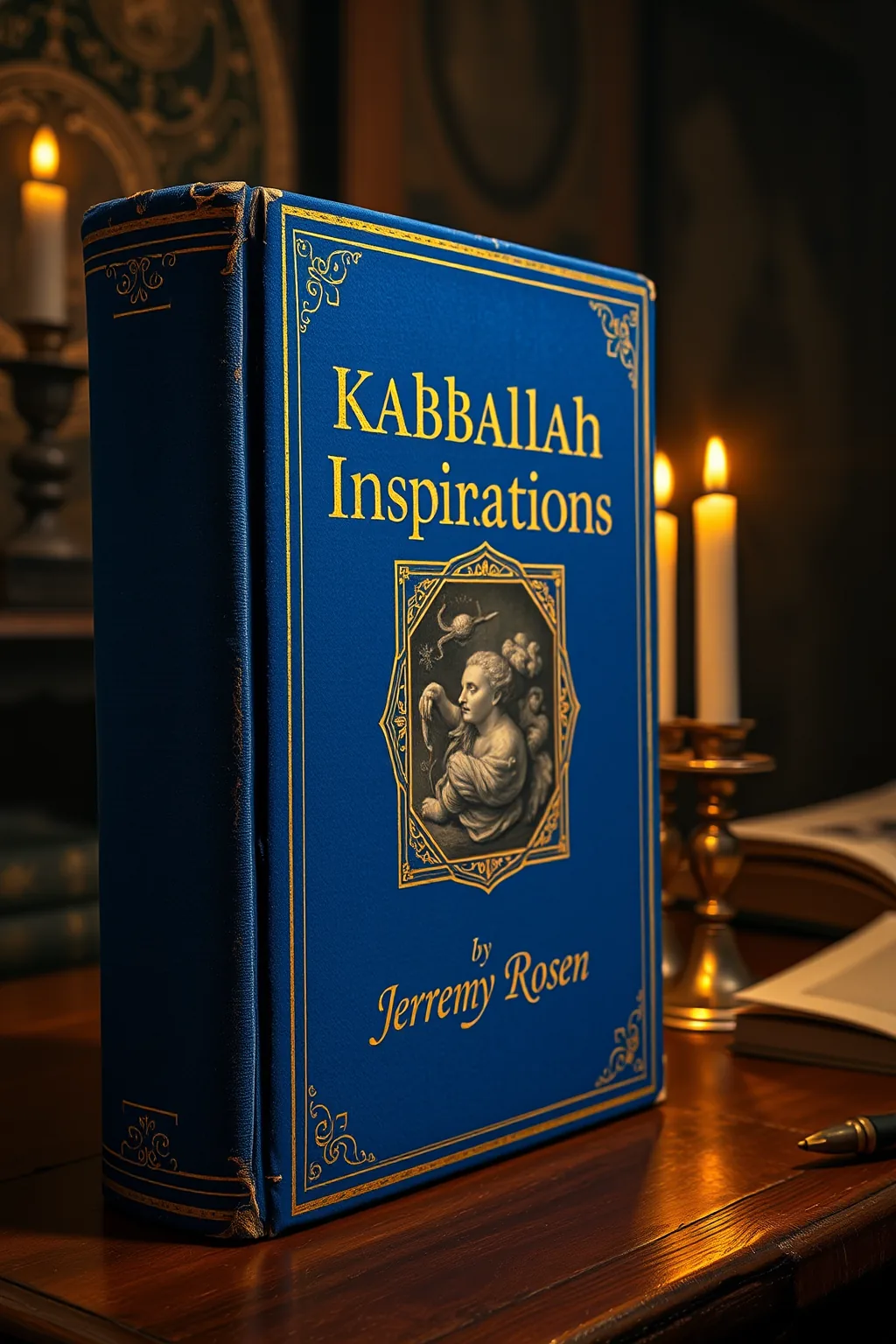
Kabbalah Inspirations
 83
83

Kabbalah Inspirations
Jeremy Rosen’s ‘Kabbalah Inspirations’ attempts to distill the dense subject matter of Kabbalah into digestible components. The strength of the book lies in its systematic approach, breaking down intricate concepts like the Sefirot into understandable parts. However, this very systematic nature can sometimes strip away the experiential, poetic essence that many find compelling in Kabbalistic texts. Rosen’s treatment of the Ein Sof, while accurate, feels somewhat clinical, lacking the awe that such a concept typically inspires. A significant passage is the detailed explanation of Malkuth, the final Sefirah, which effectively grounds the abstract system in its manifestation in the material world. Despite its intellectual clarity, the work occasionally feels more like an academic primer than a guide for spiritual contemplation, which is a limitation for a subject so deeply rooted in inner experience. It serves as a competent introduction, but does not fully capture the spiritual dynamism of Kabbalah.
📝 Description
83
Jeremy Rosen's 'Kabbalah Inspirations' (2020) decodes Kabbalah's core principles for a modern audience.
Jeremy Rosen's 'Kabbalah Inspirations' explains Kabbalistic thought, moving beyond simple history to address its central ideas. The book breaks down complex concepts, giving readers a way to understand the mystical tradition's main tenets. It works as a clear starting point for anyone wanting to grasp Kabbalistic philosophy without getting lost in its symbolic complexity. Rosen aims to guide students toward connecting with the spiritual and intellectual currents that characterize this ancient lineage.
This book is mainly for people new to Kabbalah or those needing a more organized view of its teachings. It will interest students of comparative mysticism, Western esotericism, and Jewish philosophy who need a basic text. Readers curious about the symbolic language and meditative practices within Kabbalistic traditions will find useful information. It also suits scholars of religion and philosophy who want to see Kabbalah's role in wider mystical and theological discussions.
Kabbalah emerged in medieval Provence and Spain around the 12th and 13th centuries, deeply tied to Jewish mysticism but with wider influence in esoteric circles. Rosen's work fits into this long history of interpreting and passing down Kabbalistic knowledge. The book traces Kabbalah's development from early texts like the Sefer Yetzirah through later stages such as the Zohar and Lurianic Kabbalah, acknowledging its historical growth and adaptation.
💡 Why Read This Book?
• Gain a structured understanding of the Sefirot, the ten divine emanations, as presented in Chapter 3, providing a conceptual map for divine influence and creation that differs from Western philosophical models. • Learn about the concept of Ein Sof, the Kabbalistic term for the Infinite Godhead, and its implications for understanding divine immanence and transcendence, as explored in the early sections. • Appreciate the symbolic representation of the Tree of Life, a core Kabbalistic diagram, and its role in mapping spiritual ascent and the structure of reality, as detailed throughout the work.
⭐ Reader Reviews
Honest opinions from readers who have explored this book.
❓ Frequently Asked Questions
What is the primary focus of Jeremy Rosen's 'Kabbalah Inspirations'?
The book focuses on presenting the foundational concepts of Kabbalah in a structured and accessible manner. It aims to illuminate core ideas such as the Ein Sof and the Sefirot for readers new to the subject.
Is 'Kabbalah Inspirations' suitable for beginners?
Yes, the book is designed for individuals new to Kabbalah or those seeking a clearer, more organized introduction to its principles and philosophical underpinnings.
When was 'Kabbalah Inspirations' first published?
The work by Jeremy Rosen was first published in 2013, making it a relatively contemporary exploration of an ancient mystical tradition.
What are some key Kabbalistic concepts discussed in the book?
Key concepts likely include the Ein Sof (the Infinite), the Sefirot (divine emanations), and the symbolic structure of the Tree of Life.
Does the book discuss the historical origins of Kabbalah?
The book engages with the historical context of Kabbalah, acknowledging its emergence in medieval Provence and Spain and its evolution through key texts and figures.
What is the intended audience for 'Kabbalah Inspirations'?
It is intended for students of comparative mysticism, Western esotericism, Jewish philosophy, and anyone interested in understanding the architecture of Kabbalistic thought.
🔮 Key Themes & Symbolism
The Ein Sof and Divine Emanation
The book likely examines the concept of the Ein Sof, the Kabbalistic term for God as an infinite, unknowable essence. It explores how this boundless divinity manifests through the Sefirot, the ten divine attributes or emanations that form the structure of creation. Understanding the relationship between the transcendent Ein Sof and the immanent Sefirot is crucial for grasping the Kabbalistic cosmology, which posits a dynamic interplay between the ultimate source and its created expressions. This theme is central to comprehending the nature of existence and the divine presence within it.
The Tree of Life as a Cosmic Map
A central element in Kabbalistic thought, the Tree of Life is presented as a symbolic diagram mapping the structure of the universe and the pathways of divine consciousness. 'Kabbalah Inspirations' probably details the interconnectedness of its ten Sefirot and the 22 paths, illustrating how spiritual energy flows from the highest realms to the material world. This symbolic framework serves as a guide for contemplation, spiritual ascent, and understanding the divine order underlying all reality. It is a key visual and conceptual tool for Kabbalistic study.
Kabbalistic Cosmology and Creation
The work likely addresses the Kabbalistic narrative of creation, potentially touching upon concepts such as Tzimtzum (divine contraction) to make space for creation, and Shevirat HaKelim (shattering of the vessels) to explain the presence of imperfection and evil. It explains how the universe unfolds from the divine source through a series of emanations, establishing a framework for understanding the relationship between the spiritual and the physical realms. This cosmological perspective is fundamental to Kabbalah's mystical worldview.
Mystical Interpretation and Contemplation
Beyond theoretical frameworks, the book may highlight the practical application of Kabbalistic principles for personal spiritual growth. It likely emphasizes the importance of meditative practices, symbolic interpretation, and the pursuit of divine wisdom. The goal is to enable readers to engage with these concepts not just intellectually but also experientially, fostering a deeper connection with the divine and a more profound understanding of their own spiritual path within the Kabbalistic tradition.
💬 Memorable Quotes
Direct passages from the work, attributed to the author.
“The Ein Sof is the hidden light, beyond all conception.”
— This highlights the Kabbalistic understanding of God as an infinite, utterly transcendent reality that cannot be grasped by the human mind or intellect, existing prior to any form or manifestation.
“The Sefirot are the divine vessels through which the Infinite expresses itself.”
— This emphasizes the functional role of the Sefirot as channels or attributes that make the boundless Ein Sof accessible and comprehensible within the framework of creation.
“Malkuth is the receptacle of all the higher emanations.”
— This points to the final Sefirah, Malkuth (the Kingdom), representing the material world and the culmination of the divine creative process, where all spiritual energies are ultimately received and manifested.
“The Tree of Life maps the journey from the material to the divine.”
— This interpretation underscores the Tree of Life's function as a spiritual roadmap, illustrating the pathways of ascent and descent between different levels of reality and consciousness.
“Understanding Kabbalah requires both intellect and intuition.”
— This suggests that a complete grasp of Kabbalistic teachings necessitates engaging both rational comprehension and inner, intuitive perception, reflecting the tradition's emphasis on holistic spiritual development.
🌙 Esoteric Significance
Tradition
This work fits within the Western Esoteric tradition, specifically focusing on Kabbalah, a Jewish mystical lineage. It aims to present Kabbalistic principles in a manner accessible to those outside of traditional Jewish scholarship, bridging the gap between ancient mystical concepts and modern esoteric interests. It draws upon the core cosmological and theological frameworks developed within Kabbalah, particularly concerning divine emanations and the structure of reality.
Symbolism
Central symbols likely explored include the Sefirot, often depicted as ten distinct divine attributes or emanations forming the Tree of Life, representing the pathways of divine energy and consciousness. The Hebrew alphabet, considered by Kabbalists to be the building blocks of creation, may also be discussed for its symbolic and mystical significance. The concept of light (Ohr) as a manifestation of the divine is another recurring motif, representing divine presence and creative force.
Modern Relevance
Contemporary New Age spirituality, modern psychological interpretations of archetypes (e.g., Jungian analysis), and various Western Mystery School traditions often draw upon Kabbalistic symbolism, particularly the Tree of Life. Thinkers and practitioners in these fields may use works like Rosen's to engage with the underlying structure and symbolism of Kabbalah for personal development and comparative mystical study.
👥 Who Should Read This Book
• Students of comparative mysticism seeking to understand a core branch of Jewish esoteric thought and its conceptual frameworks. • Practitioners of Western esotericism interested in the symbolic language and cosmological models of Kabbalah, such as the Tree of Life. • Academic researchers in religious studies or philosophy looking for an organized introduction to Kabbalistic principles and their historical context.
📜 Historical Context
Jeremy Rosen's 'Kabbalah Inspirations' emerges within a long intellectual lineage, tracing its roots to medieval Kabbalah which flourished in 12th and 13th century Provence and Spain. This mystical tradition developed within Jewish communities, seeking to interpret esoteric meanings within the Torah and understand the divine nature. Contemporaries and influences include figures like Moses de León, a probable author of the Zohar, the foundational text of Kabbalah. The book engages with concepts that evolved significantly, particularly with Isaac Luria's 16th-century Lurianic Kabbalah, which introduced complex ideas about cosmic repair. While Kabbalah has always had its adherents and detractors within Judaism, its ideas also permeated broader esoteric movements in the West, such as Hermeticism and later Theosophy, often through intermediaries and selective interpretations. The reception of Kabbalistic texts has historically varied, sometimes facing scholarly skepticism and sometimes embraced by mystical practitioners, a dynamic that continues to shape its study today.
📔 Journal Prompts
The Ein Sof's hidden light and its relation to personal moments of insight.
Mapping the Sefirot onto daily experiences and emotional states.
Reflecting on the Tree of Life as a personal spiritual pathway.
The concept of divine emanation and its presence in the material world.
Contemplating the symbolic meaning of Malkuth in contemporary life.
🗂️ Glossary
Ein Sof
The Kabbalistic term for God as the Infinite, Unknowable Essence, existing beyond all limitations and concepts, prior to any manifestation or creation.
Sefirot
The ten divine emanations or attributes through which the Infinite (Ein Sof) manifests and creates the universe. They form the structure of the Tree of Life.
Tree of Life
A central Kabbalistic diagram composed of ten Sefirot and 22 paths, symbolizing the structure of the universe, the pathways of divine energy, and the ascent of the soul.
Malkuth
The tenth and final Sefirah, often translated as 'Kingdom,' representing the material world, the manifestation of all divine energies, and the receptacle of the higher emanations.
Tzimtzum
A concept, particularly prominent in Lurianic Kabbalah, referring to the divine 'contraction' or withdrawal of the Infinite Light to make space for the creation of the universe.
Shevirat HaKelim
Literally 'shattering of the vessels,' this Lurianic Kabbalistic concept explains the origin of imperfection, evil, and suffering in the world as a result of the breaking of divine vessels during creation.
Ohr
Hebrew for 'light,' often used in Kabbalah to symbolize divine presence, spiritual illumination, and the creative force emanating from the Ein Sof.
🔮 Readers Also Liked
Browse all →


More by Jeremy Rosen
All books →
More Free Mysticism & Contemplation Books
View all →