The Father of Jewish Mysticism
 78
78

The Father of Jewish Mysticism
Daniel Weidner’s The Father of Jewish Mysticism provides a much-needed scholarly account of Gershom Scholem’s early intellectual development. The book excels in its meticulous tracing of Scholem’s engagement with primary Kabbalistic sources and his initial theoretical frameworks. Weidner’s exposition of Scholem’s critique of assimilationist tendencies within early 20th-century Jewish intellectual life is particularly sharp, revealing the deep personal and ideological stakes involved. A minor limitation might be that the density of academic discourse, while appropriate for the subject, could present a challenge for readers less familiar with Kabbalistic terminology or Scholem’s extensive oeuvre. The section detailing Scholem’s encounter with Martin Buber’s interpretations of Hasidism offers a concrete example of the intellectual friction that propelled Scholem’s own unique scholarly path. Weidner has delivered a rigorous and illuminating study of a foundational thinker.
📝 Description
78
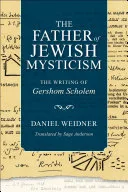
Daniel Weidner's 2022 study examines Gershom Scholem's early thought and writings.
This book analyzes the formative years and intellectual development of Gershom Scholem, a scholar who profoundly shaped the study of Jewish mysticism. Daniel Weidner's work traces Scholem's engagement with Kabbalistic texts and his critical stance against Jewish assimilation. It details how Scholem's scholarship positioned Jewish mysticism as a significant spiritual and cultural force, offering a counterpoint to secular trends.
The study is designed for academics in Jewish history, religious studies, and philosophy, as well as general readers interested in the intellectual biography of a key figure. It appeals to those seeking to understand the origins of Kabbalah studies and the philosophical ideas Scholem articulated concerning Zionism. The book arrives amid a resurgence of interest in esoteric traditions and their historical significance.
Gershom Scholem's work revitalized the academic study of Kabbalah and Jewish mysticism in the 20th century. This book situates his intellectual trajectory within that larger context, showing how his critical engagement with esoteric traditions offered an alternative to prevailing secular and assimilationist narratives. It highlights his specific interpretations of concepts like Tzimtzum and the Sefirot, demonstrating how he integrated historical scholarship with a deep understanding of Jewish mystical thought.
💡 Why Read This Book?
• Gain a precise understanding of Gershom Scholem's formative engagement with Kabbalistic texts, including his early interpretations of *Shekhinah* as detailed in Weidner’s analysis, which challenges simplistic notions of Jewish mysticism. • Appreciate the intellectual landscape of early 20th-century Jewish thought, specifically Scholem's critical stance against assimilation, as illuminated by his correspondence from the period. • Grasp Scholem's influential methodology in Kabbalah studies, particularly his emphasis on historical context and the critique of ahistorical interpretations, as presented in the book’s discussion of his 1930s work.
⭐ Reader Reviews
Honest opinions from readers who have explored this book.
❓ Frequently Asked Questions
What is the primary focus of Daniel Weidner's study on Gershom Scholem?
The book focuses on the early life and writings of Gershom Scholem, the foundational figure in modern Jewish mysticism studies. It examines the development of his thought and his critical approach to Kabbalah and Jewish intellectual history.
Who was Gershom Scholem and why is he considered important?
Gershom Scholem (1897–1982) was a pioneering historian of the Kabbalah and a major 20th-century Jewish intellectual. He is credited with establishing the academic study of Jewish mysticism and critiquing secular assimilationist trends within Jewish society.
What specific Kabbalistic concepts does the book explore?
The work delves into Scholem's interpretations of key Kabbalistic concepts such as *Tzimtzum* (divine contraction) and the *Sefirot* (divine emanations), analyzing them through Scholem's historical-critical lens.
What is the significance of Weidner's study for understanding Scholem's thought?
Weidner’s study is the first full-length English examination of Scholem’s thought, offering an in-depth analysis of his intellectual trajectory and his critical engagement with both mystical traditions and modern Jewish intellectual currents.
Does the book discuss Scholem's views on Zionism?
Yes, the book explores Scholem's philosophical underpinnings of Zionism, particularly as articulated through his critical engagement with Jewish mysticism and history, offering a nuanced perspective on his political thought.
What historical period does the book cover regarding Scholem's life?
The book primarily covers Scholem's early life and intellectual formation, focusing on the formative years that shaped his groundbreaking work on Jewish mysticism and Kabbalah, up to his establishment as a leading scholar.
🔮 Key Themes & Symbolism
Scholem's Kabbalah Method
This theme centers on Gershom Scholem's revolutionary approach to studying Kabbalah, moving beyond purely theological interpretations to a historical-critical analysis. Weidner details how Scholem integrated philological rigor with an understanding of the socio-historical contexts in which Kabbalistic texts emerged. This method allowed Scholem to trace the evolution of mystical ideas and their reception, challenging earlier, often romanticized, views of Jewish mysticism and establishing it as a legitimate field of academic inquiry from the early 20th century onwards.
Critique of Jewish Assimilation
A significant thread in the book is Scholem's sharp critique of Jewish assimilationist movements prevalent in early 20th-century Europe. Weidner illustrates how Scholem viewed the embrace of secular European culture by many Jewish intellectuals as a form of cultural and spiritual erasure. For Scholem, Jewish mysticism, particularly the Kabbalah, represented a vital, authentic spiritual heritage that offered an alternative to superficial assimilation, providing a deeper connection to Jewish identity and history.
The Emergence of Modern Mysticism Studies
The Father of Jewish Mysticism charts the intellectual journey that led to the birth of modern Kabbalah scholarship, largely through the work of Gershom Scholem. Weidner highlights Scholem's relentless efforts to bring the study of Jewish mysticism into mainstream academic discourse, often against considerable resistance. This theme underscores how Scholem’s foundational work in the 1920s and 1930s paved the way for subsequent generations of scholars and redefined the understanding of Jewish religious and intellectual history.
Scholem's Philosophical Influences
This theme explores the intellectual currents that shaped Scholem's early thought, including his engagement with German philosophy, Zionism, and various schools of Jewish thought. Weidner examines how Scholem synthesized diverse influences, from existentialism to historical materialism, in his interpretation of mystical phenomena. The book reveals the complex interplay between his academic pursuits and his personal commitment to Jewish continuity, demonstrating how thinkers like Walter Benjamin influenced his critical perspectives.
💬 Memorable Quotes
Direct passages from the work, attributed to the author.
“Scholem’s early work aimed to rescue Kabbalah from mystification and place it within historical reality.”
— This interpretation highlights Scholem's core academic project: to analyze Jewish mysticism not as a timeless spiritual phenomenon, but as a historically situated expression of Jewish culture and thought, demanding rigorous scholarly investigation.
“Weidner traces Scholem's intellectual development from his initial engagement with medieval Kabbalistic texts.”
— This statement points to the book's focus on the chronological and intellectual progression of Scholem's scholarship, underscoring the importance of his early scholarly efforts in shaping his later, more famous contributions to the field.
“Scholem’s scholarship provided a counter-narrative to the secularizing trends in 20th-century Jewish thought.”
— This concept suggests that Scholem's work on Jewish mysticism offered a powerful alternative to the prevailing secular ideologies within Jewish communities, reasserting the significance of spiritual and esoteric traditions.
“The book examines Scholem's distinctive interpretation of the Sefirot.”
— This highlights a specific area of Kabbalistic doctrine that Scholem analyzed, indicating that the book provides detailed insight into his unique academic understanding of these divine emanations within the Kabbalistic cosmology.
💡 Key Ideas
Editorial paraphrase of the work's core concepts — not direct quotes.
The critique of assimilation was inextricably linked to Scholem’s conception of authentic Jewish experience.
This paraphrase emphasizes that Scholem's opposition to assimilation wasn't merely academic; it was deeply tied to his belief that genuine Jewish identity and spiritual depth could only be found in embracing traditional and mystical elements of Jewish heritage.
🌙 Esoteric Significance
Tradition
This work is situated within the academic study of Kabbalah, a central tradition within Jewish esotericism. While Gershom Scholem is revered for his scholarly rigor, his approach departs from purely devotional or practical mystical aims. Weidner’s analysis focuses on Scholem's intellectual formation, positioning his critical historical method as foundational for understanding Kabbalah not just as a mystical system, but as a historical and cultural phenomenon deeply embedded within Jewish civilization.
Symbolism
The book implicitly engages with core Kabbalistic symbolism, particularly the *Sefirot* (divine emanations) and concepts like *Tzimtzum* (divine contraction). Scholem, as interpreted by Weidner, viewed these symbols not merely as abstract metaphysical constructs, but as potent expressions of historical consciousness and theological responses to crisis. Understanding these symbols through Scholem's lens offers insight into the dynamic, evolving nature of Jewish mystical thought and its symbolic language.
Modern Relevance
Scholem's work, as illuminated by Weidner, remains highly relevant for contemporary scholars and practitioners engaging with Jewish mysticism. Thinkers exploring the intersection of religion, history, and politics continue to draw upon Scholem's frameworks. His critical methodology informs modern studies of esoteric traditions, while his intellectual legacy shapes ongoing discussions within Jewish philosophy, theology, and identity politics, influencing those seeking to understand the historical roots of spiritual expression.
👥 Who Should Read This Book
• Scholars of Jewish history and religious studies seeking foundational texts on Kabbalah and Gershom Scholem's seminal contributions. • Students of esoteric traditions interested in the academic methodology applied to mystical systems, particularly concerning the historical development of Jewish mysticism. • Intellectual historians examining the role of religion and mysticism in shaping 20th-century Jewish thought and identity, especially Scholem's critique of assimilation.
📜 Historical Context
Daniel Weidner’s study of Gershom Scholem emerges within the intellectual milieu of the early 21st century, a period marked by a resurgence of interest in esoteric traditions and a critical re-evaluation of 20th-century intellectual history. Scholem himself was a key figure in the mid-20th century, establishing the academic study of Kabbalah. His work gained prominence during a time when Jewish intellectuals grappled with the aftermath of the Holocaust and the formation of the State of Israel. Scholem’s approach contrasted sharply with purely theological or mystical interpretations, offering a historical-critical method that aligned with burgeoning secular academic disciplines. He engaged directly with thinkers like Martin Buber, whose more humanistic interpretations of Hasidism Scholem often contested, advocating for a more historically grounded understanding. Scholem's critical stance against Jewish assimilation and his emphasis on the unique historical trajectory of Jewish messianism were particularly influential, positioning his work as a significant counterpoint to prevalent secular Zionist narratives and European philosophical trends.
📔 Journal Prompts
Gershom Scholem's critique of assimilation: How does his perspective on preserving Jewish identity through mystical tradition contrast with modern secular approaches?
The Kabbalistic concept of *Tzimtzum*: Reflect on its implications for understanding divine action and creation within a historical context.
Scholem's early engagement with Kabbalah: Consider the influence of specific texts or historical circumstances on his foundational scholarly ideas.
The intellectual relationship between Scholem and Walter Benjamin: Explore how their differing perspectives illuminated each other's work.
The role of historical criticism in studying esoteric traditions: Analyze its benefits and potential limitations as presented in Weidner's study.
🗂️ Glossary
Kabbalah
A system of Jewish mysticism and esoteric interpretation of the Torah, originating in medieval Provence and Spain, focused on divine nature, creation, and the relationship between God and humanity.
Gershom Scholem
A pioneering scholar (1897–1982) who established the academic field of Kabbalah and Jewish mysticism studies, known for his historical-critical approach.
Assimilation
The process by which a minority group or individual adopts the customs and attitudes of the prevailing culture, often leading to a loss of distinct cultural identity.
Tzimtzum
A Kabbalistic concept referring to the divine self-contraction or withdrawal, understood as necessary to make space for creation.
Sefirot
In Kabbalah, the ten divine emanations or attributes through which God interacts with the created world, often depicted in the Tree of Life.
Historical-Critical Method
An academic approach used in the study of religion and texts, emphasizing the analysis of historical context, sources, and development rather than solely theological or devotional interpretation.
Jewish Mysticism
The diverse range of mystical and contemplative traditions within Judaism, encompassing Kabbalah, Hasidism, and other esoteric practices and beliefs.