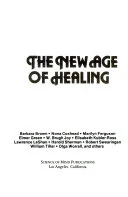
The New Age of Healing
 82
82

The New Age of Healing
Barbara B. Brown’s "The New Age of Healing" provides a fascinating, if somewhat dated, compendium of alternative healing practices from the late 1970s. The book’s strength lies in its comprehensive cataloging of modalities that were then largely outside the medical establishment’s purview, presenting them with a seriousness that belies their then-nascent status. Brown meticulously documents practices like psychic healing and the exploration of subtle energies, offering a valuable historical snapshot. However, the work occasionally suffers from a lack of critical distance, presenting some concepts with an unreserved acceptance that might raise eyebrows for contemporary readers accustomed to more rigorous scientific scrutiny or nuanced philosophical debate. A particular strength is its detailed examination of psychosomatic connections, illustrating early attempts to bridge the mind-body divide. Despite its limitations in modern context, the book remains a significant document for understanding the roots of the holistic health movement. It serves as a valuable resource for those tracing the lineage of contemporary wellness trends.
📝 Description
82
Barbara B. Brown's 1979 book documents holistic healing practices rising outside mainstream medicine.
Published in 1979, "The New Age of Healing" by Barbara B. Brown examines a variety of non-conventional therapeutic methods that gained popularity in the late 20th century. The book looks at practices aiming to connect mind, body, and spirit, presenting them as valid paths to wellness rather than mere fringe ideas. It is a valuable resource for those studying the history of New Age thought, practitioners of alternative healing, and anyone interested in how health and wellness ideas changed during the last decades of the 20th century. Readers will find historical background for concepts now common in holistic health discussions, like energy healing and the mind's effect on the body.
Brown's work appeared during a time of significant spiritual and philosophical questioning in the West. The 1970s saw growing interest in Eastern philosophies and alternative treatments, a trend captured by Marilyn Ferguson's "The Aquarian Conspiracy." "The New Age of Healing" fits into this cultural moment by documenting and analyzing healing philosophies that questioned the prevailing medical views. This period was marked by a general skepticism toward established systems and a search for more personal, spiritually-oriented ways of living, including in matters of health.
This book emerged from the late 20th-century spiritual seeking that drew heavily on Eastern philosophies and Western occult traditions. It documents a moment when alternative healing practices, often rooted in concepts of subtle energy and consciousness, began to be codified and discussed as a coherent movement. The focus on "energy fields" and the perceived connection between mental states and physical health reflects a broader esoteric interest in vitalistic theories and the power of the unseen to influence the material world, moving beyond purely biomedical explanations.
💡 Why Read This Book?
• Understand the foundational concepts of psychosomatic healing as explored in the 1970s, providing context for modern mind-body medicine. • Gain insight into the early discourse surrounding subtle energy fields and their proposed role in health, as presented by Barbara B. Brown in 1979. • Explore the historical landscape of alternative therapies that were gaining momentum, helping to differentiate early New Age healing from later developments.
⭐ Reader Reviews
Honest opinions from readers who have explored this book.
❓ Frequently Asked Questions
What specific alternative healing methods are discussed in 'The New Age of Healing'?
Barbara B. Brown's 1979 work covers a range of practices including psychic healing, energy field therapies, and explorations of the psychosomatic connection, reflecting the burgeoning holistic health movement of the era.
Who is Barbara B. Brown and what is her background?
Information on Barbara B. Brown's specific background is not extensively detailed in the original publication, but her work positions her as an early chronicler and commentator on New Age healing practices from the late 1970s.
How does 'The New Age of Healing' connect to the broader New Age movement?
Published in 1979, the book documents and analyzes healing modalities that were central to the New Age movement's broader interest in spirituality, consciousness, and alternative ways of living and healing.
Is 'The New Age of Healing' still relevant for understanding contemporary wellness?
Yes, the book offers crucial historical context for many modern wellness concepts, such as the mind-body connection and energy work, showing their origins in the late 20th century.
What does the book say about the mind-body connection?
Brown's work explores the psychosomatic link, proposing that mental and emotional states have a direct impact on physical health, a concept central to many alternative healing philosophies documented in the book.
When was 'The New Age of Healing' first published?
The book was first published in 1979, placing it firmly within the period of significant growth for alternative spiritual and healing movements in the Western world.
🔮 Key Themes & Symbolism
Psychosomatic Connections
The work extensively explores the psychosomatic nature of illness and healing, positing that mental and emotional states are not separate from physical well-being but intrinsically linked. Brown examines how beliefs, stress, and emotional experiences can manifest as physical ailments and, conversely, how healing can be facilitated through addressing these inner states. This perspective challenges purely biomedical models, suggesting a holistic approach where the mind is an active participant in maintaining or restoring health. The book details various methods believed to influence these mind-body pathways.
Subtle Energy Fields
A significant theme is the concept of subtle energy fields that permeate and surround the human body, often referred to as 'auras' or 'life force.' The book studies how practitioners in the late 1970s believed these energies could be perceived, manipulated, and balanced to promote healing. It discusses various modalities that purported to work with these fields, such as energy healing techniques and practices aimed at clearing energetic blockages. This exploration places the work within a lineage of esoteric thought concerned with unseen vital forces.
Holistic Modalities
Brown's text serves as an early compendium of diverse healing modalities that were emerging or gaining renewed interest under the 'New Age' umbrella. It goes beyond single practices to present a view of healing as an integrated process. This includes exploring intuitive diagnosis, the role of spiritual beliefs in recovery, and the potential of non-physical interventions. The overarching idea is that effective healing requires attending to the entirety of an individual—physical, mental, emotional, and spiritual—rather than isolated symptoms.
Origins of New Age Healing
As a book first published in 1979, 'The New Age of Healing' is a valuable historical document for understanding the nascent stages of what would become widely known as New Age spirituality and healing. It captures the zeitgeist of a period marked by a search for alternative paradigms to conventional Western medicine and societal structures. The work details the integration of various traditions—Eastern philosophies, esoteric traditions, and psychological insights—into a new framework for understanding health and consciousness.
💬 Memorable Quotes
Direct passages from the work, attributed to the author.
“The body is a reflection of the mind's state.”
— This concise statement expresses the core psychosomatic principle explored in the book, suggesting a direct and powerful link between psychological well-being and physical health.
“Healing energy can be directed and received.”
— This points to the concept of vital force or subtle energies, a common theme in esoteric traditions, positing that these energies are not passive but can be consciously channeled for therapeutic purposes.
“Illness often arises from imbalances in unseen forces.”
— This interpretation highlights the book's focus on non-physical causes of disease, moving beyond material explanations to consider energetic and spiritual factors influencing health.
“Intuition plays a vital role in diagnosis and treatment.”
— This suggests the book's exploration of intuitive methods in healing, contrasting with purely empirical or scientific approaches and valuing inner knowing as a diagnostic and therapeutic tool.
💡 Key Ideas
Editorial paraphrase of the work's core concepts — not direct quotes.
True wellness encompasses the whole person.
This phrase summarizes the holistic philosophy underpinning the New Age healing movement documented by Brown, emphasizing the interconnectedness of physical, mental, and spiritual aspects of an individual.
🌙 Esoteric Significance
Tradition
This work fits within the broad currents of Western Esotericism that saw a resurgence in the mid-to-late 20th century, particularly the Theosophical and New Age movements. It reflects a departure from strictly Hermetic or Kabbalistic frameworks by synthesizing various global spiritual traditions and psychological theories under the banner of 'healing.' While acknowledging an energetic basis for health, it leans towards a more eclectic, less dogmatic approach than older, established esoteric orders, emphasizing personal experience and intuitive understanding.
Symbolism
The book implicitly engages with symbols of wholeness and interconnectedness prevalent in New Age thought. The concept of the 'energy field' itself acts as a symbolic representation of unseen vital forces, akin to the concept of Prana or Qi. References to 'light' and 'balance' within these fields symbolize purity, spiritual vitality, and the restoration of harmony, core tenets in many esoteric systems aiming for spiritual and physical integration.
Modern Relevance
Contemporary practitioners of energy healing modalities like Reiki, Qigong, and various forms of therapeutic touch can trace conceptual lineage back to the explorations detailed in Brown’s book. Thinkers in positive psychology and the burgeoning field of integrative medicine also echo its emphasis on the psychosomatic connection. Modern spiritual teachers and wellness coaches often incorporate principles first popularized during the era documented by "The New Age of Healing."
👥 Who Should Read This Book
• Researchers of 20th-century spiritual movements, particularly the origins of the New Age phenomenon, will find this book a valuable primary source for understanding the healing range of the late 1970s. • Individuals exploring alternative healing modalities and seeking to understand their historical roots will benefit from its broad overview of practices gaining prominence. • Students of comparative religion and philosophy interested in the syncretic nature of New Age thought will find insights into how diverse spiritual concepts were integrated into wellness practices.
📜 Historical Context
Barbara B. Brown’s "The New Age of Healing" arrived in 1979, a period ripe with counter-cultural exploration and a burgeoning interest in alternative spiritualities and health practices. This era was characterized by a widespread questioning of established institutions, including conventional medicine, and a search for more personalized, holistic approaches to life. The book emerged alongside and in dialogue with movements influenced by figures like Fritjof Capra, whose "The Tao of Physics" (1975) explored parallels between modern physics and Eastern mysticism. Brown's work documented a diverse array of healing modalities – from psychic readings to energy work – that were gaining traction, often drawing from esoteric traditions and Eastern philosophies. While not always critically examined, these practices represented a significant departure from the purely mechanistic view of the body prevalent in Western medicine, reflecting a broader cultural shift towards integrating spiritual and psychological dimensions into concepts of health and well-being.
📔 Journal Prompts
Reflect on the concept of psychosomatic connections as presented in the book.
Consider the author's view on subtle energy fields and their relation to health.
Analyze the integration of various healing modalities discussed.
Explore the historical context of New Age healing practices from 1979.
Identify personal experiences that align with the holistic healing approach.
🗂️ Glossary
Psychosomatic
Pertaining to the influence of the mind (psyche) on the body (soma). In the context of the book, it refers to how mental and emotional states can cause or affect physical health conditions.
Subtle Energy Fields
Hypothetical fields of energy believed to surround and permeate living organisms, influencing health and consciousness. These are distinct from scientifically measurable electromagnetic fields.
Holistic Healing
An approach to health that considers the entire person—physical, mental, emotional, and spiritual—rather than focusing solely on isolated symptoms or diseases.
Energy Healing
Therapeutic practices that involve the manipulation or balancing of subtle energy fields to promote well-being and alleviate illness.
Intuitive Diagnosis
A method of assessing health conditions based on intuition, psychic perception, or inner knowing, rather than solely on objective medical tests.
New Age Movement
A broad spiritual and cultural movement that emerged in the mid-20th century, characterized by a blend of Western esotericism, Eastern religions, and alternative health practices.
Vital Force
An often-used term in esoteric and alternative medicine to denote the life energy or animating principle believed to sustain living organisms.
This book appears in 1 collection
🔮 Readers Also Liked
Browse all →









From the “Energy Healing” Collection
View all →







More Free Occult Philosophy Books
View all →