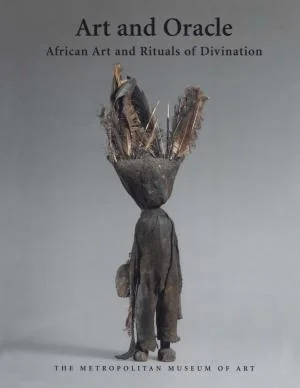
Art and Oracle
 81
81

Art and Oracle
Alisa LaGamma's *Art and Oracle* presents a powerful collection, demonstrating how material culture in Sub-Saharan Africa served as a vital conduit for spiritual and social discourse. The sheer breadth of cultures represented, from the Dogon to the Luba, is impressive, and the accompanying ethnographic detail for each of the 50 objects is both informative and respectful. The essay by John M. Janzen on divination is particularly strong, offering a cohesive theoretical anchor. However, the book's primary limitation lies in its original format as an exhibition catalog; while rich in description, it sometimes lacks the deeper, more speculative interpretive threads one might find in a monograph dedicated solely to comparative African spirituality. The section on Yaka divination figures, for instance, is visually arresting but could benefit from further exploration of the practitioners' subjective experiences. Despite this, the work remains a significant scholarly contribution to understanding African art and its spiritual dimensions.
📝 Description
81
Published in 2000, Art and Oracle catalogs a 1999 Metropolitan Museum of Art exhibition on African divination objects.
This volume documents artifacts from twenty-eight African cultures, originally displayed at The Metropolitan Museum of Art in New York City from April to July 2000. The objects cataloged were not simply decorative; they served specific roles in communication with ancestral spirits and deities. The featured artifacts address fundamental human concerns such as health, conception, and the adjudication of guilt or innocence.
Each of the 50 illustrated pieces includes detailed analysis covering ethnographic background, descriptive information, and scholarly interpretation. This provides context for each object's original purpose and use. A significant contribution is John M. Janzen's 13-page essay on divination practices across Sub-Saharan Africa, which offers a theoretical framework for understanding these artifacts within broader cultural and spiritual systems.
This book engages with traditions where objects are understood as conduits for spiritual communication and knowledge acquisition. It examines how specific material forms were employed in Sub-Saharan Africa to address fundamental human questions through divination, seeking guidance from ancestral realms and deities. The catalog presents these artifacts not as art objects alone, but as functional tools within complex cosmological systems, highlighting the role of ritual and symbolic items in connecting the human and spirit worlds.
💡 Why Read This Book?
• Gain direct insight into the divinatory practices of 28 African cultures, understanding how objects were used to consult ancestors and deities, as detailed in the book's extensive catalog entries. • Explore the concept of divination in Sub-Saharan Africa through John M. Janzen's focused 13-page essay, a foundational text for understanding this specific spiritual technology. • Examine 50 meticulously described artifacts, appreciating their ethnographic significance and their role in addressing critical life issues like health and justice, as presented in the Metropolitan Museum of Art exhibition.
⭐ Reader Reviews
Honest opinions from readers who have explored this book.
❓ Frequently Asked Questions
What is the primary focus of the 'Art and Oracle' book?
The book focuses on artifacts from 28 African cultures created for communication with spirits, ancestors, and gods, addressing issues like health, conception, and justice, originally presented in a 2000 Metropolitan Museum of Art exhibition.
Who authored the essay on divination in Sub-Saharan Africa within the book?
The 13-page essay on divination in Sub-Saharan Africa was authored by John M. Janzen, providing a scholarly framework for the exhibited artifacts.
How many distinct African cultures are represented by the artifacts in 'Art and Oracle'?
The book features artifacts from twenty-eight different African cultures, showcasing a wide range of artistic and spiritual traditions.
What specific types of issues did the artifacts aim to address?
The artifacts were created to address fundamental human concerns such as health, conception, and the determination of guilt or innocence within their respective societies.
Was 'Art and Oracle' a standalone publication or tied to an event?
The book was issued in conjunction with a major exhibition titled 'Art and Oracle' held at The Metropolitan Museum of Art in New York City from April to July 2000.
What kind of information is provided for each pictured piece?
Each of the 50 pictured pieces is accompanied by extensive ethnographic, descriptive, and interpretive text, offering detailed context and scholarly analysis.
🔮 Key Themes & Symbolism
Artifacts as Oracles
The core of *Art and Oracle* lies in its examination of objects functioning as direct interfaces with the spiritual world. These are not static museum pieces but active tools for divination, healing, and social order. The book meticulously details how artifacts from cultures like the Luba and Lega were employed in specific rituals to seek guidance on matters of conception, health, and justice, revealing a worldview where the material and spiritual realms were inextricably linked.
Ancestral Communication
A central theme is the profound connection maintained with ancestors across numerous African societies. The artifacts presented served as conduits for this ongoing dialogue, facilitating requests for blessings, warnings, or intercession. The book explores the diverse forms this communication took, highlighting how objects were imbued with the power to bridge the gap between the living and those who had passed, ensuring continuity and cultural memory.
Divination Systems
John M. Janzen's essay, alongside the catalog entries, illuminates the complex systems of divination prevalent in Sub-Saharan Africa. This includes exploring various methods—from casting lots and interpreting signs to the use of specific sculptural forms believed to hold oracles. The book demonstrates how these practices were integral to decision-making processes, offering a structured approach to understanding fate, spiritual influences, and the resolution of societal conflicts.
Art, Ritual, and Social Order
This work underscores the inseparable nature of art, ritual, and the maintenance of social order in the represented cultures. The objects were not created in isolation but were integral to communal life and spiritual practice. Their creation, use, and interpretation were governed by specific protocols that reinforced social hierarchies, moral codes, and collective understanding of the cosmos, demonstrating art's vital function beyond aesthetics.
💬 Memorable Quotes
Direct passages from the work, attributed to the author.
“Artifacts created to communicate with ancestors, spirits, and gods”
— This concise phrase captures the functional essence of the objects discussed. It moves beyond purely aesthetic appreciation to highlight their active role as spiritual tools, emphasizing the intentionality behind their creation and their vital place in the cosmological frameworks of the cultures they represent.
“Issues such as health, conception, and determination of guilt or innocence”
— This highlights the practical, life-encompassing concerns that spiritual communication and divination addressed. It reveals that these practices were not abstract philosophical pursuits but were deeply embedded in the everyday realities and critical junctures of individual and community life.
“Extensive ethnographic, descriptive, and interpretive text”
— This indicates the scholarly depth of the catalog. It promises readers more than just visual documentation; it signals a comprehensive approach that grounds the artifacts in their cultural contexts, describes their physical attributes, and offers critical analysis of their meaning and function.
“A 13-page essay about divination in Sub-Saharan Africa”
— This points to a significant theoretical contribution within the book, suggesting a dedicated exploration of the broader practices and beliefs surrounding divination, providing a crucial framework for understanding the specific objects presented.
“Twenty-eight African cultures are represented”
— This emphasizes the remarkable scope of the collection, showcasing the diversity of spiritual and artistic expression across a significant portion of the African continent, rather than focusing on a single tradition.
🌙 Esoteric Significance
Tradition
While not strictly adhering to a single Western esoteric lineage like Hermeticism or Kabbalah, *Art and Oracle* engages with universal esoteric principles concerning the manipulation of unseen forces and communication with non-corporeal entities. It aligns with animistic and shamanistic traditions found globally, where material objects act as focal points for spiritual energy and inter-species communication. The work offers a vital counterpoint to more text-centric esoteric traditions, demonstrating the power of visual and material culture in accessing alternate states of consciousness and divine knowledge.
Symbolism
The symbolism within the artifacts is rich and varied. Abstract geometric patterns on divination boards, for instance, often represent cosmic order or maps of spiritual pathways. Zoomorphic and anthropomorphic figures are frequently imbued with the spirits of specific ancestors or deities, acting as their material vessel for interaction. The very act of creating and using these objects symbolizes humanity's place within a dynamic spiritual ecosystem, constantly negotiating with forces beyond the mundane through ritual and symbolic representation.
Modern Relevance
Contemporary practitioners of shamanism, animism, and even certain branches of modern witchcraft find resonance in the functional artistry presented. The book's documentation of objects designed for direct spiritual communication and problem-solving offers inspiration and methodological insights for those seeking to integrate ritual objects into their own spiritual practices. Thinkers exploring the intersection of art, psychology, and spirituality, as well as curators focusing on the performative aspects of cultural heritage, continue to draw upon the research and visual documentation provided by this volume.
👥 Who Should Read This Book
• Students of African art history and religious studies seeking to understand the functional and spiritual roles of material culture beyond aesthetic analysis. • Anthropologists and ethnographers interested in comparative studies of divination, ritual, and belief systems across diverse global cultures. • Individuals exploring esoteric traditions who wish to broaden their understanding beyond Western frameworks, examining how other cultures engage with spirit communication through tangible objects.
📜 Historical Context
Published in 2000, *Art and Oracle* emerged during a period of increased scholarly attention to the functional and spiritual dimensions of African art, moving beyond purely formalist analyses. The exhibition at The Metropolitan Museum of Art, a major institution, lent significant visibility to these traditions. This era saw continued engagement with the theories of scholars like Robert Farris Thompson, who championed the study of African art's aesthetic vibrancy and its deep connections to cosmology and performance. While scholars like Wyatt MacGaffey were also exploring the conceptual categories of Kongo cosmology, LaGamma's work specifically focused on the performative and communicative roles of objects across a broad spectrum of cultures. The reception of such works within major museums generally affirmed the growing academic and public interest in African spiritual practices, though debates about the ethics of collecting and displaying sacred objects persisted.
📔 Journal Prompts
The role of specific divination artifacts in determining societal justice.
Interpreting the symbolism of ancestral communication objects.
The relationship between health concerns and spiritual consultation practices.
Comparing the function of these oracles to modern methods of seeking guidance.
Reflecting on the power of material objects in spiritual traditions.
🗂️ Glossary
Divination
The practice of seeking knowledge of the future or the unknown by supernatural means. In the context of the book, this involves interpreting signs and messages from spiritual entities via specific artifacts.
Ethnographic
Relating to the scientific description of peoples and cultures and their customs and interactions. In the book, this refers to the detailed study of the cultural context of the artifacts.
Artifact
An object made by a human being, typically an item of cultural or historical interest. Here, specifically referring to objects created for spiritual or ritualistic purposes.
Ancestors
In many African cultures, deceased relatives who are believed to retain influence over the living and are often venerated or consulted. They are key figures in the communication facilitated by the artifacts.
Spirits
Non-physical beings or entities believed to inhabit the world, including nature spirits, deities, and the spirits of the deceased, with whom the artifacts facilitate communication.
Cosmology
The study of the origin, evolution, and eventual fate of the universe. In this context, it refers to the structured understanding of the universe and humanity's place within it held by the represented cultures.
Ritual
A sequence of activities involving gestures, words, actions, or objects, performed according to a set sequence. The use of the artifacts is often embedded within specific rituals.
This book appears in 1 collection
🔮 Readers Also Liked
Browse all →









From the “Divination” Collection
View all →









More Free Occult Philosophy Books
View all →