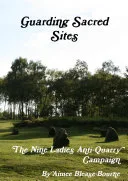
Guarding Sacred Sites: The Nine Ladies Anti-Quarry Campaign
 72
72

Guarding Sacred Sites: The Nine Ladies Anti-Quarry Campaign
Aimee Blease-Bourne’s account of the Stanton Moor campaign offers a granular look at how sustained, multifaceted activism can succeed. The strength of the book lies in its firsthand perspective, immersing the reader in the daily realities of the occupation and the strategic shifts required over nine years. The author’s detailed descriptions of the diverse tactics employed, moving beyond simple protest to innovative forms of engagement with the landscape, are particularly valuable. However, the narrative occasionally feels dense with tactical minutiae, which might slow down readers less invested in the operational aspects of the campaign. A passage detailing the construction of the "labyrinth of tree houses and tunnels" vividly illustrates the commitment and ingenuity involved. This is a vital record for understanding modern environmental defense through the lens of spiritual connection to place.
📝 Description
72
Aimee Blease-Bourne's 2016 book details a nine-year campaign to save Stanton Moor.
Guarding Sacred Sites recounts the direct action campaign waged by environmental activists to protect Stanton Moor, a notable area in the Peak District National Park. The book chronicles the nine years of activism that began in response to quarrying threats. It covers the diverse tactics employed by the group, including physical occupations and more formal advocacy. The campaign focused on a specific area known as the Nine Ladies stone circle, highlighting the connection individuals felt to this sacred land.
The effort took place during a time of growing awareness about protecting heritage sites and natural landscapes across the UK. The book examines how grassroots resistance was used as a tool for environmental defense. It discusses the concept of creating an 'impenetrable defense' through varied strategies and the personal bonds formed with the land being defended.
While focused on a modern environmental campaign, the book touches upon themes common in esoteric traditions concerning the sanctity of place and the deep connection between humanity and the natural world. The defense of the Nine Ladies stone circle speaks to a belief in the inherent spiritual value of certain landscapes, a concept echoed in animistic beliefs and earth-centered spiritualities. The campaign itself can be seen as a modern manifestation of defending sacred ground, drawing parallels to historical and mythological accounts of protecting holy sites from desecration.
💡 Why Read This Book?
• Understand the effectiveness of diversified protest tactics by examining the "impenetrable defense" strategy used during the 2009 Stanton Moor campaign, learning how varied actions countered quarrying threats. • Connect with the deep motivations behind landscape preservation by exploring first-hand accounts of activists' personal commitments to protecting sacred sites like the Nine Ladies stone circle. • Gain practical insights into long-term environmental activism by studying the nine-year battle, appreciating the perseverance required and the diverse skills mobilized from 2000 to 2009.
⭐ Reader Reviews
Honest opinions from readers who have explored this book.
❓ Frequently Asked Questions
When did the campaign to protect Stanton Moor take place?
The campaign to prevent quarrying on Stanton Moor, documented in 'Guarding Sacred Sites', spanned nine years, concluding around 2009. The book itself was first published in March 2016.
What specific sacred landscape was defended in this book?
The book focuses on Stanton Moor in the Peak District National Park, particularly the area around the 'Nine Ladies' stone circle, which was threatened by quarrying operations.
What kinds of protest methods are detailed in the book?
The book describes a wide array of tactics, including direct action such as building tree houses and tunnels, alongside more conventional methods like letter writing and community organizing.
Who is the author of Guarding Sacred Sites?
The author is Aimee Blease-Bourne, who was a participant in the campaign and provides first-hand accounts within the book.
What is the historical significance of Stanton Moor?
Stanton Moor is a sacred landscape featuring ancient monuments, including the Nine Ladies stone circle, making its preservation a key concern for environmental and heritage activists.
What does the book reveal about the activists' motivations?
It highlights the deep personal connections and spiritual significance activists found in the landscape, driving their commitment to defend it against industrial encroachment.
🔮 Key Themes & Symbolism
Direct Action & Occupation
The book meticulously details the implementation of direct action, emphasizing how physical presence and occupation, such as the construction of tree houses and tunnels, formed a crucial part of the "impenetrable defense" against quarrying. It moves beyond theoretical discussions to showcase the practical, on-the-ground efforts required over an extended period, illustrating the commitment and ingenuity necessary to physically contest industrial encroachment on sacred land.
Sacred Landscape Preservation
Fundamentally, the work champions the protection of sacred natural sites. It explores the profound connection individuals forge with landscapes like Stanton Moor, particularly its ancient monuments like the Nine Ladies stone circle. The campaign is presented not just as an environmental fight, but as a spiritual imperative to safeguard places imbued with deep cultural and historical significance from destructive development.
Diversity of Activist Tactics
A significant theme is the strategic advantage gained through employing a wide spectrum of protest methods. By integrating physical resistance with formal advocacy, letter writing, and community engagement, the activists created a many-sided opposition. This approach demonstrates how varied skill sets and strategies, drawn from individuals of all walks of life, can coalesce into a powerful and effective force for conservation.
Grassroots Resistance
This narrative serves as a powerful case study in grassroots resistance. It highlights how ordinary citizens, united by a common cause, can achieve significant victories against powerful industrial interests. The book emphasizes the long-term dedication and collaborative spirit essential for such protracted battles, showcasing the potential of organized community action in environmental defense.
💬 Memorable Quotes
Direct passages from the work, attributed to the author.
“The diversity of tactics employed – from building a labyrinth of tree houses and tunnels, to letter writing – created an impenetrable defense.”
— This statement captures the core strategy of the Stanton Moor campaign, highlighting how a multi-pronged approach, combining physical presence with formal advocacy, proved effective in thwarting quarrying plans.
“Guarding Sacred Sites is the first book study to document the direct action based campaign on Stanton Moor.”
— This declaration positions the book as a unique and foundational historical record, emphasizing its role in bringing the specific methods and narrative of this particular environmental campaign to a wider audience.
“The author, who lived [on the site/among the activists]...”
— This highlights the invaluable first-hand perspective the book offers, suggesting an intimate understanding of the campaign's daily realities, challenges, and the personal stakes involved for its participants.
“activists - from all walks of life - won...”
— This emphasizes the broad coalition that formed the campaign, suggesting inclusivity and the power of diverse individuals uniting for a common environmental and spiritual cause.
💡 Key Ideas
Editorial paraphrase of the work's core concepts — not direct quotes.
won a nine year battle to prevent quarrying on a sacred landscape
This succinctly summarizes the campaign's outcome and duration, underscoring the significant achievement of successfully protecting Stanton Moor through sustained effort over nearly a decade.
🌙 Esoteric Significance
Tradition
While not explicitly tied to a singular esoteric lineage like Hermeticism or Gnosticism, the work appeals to modern Pagan and Earth-based spiritual traditions that emphasize the sanctity of natural landscapes. It aligns with the modern Druidry and eco-spiritual movements that view specific sites, particularly those with ancient monuments like stone circles, as having intrinsic spiritual power and requiring active guardianship.
Symbolism
The "Nine Ladies" stone circle itself serves as a potent symbol of ancient connection to the land and enduring spiritual presence. The "labyrinth of tree houses and tunnels" represents a human-created sanctuary and a physical manifestation of resistance, symbolizing a deep, intertwined relationship with the environment. The act of "guarding" the site embodies the principle of stewardship and active defense of the sacred.
Modern Relevance
Contemporary thinkers and practitioners involved in landscape activism, ecopsychology, and geomancy find relevance in this account. It informs modern eco-activist strategies by demonstrating the power of sustained, community-driven action rooted in spiritual connection to place, offering a practical model for defending vulnerable sacred sites against industrial and commercial threats.
👥 Who Should Read This Book
• Environmental activists and organizers seeking case studies of successful long-term campaigns against development, learning from the diverse tactics employed at Stanton Moor. • Students of landscape studies and British archaeology interested in the contemporary struggle to protect ancient sites and understand their cultural significance beyond academic study. • Individuals drawn to eco-spirituality and Paganism who wish to explore the practical application of defending sacred natural places and the deep connections that motivate such actions.
📜 Historical Context
Published in 2016, Aimee Blease-Bourne’s "Guarding Sacred Sites" emerged during a period of heightened environmental activism and a growing public discourse on the protection of natural and heritage landscapes in the United Kingdom. The specific campaign detailed, the nine-year battle to save Stanton Moor from quarrying, culminated around 2009, aligning with a broader wave of direct action protests against development projects, exemplified by movements like the anti-roads protests of the 1990s. While not directly engaging with academic environmental sociology, the book provides a detailed case study that implicitly speaks to concepts of ecological consciousness and the efficacy of grassroots mobilization. The reception of such direct action campaigns often varied, sometimes drawing criticism for disruption while simultaneously garnering support for their cause, a dynamic likely experienced by the Stanton Moor activists.
📔 Journal Prompts
Stanton Moor's "impenetrable defense" strategy: What combination of tactics could replicate this resilience for a contemporary environmental issue?
The "Nine Ladies" stone circle: Reflect on the personal and collective significance of ancient sites in modern activism.
Aimee Blease-Bourne's first-hand accounts: How does lived experience shape the narrative and impact of direct action campaigns?
The nine-year battle: Consider the psychological and emotional endurance required for protracted social and environmental movements.
Activism "from all walks of life": Explore the power of diverse skill sets and backgrounds uniting for a common cause.
🗂️ Glossary
Stanton Moor
A moorland in the Peak District National Park, England, notable for its ancient archaeological sites, including the Nine Ladies stone circle, and the focus of a significant environmental protection campaign.
Nine Ladies
A Bronze Age stone circle located on Stanton Moor, considered a sacred site and a focal point for the campaign against quarrying in the area.
Direct Action
A form of activism involving direct confrontation or intervention to achieve political or social goals, often bypassing traditional institutional channels.
Impenetrable Defense
A strategic approach detailed in the book, characterized by the use of multiple, diverse, and persistent tactics to effectively block or deter a threat, in this case, quarrying.
Sacred Landscape
An area of land perceived as having spiritual significance, often due to natural features, ancient monuments, or historical events, deserving of protection.
Peak District National Park
A national park in the United Kingdom, known for its hilly landscape, popular for hiking and climbing, and containing numerous sites of natural and archaeological importance like Stanton Moor.
Quarrying
The process of extracting stone or other minerals from an open pit or surface mine, often posing environmental threats to surrounding landscapes and ecosystems.