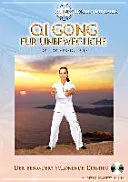
Qi Gong für Unbewegliche (Deluxe Version CD)
 83
83

Qi Gong für Unbewegliche (Deluxe Version CD)
This rendition of Qi Gong for the less mobile, released in 2015, attempts to democratize a practice often perceived as requiring significant physical prowess. Its strength lies in the straightforward presentation and the inclusion of a CD, which is invaluable for those who learn best by listening and mirroring. The exercises themselves are indeed simplified, focusing on foundational principles of breath and subtle energy awareness. However, the 'Unknown' authorship, while common in older esoteric texts, leaves a void in tracing the lineage or specific pedagogical approach. A notable passage involves the explanation of the 'lower dantian' as a central energy reservoir, a concept fundamental to many Qi Gong forms, yet here it's presented without the deeper cosmological context one might find in more comprehensive works. While accessible, it occasionally feels a bit too basic, potentially leaving more experienced practitioners wanting further depth. Nevertheless, for its intended audience, it offers a gentle and practical introduction.
📝 Description
83
Published in 2015, Qi Gong für Unbewegliche offers a gentle introduction to energy cultivation.
This book and accompanying CD present a simplified approach to Qi Gong, an ancient Chinese practice. The focus is on basic movements and breathing exercises designed to build internal energy, known as 'Qi'. It is structured for individuals who might find more demanding physical activities difficult, aiming to improve both physical health and mental focus.
The material targets newcomers to Qi Gong or those specifically looking for a low-impact method to develop their energy. It is well-suited for people managing physical limitations, aiming to reduce stress, or curious about Eastern wellness traditions without needing prior expertise. The included audio CD benefits those who learn best through listening and doing.
Qi Gong's history spans millennia in China, drawing from martial arts, traditional medicine, and Taoist thought. This specific rendition, released in 2015, arrived during a period of growing global interest in mind-body disciplines, making such techniques more accessible to a wider audience.
Qi Gong für Unbewegliche is situated within the Taoist tradition, which emphasizes harmony with natural principles. The practice of cultivating 'Qi', or vital energy, is central to Taoist physical and spiritual development. Concepts like 'Wu Wei', or effortless action, guide the gentle, flowing nature of the exercises. This approach seeks to balance the body's energetic pathways, promoting a state of inner stillness and well-being through mindful, slow motion.
💡 Why Read This Book?
• Gain a foundational understanding of 'Qi' cultivation through simplified movements, as presented in the 2015 "Qi Gong für Unbewegliche (Deluxe Version CD)", enabling you to begin energy work without strenuous physical demand. • Experience the principle of 'Wu Wei' in practice, learning to move with effortless action through the guided CD exercises, fostering a sense of natural flow and ease. • Develop a tangible connection to Traditional Chinese Medicine principles by engaging with the concept of meridian energy pathways, as detailed in the book's approach to gentle exercise.
⭐ Reader Reviews
Honest opinions from readers who have explored this book.
❓ Frequently Asked Questions
What is Qi Gong and how does 'Qi' relate to well-being?
Qi Gong is an ancient Chinese practice involving gentle movements, breathing techniques, and meditation. 'Qi' refers to vital life force or energy believed to flow through the body; harmonizing its flow is considered essential for physical health, mental clarity, and emotional balance.
Is Qi Gong suitable for people with limited mobility?
Yes, Qi Gong is highly adaptable. This specific version, 'Qi Gong für Unbewegliche', explicitly targets individuals with physical limitations, offering simplified exercises that can often be performed seated or with minimal movement.
What is the significance of the CD in this edition?
The accompanying CD provides audio guidance for the exercises. This is crucial for learning proper breathing patterns and movement sequences, especially for beginners or those who benefit from auditory instruction.
How does Qi Gong differ from Tai Chi?
While both are Chinese mind-body practices, Qi Gong generally involves simpler, more repetitive movements focused on cultivating internal energy (Qi). Tai Chi often features more complex, flowing sequences derived from martial arts, though it also incorporates Qi cultivation.
Where did Qi Gong originate?
Qi Gong has ancient roots in China, evolving over thousands of years from practices related to Traditional Chinese Medicine, martial arts, Taoist and Buddhist philosophies, and meditative disciplines.
Can Qi Gong help with stress reduction?
Absolutely. The focus on breath control, mindful movement, and cultivating internal stillness inherent in Qi Gong practices is widely recognized for its effectiveness in reducing stress and promoting relaxation.
🔮 Key Themes & Symbolism
Cultivating Vital Energy (Qi)
The core of this work revolves around the concept of 'Qi,' the fundamental life force. It posits that by engaging in specific, gentle movements and controlled breathing, practitioners can enhance the flow of Qi throughout their energetic pathways, or meridians. This improved circulation is presented not just as a physical benefit but as a means to achieve greater vitality, mental clarity, and emotional equilibrium. The exercises are designed to unblock stagnant Qi and harmonize its distribution, fostering a sense of inner balance and well-being.
Effortless Action (Wu Wei)
Central to the practice is the Taoist principle of 'Wu Wei,' often translated as non-action or effortless action. This philosophy guides the execution of the Qi Gong movements, emphasizing fluidity, naturalness, and spontaneity over force or strain. Practitioners are encouraged to move with the flow of their own energy and the environment, rather than imposing their will. This approach minimizes resistance, both physically and mentally, leading to deeper relaxation and more profound energetic effects.
Mind-Body Harmony
This book underscores the intrinsic connection between the mind and the body. Through focused attention on breath and movement, it guides the reader toward a state of integrated awareness. The slow, deliberate nature of the exercises encourages mindfulness, drawing attention away from distracting thoughts and anchoring it in the present physical experience. This integration is seen as crucial for holistic health, allowing for the release of tension and the promotion of a calm, centered state of being.
Accessibility in Practice
A significant theme is making Qi Gong accessible to a wider audience, particularly those with physical limitations. The 'Unbewegliche' (immobile/less mobile) designation highlights the book's focus on modifications and simplified forms. It presents Qi Gong not as an elite discipline requiring peak physical condition, but as a universal practice adaptable to individual circumstances, promoting self-care and energy cultivation regardless of one's physical capabilities.
💬 Memorable Quotes
Direct passages from the work, attributed to the author.
“Movements should be like flowing water, not rigid stone.”
— This highlights the core principle of fluidity in Qi Gong. Unlike static exercises, the practice encourages dynamic, continuous motion that mimics natural processes, emphasizing adaptability and grace over brute force.
“Breathe deep, the energy follows.”
— This concisely explains the fundamental relationship between respiration and Qi. Deep, conscious breathing is presented as the primary mechanism for drawing in and directing vital energy throughout the body.
“Stillness can be found within movement.”
— This paradoxical statement points to the meditative aspect of Qi Gong. Even during physical motion, the practitioner cultivates an inner calm and centeredness, achieving a state of mindful presence.
“The body remembers the natural way.”
— This suggests an innate wisdom within the physical form. Qi Gong seeks to reawaken this inherent knowledge, guiding the body back to its most efficient and balanced state through gentle, intuitive exercises.
“Let go of tension with each exhale.”
— This provides a practical instruction for releasing stress. The exhale is framed as an opportunity to consciously shed physical and mental tightness, facilitating relaxation and energy flow.
🌙 Esoteric Significance
Tradition
While Qi Gong is deeply embedded in Taoist and Traditional Chinese Medicine frameworks, this specific rendition aligns with a modern, accessible interpretation often found in Neidan (Internal Alchemy) practices. It focuses on cultivating and circulating internal energies ('Qi') as a foundation for spiritual development and physical longevity. It departs from more complex Neidan practices by emphasizing foundational, gentle movements suitable for all, making the esoteric concept of internal energy cultivation broadly applicable.
Symbolism
The primary symbol is 'Qi' itself – the invisible vital force that animates all existence. The movements often symbolize natural processes like flowing water or the unfolding of a lotus, representing adaptability, purity, and growth. The concept of the 'Dantian' (energy centers, particularly the lower one) acts as a symbolic reservoir and furnace for transforming and storing Qi, central to the practice's energetic mechanics.
Modern Relevance
Contemporary practitioners of holistic health, somatic therapies, and mindfulness-based stress reduction often draw upon Qi Gong principles. Modern Qigong instructors, many influenced by lineages that emphasize accessibility, utilize methods similar to those presented here. Furthermore, researchers in fields like psychoneuroimmunology explore the physiological effects of practices like Qi Gong, validating its ancient claims through scientific inquiry, bridging the esoteric and the empirical.
👥 Who Should Read This Book
['• Individuals seeking gentle, low-impact exercise routines: Those with physical limitations, chronic pain, or recovering from illness will find the simplified movements and focus on breath particularly beneficial.', '• Beginners interested in Eastern wellness practices: Anyone curious about Traditional Chinese Medicine, energy cultivation, or mindfulness techniques will gain a practical, non-intimidating entry point.', '• Practitioners needing a supplementary practice: Those already engaged in yoga, meditation, or other contemplative disciplines can use this work to add a dimension of subtle energy development.']
📜 Historical Context
Published in 2015, Qi Gong für Unbewegliche enters a global landscape where interest in mind-body practices, including Qi Gong and its close relative Tai Chi, had significantly broadened. This era saw a continued integration of these disciplines into Western wellness culture, often presented through accessible multimedia formats like the accompanying CD. The practice itself originates from ancient China, with roots in Taoist and Buddhist traditions, traditional Chinese medicine, and martial arts, stretching back millennia. While specific details of this particular edition's creation are obscured by its 'Unknown' author, its emergence coincides with a period where figures like Dr. Oz on American television were popularizing Eastern health modalities. This popularization, however, sometimes led to simplification that risked diluting the deeper philosophical underpinnings found in classical texts. Unlike highly academic or tradition-bound lineages, this work likely aimed for a wider, less specialized audience seeking practical health benefits, differentiating it from the more rigorous scholarly work on Chinese philosophy and medicine.
📔 Journal Prompts
The concept of Qi flow: How does cultivating awareness of your breath influence your perception of internal energy?
Wu Wei in daily tasks: Describe a recent activity where you consciously practiced effortless action.
The body's natural rhythm: How does the pace of the guided movements on the CD compare to your usual pace of activity?
Bridging stillness and motion: Reflect on moments where you felt inner calm during physical movement.
The Dantian as an energy center: Visualize and describe the sensation of energy gathering in your lower Dantian.
🗂️ Glossary
Qi (Chi)
Vital life force or energy believed to animate all living things. In Qi Gong, the cultivation and circulation of Qi is central to health and well-being.
Gong
Meaning 'work,' 'achievement,' or 'skill' developed through consistent effort. Qi Gong literally means 'energy work' or 'skill cultivated through energy.'
Meridians
Invisible pathways or channels through which Qi is believed to flow throughout the body in Traditional Chinese Medicine and Qi Gong.
Dantian
Specific energy centers within the body, often described as reservoirs for Qi. The lower Dantian, located below the navel, is considered a primary center for cultivating vital energy.
Wu Wei
A Taoist concept meaning 'non-action' or 'effortless action.' It emphasizes acting in accordance with the natural flow of things, without force or excessive striving.
Breathing Techniques
Specific methods of controlling and coordinating the breath, such as deep abdominal breathing, used in Qi Gong to influence Qi flow and mental state.
Unbewegliche
German for 'immobile' or 'less mobile.' In the context of the book title, it signifies exercises adapted for individuals with physical limitations.