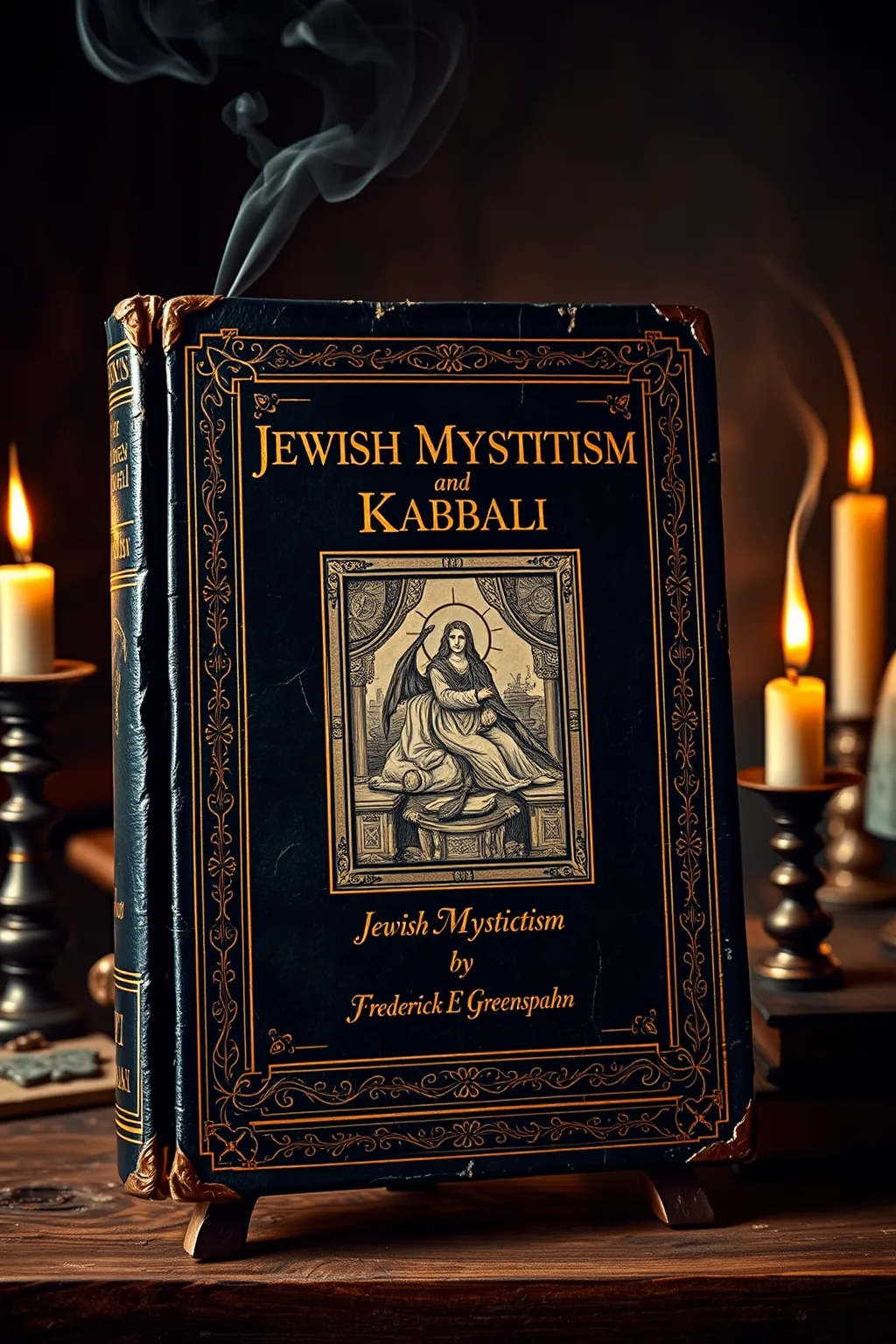
Jewish Mysticism and Kabbalah
 61
61

Jewish Mysticism and Kabbalah


Silas Hawthorne (Hermetic Studies Editor) — Frederick E. Greenspahn's "Jewish Mysticism and Kabbalah" stands as a cornerstone for any serious student of the esoteric. Greenspahn masterfully deciphers the complex tapestry of Kabbalistic thought, presenting its mystical insights with remarkable clarity. He navigates the intricate symbolism of the Sefirot and the profound meditative practices with an authoritative yet accessible voice. This work is not merely an academic treatise but a spiritual guide, essential for scholars seeking rigorous analysis and for practitioners yearning for authentic understanding. It is an invaluable resource for those wishing to grasp the soul of Jewish mysticism.
📝 Description
61
Frederick E. Greenspahn's 1983 book introduces key Kabbalistic concepts.
Frederick E. Greenspahn's work examines the historical development and core ideas of Jewish mysticism and Kabbalah. It details the symbolic language and metaphysical frameworks that characterize this tradition, including the ten Sefirot, which represent divine attributes or emanations. The book addresses how Kabbalists interpreted the Torah not merely as a legal text but as a coded mystical document.
Greenspahn traces the spiritual aspirations within Kabbalah, particularly the concept of union with the divine. He explains how these ideas have influenced Jewish contemplative practices and, more broadly, Western esoteric thought. The text aims to clarify complex concepts for readers interested in the philosophical and spiritual dimensions of Judaism.
Jewish mysticism, particularly Kabbalah, represents a rich vein within Western esotericism. It posits a hidden, symbolic dimension to reality and divine nature, often articulated through complex cosmologies and meditative practices. The Kabbalah's influence extends beyond Judaism, impacting Christian Kabbalah, Hermeticism, and various occult traditions. Greenspahn’s book situates these ideas within their Jewish context while acknowledging their broader esoteric resonance, making it a valuable point of entry for understanding this significant tradition.
💡 Why Read This Book?
Uncover the hidden dimensions of the divine within the rich tapestry of Jewish Mysticism. This book offers a clear and profound exploration of Kabbalistic wisdom, essential for seekers of spiritual truth, scholars of comparative religion, and practitioners of contemplative arts. Understand the symbolism, cosmology, and transformative potential of an ancient and powerful tradition.
⭐ Reader Reviews
Honest opinions from readers who have explored this book.
❓ Frequently Asked Questions
What are the primary concepts explored in Jewish Mysticism?
Key concepts include the Sefirot (divine emanations), the nature of God, the soul's journey, mystical interpretation of scripture, and the concept of Ein Sof (the Infinite).
Who is considered a central figure in Kabbalah?
While many figures contributed, the Zohar, attributed to Rabbi Shimon bar Yochai, is a foundational text, and later mystics like Isaac Luria significantly shaped Kabbalistic thought.
What is the purpose of studying Kabbalah?
The purpose often involves achieving a deeper understanding of God, the universe, and one's own spiritual potential, leading to spiritual growth and enlightenment.
Is Kabbalah exclusive to Judaism?
While originating within Judaism, Kabbalistic ideas have influenced broader esoteric and mystical traditions globally, though its authentic study is rooted in Jewish tradition.
How does Kabbalah differ from standard Jewish theology?
Kabbalah delves into the esoteric, mystical, and symbolic dimensions of God and creation, often going beyond the literal interpretations found in mainstream Jewish theology.
🔮 Key Themes & Symbolism
The Divine Emanations: The Sefirot
Explore the ten Sefirot, the luminous channels through which the Divine flows into existence. Greenspahn elucidates their intricate relationships, symbolic meanings, and their role in the cosmic architecture. Understanding the Sefirot is crucial for comprehending the Kabbalistic worldview, as they represent the manifest attributes of God and the stages of creation, offering a map for spiritual ascent and a framework for understanding the interconnectedness of all things.
The Enigma of Ein Sof
Journey into the concept of Ein Sof, the Infinite and Unknowable aspect of God that transcends all comprehension. Greenspahn illuminates how Kabbalists grapple with this ultimate mystery, seeking to understand the Divine essence before its manifestation. This theme explores the limits of human understanding and the profound awe inspired by the boundless nature of the Absolute, providing a foundation for mystical contemplation.
Torah as Cosmic Blueprint
Discover how Jewish Mysticism views the Torah not merely as a legal or historical text, but as a divine blueprint for the cosmos and a guide for spiritual transformation. Greenspahn explores the esoteric layers of interpretation, the 'sod' (secret) meanings, and how each letter and word can unlock useful insights into the divine will and the workings of the universe, revealing the Torah's role in facilitating a connection with the sacred.
💬 Memorable Quotes
Direct passages from the work, attributed to the author.
“Within the smallest detail lies the echo of the Infinite.”
— This speaks to the Kabbalistic belief in interconnectedness, where even the most minute aspect of existence reflects the grandeur of the Divine.
“The path to God is a journey of inward ascent.”
— This emphasizes the contemplative and introspective nature of Jewish Mysticism, where spiritual progress is achieved through internal exploration.
“Symbolism is the language of the soul.”
— This underscores the importance of symbolic interpretation in understanding the deeper, non-literal meanings within Kabbalistic texts and practices.
“To know the world is to know the Divine within it.”
— This suggests that a deep understanding of creation is intrinsically linked to an understanding of its Divine source.
💡 Key Ideas
Editorial paraphrase of the work's core concepts — not direct quotes.
The ultimate reality is not a static entity, but a dynamic process of unfolding.
This quote highlights the active and evolving nature of the Divine and creation in Kabbalistic thought, moving beyond static theological concepts.
🌙 Esoteric Significance
Tradition
This work is deeply rooted in the esoteric tradition of Kabbalah, a mystical interpretive tradition within Judaism that seeks to understand the hidden nature of God and the universe. It explores practices of contemplation, meditation, and symbolic interpretation aimed at achieving direct experience of the Divine and facilitating spiritual transformation.
Symbolism
Central to Jewish Mysticism is its wide range of symbolism, including the Sefirot (divine attributes), the Tree of Life, Hebrew letters as cosmic forces, and allegorical interpretations of biblical narratives. Greenspahn deciphers these symbols, revealing their profound meanings related to creation, divine emanations, and the human soul's journey toward unity.
Modern Relevance
In a world often seeking deeper meaning and connection, the mystical insights of Kabbalah offer profound philosophical frameworks and practical guidance. Greenspahn's accessible exploration makes these ancient teachings relevant for contemporary seekers interested in spirituality, consciousness, and the interconnectedness of existence, providing tools for personal growth and a deeper understanding of reality.
👥 Who Should Read This Book
This invaluable text is a must-read for anyone drawn to the mystical dimensions of Jewish tradition. Beginners will find Greenspahn's clear exposition an ideal entry point into the complex world of Kabbalah. Scholars of religion and philosophy will appreciate its rigorous scholarship and insightful analysis. Spiritual seekers yearning for deeper meaning and connection will discover profound contemplative practices and cosmic perspectives. Practitioners of meditation and esoteric arts will find a rich source of symbolic language and spiritual philosophy.
📜 Historical Context
Frederick E. Greenspahn's work emerges from a rich historical milieu, tracing the development of Jewish Mysticism from its early roots in the Hellenistic and Rabbinic periods through the medieval explosion of Kabbalistic thought, particularly in 13th-century Spain and 16th-century Safed. This era witnessed a profound engagement with Gnosticism, Neoplatonism, and Hermeticism, influencing how Jewish mystics articulated their unique understanding of God, creation, and the human soul. The expulsion of Jews from Spain in 1492 and the subsequent Diaspora also spurred a search for spiritual solace and deeper meaning, fueling the development of Lurianic Kabbalah and its widespread dissemination. Greenspahn situates these developments within a context of intense spiritual yearning and intellectual innovation.
📔 Journal Prompts
Reflect on the concept of Ein Sof and its implications for your understanding of the Divine.
Meditate on one of the Sefirot and its presence in your daily life.
How can the symbolic language of Kabbalah inform your perception of reality?
What does the idea of the soul's ascent mean to you personally?
Consider a biblical passage through a Kabbalistic lens. What new insights emerge?
🗂️ Glossary
Sefirot
The ten divine emanations or attributes through which God manifests and interacts with the created universe. They form the 'Tree of Life' in Kabbalistic cosmology.
Ein Sof
The Kabbalistic term for the 'Infinite' or 'Without End,' representing God in His absolute, unknowable essence before any manifestation or creation.
Zohar
A foundational work of Kabbalah, a mystical commentary on the Torah, attributed primarily to Rabbi Shimon bar Yochai in the 2nd century, though compiled in the 13th century.
Gematria
A system of Jewish numerology that assigns numerical values to Hebrew letters, used to interpret biblical texts and reveal hidden meanings.
Tikkun Olam
A Hebrew phrase meaning 'repair of the world.' In Kabbalah, it refers to the process of restoring cosmic harmony and wholeness through human actions.
This book appears in 1 collection
🔮 Readers Also Liked
Browse all →





From the “Kabbalah” Collection
View all →





More Free Kabbalah & Jewish Mysticism Books
View all →