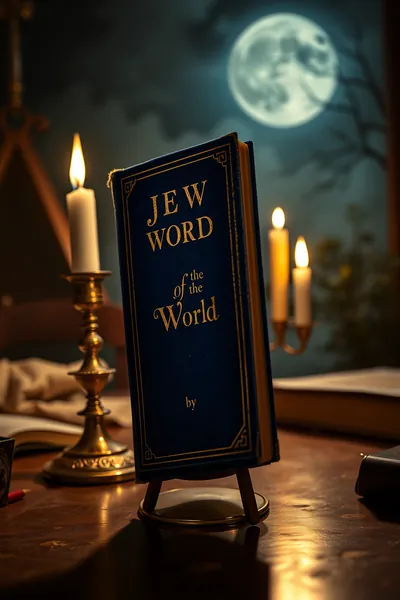
Ursprung und Anfänge der Kabbala
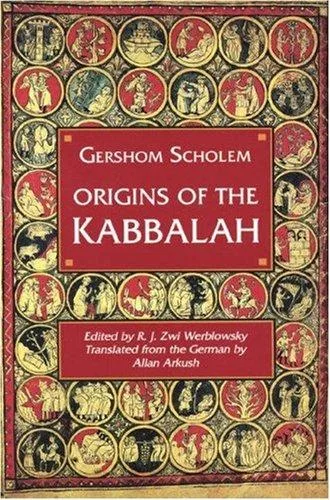
 69
69

Ursprung und Anfänge der Kabbala


By Alaric Kestrel (Metaphysical Studies Reviewer) — Gershom Scholem's "Ursprung und Anfänge der Kabbala" remains the definitive scholarly inquiry into the foundational stages of Kabbalistic thought. Scholem masterfully navigates the labyrinthine complexities of early Jewish mysticism, offering unparalleled insights into the emergence of this transformative spiritual tradition. His rigorous analysis of pre-Kabbalistic and early Kabbalistic texts, particularly the enigmatic Sefer ha-Bahir, illuminates the symbolic language and philosophical underpinnings that defined this nascent esoteric system. This work is indispensable for serious students of Kabbalah, history of religions, and Jewish mysticism, providing a crucial, authoritative foundation for understanding its subsequent evolution.
📝 Description
69
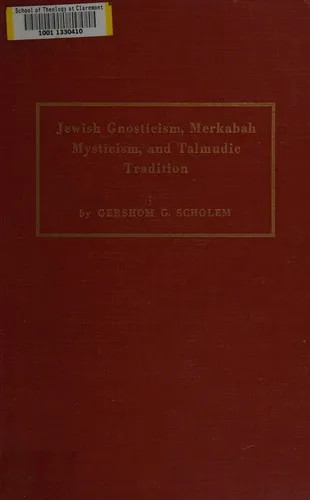
Gershom Scholem published "Ursprung und Anfänge der Kabbala" in 1962, examining Kabbalah's medieval origins.
Gershom Scholem's 1962 work, "Ursprung und Anfänge der Kabbala," investigates the emergence of Kabbalistic thought. Scholem, a key figure in modern Kabbalistic studies, traces the early development of this mystical tradition. He analyzes the historical and intellectual currents that contributed to its formation in 13th-century Europe, particularly in Provence and Germany. The book considers the complex relationship between Kabbalah and earlier Jewish mystical and philosophical movements.
Scholem meticulously reconstructs the milieu in which Kabbalistic ideas first took shape. He discusses the symbolism, theological concepts, and textual traditions that formed the basis of early Kabbalah. The study aims to provide a scholarly account of how this esoteric system of thought developed from its initial stages. It is a foundational text for understanding the historical genesis of Kabbalistic literature and practice.
This book situates Kabbalah within the broader spectrum of Jewish esoteric traditions. It examines how Kabbalah diverged from earlier Merkabah mysticism and Hekhalot literature, while also engaging with philosophical ideas. Scholem highlights Kabbalah's unique development of symbolic interpretation and its complex cosmology. The work contrasts Kabbalah with other mystical currents of the period, establishing its distinct historical and theological trajectory.
💡 Why Read This Book?
Embark on a scholarly expedition into the very genesis of Kabbalah. "Ursprung und Anfänge der Kabbala" offers a rare opportunity to understand the historical and mystical crucible from which this profound tradition emerged. Essential for scholars, serious seekers of esoteric knowledge, and practitioners aiming to ground their understanding in the historical roots of Jewish mysticism. Uncover the hidden springs of divine wisdom.
⭐ Reader Reviews
Honest opinions from readers who have explored this book.
❓ Frequently Asked Questions
What is the primary focus of this book?
The book's primary focus is the historical and scholarly investigation into the origins and early development of Kabbalah, the mystical tradition within Judaism that emerged in the Middle Ages. It explores the intellectual and spiritual environment that fostered its beginnings.
Who was Gershom Scholem?
Gershom Scholem (1897-1982) was a pioneering historian of Jewish mysticism and a central figure in the academic study of Kabbalah. His groundbreaking research established the field and remains foundational for all subsequent scholarship.
What is the significance of the Sefer ha-Bahir in relation to Kabbalah's origins?
The Sefer ha-Bahir is considered one of the earliest significant Kabbalistic texts. Scholem analyzes it as a crucial indicator of the emerging mystical concepts, symbolism, and theological ideas that characterized the initial phase of Kabbalistic development.
Is this book suitable for beginners in Kabbalah?
While comprehensive, Scholem's work is deeply scholarly and best suited for those with some background or a strong academic interest in mysticism or Jewish studies. Beginners might find it challenging but rewarding with dedicated effort.
How does this book contribute to understanding Jewish mysticism?
It provides a critical historical and textual foundation for understanding Jewish mysticism, moving beyond mythologizing to a rigorous analysis of its intellectual and spiritual genesis. It demystifies its emergence and highlights its complex evolution.
🔮 Key Themes & Symbolism
The Enigmatic Emergence of Kabbalah
This theme looks at the perplexing phenomenon of Kabbalah's sudden appearance in the 13th century. Scholem meticulously examines the historical, cultural, and intellectual climate that made such a profound mystical and theosophical system possible. It addresses the question of whether this emergence was truly spontaneous or the culmination of long-dormant esoteric currents, exploring the socio-religious context and the intellectual needs that Kabbalah sought to fulfill. The exploration goes beyond mere historical dating to probe the very nature of spiritual innovation within a deeply rooted tradition.
Symbolism and Theosophical Concepts
Central to understanding Kabbalah's origins is its unique symbolic language and theosophical framework. Scholem analyzes the early symbolic systems, including those found in texts like the Sefer ha-Bahir, to decipher the nascent conceptions of God, creation, and the divine realm. This theme explores how abstract metaphysical ideas were conveyed through rich, often paradoxical, imagery and how these symbols served as vehicles for mystical experience and esoteric knowledge. The development of the Sefirot, the divine emanations, and their symbolic representation are key areas of focus.
The Interplay of Mysticism and Judaism
Scholem's work illuminates the intricate relationship between the esoteric dimensions of Kabbalah and the broader framework of Judaism. This theme examines how Kabbalistic thought engaged with, interpreted, and sometimes transformed established Jewish law, theology, and practice. It investigates the sources of inspiration, including earlier Jewish mystical traditions, Gnosticism, and Neoplatonism, and how they were synthesized into a distinctively Jewish mystical expression. The focus is on how Kabbalah provided new avenues for spiritual communion and understanding within the Jewish religious experience.
💬 Memorable Quotes
Direct passages from the work, attributed to the author.
“The question of the origin and early stages of the Kabbalah...”
— This highlights the central, challenging inquiry of the book: understanding how this complex mystical system first arose within Judaism, a topic fraught with scholarly debate and esoteric mystery.
“...that form of Jewish mysticism and theosophy...”
— This defines Kabbalah's essence, emphasizing its dual nature as a path of inner spiritual experience and a sophisticated theological system dealing with the divine nature.
“...appears to have emerged suddenly in the thirteenth century...”
— This points to the historical puzzle of Kabbalah's perceived abrupt appearance, suggesting a period of intense creative spiritual activity that captured scholarly and mystical attention.
“...is indisputably one of the most difficult in the history of the Jewish religion...”
— This acknowledges the profound complexity and scholarly challenges involved in tracing Kabbalah's roots, underscoring the book's rigorous and in-depth approach to a formidable subject.
“...after the destruction of the Second Temple.”
— This situates the origins of Kabbalah within a significant historical epoch for Judaism, suggesting a period of profound spiritual reorientation and introspection following a major cataclysm.
🌙 Esoteric Significance
Tradition
This work is a starting point for understanding the esoteric tradition of Kabbalah within Judaism. It looks at the hidden dimensions of Jewish spirituality, exploring how the divine is conceived, how creation unfolds, and how humanity can achieve mystical union. Scholem meticulously traces the lineage of these esoteric ideas, providing a scholarly lens through which to view the mystical quest for knowledge of God and the universe, often concealed within symbolic language and complex theological structures.
Symbolism
The symbolism of early Kabbalah is a central focus. This includes the interpretation of biblical texts through an esoteric lens, the development of the Sephirotic Tree as a map of divine emanation, and the significance of Hebrew letters and divine names as mystical keys. Scholem deciphers the rich, often paradoxical, imagery used to describe the ineffable nature of God and the process of creation, revealing a sophisticated system designed to facilitate spiritual ascent and direct apprehension of the divine.
Modern Relevance
Despite its historical focus, "Ursprung und Anfänge der Kabbala" holds profound modern relevance. It offers insights into enduring human questions about existence, consciousness, and the nature of reality, explored through a unique esoteric framework. For contemporary seekers and scholars, it provides a critical understanding of a foundational mystical tradition that continues to influence spiritual thought, psychology, and philosophy. Its exploration of symbolism and the divine can offer new perspectives on personal transformation and the search for meaning in a complex world.
👥 Who Should Read This Book
This important work is essential for scholars of Jewish history, religious studies, and mysticism. It is highly recommended for serious students of Kabbalah seeking to understand its historical and intellectual roots beyond superficial interpretations. Practicing mystics and spiritual seekers who desire a deep, scholarly foundation for their studies will find it invaluable. While dense, it is a crucial text for anyone aiming for a comprehensive and authoritative grasp of the emergence of one of history's most influential esoteric traditions.
📜 Historical Context
The genesis of Kabbalah, as explored in "Ursprung und Anfänge der Kabbala," unfolds against the backdrop of medieval European Jewry, particularly in the 12th and 13th centuries. This era followed the flourishing of philosophy and legalistic studies, yet also witnessed a profound yearning for deeper, more esoteric spiritual understanding. The destruction of the Second Temple centuries prior had instilled a pervasive sense of exile and a desire for divine connection and cosmic order. This period saw the emergence of influential texts like the Sefer ha-Bahir, which contained novel mystical concepts and symbolic language. Scholem situates Kabbalah not as an isolated phenomenon, but as a complex response to the intellectual and spiritual currents of its time, influenced by earlier mystical traditions, Gnosticism, and Neoplatonism, yet forging a distinctly Jewish path towards the divine.
📔 Journal Prompts
Reflect on the 'sudden emergence' of Kabbalah. What societal or spiritual conditions might have facilitated such a profound shift in Jewish mystical thought?
Analyze a key symbol from early Kabbalah (e.g., a specific Sephirah, a concept from the Sefer ha-Bahir). How does its interpretation reveal underlying theological or cosmological ideas?
Consider the challenge of tracing esoteric origins. How does Scholem's methodology balance historical evidence with the inherent secrecy and symbolic nature of mystical traditions?
How might the destruction of the Second Temple have influenced the development of Kabbalistic thought and its focus on divine immanence or transcendence?
Imagine you are an early Kabbalist. What personal or communal needs would this mystical system have sought to address in the 13th century?
🗂️ Glossary
Kabbalah
A system of Jewish mysticism and esoteric theology that originated in medieval Provence and Spain, characterized by its exploration of the divine nature, creation, and the human soul through symbolic interpretation and contemplative practices.
Sefer ha-Bahir
An early and influential Kabbalistic text, dating from the late 12th or early 13th century, known for its enigmatic passages, symbolic descriptions of God, and early articulation of Kabbalistic concepts like the Sefirot.
Theosophy
A system of belief and practice that seeks to understand the divine nature and the relationship between humanity and the divine through mystical insights, esoteric knowledge, and often complex cosmological theories.
Sefirot
The ten divine emanations or attributes of God in Kabbalistic cosmology, often depicted as a tree, through which God reveals Himself and from which the universe is created. They represent stages of divine manifestation.
Jewish Mysticism
A broad term encompassing various esoteric and contemplative traditions within Judaism that seek direct experience of the divine, understanding of God's hidden nature, and spiritual communion, often employing symbolic language and visionary practices.
This book appears in 1 collection
🔮 Readers Also Liked
Browse all →








More by Gershom Scholem
All books →




From the “Kabbalah” Collection
View all →








More Free Kabbalah & Jewish Mysticism Books
View all →