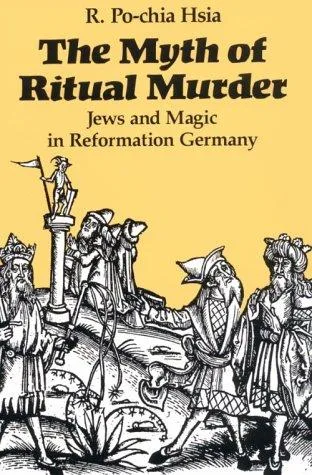
The myth of ritual murder
 62
62

The myth of ritual murder


Sophia Crane, Associate Editor — R. Po-chia Hsia's "The Myth of Ritual Murder" is a profound and unsettling exploration of one of history's most persistent and destructive libels. Hsia masterfully dissects the genesis and propagation of the blood accusation, revealing its deep roots in collective psychology and religious othering. This is not merely a historical account but a study in the dark arts of manipulation and the enduring power of myth. The book offers invaluable esoteric insights into how fear can be ritualized, shaping societal narratives and fueling persecution. It is essential reading for anyone seeking to understand the undercurrents of prejudice and the historical mechanisms of demonization, particularly for scholars and serious practitioners of esoteric history.
📝 Description
62
R. Po-chia Hsia examines the blood accusation, a myth that terrorized Jewish communities for centuries.
In "The Myth of Ritual Murder," R. Po-chia Hsia investigates the history and psychology of the blood libel. This accusation, which falsely claimed Jews murdered Christian children for ritual purposes, persisted for centuries and served as a potent tool of persecution. Hsia's research traces how this baseless myth gained traction, fueled by fear, superstition, and deliberate malice.
The book details the societal anxieties and hidden desires that contributed to the scapegoating of Jewish communities. It shows how these projections onto an 'other' led to tangible and devastating persecution. Hsia analyzes the mechanisms by which irrational beliefs can profoundly shape historical events and ethnic relations, often manifesting in clandestine forms of what might be termed magical thinking.
While not strictly an esoteric text, "The Myth of Ritual Murder" engages with themes often found in esoteric traditions: the power of belief systems, the manifestation of collective fears, and the construction of 'otherness' through ritualistic projection. It examines how deeply ingrained narratives, even irrational ones, can create a shared reality that justifies persecution. The book's focus on the psychological underpinnings of belief and its tangible effects places it in conversation with studies of how symbolic systems can influence social and historical outcomes.
💡 Why Read This Book?
Uncover the potent, often hidden, psychological mechanisms behind centuries of persecution. "The Myth of Ritual Murder" offers a critical lens into how baseless myths are constructed and weaponized, illuminating the dark interplay of fear, prejudice, and collective belief. Ideal for seekers of historical truth, scholars of sociology and religion, and practitioners interested in the esoteric roots of societal manipulation and scapegoating.
⭐ Reader Reviews
Honest opinions from readers who have explored this book.
❓ Frequently Asked Questions
What is the 'blood accusation'?
The blood accusation is a false and defamatory charge that Jews murdered Christian children to use their blood in religious rituals, particularly during Passover. This myth has no basis in Jewish law or practice and has been a primary driver of antisemitic violence for centuries.
What historical periods does the book cover?
The book offers a sweeping historical perspective, tracing the myth of ritual murder from its medieval origins through its persistence into the modern era, examining its manifestations across various European societies and timeframes.
How does Hsia connect this to magic or ritual?
Hsia explores how the accusation itself became a form of dark ritual, imbuing the perpetrators with a sense of righteous power and the victims with a symbolic, often ritualistic, death that served the accusers' psychological and social needs.
Is this book suitable for beginners in occult studies?
While the subject matter is historical and sociological, its exploration of myth, belief, and societal manipulation offers relevant context for understanding the foundations of certain esoteric phenomena and the power of collective consciousness.
What is the primary takeaway from 'The Myth of Ritual Murder'?
The book's enduring message is the critical importance of understanding how prejudice is constructed, perpetuated, and weaponized through narratives, serving as a stark reminder of the dangers of irrational belief and the fragility of truth.
🔮 Key Themes & Symbolism
The Alchemy of Fear and Scapegoating
This theme looks at how societal anxieties and collective fears are transmuted into potent, destructive narratives. Hsia examines the psychological 'alchemy' that transforms perceived differences into monstrous accusations, turning an 'other' into a vessel for societal ills. It explores how this process functions as a dark ritual, purifying the accusers by demonizing the accused, revealing the hidden mechanisms of projection and collective delusion that fuel persecution and prejudice throughout history.
The Esoteric Architecture of Prejudice
Here, the focus shifts to the underlying symbolic and quasi-magical structures that underpin prejudice. The book dissects how the blood accusation, though baseless, acquired a powerful, almost occult, hold on the collective imagination. It investigates the esoteric 'logic' that allowed such a myth to flourish, revealing how it tapped into primal fears and ancient archetypes, creating a self-perpetuating cycle of suspicion and ritualized violence that shaped ethnic relations and historical events.
Traces of the Accusation in Modern Consciousness
This theme explores the persistent resonance of the blood accusation myth in contemporary society. Hsia's work highlights how the patterns of demonization, othering, and ritualistic blame, though perhaps less overt, continue to manifest in various forms. It serves as a powerful reminder for seekers and scholars to recognize these echoes in current events and societal dynamics, urging critical examination of the narratives that shape our understanding of 'us' versus 'them'.
💬 Memorable Quotes
Direct passages from the work, attributed to the author.
“Fear is the most potent sorcery.”
— This highlights how unfounded fear, when amplified and ritualized, can exert a powerful, almost magical, influence over individuals and societies, leading to irrational actions and devastating consequences.
“The myth was not born of truth, but of necessity.”
— Suggests that the blood accusation served a specific psychological or social 'need' for its proponents, a tool to explain away problems or consolidate power, rather than being rooted in any factual basis.
“Suspicion itself becomes a ritual of exclusion.”
— Emphasizes how the act of suspecting and accusing, regardless of evidence, can become a formalized process that systematically isolates and marginalizes a group, functioning as a social and psychological ritual.
“The power of a lie is in its repetition.”
— Underscores the insidious nature of disinformation, illustrating how a falsehood, when constantly reiterated, can gain an aura of truth and become deeply ingrained in collective belief systems.
“Shadows cast long, and often distorted, histories.”
— This poetic phrase suggests that the dark, unspoken aspects of human nature and history, much like shadows, can create significant and misleading narratives that obscure reality.
🌙 Esoteric Significance
Tradition
While not explicitly aligned with a single esoteric tradition, the book looks at the esoteric dimensions of collective consciousness, belief systems, and the psychological underpinnings of ritualistic persecution. It touches upon the 'occult' power of myth and narrative, demonstrating how unfounded beliefs can manifest in tangible, often violent, ways, aligning with studies on the power of thought-forms and mass hysteria found in occult and psychological literature.
Symbolism
The blood accusation itself functions as a potent, albeit dark, symbol. It symbolizes the ultimate 'othering,' the projection of primal fears and guilt onto an innocent group. The 'blood' becomes a charged symbol of life, purity, and sacrifice, twisted into an object of morbid fascination and horrific ritual by the accusers. The myth represents the inversion of sacred symbols and the perversion of religious narratives for malevolent purposes.
Modern Relevance
The book's exploration of how fear, prejudice, and baseless accusations are manufactured and perpetuated remains profoundly relevant. In an age of misinformation and digital echo chambers, understanding the mechanisms of the blood accusation provides crucial insights into how similar 'myths' can be constructed and spread, influencing public opinion, fueling social division, and leading to contemporary forms of scapegoating and persecution.
👥 Who Should Read This Book
This book is essential for scholars of history, religious studies, sociology, and Jewish studies. It will deeply resonate with seekers of esoteric knowledge interested in the psychological and symbolic roots of prejudice and societal manipulation. Practitioners involved in comparative mythology, ritual studies, or understanding the dark side of collective belief will find invaluable insights. Even those new to these subjects but driven by a desire to understand the enduring power of harmful myths and the history of persecution will find this a compelling and useful read.
📜 Historical Context
Published in 1992, "The Myth of Ritual Murder" emerged during a period of renewed scholarly interest in the Holocaust and the long history of antisemitism. The late 20th century saw critical re-examinations of historical narratives and the social construction of identity. Hsia's work contributed to this discourse by focusing on a specific, enduring libel that had fueled centuries of violence and persecution against Jewish communities across Europe. The book's analysis of medieval accusations, their propagation through printed materials, and their insidious persistence into the modern era provided a crucial historical and sociological framework for understanding the deep-seated nature of prejudice and the power of persistent, unfounded accusations.
📔 Journal Prompts
How does the myth of ritual murder reflect primal fears about the 'other'?
In what ways can societal anxieties be 'ritually' expressed through collective accusations?
Consider a modern-day example of a widely believed but unsubstantiated narrative and analyze its 'esoteric' function.
How does the power of repetition contribute to the entrenchment of prejudice?
Reflect on the symbolic weight of 'blood' in various cultural and historical contexts, and how it can be manipulated.
🗂️ Glossary
Blood Accusation
A false and historically persistent antisemitic libel claiming that Jews murdered non-Jewish children to use their blood in religious rituals. It has no basis in Jewish law or practice and has fueled centuries of persecution.
Scapegoating
The practice of blaming an individual or group for the faults, mistakes, or sins of others. In the context of the blood accusation, Jews were scapegoated for societal problems or religious anxieties.
Antisemitism
Hostility to, prejudice toward, or discrimination against Jews. The blood accusation is one of the most virulent and enduring forms of antisemitism.
Myth
A widely held but false belief or idea. In this context, the blood accusation functioned as a powerful, destructive myth that shaped historical events and societal attitudes.
Persecution
Hostility and ill-treatment, especially because of race or political or religious beliefs. The blood accusation led to widespread persecution of Jewish communities.
This book appears in 2 collections
🔮 Readers Also Liked
Browse all →




More by R. Po-chia Hsia
All books →
From the “Ritual Magic” Collection
View all →





More Free Magic & Ritual Books
View all →