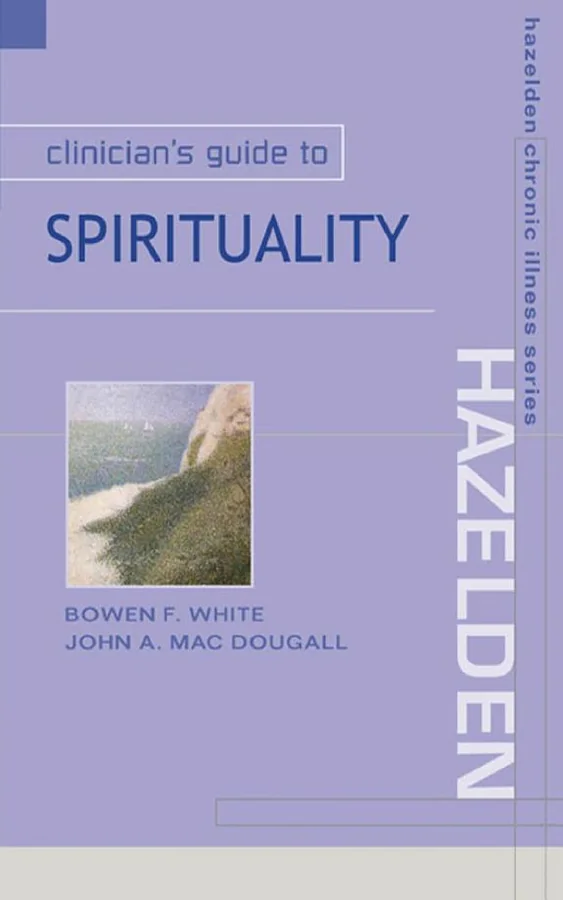
Clinician’s Guide to Spirituality
 73
73

Clinician’s Guide to Spirituality
Bowen F. White and John A. MacDougall's *Clinician's Guide to Spirituality* offers a commendably pragmatic approach to a nebulous subject. Its strength lies in constructing a universal spiritual model, a secular scaffolding that avoids the pitfalls of sectarian dogma, making it potentially useful for a broad clinical audience. The book's focus on chronic illness management, particularly the concept of "spiritual distress" as a distinct clinical concern, is a significant contribution. However, while the model is presented as universal, its articulation sometimes leans towards a Western, individualistic conception of the self, which may not fully capture the collective or ancestral spiritual orientations found in other cultures. The initial publication date of 2001 also means some contemporary research in spiritual care might offer further nuances. Nevertheless, for its clear framework and practical application in healthcare, the work remains a valuable resource. It succeeds in demystifying spiritual care for the secular clinician.
📝 Description
73
Published in 2001, this guide offers clinicians a universal model for spiritual care.
This book introduces a coherent, accessible model for understanding spirituality, distinct from any single religious doctrine. It proposes that spiritual awareness is a basic human capacity that can be cultivated and applied across various life circumstances. The work outlines a structured method for identifying and developing this inner dimension, focusing on practical application in daily life rather than abstract theological discussions.
Authored by a physician and a chaplain, the book targets clinicians. It addresses the practical difficulties of including patients' spiritual needs in their care, especially for those with chronic illnesses. The authors show how a universal spiritual framework can improve patient management by addressing existential questions, encouraging hope, and supporting coping strategies that go beyond medical treatments. The central model uses concepts such as 'inner resource,' 'spiritual distress,' and 'spiritual well-being,' stressing the clinician's role in helping patients connect with their own inner strengths and sense of meaning. They encourage an empathetic, non-judgmental approach, seeing spiritual care as a necessary part of comprehensive patient treatment.
Emerging in 2001, this guide fits into a contemporary movement within Western medicine that began acknowledging the significance of holistic health and the mind-body connection. It arrived at a time when there was growing awareness that established religious beliefs might not cover the spiritual needs of all patients. The book's approach offers a secular yet meaningful alternative, contributing to discussions about integrating spiritual support within secular medical environments. It reflects a broader societal shift toward recognizing spiritual dimensions beyond traditional religious structures.
💡 Why Read This Book?
• Gain a practical, non-religious framework for understanding spirituality, applicable beyond clinical settings, by exploring the "universal model" presented by White and MacDougall. • Learn to identify and address "spiritual distress" in patients, a concept introduced by the authors, enhancing your capacity for holistic care and support during chronic illness. • Understand the importance of "inner resources" as a therapeutic tool, a key concept from the book, enabling you to foster resilience and meaning in individuals facing significant health challenges.
⭐ Reader Reviews
Honest opinions from readers who have explored this book.
❓ Frequently Asked Questions
What is the core "universal model" of spirituality presented in Clinician's Guide to Spirituality?
The book presents a model of spirituality independent of religion, focusing on universal human capacities for meaning, connection, and inner resources. It aims to be applicable to anyone, regardless of their specific beliefs, as outlined in its initial publication in 2001.
How can clinicians use this guide to help patients with chronic illness?
The guide equips clinicians with a framework to identify "spiritual distress" and leverage patients' "inner resources." This helps in managing the existential and emotional aspects of chronic illness, complementing medical treatment.
Is this book specific to any religion or denomination?
No, a central aim of the book, first published in 2001, is to present a spirituality model that is deliberately secular and universally applicable, transcending specific religious doctrines or affiliations.
Who are the authors of Clinician's Guide to Spirituality?
The book was written by physician Bowen F. White and chaplain John A. MacDougall, bringing perspectives from both medicine and spiritual care to the subject.
When was Clinician's Guide to Spirituality first published?
The book was first published on April 22, 2001, reflecting the growing interest in holistic healthcare and spiritual well-being at the turn of the millennium.
Does the book discuss the role of faith in healing?
While not focusing on specific religious faiths, the book discusses the broader concept of "faith" as trust in oneself and the process of healing, and how clinicians can support this aspect of a patient's well-being.
🔮 Key Themes & Symbolism
Universal Spiritual Model
The work constructs a non-denominational framework for spirituality, emphasizing its presence as an inherent human capacity. This model, detailed since its 2001 publication, is designed for practical application, particularly within healthcare. It separates the experience of spiritual well-being from specific religious dogma, allowing for broader accessibility and integration into secular contexts. The focus is on meaning-making, connection, and transcending the immediate self, offering a foundation for understanding spiritual needs universally.
Spiritual Distress in Illness
A core concept introduced is 'spiritual distress,' defined as a state of suffering related to the inability to find meaning, connection, or value in life, often exacerbated by illness. The authors, White and MacDougall, argue that clinicians must be equipped to recognize and address this distress as a critical component of patient care, especially for those with chronic conditions. This highlights the interplay between psychological, physical, and spiritual health.
Inner Resources for Healing
The book posits that individuals possess innate "inner resources"—strengths, coping mechanisms, and capacities for hope and resilience—that are crucial for navigating illness and life's challenges. Clinicians are encouraged to help patients identify and activate these resources. This theme underscores a belief in the patient's inherent capacity for self-healing and finding meaning, even amidst suffering, a concept central to the guide's practical approach.
Clinician as Spiritual Care Facilitator
Rather than acting as spiritual counselors, clinicians are presented as facilitators who can create an environment conducive to spiritual exploration and support. This involves empathetic listening, acknowledging the patient's existential concerns, and helping them connect with their own spiritual framework, whatever that may be. The guide provides tools and perspectives for integrating this role within a busy medical practice, as intended since its 2001 release.
💬 Memorable Quotes
Direct passages from the work, attributed to the author.
“Spirituality is the human search for meaning, purpose, and connection.”
— This concise definition frames spirituality not as a belief system, but as an active, ongoing process of seeking fundamental aspects of human existence. It emphasizes the dynamic nature of spiritual experience, applicable to anyone engaged in life's journey.
“Clinicians can help patients identify and utilize their inner resources.”
— This highlights a key practical takeaway: the book empowers healthcare providers to guide patients toward their own inherent strengths and coping mechanisms, fostering resilience and self-efficacy in the face of illness.
“Spiritual distress is a state of suffering related to the inability to access sources of hope and meaning.”
— This defines a crucial clinical concept, differentiating spiritual suffering from psychological or physical pain. It underscores the importance of addressing existential needs for effective patient care, particularly in chronic conditions.
“A universal model allows for spiritual care independent of specific religious traditions.”
— This statement underscores the book's central thesis: providing a secular, adaptable framework that enables spiritual support for all patients, regardless of their religious or non-religious background.
“Chronic illness often brings existential questions to the forefront.”
— This acknowledges the wide impact of long-term health conditions on an individual's sense of self, purpose, and mortality, highlighting the need for spiritual considerations in comprehensive medical management.
🌙 Esoteric Significance
Tradition
While not strictly adhering to a single esoteric lineage, the book's emphasis on an inherent, universal spiritual capacity aligns with certain Gnostic and Neoplatonic ideas concerning the divine spark within humanity. It shares with Hermeticism the principle of "as above, so below" by linking inner spiritual states to outer well-being. However, its secular framing and clinical focus distinguish it from traditional esoteric texts, positioning it as a bridge between esoteric philosophy and contemporary applied psychology/medicine.
Symbolism
The concept of "inner resources" functions symbolically as the latent divine or true self, a common motif in many esoteric traditions. The "universal model" itself can be seen as a symbolic representation of the underlying unity of all spiritual experience, a quest for the prima materia of the spirit. The act of "facilitating" spiritual care symbolizes the role of the spiritual guide or teacher, helping the seeker (patient) uncover their own inner wisdom and connection to the sacred.
Modern Relevance
The work's secular approach to spirituality continues to influence contemporary fields such as positive psychology, mindfulness-based stress reduction (MBSR), and integrated healthcare models. Thinkers and practitioners focusing on existential psychotherapy, trauma-informed care, and the science of well-being often draw upon similar frameworks that emphasize meaning-making and inner resilience, echoing the principles first articulated by White and MacDougall in 2001.
👥 Who Should Read This Book
• Healthcare professionals seeking to integrate spiritual care into their practice without resorting to religious proselytizing, by utilizing the book's universal model. • Patients experiencing chronic illness who wish to understand how their existential concerns can be addressed within a clinical context, learning about "spiritual distress." • Chaplains and spiritual directors looking for secular language and frameworks to complement their work with diverse populations, particularly in non-religious settings.
📜 Historical Context
Published in 2001, *Clinician's Guide to Spirituality* emerged during a burgeoning era of interest in the mind-body connection and holistic healthcare within Western medicine. The early 2000s saw a growing, albeit sometimes contested, push to integrate complementary and alternative medicine (CAM) and patient-centered approaches into mainstream practice. This work arrived amidst discussions about the limitations of purely biomedical models in addressing the full spectrum of human suffering. It offered a secularized framework for spiritual care, responding to the needs of a diverse patient population whose spiritual or existential concerns might not align with traditional religious frameworks. While figures like Viktor Frankl had long explored meaning in suffering, White and MacDougall provided a more direct, clinical application for healthcare providers. The book contributed to a discourse that sought to legitimize spiritual well-being as a legitimate area of clinical inquiry, distinct from, yet complementary to, psychological and physiological interventions. Its reception marked a step in normalizing conversations about spirituality within secular medical institutions.
📔 Journal Prompts
Inner resources: Identify one personal strength you can draw upon during a challenging time.
Spiritual distress: Reflect on a moment when you felt a loss of meaning or connection.
Universal model: How does the concept of "spirituality" apply to your life outside of organized religion?
Clinician's role: Consider how you might foster a sense of hope in another person.
Meaning-making: What is one purpose you find in your daily activities?
🗂️ Glossary
Universal Model
A conceptual framework for understanding spirituality that is applicable to all individuals, irrespective of their religious beliefs or lack thereof. It focuses on common human experiences of meaning, purpose, and connection.
Spiritual Distress
A state of suffering experienced when an individual is unable to access sources of hope, meaning, or connection in life, often exacerbated by illness or significant life events.
Inner Resources
The inherent strengths, coping mechanisms, capacities for hope, resilience, and personal values that individuals can draw upon to navigate life's challenges and foster well-being.
Meaning
The sense of purpose, significance, and value that individuals find in their lives, experiences, and relationships. It is a core component of spiritual well-being.
Connection
The feeling of belonging and relating to something larger than oneself, whether it be other people, nature, a community, or a sense of the transcendent.
Clinician
A healthcare professional (such as a doctor, nurse, or therapist) who provides direct patient care and applies medical knowledge and skills.
Holistic Care
An approach to healthcare that addresses the whole person—physical, mental, emotional, social, and spiritual—rather than focusing solely on the symptoms of illness.
This book appears in 1 collection
🔮 Readers Also Liked
Browse all →









From the “Spiritual Awakening” Collection
View all →






More Free Magic & Ritual Books
View all →