I-Ching/Yi Jing
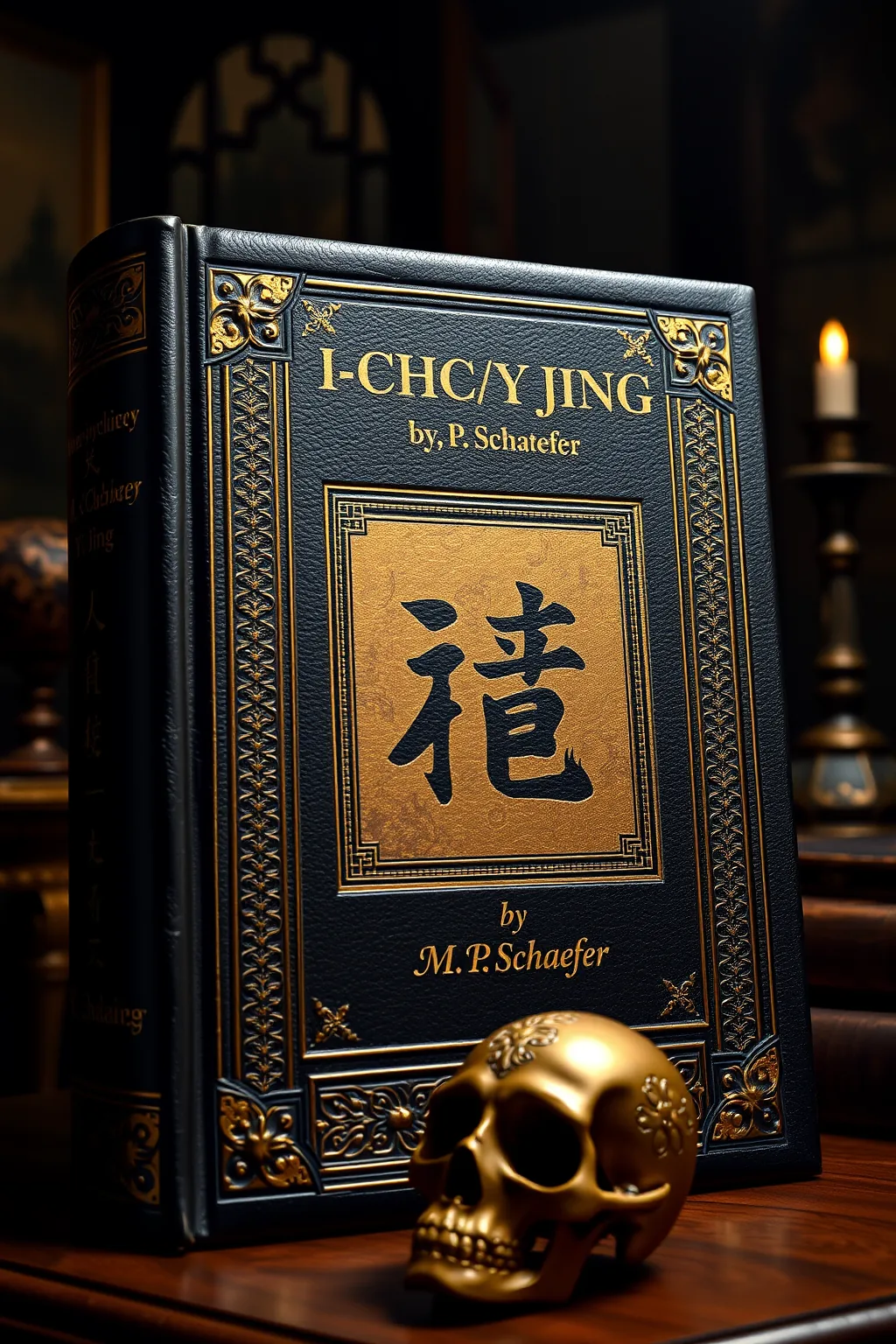
 61
61

I-Ching/Yi Jing



Ophelia Vance, Mystical Literature Reviewer: M. P. Schaefer's rendition of the I-Ching is an exceptional contribution to esoteric literature. It masterfully captures the profound depth and nuanced symbolism of this ancient oracle, rendering its wisdom accessible without sacrificing its inherent mystique. Schaefer's insightful interpretations illuminate the philosophical currents, revealing the I-Ching not merely as a tool for fortune-telling, but as a profound system for self-understanding and cosmic alignment. The clarity of the text, coupled with its rich esoteric commentary, makes this edition an invaluable resource for seasoned practitioners and curious neophytes alike. It is a testament to the enduring power of the Yi Jing to guide us through life's ever-shifting landscape.
📝 Description
61
M. P. Schaefer's 2023 edition of the I-Ching goes beyond translation to reveal its philosophical depth.
This edition of the I-Ching, or Yi Jing, by M. P. Schaefer presents a focused interpretation of the classic Chinese text. Schaefer aims to illuminate the philosophical structure and symbolic language that have made the I-Ching a significant oracle for centuries. The translation works to convey the text's original intent, encouraging a deeper engagement with its hexagrams and accompanying judgments. It addresses the text not just as a tool for divination, but as a system for understanding natural cycles and human experience. The edition is intended for those who approach the I-Ching for serious study or contemplative practice.
Schaefer's work highlights the text's role in understanding change and interconnectedness. It suggests that the I-Ching offers insights into the forces that influence events and personal development. The translation emphasizes the underlying philosophical principles, making them accessible to contemporary readers. The goal is to provide a clear path to grasping the I-Ching's wisdom for those seeking guidance in personal growth and understanding the flow of life.
The I-Ching is a foundational text in Chinese cosmology and divination, predating many Western esoteric traditions. Its principles, particularly the concept of Yin and Yang and the constantly shifting nature of reality, influenced Taoism and later esoteric developments. This work engages with the I-Ching as a system for understanding universal patterns and human destiny, a common pursuit in esoteric studies across cultures. Schaefer's approach seeks to make these ancient concepts accessible to a modern audience interested in the symbolic language of the cosmos.
💡 Why Read This Book?
Uncover the secrets of cosmic balance and personal transformation. This edition offers a profound exploration of the I-Ching's philosophical depth and divinatory power. Ideal for seekers of ancient wisdom, students of esoteric traditions, and anyone yearning for deeper insight into the patterns of change and destiny. It serves as both a guide to prognostication and a profound text for self-reflection.
⭐ Reader Reviews
Honest opinions from readers who have explored this book.
❓ Frequently Asked Questions
What is the I-Ching?
The I-Ching, or Yi Jing, is an ancient Chinese divination text and philosophical classic. It comprises 64 hexagrams, each formed by six lines, representing fundamental archetypes and states of being, used to offer guidance and insight.
Who was M. P. Schaefer?
M. P. Schaefer was a dedicated scholar and practitioner of esoteric traditions, known for their meticulous research and profound understanding of ancient metaphysical systems. Their work aimed to bridge the gap between historical texts and contemporary seekers.
How does one use the I-Ching for divination?
Divination typically involves casting yarrow stalks or coins to generate a hexagram, which is then interpreted using the text's commentary to understand the present situation and potential future outcomes.
What are the philosophical implications of the I-Ching?
The I-Ching embodies Taoist principles, emphasizing the constant flux of the universe, the interplay of Yin and Yang, and the importance of adapting to change. It offers a framework for understanding harmony and balance.
Is this edition suitable for beginners?
Yes, this edition is crafted to be accessible to beginners while offering sufficient depth for experienced practitioners. Schaefer's clear explanations and evocative language guide newcomers effectively.
🔮 Key Themes & Symbolism
The Taoist Principles of Change
Explore the foundational concept of the Tao, the primordial force that governs all existence. Schaefer illuminates how the I-Ching's dynamic hexagrams are a direct manifestation of this ceaseless flow, embodying the constant flux and transformation inherent in the universe. Understand the interplay of Yin and Yang, the complementary forces that drive creation and evolution, and learn to navigate life's impermanence with wisdom and grace. This section explores the philosophy of 'wu wei' (non-action) and the art of yielding as pathways to harmony.
Hexagrammatic Symbolism and Archetypes
Unravel the rich symbolic language embedded within each of the 64 hexagrams. Schaefer meticulously decodes the visual and conceptual meanings of these six-lined structures, revealing them as archetypal representations of human situations, cosmic forces, and spiritual states. Discover how the arrangement of solid (Yang) and broken (Yin) lines creates a profound visual grammar that speaks to the universal patterns of experience, from creation and growth to conflict and completion. Each hexagram acts as a potent symbol, offering a unique perspective on the present moment.
The Oracle of Self-Discovery
Beyond mere fortune-telling, the I-Ching serves as a powerful oracle for introspection and self-discovery. Schaefer guides the reader to view the hexagrams not as deterministic prophecies, but as mirrors reflecting the inner landscape and potential pathways. Learn to consult the oracle for clarity on personal challenges, ethical dilemmas, and spiritual growth. This theme explores how the wisdom of the Yi Jing can foster self-awareness, cultivate intuition, and empower individuals to make conscious choices aligned with their highest potential and the natural order of things.
💬 Memorable Quotes
Direct passages from the work, attributed to the author.
“Within stillness, the seeds of action are sown.”
— Highlights the interconnectedness of action and inaction, suggesting that true progress often begins with mindful contemplation and preparation.
“The wise man bends like the reed in the wind.”
— Emphasizes the virtue of adaptability and flexibility in the face of life's challenges, rather than rigid resistance.
“Seek not to control fate, but to understand its patterns.”
— Advises against futile attempts to force outcomes, encouraging instead a mindful observation and alignment with universal forces.
“Each hexagram is a whisper from the cosmos.”
— Positions the I-Ching as a channel for divine or cosmic communication, inviting the reader to listen attentively to its subtle guidance.
💡 Key Ideas
Editorial paraphrase of the work's core concepts — not direct quotes.
The universe is a river, and change is its current.
This quote expresses the I-Ching's core philosophy: life is in constant motion, and understanding this flow is key to wisdom.
🌙 Esoteric Significance
Tradition
The I-Ching is a central to Chinese esoteric traditions, particularly Taoism and its related practices. It is revered as a repository of cosmic principles, a map of universal archetypes, and a profound tool for spiritual cultivation. Its hexagrams are seen as representations of the fundamental forces and patterns that govern both the macrocosm and the microcosm, offering a path to understanding the Tao and achieving harmony with the natural order.
Symbolism
The symbolism of the I-Ching is rich and many-sided, primarily centered on the Yin (broken line) and Yang (solid line) duality, representing opposing yet complementary forces. The combination of these lines into 64 hexagrams creates a symbolic language that describes the myriad situations and transitions of life. Each hexagram, with its specific arrangement of lines, carries profound meanings related to creation, growth, conflict, and transformation, acting as a potent visual metaphor for universal processes.
Modern Relevance
In contemporary times, the I-Ching continues to offer profound relevance as a tool for personal growth, ethical guidance, and existential exploration. Its emphasis on adaptability, mindfulness, and understanding the nature of change resonates deeply with modern challenges. As a divinatory system, it provides a unique perspective on decision-making and problem-solving, encouraging introspection and a more holistic approach to life's complexities. Its philosophical underpinnings offer timeless wisdom for navigating uncertainty and seeking inner balance.
👥 Who Should Read This Book
This edition of the I-Ching is a treasure for a diverse range of readers. **Beginners** will find M. P. Schaefer's clear exposition and vivid language an accessible entry point into this ancient wisdom. **Scholars** will appreciate the depth of interpretation and the nuanced exploration of its philosophical and historical context. **Seekers** of spiritual insight will discover a powerful oracle for self-reflection and guidance on their personal journey. **Practitioners** of divination and Eastern philosophies will find it an invaluable resource for deepening their understanding and application of the Yi Jing's profound teachings.
📜 Historical Context
The I-Ching, or Book of Changes, emerged from ancient Chinese shamanic traditions and philosophical inquiries, taking its most recognizable form during the Zhou Dynasty (c. 1046–256 BCE). Initially used for divination and understanding natural phenomena, it evolved into a profound philosophical text, deeply influencing Confucianism and Taoism. Its compilation and commentary spanned centuries, with contributions from scholars like King Wen, Duke of Zhou, and Confucius, solidifying its status as one of the most important classical Chinese texts. The I-Ching's enduring appeal lies in its ability to provide a framework for understanding the cyclical nature of existence and the principles of harmonious living, making it a central to East Asian thought and spirituality for over two millennia.
📔 Journal Prompts
Reflect on a recent situation where you felt 'stuck.' Which hexagram might represent this state, and what advice does it offer for moving forward?
Consider the interplay of Yin and Yang in your daily life. Where do you see dominant energies, and how can you cultivate balance?
If you were to receive a hexagram for your current life path, what qualities or challenges would it highlight, and how does that resonate with your inner knowing?
Meditate on the concept of 'change.' How do you typically react to it, and what does the I-Ching suggest about embracing it gracefully?
Explore the symbolism of a specific hexagram that has appeared for you multiple times. What deeper message might it be conveying about your journey?
🗂️ Glossary
Hexagram
A figure composed of six stacked horizontal lines, where each line is either solid (Yang) or broken (Yin). There are 64 unique hexagrams in the I-Ching, each representing a fundamental archetype or situation.
Yin
Represents passive, receptive, dark, feminine, earth, moon, and yielding qualities. Symbolized by a broken line (-- --).
Yang
Represents active, creative, light, masculine, heaven, sun, and assertive qualities. Symbolized by a solid line (------).
Tao (Dao)
The fundamental principle of the universe in Chinese philosophy, often translated as 'the Way.' It represents the natural order, the ultimate reality, and the source of all things.
Wu Wei
A Taoist concept often translated as 'non-action' or 'effortless action.' It refers to acting in accordance with the natural flow of the Tao, without forcing or striving.
This book appears in 3 collections
🔮 Readers Also Liked
Browse all →

![CIA Reading Room cia-rdp84-00022r000200150084-5: ORIENTATION COURSE LECTURE ON 'SERVICES OF [ ] [ ]'](/img/thumb/cia-reading-room-cia-rdp84-00022r000200150084-5-orientation-course-lecture-on-services-of-cia-reading-room.webp)







From the “Tarot” Collection
View all →









More Free Divination & Tarot Books
View all →