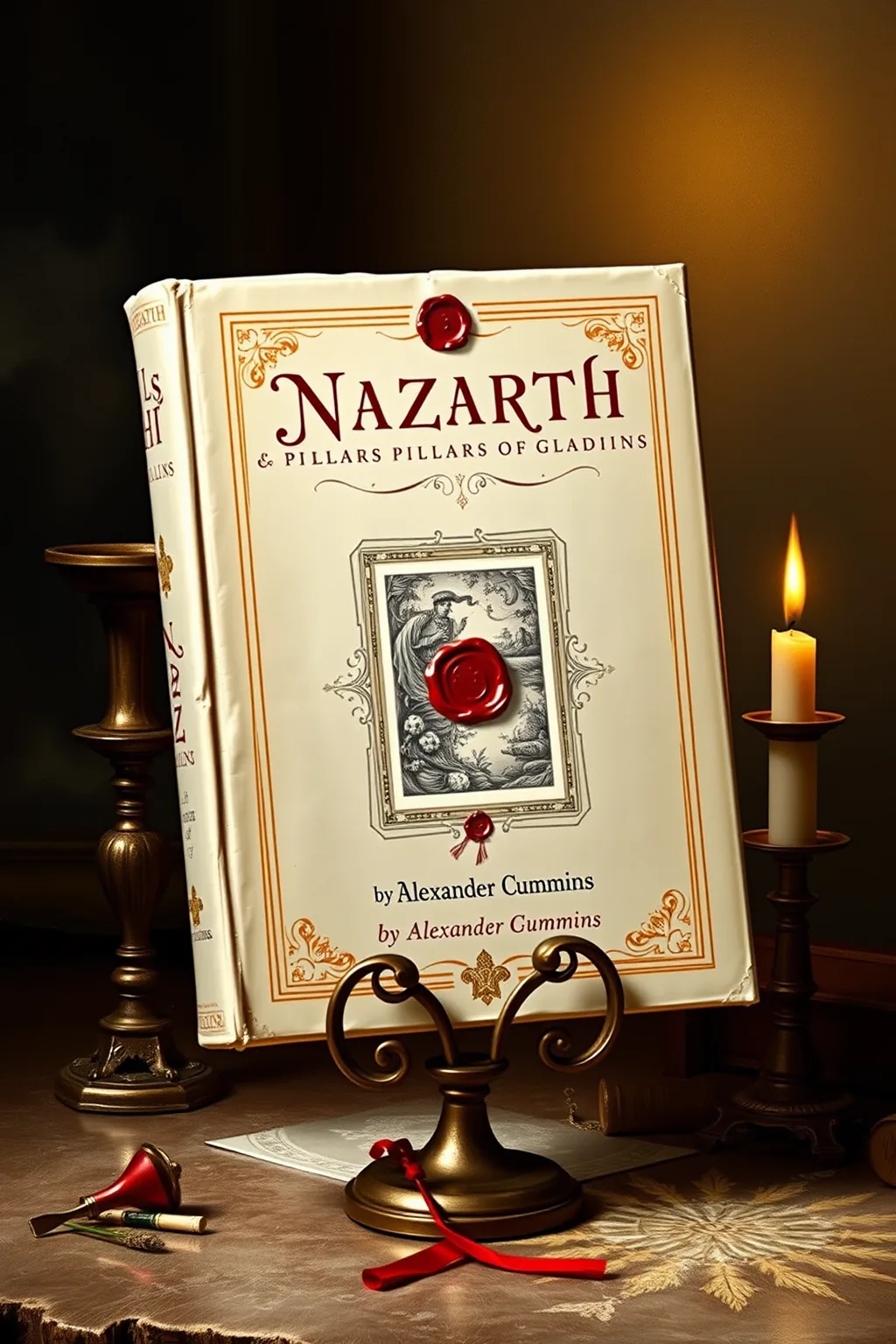
Nazarth, Pillars of Gladness
 61
61

Nazarth, Pillars of Gladness



Alexander Cummins' 'Nazarth, Pillars of Gladness' is a masterful unveiling of the esoteric underpinnings of joy. Cummins, with his characteristic erudition, doesn't just discuss divination; he excavates its spiritual core, revealing how ancient practices are inextricably linked to the cultivation of profound, unshakeable happiness. The text is rich with symbolism, offering insights that will resonate deeply with seasoned practitioners and earnest seekers alike. This work serves as a potent alchemical text, capable of transforming one's perception of spiritual practice and personal well-being. 'Nazarth' is an essential addition to the library of any serious student of the occult, offering a rare synthesis of practical application and profound philosophical inquiry.
📝 Description
61
Alexander Cummins's 'Nazarth, Pillars of Gladness' (2023) maps the soul's capacity for bliss.
Published in 2023, Alexander Cummins's 'Nazarth, Pillars of Gladness' moves beyond simple fortune-telling. The book examines the fundamental structures of joy and spiritual awakening. It does not focus on predicting the future but rather on the soul's inherent ability to experience happiness. Cummins uses esoteric symbolism and older traditions to show how to achieve inner peace and ecstatic states of consciousness.
The author leads readers through a body of less common knowledge. In this material, the everyday is made sacred, and ordinary things reveal extraordinary insights. 'Nazarth' is for individuals seeking greater knowledge. It aims to help them remove illusions and live with purpose and happiness. The book functions as a philosophical guide and a spiritual map for contemporary seekers who wish to connect with the stable foundations of gladness that underpin existence.
This work engages with traditions that see spiritual development as an architectural process, built upon internal pillars. It draws from currents that view joy not as a fleeting emotion but as a stable state accessible through specific practices and understanding. The book connects with esoteric thought that posits hidden symbolic languages within the everyday world, capable of unlocking deeper states of consciousness and a sense of purpose. It positions itself within a lineage of texts that aim to provide a map for the inner life, guiding the practitioner toward a more profound connection with existence.
💡 Why Read This Book?
For the discerning seeker, 'Nazarth, Pillars of Gladness' offers a rare opportunity to explore the esoteric architecture of true joy. This book illuminates the hidden connections between divination, spiritual practice, and profound inner contentment. It is ideal for those who wish to move beyond superficial answers and delve into the foundational principles of lasting happiness, offering a path to integrating ancient wisdom with modern life for a more radiant existence.
⭐ Reader Reviews
Honest opinions from readers who have explored this book.
❓ Frequently Asked Questions
What is the primary focus of 'Nazarth, Pillars of Gladness'?
The primary focus is the esoteric understanding of joy and spiritual enlightenment, exploring how ancient wisdom and divination practices contribute to cultivating unshakeable happiness and inner peace.
Is this book suitable for beginners in divination?
While it offers profound insights, it's best suited for those with some familiarity with esoteric concepts or a deep interest in philosophical explorations of happiness.
What kind of knowledge can one expect to gain?
Readers can expect to gain a deeper understanding of symbolism, the spiritual roots of divination, and practical approaches to fostering enduring joy and spiritual awareness.
Does the book offer practical exercises?
The book emphasizes philosophical and symbolic understanding, guiding readers toward internal transformation rather than providing step-by-step mechanical exercises.
What is the overall tone and atmosphere of the book?
The tone is deeply mystical, philosophical, and evocative, creating an atmosphere of profound discovery and spiritual exploration, inviting introspection and contemplation.
🔮 Key Themes & Symbolism
The Alchemy of Inner Joy
'Nazarth' explores the profound concept of joy not as a fleeting emotion, but as an inherent spiritual state discoverable through esoteric practices. It explores the alchemical process of transforming mundane experiences and limiting beliefs into a foundation of unshakeable bliss. Cummins illuminates how the seeker can transmute inner dross into the gold of radiant happiness, revealing the hidden mechanisms that govern our emotional and spiritual well-being, and offering a roadmap to sustained inner contentment.
Divination as Spiritual Architecture
This work recontextualizes divination, presenting it not merely as a tool for prediction, but as a sophisticated system for understanding and constructing one's spiritual reality. Cummins reveals how ancient methods of seeking insight serve as blueprints for building a life aligned with higher purpose and profound gladness. The book explores the symbolic language of divinatory tools, demonstrating how they can be employed to map the soul's terrain and reveal the structural pillars of true spiritual fulfillment.
Symbolism and the Language of the Soul
At the heart of 'Nazarth' lies a deep engagement with the symbolic language that underpins both the cosmos and the human psyche. Alexander Cummins guides readers through the wide range of esoteric symbols, revealing their power to unlock hidden knowledge and foster profound self-understanding. The book emphasizes how deciphering these archetypal forms allows one to communicate with the deeper currents of existence, leading to a more intuitive and joyous engagement with life's mysteries.
💬 Memorable Quotes
Direct passages from the work, attributed to the author.
“The diviner's art is the architect's vision of the spirit.”
— This highlights the constructive and purposeful nature of divination, framing it as a means to design and build one's inner spiritual landscape and destiny.
“Within every shadow lies the seed of useful joy.”
— This suggests that even challenges and difficult experiences hold the potential for growth and happiness, encouraging a perspective of embracing all aspects of life.
“The Pillars of Gladness are not built of stone, but of luminous intention.”
— This emphasizes the non-material, spiritual foundation of true happiness, positing that it is forged through focused, positive intent and consciousness.
“To know the self is to inherit the kingdom of eternal delight.”
— This profound statement links self-knowledge with ultimate spiritual joy, suggesting that true and lasting happiness is a direct consequence of deep introspection and self-awareness.
💡 Key Ideas
Editorial paraphrase of the work's core concepts — not direct quotes.
True gladness is not found, but cultivated from the fertile soil of the soul.
This quote suggests that happiness is an internal practice, a result of conscious spiritual cultivation rather than an external discovery. It emphasizes agency in achieving joy.
🌙 Esoteric Significance
Tradition
This work aligns with the Western Esoteric Tradition, particularly drawing from Hermeticism, Alchemy, and Gnosticism. It explores the idea of inner transformation and the pursuit of divine knowledge as pathways to spiritual fulfillment and radiant happiness, echoing the ancient quest for self-mastery and union with the divine.
Symbolism
Central to 'Nazarth' is the exploration of profound symbolism, particularly concerning the 'Pillars of Gladness.' These are not literal structures but archetypal representations of spiritual fortitude, inner peace, and ecstatic awareness. The book explores how various divinatory systems and mystical metaphors serve as keys to unlocking these fundamental truths of existence and achieving a state of sustained spiritual joy.
Modern Relevance
In an era often characterized by superficiality and fleeting pleasures, 'Nazarth, Pillars of Gladness' offers a vital antidote. It provides a framework for understanding and cultivating a deeper, more resilient form of happiness rooted in spiritual insight. The book empowers modern seekers to integrate ancient wisdom into their lives, fostering a sense of purpose, profound contentment, and a luminous connection to the deeper currents of existence.
👥 Who Should Read This Book
This useful text is essential for the seasoned practitioner of occult arts and the dedicated scholar of esoteric philosophy seeking to deepen their understanding of spiritual joy. It will resonate deeply with seekers who are moving beyond superficial spiritual pursuits and yearning for profound, foundational happiness. Beginners with a strong philosophical inclination and a desire to explore the spiritual underpinnings of well-being will also find 'Nazarth' to be an inspiring and transformative guide.
📜 Historical Context
Emerging from a rich vein of esoteric thought that flourished across centuries, 'Nazarth, Pillars of Gladness' draws inspiration from traditions that sought to reconcile the material and spiritual realms. The book carries the Renaissance Hermeticists' quest for divine knowledge, the alchemical pursuit of transformation, and the Gnostic emphasis on inner gnosis. It speaks to a lineage of thinkers who believed that hidden wisdom held the key to unlocking human potential and achieving spiritual liberation. Cummins' work, while contemporary in its articulation, is deeply rooted in this historical continuum, offering a modern interpretation of ancient principles for those seeking to work through the complexities of existence with grace and profound joy.
📔 Journal Prompts
What does 'gladness' truly signify beyond fleeting happiness in your personal spiritual journey?
How can the symbolic language of divination be used to map and cultivate the 'Pillars of Gladness' within yourself?
Reflect on a time you experienced profound, unshakeable joy. What were the internal and external conditions that facilitated this state?
Explore the concept of 'luminous intention.' How can you consciously direct your intentions to build inner spiritual fortitude?
Consider the 'shadows' in your life. What potential for useful joy might lie dormant within them, and how can you uncover it?
🗂️ Glossary
Gnosis
A Greek term meaning 'knowledge,' often referring to intuitive, spiritual, or mystical understanding. In esoteric contexts, it signifies direct, experiential knowledge of divine truths.
Hermeticism
A philosophical and religious tradition based on writings attributed to Hermes Trismegistus. It emphasizes the unity of all things, the power of the mind, and the pursuit of divine wisdom through spiritual disciplines.
Alchemy
An ancient tradition focused on the transformation of matter, often understood as a metaphor for spiritual purification and the transmutation of the base self into a higher, enlightened state.
Archetype
A universal, archaic symbol or motif that derives its meaning from the collective unconscious. Archetypes represent fundamental human experiences and patterns.
Divination
The practice of seeking knowledge of the future or the unknown by supernatural means. In esoteric traditions, it's often viewed as a dialogue with the divine or the subconscious mind.
This book appears in 3 collections
🔮 Readers Also Liked
Browse all →









More by Alexander Cummins
All books →
From the “Geomancy” Collection
View all →









More Free Divination & Tarot Books
View all →