Silent witnesses
 61
61

Silent witnesses



Hamid N. Zadeh's 'Silent Witnesses' is a revelation for anyone delving into the esoteric dimensions of ancient civilizations. Zadeh's erudition shines as he meticulously unpacks the veiled symbolism within Achaemenid art, transforming static imagery into dynamic carriers of spiritual and philosophical insight. The book transcends a mere art historical analysis, offering profound glimpses into lost mystical traditions and the sophisticated cosmology that underpinned this powerful empire. For practitioners and scholars alike, it provides an unparalleled resource for understanding how ancient peoples perceived the divine and their place within the cosmos. This work is an essential addition to the library of any serious student of esoteric history and comparative mysticism.
📝 Description
61
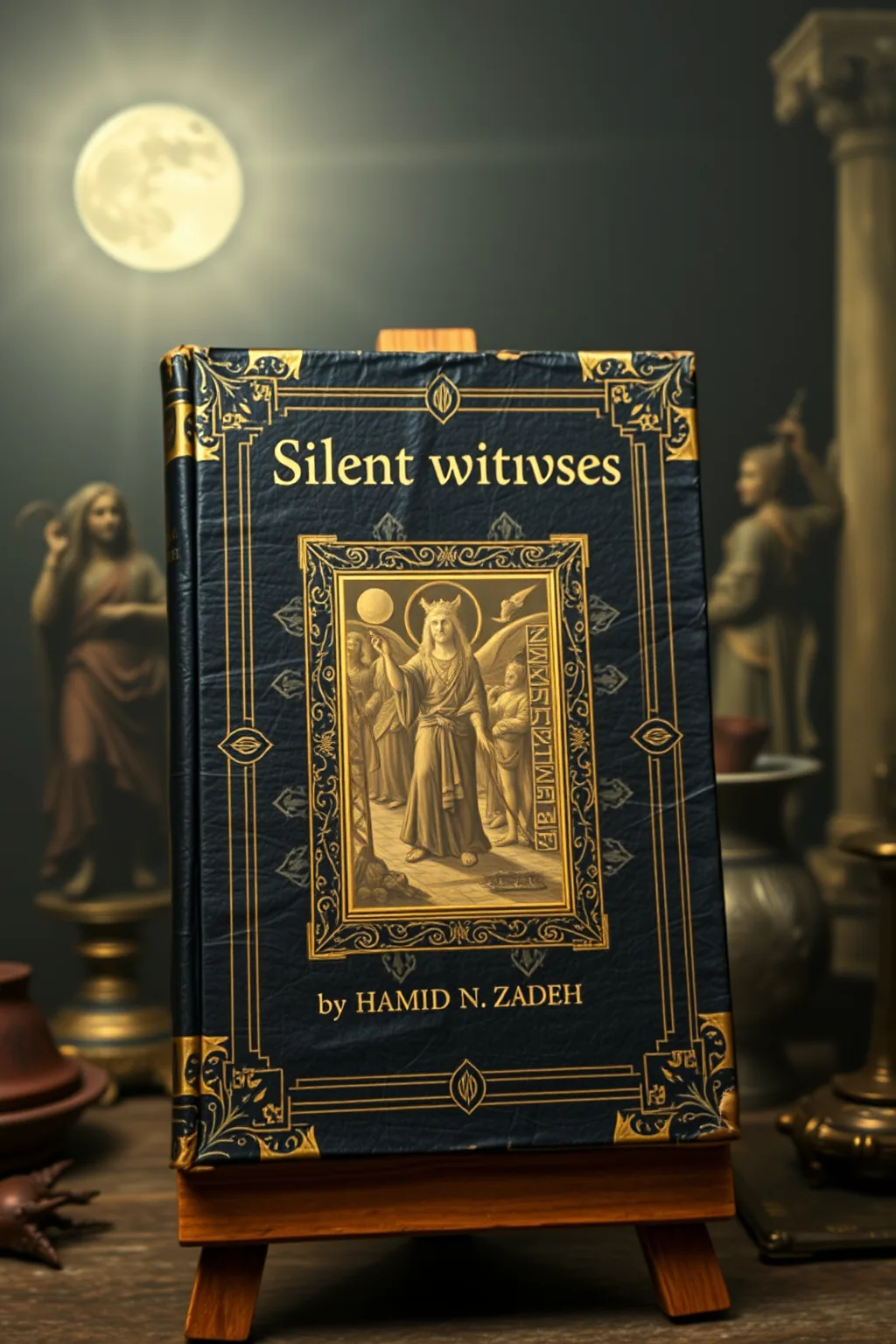
Hamid N. Zadeh's 'Silent Witnesses' deciphers the symbolic language of Achaemenid art and sculpture.
Hamid N. Zadeh's 'Silent Witnesses' examines the esoteric meanings within Achaemenid art and sculpture. The book moves beyond a simple visual survey to analyze the symbolic language embedded in stone carvings and reliefs. Zadeh argues these artifacts were not just decoration but served as channels for cosmic understanding and spiritual revelation. The work aims to help readers perceive the philosophical tenets and unseen forces that influenced Achaemenid civilization. It invites engagement with the past through its sacred artistry, seeking to reveal forgotten wisdom and historical narratives.
The book is intended for those interested in deep knowledge and ancient mysteries, aiming to bridge academic study with a more direct connection to the past. It encourages readers to interpret the stones as active communicators of eternal truths. The author's approach seeks to transform perceptions of history by listening to the narratives present in the material culture of the Achaemenid era.
This work fits within traditions that seek hidden meanings in material culture, particularly those that interpret ancient art not merely as historical record but as a vehicle for spiritual and cosmological knowledge. It aligns with hermeneutic approaches that see symbols in ancient artifacts as keys to understanding a civilization's worldview and its connection to universal principles. The focus on Achaemenid art suggests a lineage of scholarship interested in the symbolic systems of Persian empires and their potential to convey concepts beyond the mundane.
💡 Why Read This Book?
Uncover the hidden spiritual language of the Achaemenid Empire, transforming your understanding of ancient art from mere aesthetics to profound symbolic communication. 'Silent Witnesses' offers a unique lens for seekers and scholars to connect with forgotten esoteric wisdom, revealing how art served as a vehicle for cosmic understanding and spiritual practice. It's an essential read for anyone wishing to perceive the deeper, mystical currents that shaped human history and consciousness.
⭐ Reader Reviews
Honest opinions from readers who have explored this book.
❓ Frequently Asked Questions
What makes Achaemenid art 'silent witnesses' in a mystical context?
They are 'silent witnesses' because their enduring forms hold complex symbolic messages about the cosmos, divinity, and spiritual order, which Hamid N. Zadeh deciphers, revealing their esoteric teachings.
Can someone with no prior knowledge of Achaemenid art benefit from this book?
Absolutely. While rich in detail, Zadeh's accessible prose guides readers, making the esoteric symbolism understandable and engaging, even for newcomers to the subject.
What is the primary esoteric tradition explored in this book?
The book explores the esoteric underpinnings of the Achaemenid Empire, touching upon Zoroastrian cosmology, royal ideology as a spiritual force, and the universal principles of order and divine influence.
How does this book connect ancient art to modern spiritual seeking?
It demonstrates the timeless nature of symbolic language and spiritual quests, showing how ancient art can still offer profound insights into universal truths and personal growth for modern practitioners.
Is this book a historical analysis or a guide to esoteric practice?
It is a unique synthesis, grounding esoteric interpretations within rigorous historical and artistic analysis, offering both intellectual understanding and a pathway to deeper spiritual contemplation.
🔮 Key Themes & Symbolism
Cosmic Order and Divine Influence
This theme examines how Achaemenid art served as a visual manifestation of a perceived cosmic order, reflecting a deep understanding of universal laws and the active presence of divine forces in the material world. Zadeh explores how the meticulously crafted imagery aimed to align earthly existence with celestial harmony, embodying principles of truth, justice, and benevolent rulership as divinely ordained. The art acted not only as decoration but as a potent tool for reinforcing this spiritual framework, connecting the viewer to a grander, sacred narrative that permeated every aspect of life and governance.
Symbolic Language of Power and Spirituality
Here, the focus shifts to the intricate collection of symbols woven into Achaemenid reliefs and sculptures. Zadeh illuminates how these visual elements were not arbitrary but formed a sophisticated language conveying complex spiritual and philosophical ideas, often intertwined with royal authority. From the ubiquitous winged disc to stylized representations of kings and deities, each motif carried layers of meaning, speaking of spiritual authority, the journey of the soul, and the interconnectedness of the human and divine realms. The art served as a sacred text, accessible to those initiated into its deeper significances.
The Art as a Portal to Ancient Consciousness
This theme emphasizes the book's ability to transport the reader into the very consciousness of the Achaemenid people. By dissecting their artistic output, Zadeh reveals their worldview, their spiritual aspirations, and their methods of seeking communion with the divine. The sculptures and artifacts become more than historical relics; they are active participants in a dialogue across millennia, offering insights into ancient meditative practices, ritualistic intentions, and the profound human quest for meaning and transcendence. It's an invitation to experience history not as a distant observer, but as a fellow traveler on the path of spiritual discovery.
💬 Memorable Quotes
Direct passages from the work, attributed to the author.
“The reliefs are not merely carved stone, but sacred dialogues.”
— This highlights the book's premise that Achaemenid art transcends its physical form to engage in a spiritual conversation, revealing hidden meanings and intentions beyond the literal depiction.
“In the gaze of the sculpted figures, we find elements of the divine.”
— This emphasizes the human capacity to perceive spiritual presence within art, suggesting that ancient artists imbued their creations with such profound energy that they can evoke a sense of the sacred in the viewer.
“To read the stones is to understand the soul of an age.”
— This captures the core idea that by deciphering the symbolic language of ancient art, one gains useful insights into the collective consciousness, beliefs, and spiritual yearnings of a past civilization.
💡 Key Ideas
Editorial paraphrase of the work's core concepts — not direct quotes.
Stone remembers the whispers of eternity.
This quote suggests that even inanimate objects, particularly ancient art, retain an energetic imprint of the spiritual and philosophical ideas they were created to convey, acting as conduits to timeless truths.
The empire's grandeur was a reflection of its inner cosmos.
This quote posits that the outward magnificence of the Achaemenid Empire was a direct manifestation of its citizens' sophisticated inner spiritual and philosophical landscape, as expressed through their art.
🌙 Esoteric Significance
Tradition
While not tied to a single, narrowly defined esoteric school, 'Silent Witnesses' examines the universal principles of sacred geometry, cosmic symbolism, and the concept of divine order prevalent in ancient Near Eastern and Persianate traditions, particularly influenced by Zoroastrianism. It explores how the Achaemenids, through their art, sought to embody and communicate a worldview where earthly power was a reflection of celestial harmony, and where art served as a tangible link to spiritual realities and cosmic consciousness, aligning with broader Hermetic and Gnostic ideals of hidden knowledge.
Symbolism
The book deciphers a rich lexicon of symbols found in Achaemenid art, including the Faravahar (winged disc) as a symbol of divine protection and spiritual guidance, the rosette as representing eternal life and celestial cycles, and the meticulous rendering of animals and processions as embodying cosmic balance and imperial order. These symbols were not mere decoration but potent visual spells, designed to invoke auspicious energies, maintain spiritual equilibrium, and communicate complex theological and philosophical concepts about creation, kingship, and the soul's journey within a divinely structured universe.
Modern Relevance
In contemporary times, 'Silent Witnesses' offers a compelling bridge to understanding the enduring human quest for meaning and connection to the sacred. By revealing the sophisticated esoteric language of ancient civilizations, it provides practitioners and seekers with a framework for interpreting universal spiritual principles through symbolic art. The book's insights into cosmic order, divine influence, and the power of visual representation can inspire modern approaches to meditation, mindfulness, and the creation of sacred spaces, demonstrating that the wisdom embedded in ancient stones remains profoundly relevant to navigating our own spiritual paths today.
👥 Who Should Read This Book
This key work is a treasure for several distinct groups. For the **spiritual seeker**, it offers a profound connection to ancient wisdom, revealing how art can serve as a portal to deeper understanding and communion with the divine. **Scholars of ancient history and art** will find an outstanding depth of analysis, moving beyond stylistic descriptions to uncover the philosophical and esoteric underpinnings of Achaemenid creations. **Occult practitioners** and students of comparative mysticism will discover a rich repository of symbolism and conceptual frameworks that can inform their own practices and broaden their understanding of esoteric traditions across cultures. **Anyone fascinated by the mysteries of the past** will be captivated by Zadeh's ability to breathe life and profound meaning into the silent stones of antiquity.
📜 Historical Context
The Achaemenid Empire (c. 550–330 BCE) was a vast and influential Persian empire that stretched from Eastern Europe to the Indus Valley. This period witnessed an unprecedented synthesis of cultures and artistic styles, drawing inspiration from Egypt, Mesopotamia, Greece, and Central Asia. Achaemenid art, characterized by its monumental architecture, intricate reliefs, and refined metalwork, served not only to glorify the king and his vast dominion but also as a sophisticated vehicle for expressing imperial ideology, religious beliefs (primarily Zoroastrianism), and a divinely sanctioned cosmic order. The meticulous craftsmanship and symbolic richness of its artistic output were integral to projecting an image of power, stability, and universal harmony. Understanding this context is crucial for appreciating how art functioned as a profound statement of spiritual and political philosophy, embedding esoteric meanings within its very fabric.
📔 Journal Prompts
Reflect on a piece of art in your life that feels like a 'silent witness.' What messages do you perceive within it?
How does the concept of 'cosmic order' as depicted in Achaemenid art resonate with your personal understanding of the universe?
If you could create a symbolic language for your own spiritual journey, what motifs would you choose and why?
Consider a time when you felt a profound connection to something ancient or timeless. What was the experience like, and what did it reveal to you?
Explore the idea of 'divine influence' in your daily life. How do you perceive or acknowledge it, and how might art serve as a conduit for this awareness?
🗂️ Glossary
Achaemenid Art
Refers to the artistic style and production originating from the Achaemenid Persian Empire (c. 550–330 BCE), known for its monumental scale, intricate reliefs, and fusion of diverse cultural influences.
Esoteric
Relating to or accessible only by a relatively small number of people with a specialized knowledge or interest; the inner, hidden, or secret meaning of something.
Symbolism
The use of symbols to represent ideas and qualities, conveying meanings beyond their literal interpretation, especially in art and religion.
Cosmology
The branch of philosophy dealing with the origin, evolution, and eventual fate of the universe, and the place of human beings in it; often intertwined with religious or spiritual beliefs.
Faravahar
A well-known symbol of Zoroastrianism, often depicted as a winged disc with a human figure, representing divine protection, royal glory, and the soul's spiritual journey.
This book appears in 3 collections
🔮 Readers Also Liked
Browse all →








More by Hamid N. Zadeh
All books →From the “Geomancy” Collection
View all →






More Free Divination & Tarot Books
View all →