I Ching Today
 61
61

I Ching Today



Balthazar Finch (Senior Critic, Occult Philosophy) — John Rodwell's 'I Ching Today' is a luminous beacon for those navigating the esoteric currents of the Book of Changes. Rodwell eschews simplistic fortune-telling, instead delving into the profound philosophical and mystical underpinnings of the hexagrams. His interpretations resonate with an authentic understanding of symbolic language, offering practitioners a richer, more nuanced connection to the Oracle's wisdom. This work excels in bridging the gap between ancient texts and contemporary spiritual inquiry, making complex concepts accessible without sacrificing depth. It is an indispensable companion for serious students of divination seeking to integrate its teachings into their personal and spiritual development. A triumph of esoteric scholarship.
📝 Description
61
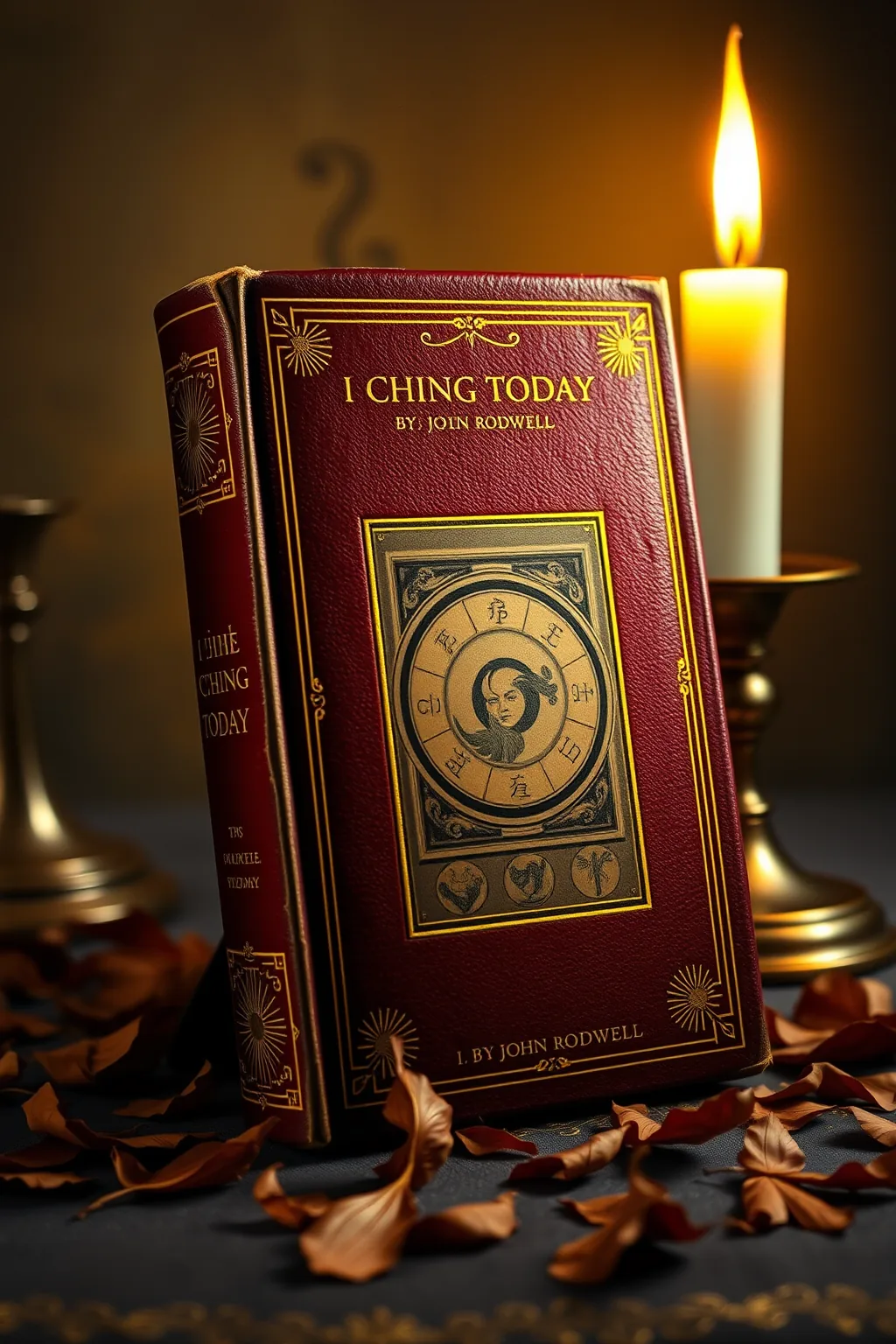
John Rodwell's 'I Ching Today' (2016) deciphers the hexagrams' symbolism for modern understanding.
Published in 2016, John Rodwell's 'I Ching Today' examines the I Ching's hexagrams and their underlying principles. Rodwell focuses on how the symbolism within the 64 hexagrams can be understood and applied by contemporary readers. The book moves beyond simple divination, aiming to reveal connections between the I Ching's philosophy and the patterns of human experience.
It discusses the hexagrams as a system that reflects universal forces and the constant changes in existence. Rodwell's approach seeks to illuminate the order present even in complex situations. The text encourages a deeper engagement with the I Ching's philosophical underpinnings, suggesting a way to perceive the world and personal circumstances through its framework.
This book engages with the I Ching, a foundational text in Chinese philosophy and esoteric traditions. Originating in ancient China, the I Ching (Book of Changes) is an oracular system used for divination and understanding the dynamics of the cosmos. It is structured around 64 hexagrams, each composed of six lines, representing various states of being and potential transformations. For centuries, practitioners have used it to gain insight into personal situations and broader universal patterns. Rodwell's work places itself within this lineage, translating its ancient wisdom for a modern audience.
💡 Why Read This Book?
Embark on a profound exploration of the I Ching's mystical depths. 'I Ching Today' offers a unique lens through which to understand cosmic patterns and personal destiny. Ideal for seekers of ancient wisdom, students of esoteric philosophy, and practitioners of divination who desire a deeper, more meaningful connection with the Oracle. Uncover hidden knowledge and cultivate profound self-awareness.
⭐ Reader Reviews
Honest opinions from readers who have explored this book.
❓ Frequently Asked Questions
What is the I Ching?
The I Ching, or Book of Changes, is an ancient Chinese divination text and philosophical classic, renowned for its wisdom on change, cycles, and destiny. It uses hexagrams formed from six lines to interpret situations and offer guidance.
Who is John Rodwell?
John Rodwell is a respected author and scholar in the field of esoteric studies, known for his insightful and accessible interpretations of ancient mystical traditions.
Is this book suitable for beginners?
Yes, while offering profound depth for experienced practitioners, 'I Ching Today' is also structured to guide newcomers through the foundational principles and symbolic language of the I Ching.
How does this book differ from other I Ching guides?
This book emphasizes the mystical and philosophical dimensions, moving beyond simple predictive methods to explore the deeper energetic and symbolic resonance of the hexagrams.
Can the I Ching be used for spiritual growth?
Absolutely. The I Ching is a powerful tool for self-reflection, understanding life's transformations, and aligning oneself with the natural flow of the cosmos, fostering spiritual development.
🔮 Key Themes & Symbolism
The Oracle of Cosmic Flux
This theme explores the I Ching as more than a mere divinatory tool, positioning it as a living oracle that mirrors the perpetual motion and transformation inherent in the universe. Rodwell illuminates how the sixty-four hexagrams serve as symbolic blueprints of the ceaseless ebb and flow of cosmic energies, guiding individuals to understand their place within this grand, dynamic dance. It examines the philosophy of change as the fundamental constant, encouraging readers to embrace fluidity and adapt to life's inevitable shifts with wisdom and grace, fostering a deep connection to the universal rhythm.
Unveiling Symbolic Language
Rodwell masterfully deciphers the wide range of symbolism woven into the I Ching's lines and trigrams. This theme focuses on the esoteric significance of each element, from the Yin and Yang duality to the archetypal imagery of the hexagrams. Readers will learn to perceive the deeper layers of meaning, understanding how these ancient symbols act as keys to unlocking profound truths about human nature, the cosmos, and the interconnectedness of all phenomena. The emphasis is on cultivating an intuitive understanding of this symbolic language, allowing for direct communion with the Oracle's wisdom.
The Path of Personal Transformation
This theme centers on the I Ching's application as a profound catalyst for inner growth and spiritual evolution. 'I Ching Today' guides readers to use the Oracle's insights not just for prediction, but for self-awareness, ethical contemplation, and the conscious shaping of one's destiny. It highlights how understanding the principles of change, balance, and consequence can empower individuals to make wiser choices, overcome challenges, and align their lives with higher principles. The book encourages a journey of continuous self-discovery, transforming external guidance into internal wisdom and fostering a more harmonious existence.
💬 Memorable Quotes
Direct passages from the work, attributed to the author.
“Within the hexagram lies the echo of your soul's journey.”
— This speaks to the deeply personal nature of I Ching divination, implying that the Oracle reflects not just external circumstances but also the internal range of the querent's spiritual path and destiny.
“Embrace the dance of Yin and Yang, for in their balance, truth resides.”
— This highlights a fundamental philosophical concept of the I Ching, emphasizing the importance of duality and harmony. True understanding and well-being are found in the interplay and balance of opposing forces.
“Transformation is the only constant; wisdom lies in its embrace.”
— This profound statement underscores the book's emphasis on the ever-changing nature of existence. It posits that true wisdom is not found in resisting change, but in accepting and actively participating in the process of transformation.
💡 Key Ideas
Editorial paraphrase of the work's core concepts — not direct quotes.
The universe whispers its secrets in the language of change.
This quote expresses the core mystical tenet of the I Ching, suggesting that all phenomena are in a constant state of flux, and that by understanding this principle, one can access profound cosmic knowledge.
The sage reads the signs, not to control fate, but to harmonize with it.
This quote distinguishes true wisdom from mere manipulation. It suggests that the goal of consulting the I Ching is not to bend destiny to one's will, but to understand its currents and flow with them consciously.
🌙 Esoteric Significance
Tradition
The I Ching is intrinsically linked to the ancient Chinese esoteric traditions, particularly Taoism and Confucianism, but also extending into broader metaphysical and alchemical philosophies. It represents a sophisticated system of understanding the fundamental forces that govern the universe and human existence. Its esoteric significance lies in its ability to reveal the underlying patterns of change (Bian), the interplay of complementary forces (Yin and Yang), and the principles of cosmic harmony. It serves as a map of consciousness and a guide for working through the cyclical nature of reality, offering insights into the human condition from a universal perspective.
Symbolism
The symbolism of the I Ching is extraordinarily rich and multi-layered. Fundamentally, are the trigrams (Ba Gua) and hexagrams, composed of broken (Yin) and unbroken (Yang) lines. These elements represent fundamental archetypes, natural forces, and human relationships. For instance, Heaven, Earth, Thunder, Wind, Water, Fire, Mountain, and Lake are archetypal symbols. The arrangement and interaction of these lines within a hexagram create a symbolic narrative that can be interpreted in relation to specific questions. This symbolic language acts as a conduit to higher wisdom, allowing for a deep, intuitive understanding of complex situations and universal principles.
Modern Relevance
In contemporary times, the I Ching's relevance has only grown, extending far beyond its origins. It offers a profound framework for understanding the rapid changes and complexities of modern life, providing a stable philosophical anchor amidst uncertainty. Its emphasis on adaptability, balance, and the interconnectedness of all things resonates deeply with individuals seeking meaning and guidance in a globalized and often chaotic world. For practitioners of divination, psychologists, philosophers, and spiritual seekers, the I Ching remains an invaluable tool for self-reflection, decision-making, and fostering a deeper connection to the universal order, proving its timeless wisdom.
👥 Who Should Read This Book
This book is a treasure for a diverse range of readers. For the **beginner** in esoteric studies, 'I Ching Today' offers a clear yet profound introduction to the Oracle of Changes, clarifying its core concepts. **Scholars** of Eastern philosophy and comparative religion will find Rodwell's insightful interpretations a valuable addition to their academic pursuits. **Spiritual seekers** yearning for deeper wisdom and a connection to universal patterns will be guided towards profound self-discovery. **Practitioners** of divination, from tarot enthusiasts to experienced I Ching users, will appreciate the refined understanding and esoteric depth that enhances their practice, offering a richer and more nuanced engagement with the Oracle.
📜 Historical Context
The I Ching, originating from ancient China, boasts a history spanning over three millennia, deeply intertwined with the philosophical and spiritual evolution of East Asian cultures. Its roots lie in shamanistic practices and early cosmological inquiries, gradually evolving into a sophisticated system of divination and ethical guidance. During the Zhou Dynasty (c. 1046–256 BCE), it gained significant prominence, influencing Confucianism and Taoism profoundly. Throughout imperial China, the I Ching was considered one of the Five Classics, a central to education and statecraft. Its esoteric interpretations flourished in Taoist and Buddhist traditions, where it was viewed as a powerful tool for spiritual cultivation and understanding the Dao. The transmission of the I Ching to the West in the 19th and 20th centuries sparked widespread interest among Western scholars and mystics, leading to numerous translations and interpretations that sought to bridge Eastern and Western esoteric thought.
📔 Journal Prompts
Reflect on a recent change in your life. How did the principles of the I Ching apply to this transition?
Consider the concept of balance. Where in your life is balance lacking, and what hexagrams might speak to restoring it?
Explore the symbolic imagery of a hexagram that appeals to you. What personal meaning does it hold?
How can the wisdom of the I Ching help you navigate a current challenge or decision?
What does 'harmonizing with fate' mean to you personally, and how can you practice this in your daily life?
🗂️ Glossary
Hexagram
A symbol composed of six stacked lines, either solid (Yang) or broken (Yin), used in the I Ching to represent a specific situation or archetypal state.
Trigram (Ba Gua)
A symbol composed of three stacked lines, representing eight fundamental archetypes or natural forces, which combine to form hexagrams.
Yin
In I Ching philosophy, Yin represents the passive, receptive, dark, feminine, and yielding aspects of existence.
Yang
In I Ching philosophy, Yang represents the active, creative, light, masculine, and assertive aspects of existence.
Oracle
A medium or source through which divine or mystical knowledge or guidance is believed to be communicated; in this context, the I Ching itself.
This book appears in 3 collections
🔮 Readers Also Liked
Browse all →









More by John Rodwell
All books →

From the “Tarot” Collection
View all →







More Free Divination & Tarot Books
View all →