I Ching Journal
 61
61

I Ching Journal



Celeste Moreau (Divination & Symbolism Reviewer) — John Rodwell's 'I Ching Journal' is a luminous addition to any esoteric library. It transcends mere translation, offering a deeply resonant space for personal engagement with the venerable Book of Changes. Rodwell's intuitive approach unveils the I Ching's layers of meaning, making its profound symbolism accessible without sacrificing its esoteric depth. The journal's design encourages thoughtful reflection, transforming abstract principles into tangible insights for the modern seeker. This work is particularly valuable for those who wish to move beyond rote interpretation and cultivate a living relationship with the oracle. It is a guiding light for practitioners seeking to deepen their understanding and for beginners eager to explore this ancient wisdom.
📝 Description
61
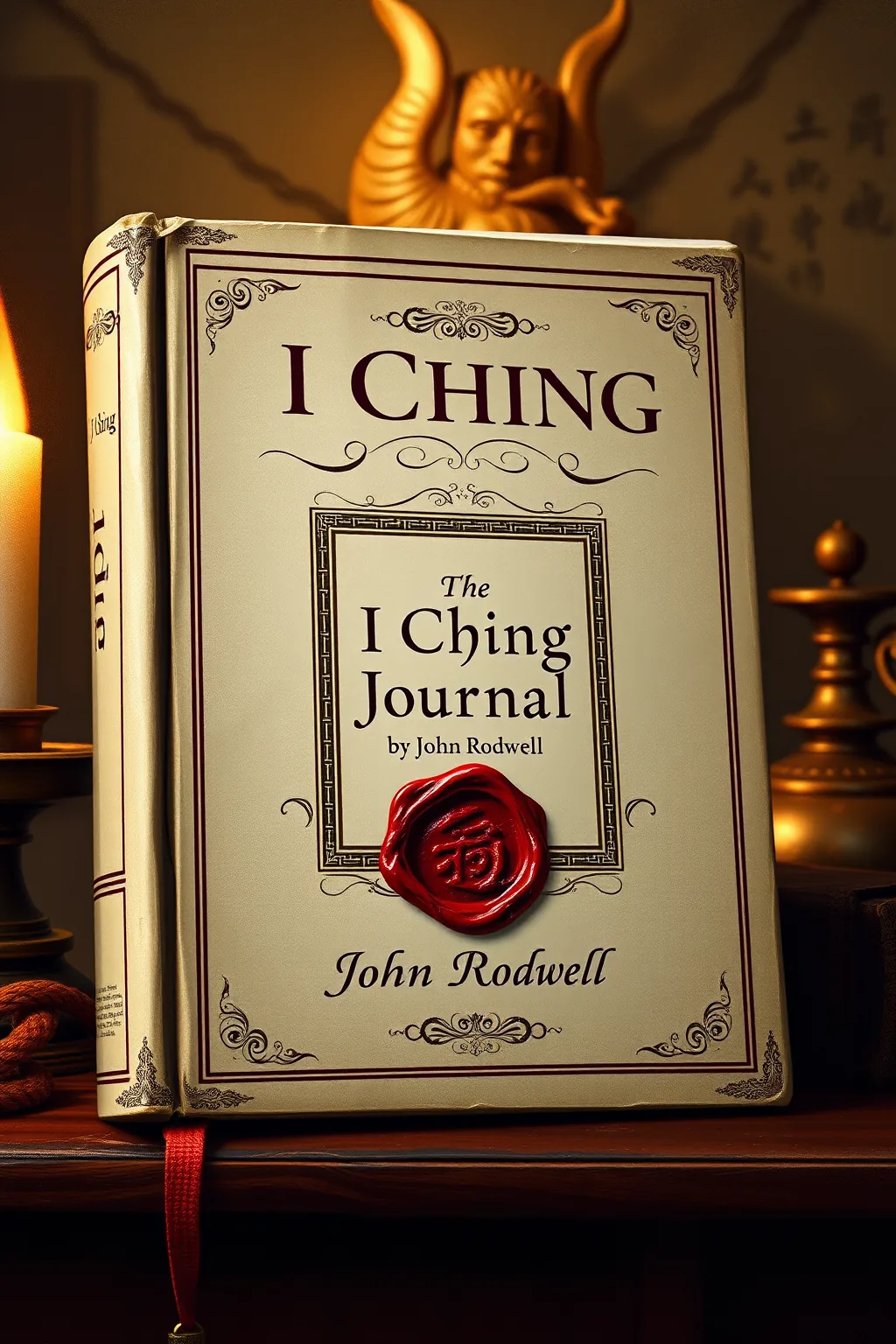
John Rodwell's 'I Ching Journal' (2002) offers a structured approach to personal divination.
This volume presents the I Ching not just as an oracle but as a tool for introspection. Rodwell guides readers through the hexagrams, explaining their symbolic meanings and philosophical underpinnings. The book encourages users to actively engage with the text, recording their readings and personal reflections. This interactive method aims to deepen understanding of the I Ching's counsel and its application to daily life.
It focuses on the practical use of the I Ching for self discovery. The journal format invites users to note down hexagrams cast, their interpretations, and how these relate to their own experiences. Rodwell emphasizes the connection between the I Ching's imagery and the dynamic interplay of yin and yang. The goal is to transform passive consultation into an active practice of seeking insight and aligning with personal circumstances.
The I Ching, or 'Book of Changes', is one of the oldest Chinese classic texts. It functions as a philosophical work and a method of divination. Its core is the system of 64 hexagrams, each representing a fundamental situation or process. These figures are formed by combining two trigrams, which in turn are composed of three yin (broken) or yang (solid) lines. The text associated with each hexagram provides commentary and advice, traditionally used for decision making and understanding the flow of events.
💡 Why Read This Book?
Unveil the profound philosophical depths of the I Ching, transforming its ancient wisdom into personal revelation. This journal provides a sacred space to document your divinatory experiences, fostering intuitive growth and self-discovery. It is an essential tool for practitioners seeking to deepen their connection with the oracle and for seekers yearning for guidance on their spiritual path. Unlock the symbolic language of the cosmos and weave its insights into the fabric of your daily life.
⭐ Reader Reviews
Honest opinions from readers who have explored this book.
❓ Frequently Asked Questions
What is the I Ching?
The I Ching, or 'Book of Changes,' is an ancient Chinese divination text and philosophical classic. It uses a system of hexagrams, formed by six stacked lines (solid for yang, broken for yin), to represent fundamental cosmic principles and offer guidance on life's myriad situations.
Who is John Rodwell?
John Rodwell is an author and scholar recognized for his insightful explorations of Eastern philosophy and esoteric traditions, particularly his work on the I Ching, making complex wisdom accessible to a contemporary audience.
What makes this a 'journal' book?
This book is designed as an interactive journal, providing space for users to record their I Ching readings, personal reflections, and insights. It encourages an ongoing dialogue with the oracle, fostering a deeper personal connection and understanding.
Is this book suitable for beginners?
Absolutely. While the I Ching is ancient and profound, Rodwell's approach in this journal makes its core concepts and divinatory practices accessible to those new to the system, guiding them gently into its wisdom.
What kind of insights can one gain from using this journal?
Users can expect to gain profound self-awareness, clarity on complex decisions, a deeper understanding of life's cyclical nature, and a heightened sense of intuition by consistently engaging with the I Ching through this journaling practice.
🔮 Key Themes & Symbolism
The Art of Divination
This theme studies the practice of divination as a sacred art, exploring how the I Ching acts as a mirror to the soul and a conduit to cosmic intelligence. It examines the principles of synchronicity, intuition, and the careful interpretation of symbolic language to glean wisdom from the universe's patterns. Readers will learn to approach divination not as fortune-telling, but as a profound tool for self-awareness, ethical guidance, and understanding the dynamic interplay of fate and free will.
Archetypal Symbolism of the Hexagrams
This section unpacks the rich, archetypal symbolism embedded within the 64 hexagrams of the I Ching. Each hexagram is presented as a miniature narrative, representing universal human experiences and cosmic forces. The exploration focuses on understanding the dynamic relationships between yin and yang, the subtle shifts in energies, and how these archetypes manifest in both the external world and our inner psychological landscapes, offering useful insights into transformation and balance.
Contemplation and Self-Discovery
Here, the journal's role as a catalyst for introspection and personal growth is highlighted. It emphasizes the practice of mindful contemplation, encouraging readers to engage with the I Ching's wisdom through journaling, meditation, and reflective exercises. The aim is to foster a deeper connection with one's inner self, to uncover hidden potentials, and to navigate life's challenges with greater wisdom, clarity, and a profound sense of self-understanding rooted in ancient philosophical principles.
💬 Memorable Quotes
Direct passages from the work, attributed to the author.
“In stillness, the patterns emerge.”
— This highlights the importance of quiet contemplation and inner peace to perceive the subtle connections and underlying order within life's events, as revealed by the I Ching.
“Every change holds a seed of wisdom.”
— This profound statement underscores the I Ching's philosophy that even challenging transitions or transformations contain valuable lessons and opportunities for growth and understanding.
“The hexagrams are maps of the soul.”
— This evocative metaphor suggests that the symbolic structures of the I Ching reflect the inner field of human experience, offering guidance and insight into our psychological and spiritual journeys.
💡 Key Ideas
Editorial paraphrase of the work's core concepts — not direct quotes.
The lines speak, if only we learn to listen.
This quote emphasizes the I Ching's nature as a living oracle, suggesting that its wisdom is accessible through attentive listening and mindful interpretation, rather than mere passive reception.
Know the currents, read through the tides.
This quote advocates for understanding the underlying forces and influences at play in any situation, enabling one to make more informed and effective choices, much like a sailor working through the sea.
🌙 Esoteric Significance
Tradition
The I Ching is a central to Taoist and Confucian philosophical traditions, deeply embedded within Chinese esoteric cosmology. It represents a sophisticated system of understanding the universe through the interplay of yin and yang, the five elements, and the dynamic principles of change. Its esoteric significance lies in its function as a symbolic language that describes the fundamental forces of creation and transformation, offering a framework for aligning human actions with the natural order of the cosmos.
Symbolism
The primary symbolism of the I Ching resides in its 64 hexagrams, each composed of six yin (broken) or yang (solid) lines. These lines represent elemental forces, archetypal situations, and stages of development. The trigrams (three-line combinations) within the hexagrams further refine these meanings, relating to fundamental aspects of nature and human experience such as heaven, earth, water, fire, and thunder. The interplay and transformation between these symbols offer useful insights into the ever-changing nature of reality.
Modern Relevance
In the modern era, the I Ching remains remarkably relevant as a tool for navigating complexity and uncertainty. Its philosophy of change and adaptability offers a powerful antidote to the anxieties of a rapidly evolving world. Esoterically, it provides a framework for developing intuition, enhancing self-awareness, and fostering a deeper connection with the subtle energies of life. Its symbolic language continues to inspire personal growth, ethical decision-making, and a more harmonious relationship with oneself and the wider universe.
👥 Who Should Read This Book
This 'I Ching Journal' is a treasure for a diverse audience. For the **beginner** venturing into divination, it offers a gentle and structured introduction to the Book of Changes. **Scholars** and practitioners of esoteric traditions will find it a valuable resource for deepening their understanding and personal engagement with the I Ching's complex symbolism. **Seekers** of spiritual guidance and self-knowledge will appreciate its role as a contemplative tool, fostering introspection and clarity. **Practitioners** of various divination arts will discover a powerful method for integrating the I Ching's wisdom into their existing practices, enhancing their intuitive abilities and their connection to the cosmic flow.
📜 Historical Context
The I Ching's origins stretch back to the Shang Dynasty (c. 1600–1046 BCE) in China, evolving through the Zhou Dynasty and later commentary by Confucian scholars like Confucius and his disciples. Initially a form of divination, it gradually became a foundational text of Chinese philosophy, influencing Taoism, Confucianism, and broader East Asian thought. Its emphasis on change, balance, and the cyclical nature of existence resonated deeply within a society that valued harmony and adaptation. The text's enduring legacy lies in its ability to transcend its historical era, offering timeless wisdom applicable to diverse cultures and epochs. Rodwell's 'I Ching Journal' places this ancient wisdom within a modern context, bridging millennia and making its profound teachings accessible to contemporary seekers.
📔 Journal Prompts
Reflect on a recent situation where you felt out of balance. Which hexagram might represent this state, and what wisdom does it offer for regaining equilibrium?
Consider a decision you are currently facing. Cast the I Ching, record the hexagram, and write down your initial intuitive response to its message.
What does the concept of 'change' mean to you personally? How has change shaped your life, and how do you typically respond to it?
Explore the symbolism of a specific trigram (e.g., Heaven, Earth, Water). How does its inherent meaning resonate with your current life circumstances?
After receiving an I Ching reading, write down the 'advice' or 'warning' the oracle seems to be offering. How can you practically apply this guidance in the coming days?
🗂️ Glossary
Hexagram
A figure composed of six stacked lines, either solid (yang) or broken (yin), used in the I Ching to represent a specific cosmic situation or archetype. There are 64 unique hexagrams.
Yin
The feminine, passive, receptive, dark, and yielding principle in Taoist philosophy, often represented by a broken line (--) in the I Ching.
Yang
The masculine, active, creative, light, and assertive principle in Taoist philosophy, often represented by a solid line (—) in the I Ching.
Trigram
A figure composed of three stacked lines (yin or yang). The I Ching hexagrams are formed by combining two trigrams, with eight fundamental trigrams representing basic forces of nature and human experience.
Synchronicity
Meaningful coincidences; the acausal connecting principle described by Carl Jung, often observed when using divination tools like the I Ching, where seemingly random events align with one's inner state or questions.
This book appears in 3 collections
🔮 Readers Also Liked
Browse all →









More by John Rodwell
All books →

From the “Tarot” Collection
View all →









More Free Divination & Tarot Books
View all →