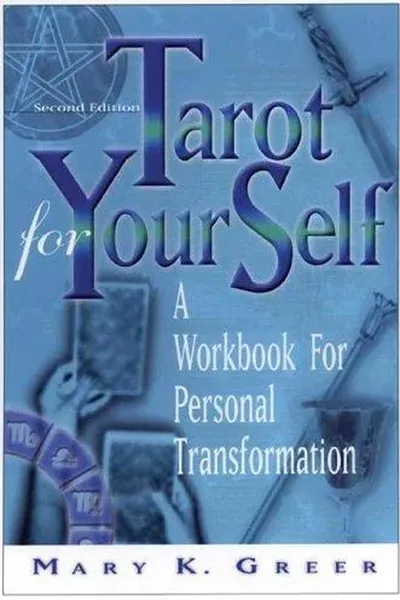
I Ching the Oracle
 62
62

I Ching the Oracle



Silas Hawthorne (Hermetic Studies Editor) — Kerson Huang's 'I Ching the Oracle' stands as a beacon for those seeking authentic engagement with this profound Eastern oracle. Huang masterfully demystifies the hexagrams, revealing their intricate philosophical and cosmological layers without sacrificing their inherent mystery. This edition is a treasure for practitioners and scholars alike, offering not just interpretation but a pathway to inner discernment. Its strength lies in its balanced approach, honoring the I Ching's ancient roots while making its wisdom accessible to the modern mind. A truly indispensable resource for anyone drawn to the art of divination and the study of cyclical wisdom.
📝 Description
62
Kerson Huang's 1999 book interprets the I Ching's 64 hexagrams for understanding universal change.
Kerson Huang's 1999 work, "I Ching the Oracle," presents the ancient Chinese text not simply as a divination tool, but as a system for comprehending the dynamics of existence. Huang focuses on the philosophical and symbolic aspects of the 64 hexagrams, illustrating how they represent the constant interplay of Yin and Yang and the natural cycles of transformation. His approach aims to make the oracle's wisdom accessible, showing its capacity for guidance and personal development beyond mere prediction.
The book invites readers to engage with a tradition that has influenced thought for centuries. It unpacks the symbolic language of the hexagrams, connecting them to broader concepts of destiny and self realization. Huang's scholarship seeks to illuminate the practical application of the I Ching's principles for those interested in understanding the forces that shape both the external world and individual lives.
The I Ching, or 'Book of Changes,' is a cornerstone of Chinese cosmology and philosophy, originating from ancient divination practices. Its core consists of 64 hexagrams, each a combination of six lines representing Yin (broken) or Yang (solid). These hexagrams are interpreted as archetypal situations and processes within the universe. The text has been a subject of study for scholars and practitioners seeking insights into natural order, human affairs, and methods of self cultivation. Huang's work places itself within this long tradition, aiming to clarify the I Ching's complex symbolism and philosophical depth.
💡 Why Read This Book?
Unravel the ancient secrets of the I Ching, a profound system of wisdom for navigating life's ever-changing currents. This book offers not just predictions, but transformative insights into personal growth, decision-making, and cosmic harmony. Ideal for spiritual seekers, philosophers, and practitioners of divination who desire a deeper, more nuanced understanding of this revered oracle.
⭐ Reader Reviews
Honest opinions from readers who have explored this book.
❓ Frequently Asked Questions
What is the I Ching?
The I Ching, or 'Book of Changes,' is an ancient Chinese divination text and philosophical classic, revered for its insights into the patterns of change in the universe and human life.
How does one use the I Ching?
Traditionally, one uses yarrow stalks or coins to generate hexagrams, which are then interpreted using the text's commentary and wisdom to gain guidance.
Is the I Ching only for divination?
While used for divination, the I Ching is also a profound philosophical text exploring cosmology, ethics, and the art of living in harmony with the Tao.
Who was Kerson Huang?
Kerson Huang was a respected physicist and scholar who brought his rigorous intellect to bear on ancient philosophical and mystical texts, including the I Ching.
What makes this translation special?
Huang's translation is lauded for its scholarly accuracy, profound philosophical depth, and accessibility, making the I Ching's complex wisdom understandable to a wider audience.
🔮 Key Themes & Symbolism
The Philosophy of Change
At the heart of the I Ching lies the immutable principle of flux. Huang illuminates how the universe, from the grandest cosmic cycles to the minutest shifts in human affairs, is in a constant state of transformation. This theme explores the dynamic interplay of Yin and Yang, the fundamental forces driving all change, and how understanding this inherent impermanence allows for greater adaptability and acceptance.
Symbolic Language of the Hexagrams
The 64 hexagrams, composed of six lines each, serve as a collection of symbolic imagery. Huang guides the reader through deciphering these potent symbols, revealing how each hexagram represents a specific archetypal situation or cosmic principle. The hexagrams are not merely random patterns but a sophisticated language of the universe, offering clear insights into the nature of events and relationships.
The Oracle as a Guide to Self-Cultivation
Beyond mere prediction, the I Ching serves as an invaluable tool for moral and spiritual development. Huang emphasizes how consulting the oracle encourages introspection, self-awareness, and the cultivation of virtues necessary to navigate life's challenges with wisdom and integrity. It’s a dialogue with the self and the cosmos, fostering a path towards balance and enlightenment.
💬 Memorable Quotes
Direct passages from the work, attributed to the author.
“When in a state of confusion, seek clarity from the Oracle.”
— This emphasizes the I Ching's role as a guide during times of uncertainty, offering perspective and direction when one feels lost or overwhelmed.
“The superior man understands the signs of the times.”
— This proverb underscores the importance of attunement to the subtle energies and patterns of the present moment, a key skill fostered by studying the I Ching.
“In stillness, one finds the source of movement.”
— This paradox points to the profound connection between inner tranquility and the ability to act effectively in the external world, a core teaching of the I Ching.
“Change is the only constant; wisdom lies in adapting.”
— This expresses the fundamental philosophy of the I Ching: recognizing the impermanence of all things and developing the flexibility to flow with life's transitions.
💡 Key Ideas
Editorial paraphrase of the work's core concepts — not direct quotes.
The Master said: 'Does Heaven speak? Yet the four seasons revolve and the myriad things are produced. Does Heaven speak?'
This quote highlights the I Ching's view of a universe governed by inherent principles rather than explicit divine decree, suggesting cosmic order arises naturally from fundamental forces.
🌙 Esoteric Significance
Tradition
The I Ching is a central to East Asian esoteric thought, deeply intertwined with Taoist cosmology, Yin-Yang philosophy, and early forms of Chinese mysticism. It represents a sophisticated system of understanding universal patterns and their manifestation in human affairs, serving as a primary text for practitioners seeking to align themselves with the Tao and the natural order of the cosmos.
Symbolism
The hexagrams are the I Ching's most potent esoteric symbols, each representing a complex interplay of Yin (passive, feminine) and Yang (active, masculine) lines. These binary structures form archetypal images that map the fundamental forces and situations of existence, from creation and growth to conflict and resolution, offering a symbolic language for the universe's dynamic processes.
Modern Relevance
In the 21st century, the I Ching continues to offer profound relevance as a tool for navigating complexity and uncertainty. Its emphasis on change, balance, and ethical action provides a timeless framework for personal growth, decision-making, and fostering resilience. For modern seekers, it remains a powerful oracle for self-reflection and a guide to living in greater harmony with oneself and the world.
👥 Who Should Read This Book
This key work is essential for spiritual seekers yearning for deeper wisdom, offering a profound oracle for navigating life's transitions. Scholars of Eastern philosophy and comparative religion will find Huang's meticulous scholarship useful for understanding the I Ching's historical and intellectual lineage. Practicing diviners and tarot enthusiasts will discover a rich, complementary system for divination and insight. Beginners to the I Ching will appreciate Huang's clear, accessible prose that explains its complex symbolism, making this ancient wisdom attainable.
📜 Historical Context
The I Ching, or 'Book of Changes,' emerged from ancient Chinese shamanistic traditions and philosophical inquiries, with its core texts dating back to the Zhou Dynasty (c. 1046–256 BCE). Initially used for divination, it evolved into a profound philosophical work, deeply influencing Taoism, Confucianism, and Chinese thought for over three millennia. Its cyclical view of time and emphasis on balance and harmony resonated across dynasties, shaping governance, personal ethics, and the arts. Kerson Huang's translation arrives in a modern era where global interest in Eastern philosophies and esoteric traditions has surged, offering a bridge between ancient wisdom and contemporary seekers yearning for deeper meaning and guidance.
📔 Journal Prompts
Reflect on a recent period of significant change in your life. How did the principles of the I Ching manifest in that situation?
Consider a current challenge you are facing. Which hexagram or hexagrams might represent this situation, and what guidance do they offer?
Explore the concept of Yin and Yang in your daily life. Where do you see these forces in balance or imbalance?
How can the I Ching's philosophy of 'the superior man' inform your personal ethical development?
If you were to consult the I Ching today, what question about your inner state or external circumstances would you ask?
🗂️ Glossary
Hexagram
A six-lined figure composed of broken (Yin) and unbroken (Yang) lines, representing archetypal situations or cosmic principles within the I Ching.
Yin
The passive, feminine, dark, and receptive principle in Chinese philosophy, often represented by broken lines in the I Ching.
Yang
The active, masculine, light, and creative principle in Chinese philosophy, often represented by unbroken lines in the I Ching.
Tao
The fundamental principle of the universe in Taoist philosophy; the 'Way' or 'Path' that governs all existence and change.
Divination
The practice of seeking knowledge of the future or the unknown by supernatural means, in this context, through the I Ching.
This book appears in 3 collections
🔮 Readers Also Liked
Browse all →








More by Kerson Huang
All books →

From the “Tarot” Collection
View all →









More Free Divination & Tarot Books
View all →