The Book of Palmistry

 62
62

The Book of Palmistry



Sasha Fenton's 'The Book of Palmistry' stands as a luminous beacon in the realm of palmistry literature. Fenton's erudition shines through as she meticulously deciphers the intricate glyphs of the hand, offering not just predictions but profound insights into character and destiny. This is not a superficial guide; it is a deep dive into the esoteric connections between our physical form and our spiritual journey. The author's prose is both accessible and evocative, making complex concepts understandable for neophytes while offering depth for seasoned practitioners. It's an indispensable resource for anyone seeking to understand the subtle language of the hand as a reflection of the soul's unfolding.
📝 Description
62
Sasha Fenton's 1989 book deciphers the lines, mounts, and shapes of the hand as a map of destiny.
Sasha Fenton's 'The Book of Palmistry' examines chiromancy, the practice of reading palms. The book details how the lines, mounts, and shapes of the hand are interpreted to reveal aspects of a person's character and life path. Fenton explains the system of palmistry, connecting the physical features of the hand to a deeper understanding of the self.
The work goes beyond simple fortune-telling. It suggests a connection between the physical body and spiritual awareness, offering insights into the relationship between mind, body, and spirit. The book aims to help readers understand their own potential and the subtle energies influencing their lives. It combines historical knowledge of palmistry with practical advice for its application.
Palmistry, or chiromancy, has a long history within esoteric traditions, dating back to ancient India and Greece. It is often considered a form of divination and a tool for self-understanding, alongside astrology and tarot. This practice assumes a correspondence between the physical form, specifically the hand, and an individual's inner nature or fate. Fenton's book places itself within this lineage, presenting palmistry as a method to access hidden knowledge about oneself and one's life trajectory, aligning with broader esoteric interests in symbolic systems and personal spiritual growth.
💡 Why Read This Book?
Unlock the profound wisdom encoded within your own hands. 'The Book of Palmistry' offers a clear, comprehensive guide to understanding your character, potential, and life path through the ancient art of chiromancy. Ideal for spiritual seekers, aspiring practitioners, and those fascinated by the mind-body-spirit connection, this book provides the keys to self-discovery and empowers you to read the universal language of the palm.
⭐ Reader Reviews
Honest opinions from readers who have explored this book.
❓ Frequently Asked Questions
What is the primary focus of this book?
The primary focus is the ancient art of palmistry, delving into the meaning of hand lines, mounts, shapes, and fingers to understand character, destiny, and spiritual insights.
Is this book suitable for beginners?
Absolutely. Fenton's approach is clear and accessible, making it an excellent starting point for those new to palmistry, while still offering depth for more experienced readers.
Does the book cover modern interpretations of palmistry?
Yes, while rooted in ancient traditions, the book integrates modern psychological and spiritual perspectives, offering a holistic understanding of palmistry's relevance today.
Can palmistry reveal future events?
Palmistry is primarily seen as a tool for understanding potentials, character traits, and life tendencies rather than a deterministic forecast of specific future events.
What are the 'mounts' in palmistry?
The 'mounts' are the fleshy, raised areas on the palm, associated with different planets and human characteristics. Their prominence and markings offer significant insights.
🔮 Key Themes & Symbolism
The Hand as a Cosmic Map
This theme explores the profound concept of the hand as a microcosm reflecting the macrocosm. Fenton elucidates how the intricate lines, mounts, and finger formations serve as a divine blueprint, charting not just potential future events but also innate character traits, karmic lessons, and spiritual aspirations. It emphasizes the hand as a living, dynamic entity, constantly evolving with our life experiences and spiritual growth, making it a powerful tool for self-awareness and personal transformation.
Mind-Body-Spirit Interconnectedness
Fenton masterfully illustrates the inseparable link between our physical form and our inner spiritual state. The palm, in this context, becomes a tangible manifestation of our mental and emotional landscape. The book examines how thoughts, beliefs, and spiritual energies imprint themselves onto the physical lines and shapes of the hand, offering a unique perspective on the holistic nature of well-being and self-understanding. It encourages readers to see their hands as a gateway to understanding their complete being.
Unlocking Hidden Potential and Destiny
A central tenet of 'The Book of Palmistry' is the revelation of latent talents, strengths, and life purposes. By deciphering the symbols on the palm, readers are empowered to identify their inherent gifts and understand the challenges and opportunities that lie ahead. This theme focuses on using palmistry not as a means of passive prediction, but as an active tool for conscious living, enabling individuals to harness their potential, navigate obstacles with wisdom, and consciously shape their destiny with greater clarity and intention.
💬 Memorable Quotes
Direct passages from the work, attributed to the author.
“Each crease is a chapter, each mount a theme.”
— This evocative metaphor frames the palm as a narrative, with its various features contributing to the overarching story of an individual's life and character.
“Your hand is a living manuscript of your journey.”
— This emphasizes the dynamic and personal nature of palmistry, portraying the hand as a continuously written record of one's unique experiences and evolution.
“The future is not fixed, but a range woven by choice.”
— This offers a hopeful and empowering perspective on destiny, suggesting that while potentials exist, free will plays an important role in shaping one's path.
💡 Key Ideas
Editorial paraphrase of the work's core concepts — not direct quotes.
The lines on your palm are whispers of the soul.
This quote highlights the deeply spiritual and intuitive nature of palmistry, suggesting that the hand holds profound truths about our inner essence and journey.
Look within your palm to understand the universe without.
This quote speaks to the esoteric principle of 'as above, so below,' suggesting that the microcosm of the hand reflects the greater cosmic order and universal energies.
🌙 Esoteric Significance
Tradition
This work draws heavily from the Vedic traditions of India and the Hermetic principles of the West, viewing the hand as a reflection of astrological influences and karmic imprints. It aligns with the Neoplatonic concept of the soul's journey and the Hermetic axiom 'As above, so below,' positing that the physical form mirrors spiritual and cosmic realities. The focus is on understanding the subtle energies and archetypal forces that shape human experience.
Symbolism
Key symbols include the major and minor lines (Life, Head, Heart, Fate, etc.), each representing fundamental aspects of human existence. The mounts (Venus, Jupiter, Saturn, etc.) symbolize planetary energies and corresponding personality traits. Finger lengths and shapes, nail characteristics, and hand shapes themselves add further layers of symbolic meaning, creating a rich lexicon for interpreting the hand.
Modern Relevance
In an age of rapid change and increasing disconnection, 'The Book of Palmistry' offers a grounding in self-awareness and personal empowerment. It provides a tangible method for introspection, helping individuals navigate their inner lives and external circumstances with greater clarity. The book's emphasis on potential and growth, rather than rigid prediction, speaks to contemporary desires for self-development and conscious living, making it a valuable tool for modern spiritual practitioners and seekers.
👥 Who Should Read This Book
This comprehensive guide is essential for aspiring palmists and seasoned practitioners seeking to deepen their knowledge. Spiritual seekers will find it an invaluable tool for self-discovery and understanding their life's path. Those interested in the mind-body-spirit connection will appreciate its holistic approach, while scholars of esotericism will find a well-researched and insightful exploration of a timeless art. It is for anyone yearning to unlock the hidden language of their own hands and gain useful insights into their unique journey.
📜 Historical Context
Palmistry, or chiromancy, boasts an lineage stretching back to ancient civilizations, with roots found in Indian Vedic astrology, Chinese physiognomy, and Greek philosophy. For centuries, it was practiced by scholars, mystics, and even physicians who saw the hand as a key to understanding human health and temperament. During the Renaissance, palmistry experienced a surge in popularity across Europe, often interwoven with other divinatory arts and occult studies. As scientific thought evolved, palmistry was often relegated to the fringes, yet it persisted as a vital esoteric practice. Sasha Fenton's work emerges in a modern era of renewed interest in ancient wisdom and holistic approaches to self-understanding, bridging the gap between historical practice and contemporary spiritual exploration.
📔 Journal Prompts
Examine the lines on your dominant hand. What stories do they seem to tell about your core motivations and past experiences?
Consider the most prominent mount on your palm. How do its associated characteristics manifest in your personality and life choices?
Trace the outline of your hand. What does its overall shape suggest about your fundamental approach to life and relationships?
Reflect on a significant challenge you have faced. Can you see any corresponding markings or patterns on your palm that might relate to this experience?
How can the insights gained from palmistry empower you to consciously shape your future path and embrace your potential?
🗂️ Glossary
Chiromancy
The ancient art and practice of foretelling future or character by the examination of the hand, particularly the lines and the shape of the palm and fingers.
Mounts
The fleshy, raised pads on the palm, each associated with a planet and specific human traits or potentials.
Life Line
The arc running from the thumb side of the palm towards the wrist, often interpreted as indicating vitality, physical well-being, and major life experiences.
Head Line
A line extending across the palm, typically from beneath the index finger towards the opposite side, representing mental faculties, intellect, and thought processes.
Heart Line
A horizontal line across the upper palm, beneath the fingers, believed to reflect emotional disposition, romantic relationships, and the state of the heart.
This book appears in 1 collection
🔮 Readers Also Liked
Browse all →







More by Sasha Fenton
All books →





From the “Palmistry” Collection
View all →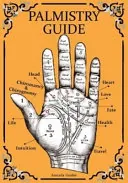







More Free Divination & Tarot Books
View all →