✍️ Author Biography
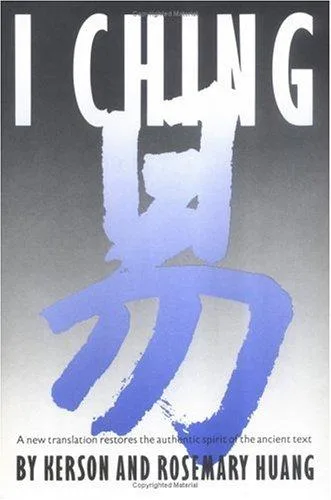
Kerson Huang
📅 1928 – 2016
🌍 American
📚 4 free books
⭐ Known for: The Rubáiyát of Omar Khayyám (1859)
Edward FitzGerald's translation of Omar Khayyam's quatrains became immensely popular, sparking debates on its philosophical and mystical interpretations.
Edward FitzGerald's 1859 English translation of quatrains attributed to Omar Khayyam, known as the "Rubáiyát of Omar Khayyám", initially saw little commercial success. However, its popularity surged from 1861 onwards, significantly boosted by figures like Whitley Stokes and the admiration of the Pre-Raphaelite Brotherhood. By the 1880s, the work had achieved widespread acclaim across the English-speaking world, leading to the formation of "Omar Khayyam clubs" and a notable "fin de siècle cult of the Rubaiyat". FitzGerald's translation has since been reissued in hundreds of editions and has inspired similar translations in various languages.
The authenticity of the poetry attributed to Omar Khayyam, who was primarily recognized as an astronomer and mathematician during his lifetime, remains a subject of scholarly uncertainty. Medieval historians offer the earliest mentions of his poetry, but the attribution is debated, with some scholars suggesting the collected works are pseudepigraphic. Debates also surround the philosophical underpinnings of the Rubáiyát, with FitzGerald emphasizing a skeptical, Epicurean interpretation. Conversely, others argue for a mystical Sufi reading, suggesting FitzGerald's translation may have misrepresented the original intent.
Translation and Reception
Edward FitzGerald's translation of the "Rubáiyát of Omar Khayyám", first published in 1859, drew from Persian manuscripts provided by his friend Edward B. Cowell. Despite a slow start commercially, the work gained momentum after 1861, propelled by figures like Whitley Stokes and embraced by the Pre-Raphaelite movement in England. Increased interest in the United States followed a third edition in 1872. By the 1880s, the book was exceptionally popular globally, fostering "Omar Khayyam clubs" and a significant cultural "fin de siècle cult of the Rubaiyat". FitzGerald's rendition has seen hundreds of editions and inspired translations into numerous languages, highlighting its enduring impact on world literature.
Authorship and Authenticity Debates
The attribution of the "Rubáiyát" to Omar Khayyam, renowned in his time as an astronomer and mathematician, is uncertain. While medieval biographers mention his poetry, scholars question its authenticity, with some suggesting the tradition is pseudepigraphic. Reconstructions of an authentic core of verses have been attempted, but challenges persist due to the late dating of extant manuscripts and the linguistic and thematic inconsistencies in later collections. Some scholars, like Hans Heinrich Schaeder, have even suggested removing Khayyam's name from literary history, while others like Sadegh Hedayat concluded only a small fraction of the quatrains could be definitively attributed to him.
Philosophical Interpretations: Skepticism vs. Sufism
FitzGerald's translation ignited a long-standing debate regarding the philosophical perspective of the "Rubáiyát". FitzGerald himself posited an Epicurean and skeptical worldview, suggesting Omar Khayyam was critical of Sufi mysticism. This interpretation is supported by some medieval historians who noted an anti-religious agenda behind the poetry, even citing an indictment for impiety. However, critics argue FitzGerald's translation is overly literal and misrepresents the mystical elements. Proponents of a Sufi interpretation suggest the poetry should be understood esoterically, with terms like "wine" carrying symbolic weight. Modern scholars continue to explore these contrasting readings, with some, like Sadegh Hedayat, aligning with the skeptical viewpoint, interpreting Khayyam's philosophy as agnostic and finding solace in earthly pleasures.
Key Ideas
- Debate on the authenticity of poetry attributed to Omar Khayyam.
- FitzGerald's translation as a significant cultural phenomenon.
- Contrasting interpretations of the Rubáiyát's philosophy: skeptical vs. Sufi mysticism.
- The role of translation in shaping the perception of ancient texts.