I ching
 80
80

I ching
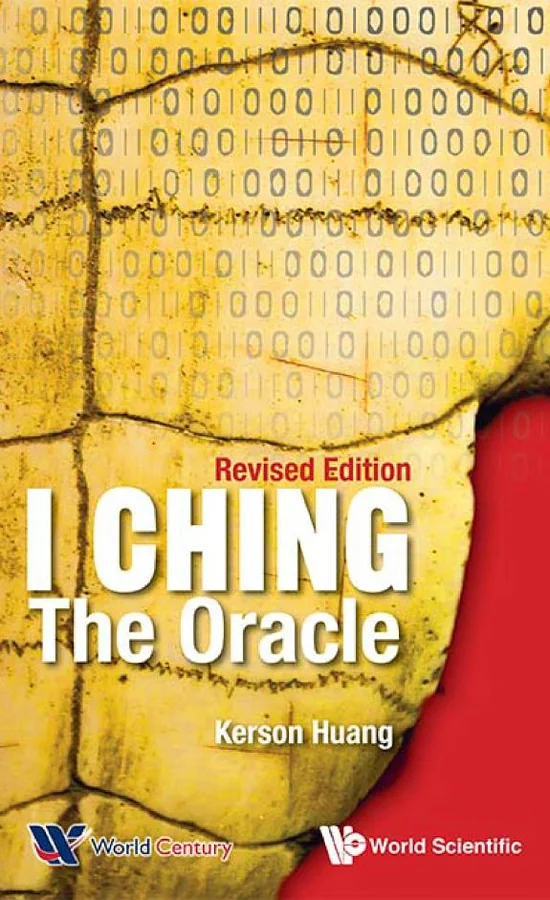
Kerson Huang’s translation of the *I Ching* offers a lucid entry point into this foundational Chinese classic. Published in 1987, it presents the hexagrams and their accompanying texts with a clarity that, while perhaps less poetic than some other versions, prioritizes a direct understanding of the underlying philosophical structure. Huang, a physicist by training, brings a systematic approach to the material, which can be particularly helpful for Western readers accustomed to logical frameworks. One notable strength is the clear presentation of the commentaries, often referred to as the Ten Wings, which are crucial for grasping the text’s deeper meanings.
A potential limitation for some readers might be its relative lack of emphasis on the more esoteric or strictly divinatory practices, which are central to many modern engagements with the *I Ching*. While the philosophical and cosmological aspects are robustly presented, those seeking detailed instructions for ritualistic divination might need to supplement this work. The passage explaining the 'Great Ultimate' (Tai Chi) and its generation of yin and yang provides a solid philosophical foundation, illustrating Huang's focus.
Read more ↓
Overall, Huang's *I Ching* serves as a valuable scholarly resource for understanding the *Book of Changes* as a system of thought.
📝 Description
80
Kerson Huang's 1987 edition of the I Ching offers a scholarly approach to the ancient Chinese text.
First published in 1987, Kerson Huang's translation of the I Ching, or "Book of Changes," presents an ancient Chinese divination text and philosophical system. Its origins trace to the Western Zhou dynasty, with compilation and commentary evolving over centuries. The book is structured around 64 hexagrams, each formed from six solid (yang) or broken (yin) lines. These symbols represent a wide range of natural phenomena, human situations, and cosmic principles.
Huang's edition is aimed at readers interested in the philosophical foundations and systemic logic of the I Ching, moving beyond purely divinatory uses. Students of comparative philosophy, Chinese history, and early scientific thought will find particular relevance. The text's historical influence on Neo-Confucianism and Taoism is significant, with early philosophical readings linked to figures like Confucius.
The core of the I Ching is the dynamic interplay of yin and yang, seen as fundamental forces governing the universe. The hexagrams depict transitional states, illustrating the constant transformation of reality. Consulting the I Ching involves generating a hexagram through methods like casting yarrow stalks or coins, which then guides interpretation for specific situations and actions.
The I Ching stands as a foundational text within Chinese esoteric traditions, predating many philosophical schools it later influenced. Its divinatory system, built on the interplay of yin and yang and represented by hexagrams, offers a framework for understanding cosmic processes and human affairs. This edition emphasizes the text's philosophical weight, connecting its conceptual structure to early Chinese thought and its long development through commentaries like the Ten Wings.
💡 Why Read This Book?
• Gain a structured understanding of the 64 hexagrams and their philosophical underpinnings, as presented in Huang's methodical translation first published in 1987, moving beyond superficial interpretations. • Grasp the core concepts of yin and yang and their dynamic interplay as the generative force behind all phenomena, as detailed in the commentaries associated with each hexagram. • Appreciate the *I Ching* as a complex system of thought developed over centuries in ancient China, understanding its historical roots and its influence on later philosophical traditions.
⭐ Reader Reviews
Honest opinions from readers who have explored this book.
❓ Frequently Asked Questions
When was Kerson Huang's translation of the I Ching first published?
Kerson Huang's translation of the I Ching was first published in 1987. This edition aims to provide a clear and systematic understanding of the ancient Chinese text.
What are the primary components of the I Ching text?
The I Ching is primarily composed of 64 hexagrams, each formed by six lines (solid or broken), and their accompanying textual commentaries, notably the Ten Wings.
What is the philosophical significance of yin and yang in the I Ching?
Yin and yang represent the fundamental, complementary forces believed to govern the universe. Their dynamic interaction and transformation are central to understanding the principles of change illustrated by the hexagrams.
Is this translation suitable for beginners interested in divination?
While it offers a solid philosophical foundation, this translation might be more focused on the systematic and intellectual aspects of the I Ching rather than providing extensive guidance on divinatory practices.
What historical period does the I Ching originate from?
The origins of the I Ching are typically dated to the Western Zhou dynasty in ancient China, roughly between 1046 and 771 BCE, though its compilation and interpretation evolved significantly over subsequent centuries.
How does the I Ching represent change?
The I Ching represents change through its 64 hexagrams, which are seen as depictions of transitional states and evolving situations, illustrating the constant flux and interconnectedness of all things.
🔮 Key Themes & Symbolism
The Dynamics of Yin and Yang
This translation emphasizes the foundational principle of yin and yang as the binary forces whose interplay drives all phenomena. The text illustrates how these seemingly opposite forces are interdependent and constantly transforming into one another, mirroring the natural world and human experience. The hexagrams themselves are visual representations of various combinations and transitions between solid (yang) and broken (yin) lines, offering a systematic language to describe these cosmic dynamics.
Hexagrams as Situational Archetypes
Huang's approach highlights the 64 hexagrams as symbolic representations of archetypal situations. Each hexagram, with its specific line configurations, is presented not as a fixed entity but as a snapshot of a particular moment in a larger process of change. The accompanying texts and commentaries guide the reader to understand the dynamics inherent in each situation and to discern appropriate responses or attitudes based on the principles of cosmic order.
The Philosophy of Change and Transformation
Central to this edition is the concept that reality is in a perpetual state of flux. The *I Ching* provides a framework for understanding this ceaseless transformation, viewing change as an inherent and natural aspect of existence. The text encourages an acceptance of impermanence and offers wisdom on how to align oneself with the natural flow of events, rather than resisting them, thereby achieving harmony.
Commentaries and Interpretation
The importance of the 'Ten Wings'—commentaries traditionally attributed to Confucius and his disciples—is evident in this edition. These layers of interpretation are crucial for moving beyond a purely divinatory reading to grasp the philosophical and cosmological significance of the hexagrams. Huang’s translation makes these explanatory texts accessible, revealing how the ancient sages sought to understand universal principles through the *I Ching*.
💬 Memorable Quotes
Direct passages from the work, attributed to the author.
“The Great Ultimate produces the Two [Yin and Yang].”
— This foundational statement, central to the philosophical interpretations of the *I Ching*, explains the genesis of the cosmos from a singular, undifferentiated source (Tai Chi) into the dualistic forces that shape reality.
“The superior man considers what is good and carries it out.”
— This reflects the ethical dimension of the *I Ching*, suggesting that understanding the principles of change also implies a responsibility to act virtuously and in accordance with beneficial patterns.
“What is formless is the Tao; what is operative is the *I Ching*.”
— This highlights the relationship between the ultimate principle (Tao) and its manifest expression through the symbolic system of the *I Ching*, framing the text as a practical tool for engaging with the underlying order.
“The Book of Changes is a book of nature.”
— This interpretation underscores the *I Ching*'s connection to the natural world, suggesting that its principles are derived from observing universal patterns and rhythms found in nature.
💡 Key Ideas
Editorial paraphrase of the work's core concepts — not direct quotes.
Change is the only constant.
This paraphrased concept captures the essence of the *I Ching*'s worldview: that reality is in perpetual motion and transformation, and understanding this flux is key to wisdom and adaptation.
🌙 Esoteric Significance
Tradition
While the *I Ching* predates many formalized esoteric traditions, its principles have deeply informed Hermeticism, Taoism, and later Theosophical thought. Its emphasis on dynamic balance, cosmic cycles, and the interconnectedness of all things aligns with Hermetic axioms like 'As Above, So Below.' It serves as a foundational text for understanding cyclical patterns and correspondences, elements crucial in various Western esoteric systems.
Symbolism
The primary symbols are the solid (yang) and broken (yin) lines, representing fundamental dualities such as male/female, light/dark, active/passive. The 64 hexagrams, formed by combinations of these lines, function as archetypal symbols for a vast spectrum of human situations and natural phenomena. For instance, the hexagram 'The Creative' (☰☰) symbolizes heaven, strength, and initiative, while 'The Receptive' (☷☷) represents earth, yielding, and devotion.
Modern Relevance
Contemporary thinkers and practitioners in fields ranging from systems theory and chaos mathematics to transpersonal psychology and modern Taoist practice draw upon the *I Ching*. Its model of change, cyclical processes, and complementary forces continues to offer insights into complex systems and personal development, making it relevant for those exploring interconnectedness in a globalized world.
👥 Who Should Read This Book
• Students of comparative philosophy and ancient Chinese thought seeking a clear, textually grounded exploration of the *I Ching*'s philosophical structure. • Individuals interested in the historical development of divination and cosmologies, particularly those tracing the influence of Eastern systems on Western thought. • Readers drawn to systematic approaches to understanding change and cyclical processes, who appreciate a methodical translation that prioritizes clarity over poetic embellishment.
📜 Historical Context
Kerson Huang’s 1987 translation of the *I Ching* emerged in an era of burgeoning interest in Eastern philosophies within Western academia and counter-culture movements. The *I Ching* had already been introduced to the West, notably by Gottfried Wilhelm Leibniz in the early 18th century and later through translations by James Legge and Richard Wilhelm. By the late 20th century, sinology was a more established field, with scholars debating the precise dating of the text's layers and commentaries. Huang’s work, coming decades after Wilhelm's influential German version (translated into English by Cary Baynes in 1950), sought a more systematic and perhaps less overtly mystical presentation, appealing to those interested in its philosophical and proto-scientific aspects. This period saw continued engagement with Chinese thought, often contrasted with Western philosophical traditions like Aristotelian logic or Cartesian dualism, with the *I Ching* being studied for its holistic and process-oriented worldview.
📔 Journal Prompts
The interplay of yin and yang within Hexagram 1, The Creative.
The concept of 'Great Ultimate' (Tai Chi) as described in the commentaries.
How the 64 hexagrams function as archetypes of situations.
The role of the 'Ten Wings' in interpreting the *I Ching*.
Personal reflections on the principle of constant transformation.
🗂️ Glossary
Hexagram
A figure composed of six stacked horizontal lines, each line being either solid (yang) or broken (yin). The 64 hexagrams form the core symbolic language of the *I Ching*.
Yin
The passive, dark, feminine, or receptive principle in Chinese cosmology, represented by a broken line (--) in the *I Ching*.
Yang
The active, light, masculine, or creative principle in Chinese cosmology, represented by a solid line (—) in the *I Ching*.
Ten Wings
A collection of commentaries traditionally attributed to Confucius and his disciples, which elaborate on the meaning and application of the *I Ching*'s hexagrams and lines.
Great Ultimate (Tai Chi)
The primordial, undifferentiated unity or cosmic source from which the dual forces of yin and yang arise, according to Chinese philosophy and the interpretations of the *I Ching*.
Book of Changes
The English translation of *I Ching*, referring to its nature as a text that reveals the principles of transformation and flux in the universe.
Line
The fundamental component of a hexagram, consisting of either a solid (yang) or a broken (yin) stroke. Each of the six lines within a hexagram carries specific meaning.
🔮 Readers Also Liked
Browse all →









More by Kerson Huang
All books →
More Free Occult Philosophy Books
View all →