The Place of Enchantment
 81
81

The Place of Enchantment
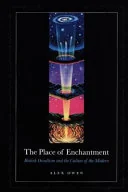
Alex Owen’s *The Place of Enchantment* is a welcome corrective to the often-simplified narrative of late Victorian intellectual life. The book effectively demonstrates that the era’s embrace of spiritualism and occultism was not a mere fringe phenomenon but a significant cultural current, deeply intertwined with the anxieties and transformations brought about by scientific advancement. Owen’s strength lies in her detailed exploration of how figures like the Society for Psychical Research’s members sought empirical validation for the supernatural, a fascinating paradox. A limitation, perhaps, is that the sheer volume of examples, while illuminating, can occasionally feel overwhelming, making it challenging to grasp the overarching theoretical framework without careful attention. The passage discussing the appeal of mediumship as a form of embodied knowledge, offering an alternative to abstract scientific theory, is particularly insightful. Owen presents a nuanced, scholarly account of a period rich with spiritual seeking.
📝 Description
81
Alex Owen's 2017 book examines the late Victorian and Edwardian fascination with occultism and spiritualism.
The Place of Enchantment challenges the common view of late Victorian and Edwardian Britain as solely a period of rationalism. Alex Owen details a significant public engagement with magic, séances, and psychic phenomena during this era. Many individuals, confronted by Darwinism and Freudian psychology, looked for new ways to understand their world and themselves. Owen's work explores the complex relationship between scientific thought and the adoption of mystical beliefs.
This book is for anyone interested in the cultural and intellectual history of the late 19th and early 20th centuries, especially those curious about enduring esoteric interests. It will appeal to scholars of Victorian studies, the history of science, and religious studies, as well as those intrigued by why people believe what they do. It provides a different perspective than the idea that modernity was entirely secular and rational.
This work fits within the study of Western esotericism by detailing a specific historical moment when occult and spiritualist movements gained traction among educated populations. It addresses how individuals sought alternative spiritual frameworks in response to major intellectual shifts like Darwinism and early psychoanalysis. By examining the "enchantment" sought in practices like séances and psychic phenomena, Owen situates these interests not as mere superstition but as a response to a perceived loss of meaning in a rapidly changing world. The book highlights how esoteric beliefs coexisted and interacted with mainstream scientific and philosophical currents.
💡 Why Read This Book?
• Understand the Victorian paradox of embracing rationalism while simultaneously exploring spiritualism, a direct challenge to the idea of linear secularization, as detailed in the book's examination of figures like F.W.H. Myers. • Discover how the intellectual shifts of the late 19th century, including Darwinism and emerging psychology, created a vacuum that esoteric practices sought to fill, offering alternative modes of knowing. • Gain insight into the specific practices of spiritualism and occultism during this period, moving beyond simplistic dismissals to appreciate their complex social and psychological functions.
⭐ Reader Reviews
Honest opinions from readers who have explored this book.
❓ Frequently Asked Questions
When was *The Place of Enchantment* first published?
Alex Owen's *The Place of Enchantment* was first published in December 2006, offering a detailed historical analysis of spiritualism and occultism in the late Victorian and Edwardian eras.
What intellectual movements influenced the period discussed in the book?
The period covered in *The Place of Enchantment* was significantly shaped by intellectual currents such as Charles Darwin's evolutionary theories and Sigmund Freud's early psychological models, which challenged traditional beliefs and understanding of the mind.
Who were some key figures or organizations involved in the esoteric movements of this era?
The book frequently references organizations like the Society for Psychical Research, founded in 1882, and individuals involved in spiritualism and occultism who sought to reconcile these interests with contemporary scientific and philosophical thought.
How does the book challenge the perception of Victorian society?
It challenges the notion that Victorians were solely focused on rationalism by demonstrating a widespread and serious engagement with magic, spiritualism, and the occult, suggesting a more complex intellectual landscape.
What does 'enchantment' refer to in the context of the book?
In *The Place of Enchantment*, 'enchantment' signifies a perceived need for wonder, mystery, and alternative forms of knowledge in response to the perceived 'disenchantment' brought about by scientific materialism.
What academic fields would find this book particularly relevant?
This work is highly relevant to scholars and students of Victorian studies, the history of science, religious studies, cultural history, and the history of esotericism.
🔮 Key Themes & Symbolism
Spiritualism's Intellectual Appeal
The book meticulously details how spiritualism and occult practices were not relegated to the uneducated but actively engaged with by intellectuals and scientists. Figures associated with the Society for Psychical Research, for example, sought empirical evidence for phenomena beyond the material world. This theme explores how these movements offered a perceived antidote to the existential anxieties generated by Darwinism and the perceived 'disenchantment' of a world explained solely by science. It highlights the era's desire for meaning and connection to the unseen.
The 'Enchanted' Modernity
Contrary to narratives of straightforward secularization, Owen argues that modernity, particularly in late Victorian England, paradoxically fostered a search for enchantment. This section examines how individuals grappled with the implications of scientific discovery by seeking alternative frameworks for understanding consciousness, the afterlife, and hidden realities. Practices like séances and automatic writing provided avenues for exploring subjective experience and transcending the limitations of empirical observation, creating a complex spiritual landscape.
Gender and Esotericism
The role of women as both practitioners and mediums within spiritualist and occult circles is a significant focus. This theme investigates how these esoteric pursuits offered avenues for female agency and expression in a society with restrictive gender roles. The book explores the dynamics of spiritualist séances, where women often occupied central roles, and how their experiences contributed to broader discussions about consciousness, embodiment, and the nature of reality, challenging conventional notions of authority and knowledge.
Science, Magic, and Belief
This theme examines the porous boundary between science and magic during the period. Owen examines how figures sought to apply scientific methodologies to the study of the occult, or conversely, how magical thinking permeated aspects of the scientific or philosophical discourse. The work explores the tension and interplay between rational inquiry, as exemplified by figures like Freud and Darwin, and the persistent human inclination towards belief in forces beyond the empirically verifiable, creating a unique intellectual climate.
💬 Memorable Quotes
Direct passages from the work, attributed to the author.
“The Victorians were not simply abandoning religion; many were seeking new forms of spiritual expression.”
— This concept highlights that the era's intellectual ferment didn't necessarily lead to atheism, but rather a migration of spiritual seeking into less orthodox channels, including occultism and spiritualism.
“The quest for psychic phenomena was often an attempt to find meaning in a world unsettled by science.”
— This interpretation emphasizes the psychological and existential drivers behind the era's fascination with the supernatural, positing it as a response to the perceived loss of traditional certainties.
“Spiritualism offered a participatory, embodied mode of knowing distinct from abstract scientific theory.”
— This idea underscores the appeal of practices like séances, suggesting they provided a tangible, experiential connection to the spiritual that contrasted with the intellectual distance of scientific discourse.
“The study of magic and myth was subjected to systematic inquiry alongside scientific advancements.”
— This points to the intellectual rigor applied even to seemingly irrational subjects, as seen in the work of anthropologists like J.G. Frazer, indicating a complex engagement with non-scientific belief systems.
“The line between the rational and the irrational became blurred in the face of profound societal change.”
— This interpretation captures the essence of the period's intellectual climate, where established boundaries of knowledge were challenged, leading to a widespread exploration of phenomena previously dismissed.
🌙 Esoteric Significance
Tradition
This work primarily engages with the Western Esoteric Tradition, specifically focusing on the late Victorian and Edwardian manifestations of spiritualism and occultism. It situates these movements within a broader context of seeking alternative spiritual frameworks in response to the perceived 'disenchantment' of modernity, a recurring theme in esoteric thought. Owen's approach departs from purely historical accounts by highlighting the psychological and philosophical underpinnings of these beliefs, connecting them to contemporary anxieties about science and reason.
Symbolism
While not overtly symbolic in a ritualistic sense, the book explores the symbolic weight attributed to phenomena like séances and mediumship. A séance, for instance, becomes a symbol of the desire to bridge the material and immaterial worlds, representing a ritualistic attempt to commune with the departed or unseen forces. The act of automatic writing can be seen as a symbol of accessing subconscious or 'higher' knowledge, bypassing the rational ego. These practices functioned symbolically, offering tangible representations of abstract spiritual or psychological concepts.
Modern Relevance
Contemporary interest in consciousness studies, the psychology of belief, and the history of science often revisits the period explored in *The Place of Enchantment*. Thinkers examining the resurgence of interest in spirituality, the limitations of purely materialistic worldviews, and the cultural impact of scientific discovery find Owen's work invaluable. It informs modern discussions on how societies grapple with existential questions and the persistent human search for meaning beyond the purely empirical, relevant to fields from sociology to parapsychology.
👥 Who Should Read This Book
• Students of Victorian and Edwardian cultural history seeking to understand the era's complex relationship with science, religion, and the paranormal. • Scholars of the history of science and medicine interested in how scientific advancements influenced and were perceived alongside esoteric beliefs. • General readers fascinated by the history of spiritualism, occultism, and the enduring human quest for meaning beyond the material world.
📜 Historical Context
The late nineteenth and early twentieth centuries marked a period of intense intellectual and social flux, profoundly influencing how Britons perceived reality. The groundbreaking work of Charles Darwin, published in 1859, fundamentally challenged religious cosmology, while Sigmund Freud's nascent psychoanalytic theories began to dissect the unconscious mind. In this climate of intellectual upheaval, James George Frazer was undertaking his systematic study of magic and myth. Amidst this drive towards rationalism, *The Place of Enchantment* documents a powerful counter-current: a widespread public and intellectual fascination with spiritualism, psychical research, and occultism. Organizations like the Society for Psychical Research, founded in 1882, actively sought to investigate paranormal phenomena using scientific methods, demonstrating a complex interplay between skepticism and a deep-seated desire for transcendent experience. This engagement with the esoteric was not a rejection of modernity, but rather an integral part of its unfolding spiritual and intellectual landscape, offering alternative ways of understanding existence in a rapidly changing world.
📔 Journal Prompts
The perceived 'disenchantment' of modernity and its proposed remedies.
The appeal of embodied knowing versus abstract scientific theory.
The role of women in late Victorian spiritualist movements.
Reconciling scientific inquiry with belief in the supernatural.
The concept of 'enchantment' in a rationalist age.
🗂️ Glossary
Spiritualism
A religious movement believing that the spirits of the dead can communicate with the living. Prominent in the 19th century, it often involved séances and mediums.
Occultism
The study of hidden or secret knowledge, often involving magic, alchemy, astrology, and divination, typically pursued outside mainstream religious or scientific frameworks.
Séance
A meeting where people attempt to make contact with the spirit world, usually led by a medium who facilitates communication.
Medium
A person believed to be able to communicate with the spirits of the dead or to act as an intermediary between the living and the spirit world.
Psychical Research
The interdisciplinary study of paranormal and psychic phenomena, such as telepathy, clairvoyance, and psychokinesis, often employing scientific methods.
Automatic Writing
A purported psychic phenomenon where a person's hand detaches from conscious control to write messages dictated by a spirit or the subconscious mind.
Disenchantment
A concept, notably used by sociologist Max Weber, describing the process by which magic, myth, and supernatural beliefs are replaced by scientific and rational explanations in modern societies.
This book appears in 1 collection
🔮 Readers Also Liked
Browse all →








From the “Enchantment” Collection
View all →


More Free Occult Philosophy Books
View all →