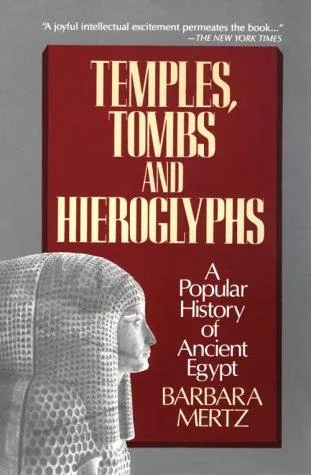
More about the spirit world

 76
76

More about the spirit world
Sculthorp's "More About the Spirit World" attempts a systematic cataloguing of the ethereal, a task fraught with inherent difficulties. The book’s strength lies in its structured approach, attempting to map unseen realms with a quasi-scientific rigor uncommon in the genre. The chapter discussing the 'etheric double' and its relationship to physical vitality offers a particularly concrete point of analysis, moving beyond vague spiritualist pronouncements. However, the text occasionally falters under the weight of its own ambition. The descriptions of various spirit hierarchies, while detailed, can become repetitive, and the author's certainty in delineating these planes sometimes feels more like assertion than demonstrable fact. The 1982 publication date is evident in its slightly dated terminology, though the core concepts remain relevant. Ultimately, it serves as a valuable, if somewhat dry, manual for the determined student of the occult.
📝 Description
76
### What It Is Frederick C. Sculthorp's "More About the Spirit World," first published in 1982, presents an extended exploration of ethereal realms and their inhabitants. It moves beyond introductory concepts, offering a more detailed examination of the unseen dimensions that coexist with our physical reality. The work acts as a guide for those seeking to understand the principles and entities described within spiritualist and occult traditions. It posits a universe where consciousness is not confined to biological forms, detailing various states of being and the mechanics of spiritual interaction. The book aims to demystify subjects often relegated to folklore or abstract philosophy.
### Who It's For This volume is intended for serious students of the occult, spiritualism, and comparative religion who have already engaged with foundational texts. Readers should possess a degree of familiarity with concepts such as astral projection, mediumship, and the nature of consciousness beyond the physical. It is for individuals who approach these subjects with an analytical mindset, seeking structured information rather than purely anecdotal accounts. Those interested in the philosophical underpinnings of spiritual phenomena and the potential for inter-dimensional communication will find its content particularly relevant. It is not for the casual reader but for the dedicated investigator.
### Historical Context Published in 1982, "More About the Spirit World" emerged during a period of renewed interest in esoteric subjects, following the counter-cultural explorations of the 1960s and 70s. This era saw a proliferation of occult literature, often engaging with both ancient traditions and modern psychological theories. Sculthorp's work can be seen in dialogue with the continuing influence of Theosophy, as well as the burgeoning field of New Age thought. It offered a more systematic approach compared to some of the more channelled or impressionistic works popular at the time. While not explicitly tied to a specific academic debate, it contributed to the broader cultural discourse on consciousness, survival of death, and the nature of reality that persisted throughout the late 20th century, influenced by figures like Helena Blavatsky and later Arthur C. Clarke's speculative fiction exploring consciousness.
### Key Concepts The book systematically discusses various planes of existence, differentiating them based on vibratory rates and the nature of their inhabitants. It elaborates on the concept of the 'astral body' or 'subtle body,' detailing its structure and function in relation to the physical form and its role in experiences like out-of-body travel. Sculthorp addresses the hierarchy of spiritual entities, from elemental spirits to more advanced intelligences, and the principles governing their interaction with the material world. A significant focus is placed on the mechanics of mediumship and clairvoyance, explaining these not as mere psychic abilities but as manifestations of natural laws operating on different planes. The work also explores the ethical considerations and dangers inherent in spiritual exploration.
💡 Why Read This Book?
• Gain a structured understanding of inter-dimensional frameworks, moving beyond anecdotal spiritualism to explore Sculthorp's specific models of spiritual planes and their inhabitants as presented in his detailed classifications. • Learn about the mechanics of subtle bodies, particularly the 'astral body,' and its described role in phenomena like out-of-body experiences, offering practical theoretical insights. • Investigate the principles of spiritual interaction and mediumship as natural laws, examining Sculthorp's specific framework for how entities communicate across planes.
⭐ Reader Reviews
Honest opinions from readers who have explored this book.
❓ Frequently Asked Questions
What is the primary focus of Frederick C. Sculthorp's "More About the Spirit World"?
The book focuses on providing a detailed and systematic exploration of the spirit world, its various planes of existence, and the entities that inhabit them, aiming to demystify spiritual phenomena for serious students.
When was "More About the Spirit World" first published?
Frederick C. Sculthorp's "More About the Spirit World" was first published in 1982.
Who would benefit most from reading this book?
Serious students of the occult, spiritualism, and comparative religion who have a foundational knowledge and seek a more structured, analytical approach to understanding the spirit world will benefit most.
Does the book discuss practical techniques for spiritual exploration?
While primarily theoretical, the book discusses the principles behind phenomena like mediumship and clairvoyance, offering a framework for understanding rather than explicit step-by-step guides.
What is the 'astral body' as described by Sculthorp?
Sculthorp describes the 'astral body' as a subtle or ethereal counterpart to the physical body, detailing its structure and function in spiritual experiences such as out-of-body travel.
How does this book relate to Theosophy?
Published in the 1980s, the work engages with similar concepts to Theosophy, such as planes of existence and subtle bodies, contributing to the broader esoteric discourse influenced by figures like Blavatsky.
🔮 Key Themes & Symbolism
Planes of Existence
The work meticulously delineates various levels of reality beyond the physical, assigning them distinct vibratory frequencies and describing the nature of consciousness and entities that reside within each. Sculthorp posits a hierarchical structure, moving from the purely physical to increasingly rarefied spiritual states. This systematic approach aims to provide a coherent map for the aspiring spiritual explorer, differentiating these planes based on their inherent qualities and the types of experiences possible within them.
The Astral Body
A central concept is the 'astral body,' Sculthorp's term for the non-physical vehicle of consciousness. The book details its composition, its separation from the physical form during altered states, and its function as the medium for experiences such as dreams, visions, and out-of-body travel. Understanding the astral body is presented as key to comprehending spiritual perception and interaction, forming a bridge between the material and immaterial worlds.
Spiritual Entities and Hierarchy
Sculthorp categorizes and describes a range of spiritual beings, from elemental forces to more advanced intelligences. The text outlines a perceived hierarchy governing these entities and their interactions with the human realm. This classification provides a framework for understanding the diverse phenomena reported in spiritualist literature and occult traditions, suggesting a structured cosmos rather than chaotic spiritual activity.
Mechanics of Mediumship
The book studies the operational principles of mediumship and clairvoyance, presenting them not as supernatural gifts but as natural faculties that can be understood and potentially developed. Sculthorp explains the processes by which spiritual information is perceived and transmitted, emphasizing the role of the medium's own subtle bodies and their alignment with specific spiritual frequencies.
💬 Memorable Quotes
Direct passages from the work, attributed to the author.
“The spirit world is not a place of reward or punishment, but a state of being governed by natural law.”
— This statement reframes the afterlife from a moralistic judgment to a consequence of one's own energetic state and spiritual development, aligning with principles of karma and spiritual evolution.
“Each plane of existence possesses a unique vibratory rate, determining the nature of its inhabitants and phenomena.”
— This highlights Sculthorp's systematic approach, suggesting that understanding these 'vibratory rates' is crucial for mapping the different levels of reality and the consciousness that operates within them.
“The astral body acts as the vehicle for consciousness when the physical senses are dormant.”
— This emphasizes the functional role of the astral body, positioning it as the essential component for experiencing non-physical realities and consciousness independent of the physical form.
“True spiritual progress involves the refinement of one's own energetic structure.”
— This points to an internal, rather than external, focus for spiritual advancement, suggesting that personal energetic transformation is the primary means of achieving higher states of being.
“Interactions with spiritual entities are governed by principles of resonance and attraction.”
— This interpretation suggests that encounters with spirits are not random but based on sympathetic vibrations and shared energetic signatures, implying a degree of control or influence through conscious energetic alignment.
🌙 Esoteric Significance
Tradition
This work aligns broadly with the Western Esoteric Tradition, particularly drawing from Spiritualism and Theosophical concepts regarding planes of existence and subtle bodies. It departs from purely mystical or magical traditions by attempting a more systematic, almost descriptive, classification of the spirit world, akin to mapping an undiscovered territory. Its focus on the mechanics of spiritual interaction and consciousness beyond the physical echoes late 19th and early 20th-century attempts to rationalize and codify occult phenomena.
Symbolism
While not heavily reliant on overt symbolic language, the book's conceptual framework itself functions symbolically. The 'planes of existence' represent stages of consciousness and spiritual evolution, with higher planes symbolizing greater purity and awareness. The 'astral body' symbolizes the soul's vehicle for navigating these non-physical realms, while the 'hierarchy of entities' can be seen as representing the ordered structure of the cosmos and the different levels of spiritual intelligence.
Modern Relevance
Contemporary practitioners of astral projection, lucid dreaming, and energy healing often find Sculthorp's systematic approach to subtle bodies and inter-dimensional mechanics a valuable reference. His work informs discussions within modern spiritualist communities and among researchers of consciousness studies who seek detailed theoretical models. Thinkers exploring comparative cosmology and the nature of consciousness beyond neuroscience may find his classification of spiritual realms and entities a useful, albeit dated, point of departure.
👥 Who Should Read This Book
• Students of Spiritualism seeking a systematic overview of spirit world mechanics and inhabitants, moving beyond anecdotal accounts to a structured theoretical framework. • Investigators of consciousness and altered states who are interested in detailed descriptions of the astral body and its functions in non-physical experiences. • Comparative religion scholars interested in late 20th-century esoteric literature that attempts to map spiritual realities and categorize non-physical entities.
📜 Historical Context
Frederick C. Sculthorp's "More About the Spirit World" emerged in 1982, a period characterized by a resurgence of interest in esoteric philosophy and the occult, following the more experimental spiritual explorations of the preceding decades. The intellectual climate was influenced by the enduring legacy of Theosophy, pioneered by Helena Blavatsky in the late 19th century, and the burgeoning New Age movement, which sought to integrate spiritual concepts with psychological and scientific ideas. Sculthorp's work offered a more structured and detailed exposition of spiritualist tenets, aiming for a systematic understanding of non-physical realms. While not directly engaging with academic debates, it contributed to the broader cultural discourse on consciousness and the nature of reality, alongside speculative fiction authors like Arthur C. Clarke who explored similar themes. The book stood as a more didactic counterpoint to the more intuitive or channelled material becoming popular, seeking to establish a coherent framework for understanding spiritual phenomena.
📔 Journal Prompts
The vibratory rate of different planes, as described by Sculthorp.
The function of the astral body in non-physical perception.
Sculthorp's classification of spiritual entities.
Principles of resonance in spiritual interaction.
The concept of spiritual laws governing the ethereal realms.
🗂️ Glossary
Astral Body
A non-physical counterpart to the physical body, considered the vehicle of consciousness during sleep, dreams, and out-of-body experiences. It is described as existing on a different vibratory plane.
Planes of Existence
Distinct levels or dimensions of reality, each characterized by a unique vibratory rate, influencing the nature of consciousness and entities that inhabit them. These range from the physical to increasingly subtle spiritual realms.
Vibratory Rate
The fundamental frequency at which matter and consciousness oscillate. Sculthorp posits that differences in vibratory rates determine the nature of different planes and the beings within them.
Spiritual Entities
Beings that inhabit the spirit world, ranging from elemental forces to more advanced intelligences. Their nature and function are described according to their plane of existence and vibratory rate.
Mediumship
The practice or faculty of acting as an intermediary between the physical world and the spirit world, facilitating communication. Sculthorp explains this as a natural process governed by specific principles.
Etheric Double
Often used interchangeably with astral body or subtle body, this refers to the energetic or spiritual counterpart of the physical organism, vital for maintaining life and consciousness.
Resonance
The principle by which entities or planes of similar vibratory rates attract or interact with each other. It explains the basis of communication and influence within the spirit world.
🔮 Readers Also Liked
Browse all →








More by Frederick C. Sculthorp
All books →
More Free Occult Philosophy Books
View all →