Eerie ESP
 81
81

Eerie ESP
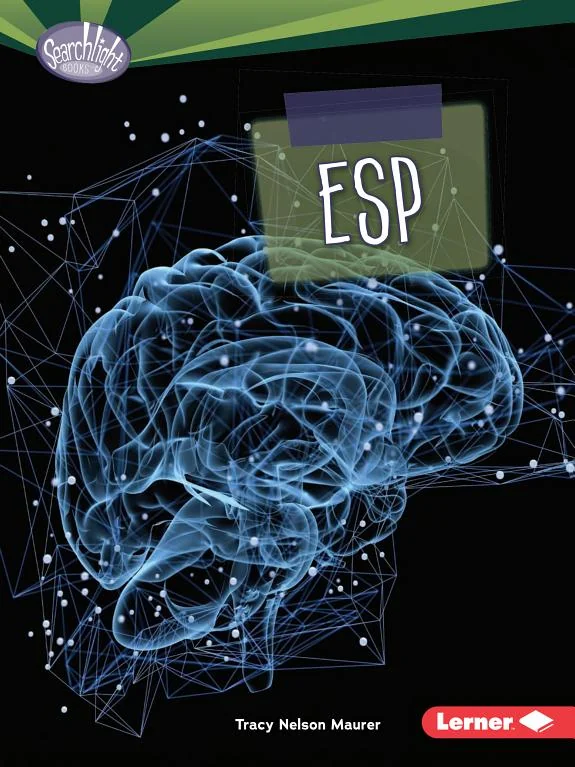
Tracy Maurer’s *Eerie ESP* attempts to catalogue the diverse claims within extrasensory perception, from the structured experiments with Zener cards to the more speculative realms of remote viewing. The book's strength lies in its comprehensive overview, touching upon a wide array of phenomena that have historically captivated and confounded investigators. Maurer presents these claims with a measured tone, providing context without overt endorsement or dismissal. However, the work occasionally feels like an exhaustive inventory rather than a critical analysis. For instance, the section discussing the historical use of Zener cards, while informative, could benefit from a deeper engagement with the statistical criticisms and methodological debates that have plagued such research since the mid-20th century. The author’s treatment of remote viewing, while detailing its operational parameters, stops short of offering a robust framework for evaluating its efficacy beyond anecdotal reports. Despite these limitations, *Eerie ESP* serves as a valuable primer for those new to the subject, offering a broad sweep of concepts and historical attempts to understand them. It is a useful compendium for anyone seeking to orient themselves within the complex landscape of psychic claims.
📝 Description
81
Tracy Maurer's 2018 book Eerie ESP examines claims of extrasensory perception.
Published in 2018, Eerie ESP by Tracy Maurer systematically examines claims surrounding extrasensory perception. The book moves beyond anecdotal accounts to dissect the methodologies and theories proposed by proponents of ESP. It covers abilities such as telepathy, precognition, remote viewing, and psychometry. Maurer's objective is to provide a structured overview of a field often dominated by sensationalism. She seeks to ground the discussion in historical and theoretical frameworks that have attempted to explain these purported psychic abilities.
This work is for individuals seriously interested in parapsychology, psychic phenomena, and the history of esoteric thought. It suits skeptics who remain open-minded, as well as those already investigating the boundaries of consciousness and perception. Researchers of anomalous phenomena and students of the occult will find Maurer's structured approach valuable for understanding ESP claims without accepting unsubstantiated dogma. The book also speaks to those interested in the philosophical debates concerning consciousness.
The study of ESP gained momentum with the rise of spiritualism and psychical research in the late 19th century. Organizations like the Society for Psychical Research, founded in 1882, initially focused on mediums and séances. The field evolved with controlled experiments, notably involving Zener cards, and figures like J.B. Rhine at Duke University helped popularize the term 'ESP' through extensive statistical studies. Maurer's 2018 book engages with this historical lineage, situating modern ESP claims within this long tradition of investigation into phenomena beyond conventional understanding.
💡 Why Read This Book?
• Understand the historical methodology behind testing psychic abilities, specifically through the use of Zener cards, a concept explored in detail, providing insight into early parapsychological research. • Gain clarity on the operational principles of remote viewing, a technique detailed by Maurer, allowing for a more informed perspective on its purported capabilities and applications. • Discover the foundational concepts of clairvoyance as presented in the book, offering a structured understanding of how information is claimed to be perceived beyond the five senses.
⭐ Reader Reviews
Honest opinions from readers who have explored this book.
❓ Frequently Asked Questions
What is the primary focus of Tracy Maurer's Eerie ESP?
Eerie ESP primarily focuses on cataloging and discussing claims of extrasensory perception (ESP), examining phenomena like remote viewing and the use of Zener cards. It aims to provide a structured overview of these purported abilities.
When was Eerie ESP first published?
Eerie ESP by Tracy Maurer was first published in 2018, placing it within contemporary discussions of parapsychology and consciousness studies.
Does Eerie ESP endorse psychic phenomena?
The book presents information on ESP claims in a measured tone, aiming for a comprehensive overview rather than outright endorsement or dismissal, allowing readers to form their own conclusions.
What specific methods of ESP does the book discuss?
The book discusses a range of ESP methods, including remote viewing, clairvoyance, telepathy, and precognition, often referencing historical testing tools like Zener cards.
Who would benefit most from reading Eerie ESP?
Individuals interested in parapsychology, the history of consciousness research, skeptical inquiry into psychic phenomena, and those seeking a structured introduction to ESP concepts will find this book beneficial.
What is the significance of Zener cards in the context of Eerie ESP?
Zener cards are presented as a classic tool used in early parapsychological research to quantitatively test abilities like telepathy and clairvoyance, a historical aspect explored within the book.
🔮 Key Themes & Symbolism
The Phenomenon of ESP
The book thoroughly examines the concept of extrasensory perception, defining it as the ability to acquire information not obtainable through the known senses. It explores various manifestations, from telepathy and clairvoyance to precognition and psychometry. Maurer grounds these discussions by referencing historical research, particularly the use of Zener cards, and modern techniques like remote viewing, aiming to provide a clear taxonomy of purported psychic abilities and the theoretical frameworks that attempt to explain them.
Historical Research Methods
A significant portion of Eerie ESP is dedicated to the historical methods employed in studying psychic phenomena. This includes detailed discussions on the standardized testing procedures involving Zener cards, a staple of early parapsychological research in institutions like Duke University. The book also touches upon the evolution of research methodologies, from controlled card-guessing experiments to more complex protocols used in remote viewing studies initiated by organizations like SRI.
Remote Viewing and Clairvoyance
The work offers an in-depth look at specific ESP abilities, with a notable focus on remote viewing and clairvoyance. Remote viewing is presented as a disciplined approach to perceive distant or obscured targets, often explored within government-funded research projects. Clairvoyance, the broader ability to perceive hidden information, is discussed in relation to its various forms and the challenges in distinguishing it from other psychic phenomena or conventional perception.
Skepticism and Evidence
While detailing the claims and research surrounding ESP, Eerie ESP maintains a balanced perspective, acknowledging the inherent skepticism and scientific scrutiny applied to these subjects. It navigates the complex terrain of evidence, discussing both the anecdotal accounts and the experimental data that proponents and critics alike have used. The book implicitly encourages critical evaluation by presenting the historical context and methodological approaches to understanding these often controversial claims.
💬 Memorable Quotes
Direct passages from the work, attributed to the author.
“The use of Zener cards provided a statistical framework for early ESP research.”
— This highlights how standardized tools like Zener cards were crucial in attempting to move psychic research from anecdotal observation to a more quantifiable scientific discipline.
“Remote viewing protocols aimed to bypass conventional sensory channels.”
— This statement emphasizes the core objective of remote viewing research: to investigate the possibility of consciousness perceiving information without relying on known physical senses.
“Claims of ESP challenge conventional materialistic understandings of consciousness.”
— This points to the philosophical implications of psychic phenomena, suggesting that their potential existence necessitates a re-evaluation of how we understand the mind and its relationship to the physical world.
“The history of psychical research is marked by evolving methodologies.”
— This acknowledges that the study of the paranormal is not static, but rather a field that has continuously adapted its experimental designs and theoretical approaches over time.
“Distinguishing between clairvoyance and other perceptual inputs remains a challenge.”
— This reflects the ongoing difficulty in parapsychology to isolate and definitively prove psychic abilities, as they can often be confused with ordinary perception or subtle environmental cues.
🌙 Esoteric Significance
Tradition
While not explicitly tied to a single esoteric lineage, *Eerie ESP* engages with themes central to Western esotericism, particularly those concerning the nature of consciousness and its potential to transcend physical limitations. It touches upon concepts explored within Hermeticism and broader metaphysical traditions that posit an immaterial realm or subtle energies influencing perception. The book fits within the modern esoteric landscape by examining phenomena often discussed in New Age and occult circles, providing a structured overview of claims that have long been part of esoteric exploration.
Symbolism
The Zener cards, with their simple geometric symbols (circle, cross, waves, square, star), serve as a primary motif. In esoteric traditions, geometric shapes often represent fundamental cosmic principles or states of consciousness. The circle can symbolize unity or spirit, the cross represents material manifestation or balance, waves can denote the flow of energy or consciousness, the square signifies stability or the material world, and the star can indicate divine influence or aspiration. Their use in ESP testing imbues them with potential symbolic weight related to the transmission of consciousness.
Modern Relevance
The concepts explored in *Eerie ESP*, particularly remote viewing and the broader study of consciousness, continue to resonate in contemporary esoteric and New Age practices. Thinkers and practitioners interested in consciousness studies, bioenergetics, and subtle energy fields often draw upon the historical research and phenomena documented in works like Maurer's. Modern developments in quantum physics are sometimes invoked (though often speculatively) to provide theoretical underpinnings for such abilities, keeping the discussion alive within circles exploring the frontiers of mind and reality.
👥 Who Should Read This Book
• Aspiring parapsychologists: Those looking to understand the foundational concepts, historical research methods (like Zener card experiments), and key phenomena (such as remote viewing) in the study of ESP. • Skeptical investigators of the paranormal: Individuals interested in critically examining claims of psychic abilities, seeking a structured overview of the evidence and methodologies that have been employed. • Students of consciousness studies: Readers exploring the boundaries of human perception and the mind-body problem, who wish to learn about empirical and theoretical approaches to extrasensory perception.
📜 Historical Context
Published in 2018, Tracy Maurer's *Eerie ESP* enters a field with a rich, often contentious, history. The formal study of psychic phenomena gained momentum in the late 19th century with the establishment of organizations like the Society for Psychical Research in 1882, attracting figures from scientific and academic circles. Early research focused on spiritualism and mediumship, but by the mid-20th century, the focus shifted towards more quantifiable methods, heavily influenced by J.B. Rhine's work at Duke University, which popularized the term 'ESP' and utilized tools like Zener cards. This period also saw the rise of competing explanations, including fraud, sensory leakage, and psychological biases, debated fiercely by researchers and skeptics alike. Maurer’s work engages with this lineage, exploring how concepts and research paradigms, such as those developed by Rhine or later investigated in government-sponsored remote viewing projects, continue to inform contemporary discussions, even as mainstream science remains largely unconvinced.
📔 Journal Prompts
The historical use of Zener cards in ESP testing.
How remote viewing protocols attempt to bypass conventional sensory input.
Reflect on the definition and potential implications of clairvoyance.
The relationship between ESP claims and materialistic paradigms.
Consider the challenges in distinguishing genuine psychic perception from other forms of information gathering.
🗂️ Glossary
Extrasensory Perception (ESP)
The purported ability to acquire information through means that do not involve the known physical senses. It encompasses phenomena like telepathy, clairvoyance, and precognition.
Remote Viewing
A specific technique developed for psychic espionage or information gathering, aiming to perceive distant or unseen targets through non-sensory means.
Zener Cards
A set of cards used in early parapsychological research, featuring five simple symbols (circle, cross, waves, square, star) for testing telepathy and clairvoyance.
Clairvoyance
The alleged ability to perceive objects, events, or information that is not detectable by the normal senses, often referring to seeing things remotely or in the future.
Telepathy
The direct communication of thoughts or feelings between individuals without the use of the known senses.
Precognition
The alleged ability to perceive or know future events before they happen.
Psychical Research
The interdisciplinary field devoted to the study of purported psychic phenomena and other paranormal claims, often employing scientific methodologies.
This book appears in 1 collection
🔮 Readers Also Liked
Browse all →









From the “Extrasensory Perception” Collection
View all →






More Free Occult Philosophy Books
View all →