I Ching in Plain English

 81
81

I Ching in Plain English
George Hulskramer’s "I Ching in Plain English" tackles the formidable task of rendering the *Book of Changes* comprehensible, a feat many have attempted with varying success since its ancient origins. The strength of this 2017 publication lies in its deliberate clarity; Hulskramer strips away the dense layering of commentary that can obscure the text's practical wisdom for newcomers. He succeeds in making the foundational concepts of hexagrams and their associated judgments accessible, avoiding the esoteric jargon that often alienates those new to Chinese philosophy.
A notable limitation, however, is that in its pursuit of simplicity, some of the poetic nuance and layered symbolic depth found in more traditional translations, like Richard Wilhelm's, may feel diminished. For instance, the interpretation of Hexagram 1, "The Creative," while clear, might lack the profound cosmic resonance that earlier scholars found within its imagery of the dragon. Nevertheless, the book offers a solid foundation for understanding the *I Ching*'s structure and its utility as a tool for self-reflection. For readers seeking an unadorned introduction, "I Ching in Plain English" provides a functional and direct pathway into this enduring oracle.
📝 Description
81
George Hulskramer's 'I Ching in Plain English' was published in 2017.
George Hulskramer's "I Ching in Plain English," published in 2017, aims to make the ancient Chinese oracle, the *Book of Changes*, understandable for a modern readership. The book breaks down the complex hexagrams and their associated judgments, focusing on the philosophical ideas and practical uses of the *I Ching* without relying on academic jargon. It explains the 64 hexagrams, helping readers interpret life's changes and patterns.
This book is for anyone wanting a straightforward introduction to the *I Ching*, especially those intimidated by other translations. It appeals to readers interested in divination, self-awareness, and the cyclical nature of events. Newcomers and those with some familiarity with the *I Ching* can benefit from its direct commentary. Students of philosophy and comparative religion may also find its clear language useful.
The *I Ching* has a history spanning millennia, with roots often traced to figures like King Wen and Duke of Zhou, and later commentaries by Confucius. Hulskramer's 2017 rendition appears during a period of renewed interest in Eastern philosophies and divination, echoing earlier Western engagement exemplified by Carl Jung's study of synchronicity. This work connects to a long tradition of scholarship and practice, building on earlier translations by scholars like Richard Wilhelm and James Legge.
💡 Why Read This Book?
• Gain a clear, accessible understanding of the 64 hexagrams and their associated judgments, as presented in Hulskramer's 2017 rendition, making the *I Ching* less intimidating for beginners. • Learn to apply the *I Ching*'s principles of change and alignment to personal circumstances, moving beyond mere prediction to a framework for self-awareness and mindful action. • Explore the foundational concepts of yin and yang lines and hexagram formation, understanding the mechanical basis of this ancient Chinese oracle without getting lost in complex scholarly exegesis.
⭐ Reader Reviews
Honest opinions from readers who have explored this book.
❓ Frequently Asked Questions
What is the primary goal of George Hulskramer's 'I Ching in Plain English'?
The book's main goal is to demystify the ancient Chinese text known as the *I Ching*, making its philosophical concepts and divination methods understandable to a modern audience unfamiliar with its traditional interpretations.
Who is the intended audience for this version of the I Ching?
It is primarily for beginners or those intimidated by more complex academic or esoteric translations. Readers interested in self-reflection, Eastern philosophy, and practical divination will find it useful.
When was 'I Ching in Plain English' first published?
George Hulskramer's "I Ching in Plain English" was first published in 2017, offering a contemporary perspective on the ancient text.
Does this book cover the historical commentaries on the I Ching?
While acknowledging the historical context, Hulskramer focuses on presenting the core meanings and applications of the hexagrams in a simplified manner, rather than delving deeply into the scholarly history of commentaries.
Is this book suitable for experienced I Ching practitioners?
Experienced practitioners might find it offers a different, more direct perspective. However, those accustomed to the depth of translations like Richard Wilhelm's may find it less comprehensive in symbolic nuance.
What is a hexagram in the context of the I Ching?
A hexagram is a figure composed of six stacked horizontal lines, where each line is either 'broken' (yin) or 'solid' (yang). The *I Ching* contains 64 such hexagrams, each with associated meanings and advice.
🔮 Key Themes & Symbolism
The Dynamics of Change
The core of the *I Ching*, as presented in Hulskramer's accessible rendition, is the understanding that all phenomena are in a state of flux. The book elucidates how the 64 hexagrams represent different stages and types of change. Readers learn to recognize the patterns of transition, from beginnings to culminations and declines, encouraging a mindset that embraces impermanence rather than resisting it. This theme is crucial for applying the oracle's wisdom to life's unfolding circumstances.
Self-Reflection and Guidance
Beyond mere prediction, "I Ching in Plain English" emphasizes the oracle's role as a tool for introspection. Hulskramer interprets the judgments associated with each hexagram not as absolute decrees, but as insights into potential outcomes and advice for navigating specific situations. By understanding the energies represented by the yin and yang lines and their combinations, readers are guided to examine their own actions, motivations, and the underlying dynamics of their challenges.
Yin and Yang Principles
The fundamental building blocks of the *I Ching*, yin (broken lines) and yang (solid lines), are presented clearly. Hulskramer explains how these dualistic forces interact and combine to form the trigrams and subsequently the 64 hexagrams. This section clarifies how the interplay between passive/receptive (yin) and active/creative (yang) energies shapes the interpretations and advice offered by the oracle, providing a foundational understanding of Chinese cosmology.
Accessible Oracle Practice
This work is dedicated to making the practice of consulting the *I Ching* straightforward. Hulskramer's approach simplifies the process of casting hexagrams and understanding the resulting text. The focus is on practical application, enabling individuals to use the book as a reliable guide for decision-making and personal growth, clarifying a practice that has historically been perceived as complex or arcane.
💬 Memorable Quotes
Direct passages from the work, attributed to the author.
“Change is the only constant; understanding its flow is key.”
— This aphorism captures the essence of the *I Ching*'s philosophy. It suggests that rather than fearing or resisting change, wisdom lies in recognizing its presence and learning to adapt one's actions and perspective to align with prevailing circumstances.
“The hexagrams offer perspectives, not prophecies.”
— This highlights the interpretive nature of the *I Ching*. It functions as a mirror reflecting potential paths and internal states, guiding the user toward informed choices rather than dictating a fixed future.
“Wisdom involves discerning the right action for the present moment.”
— This points to the practical utility of the oracle. It encourages users to consult the *I Ching* not just for foresight, but for guidance on how to act effectively and appropriately given the current energies and situation.
“Each line's position within the hexagram modifies its meaning.”
— This emphasizes the nuanced structure of the *I Ching*. It indicates that the specific placement of yin and yang lines within the six levels of a hexagram significantly impacts its overall interpretation and advice.
“The oracle helps reveal hidden dynamics.”
— This interpretation underscores the *I Ching*'s function as a tool for uncovering subconscious patterns or subtle influences that may be affecting a situation, thereby enhancing self-awareness.
🌙 Esoteric Significance
Tradition
The *I Ching* holds a unique position, bridging Confucian and Taoist thought within Chinese philosophy, and serving as a foundational text for many esoteric traditions globally. Its use in divination aligns it with Hermetic principles of correspondence and the idea that the microcosm reflects the macrocosm. In Western esotericism, it's often viewed as a system of cosmic law and cyclical change, influencing practices that seek harmony with universal patterns.
Symbolism
Central symbols include the Yin (broken line, representing receptivity, darkness, the feminine) and Yang (solid line, representing activity, light, the masculine). These combine to form trigrams (three-line figures) and hexagrams (six-line figures). The 64 hexagrams symbolize archetypal situations and transformations, such as 'The Creative' (Heaven) and 'The Receptive' (Earth), offering symbolic maps of universal processes and human experience.
Modern Relevance
Contemporary thinkers and practitioners in fields ranging from psychology (echoing Jung's interest) to systems theory and even game design draw upon the *I Ching*'s principles of dynamic change and interconnectedness. Its structured yet flexible approach to understanding complex situations continues to resonate with those seeking frameworks for navigating uncertainty and fostering personal growth in a rapidly evolving world.
👥 Who Should Read This Book
• Aspiring students of Chinese philosophy and divination seeking an accessible entry point to the *I Ching* without the density of older scholarly translations. • Individuals interested in self-reflection and personal growth who want to use a structured oracle for insight into life's challenges and decisions. • Comparative religion scholars or cultural enthusiasts looking to understand a foundational text of East Asian thought and its global influence.
📜 Historical Context
George Hulskramer's "I Ching in Plain English," published in 2017, emerges within a long lineage of Western engagement with the ancient Chinese text. The *I Ching*'s journey into Western consciousness gained significant momentum in the 20th century, notably through Richard Wilhelm's German translation (1924), which was later translated into English by Cary Baynes and introduced by Carl Jung. Jung's foreword, exploring concepts of synchronicity, significantly shaped the Western esoteric reception of the *I Ching*. Hulskramer's work can be seen as part of a contemporary trend to make these profound philosophical tools more accessible, moving beyond the denser academic scholarship of figures like James Legge or the philosophical interpretations of Confucianism. It arrives in an era where interest in mindfulness, divination, and Eastern philosophies is widespread, yet distinct from the earlier, more formal academic or theosophical approaches.
📔 Journal Prompts
The transformation depicted in Hexagram 24, 'Return'.
Reflecting on the interplay of Yin and Yang lines.
The concept of 'The Creative' as represented by Hexagram 1.
How the advice for Hexagram 12, 'Stagnation', applies to current obstacles.
Interpreting a personal hexagram reading.
🗂️ Glossary
Hexagram
A figure composed of six stacked horizontal lines, each either solid (yang) or broken (yin). The *I Ching* consists of 64 unique hexagrams, each representing a specific situation or stage of development.
Yin
In the *I Ching*, represented by a broken line (--) it symbolizes receptivity, passivity, darkness, the feminine, and the earth.
Yang
In the *I Ching*, represented by a solid line (—), it symbolizes activity, creativity, light, the masculine, and heaven.
Trigram
A figure composed of three lines (yin or yang). Eight basic trigrams form the building blocks for the 64 hexagrams.
Judgment
The accompanying text or commentary for each hexagram, offering advice or interpretation related to the situation it represents.
Line Text
Specific commentary associated with each individual line (from bottom to top) within a hexagram, offering more detailed insights into the unfolding situation.
Oracle
A source of wisdom or prophecy, often consulted for guidance. In this context, the *I Ching* is used as an oracle.
🔮 Readers Also Liked
Browse all →








More by George Hulskramer
All books →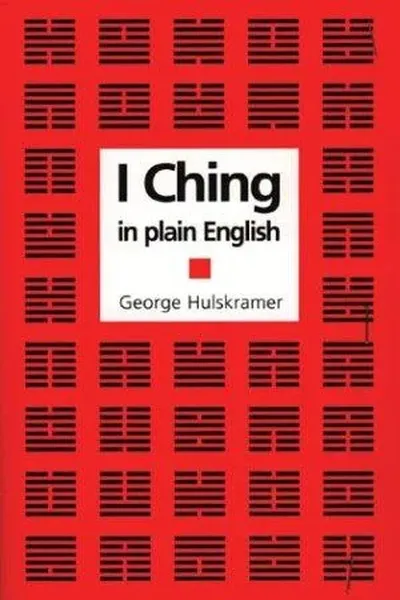
More Free Occult Philosophy Books
View all →