Biblical theology
 82
82

Biblical theology
Geerhardus Vos’s *Biblical Theology* offers a dense, yet rewarding, examination of theological progression within Scripture. Its strength lies in its meticulous tracing of covenantal continuity from Genesis to Revelation, a perspective that provides a cohesive theological framework often missing in more atomistic approaches. Vos’s treatment of the Davidic covenant, for instance, and its eschatological implications, is particularly illuminating, showing how Old Testament promises find their ultimate meaning in Christ. However, the work’s academic rigor can also be its limitation; the prose is often dense and assumes a familiarity with theological discourse, making it less accessible to the casual reader. The section on the Mosaic covenant, while thorough, might benefit from clearer signposting for those less versed in the intricacies of Levitical law. Ultimately, Vos provides a foundational text for understanding biblical theology as a unified, unfolding narrative, essential for serious theological study.
📝 Description
82
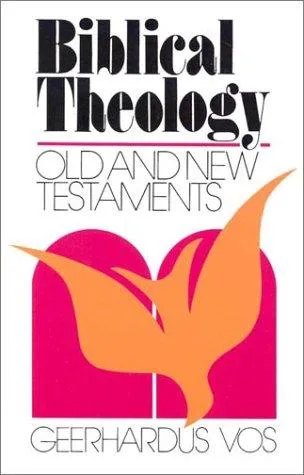
Geerhardus Vos's Biblical Theology, first published in 1959, analyzes the organic unfolding of God's redemptive plan.
This book examines the development of theological concepts throughout the biblical narrative, moving beyond a simple historical survey. It analyzes how earlier covenants and prophecies find deeper meaning in later stages of revelation, particularly in the New Testament. Vos traces the interconnectedness of these elements, demonstrating how the entire Bible points towards Christ.
The volume is intended for serious students of theology, biblical scholars, and those interested in the historical development of Christian doctrine. It appeals to readers who seek a scholarly understanding of how biblical themes cohere. Those with a background in systematic theology will find it offers a crucial diachronic perspective, complementing synchronic studies.
Vos's work stands within a tradition of theological interpretation that seeks to understand the Bible not just as a collection of historical documents but as a unified, divinely ordered revelation. This approach, often termed 'biblical theology,' emphasizes the organic growth of divine truth from Genesis to Revelation. It contrasts with purely historical critical methods by focusing on the internal coherence and theological trajectory of Scripture, finding Christ as the central thread connecting all its parts. This perspective views the biblical text as a testament to a singular, developing divine plan.
💡 Why Read This Book?
• Gain a comprehensive understanding of covenant theology, learning how concepts like the Abrahamic covenant evolve and find fulfillment, a perspective vital for grasping biblical unity. • Appreciate the typological connections between Old Testament figures and events (e.g., Moses, the Passover) and their New Testament antitypes, enriching your interpretation of both testaments. • Grasp Geerhardus Vos's specific methodology for tracing theological development across biblical history, offering a unique scholarly lens distinct from purely systematic or historical-critical approaches.
⭐ Reader Reviews
Honest opinions from readers who have explored this book.
❓ Frequently Asked Questions
When was Geerhardus Vos's Biblical Theology first published?
Geerhardus Vos's *Biblical Theology* was first published in 1959, making it a mid-20th-century contribution to the field of theological studies.
What is the central argument of Biblical Theology by Vos?
The central argument is that the Bible presents a unified, organic unfolding of God's redemptive plan, with later revelations building upon and fulfilling earlier ones, particularly through the lens of covenant.
How does Vos's work relate to covenant theology?
Vos's work is foundational to covenant theology, meticulously tracing the development and continuity of covenants (Abrahamic, Mosaic, Davidic, New) throughout Scripture.
Is Biblical Theology suitable for beginners?
While foundational, the book's dense academic style and theological terminology make it more suitable for students with some prior theological background rather than absolute beginners.
What distinguishes Biblical Theology from systematic theology?
Biblical Theology focuses on the historical development and progression of theological themes within the biblical narrative (diachronic), whereas systematic theology organizes doctrines thematically without primary emphasis on their unfolding in time (synchronic).
What is 'progressive revelation' as discussed by Vos?
Progressive revelation, as explored by Vos, refers to the concept that God's self-disclosure and plan of salvation were revealed incrementally throughout biblical history, culminating in Christ.
🔮 Key Themes & Symbolism
Covenantal Progression
Vos meticulously demonstrates how biblical history is structured by a series of divine covenants—Abrahamic, Mosaic, Davidic, and New. He argues that these are not isolated agreements but part of a unified, unfolding plan of redemption. Each covenant builds upon the previous, clarifying and expanding God's promises, culminating in the new covenant established through Christ. This perspective highlights the organic unity of Scripture, showing how the Old Testament anticipates and finds its ultimate meaning in the New Testament.
Typological Fulfillment
A core element of Vos's method is the identification and analysis of types and antitypes. He shows how persons, events, and institutions in the Old Testament foreshadow or prefigure Christ and the realities of the New Covenant. For example, the Passover lamb is presented as a type of Christ, the ultimate sacrifice. Understanding these typological relationships is crucial for Vos's argument that the entire Bible points towards Christ as its central theme and fulfillment.
Redemptive Historical Unity
Vos's work emphasizes the concept of redemptive history, viewing biblical events not as isolated incidents but as integral parts of God's overarching plan to redeem humanity. He traces the continuity of this plan from creation through the fall, the covenants, the incarnation, and the consummation. This historical-theological approach provides a framework for understanding the Bible as a coherent narrative of God's saving work throughout time.
The Person of Christ
Central to Vos's Biblical Theology is the person and work of Jesus Christ. He argues that Christ is the focal point of all biblical revelation and the fulfillment of all Old Testament promises and types. From the seed of the woman in Genesis to the Son of David in the Psalms, Vos interprets biblical figures and prophecies as ultimately pointing to Christ. The book thus presents Christ not merely as a historical figure but as the divine agent of redemption woven throughout the entire biblical storyline.
💬 Memorable Quotes
Direct passages from the work, attributed to the author.
“The Old Testament is not a separate book from the New, but rather the New is the continuation and completion of the Old.”
— This expresses Vos's view of scriptural unity. He saw the entirety of the Bible as a single, unfolding divine revelation, where the promises and foreshadowings of the Old Testament find their definitive realization and explanation in the New Testament.
“Covenant is the fundamental principle of the divine administration of the world.”
— This statement highlights the centrality of covenant in Vos's theological system. He viewed God's relationship with humanity and His redemptive plan as fundamentally structured by a series of divinely instituted covenants.
“The Mosaic Law serves as a temporary framework revealing God's holiness and the consequence of sin.”
— This interpretation reflects Vos's understanding of the Mosaic covenant's role. He saw it as a crucial stage in revelation, demonstrating God's perfect standard and humanity's inability to meet it, thus pointing towards the need for a different kind of righteousness found in Christ.
💡 Key Ideas
Editorial paraphrase of the work's core concepts — not direct quotes.
The entire Bible, in its historical development, points to Christ.
This paraphrase emphasizes Vos's redemptive-historical approach. He believed that every part of Scripture, when understood in its historical context and theological trajectory, ultimately directs the reader to Jesus Christ as its culmination.
Typology reveals the deeper, spiritual meaning of Old Testament institutions and events.
This paraphrased concept explains Vos's use of typology. It's not just about superficial resemblances but about discerning how Old Testament elements prefigure and find their ultimate, spiritual substance in Christ and the New Covenant.
🌙 Esoteric Significance
Tradition
While rooted in Reformed Protestantism, Vos's emphasis on the organic, unfolding nature of divine revelation and the symbolic depth of biblical narratives can be seen as aligning with certain esoteric Hermetic principles of correspondence and hidden meanings. His tracing of covenants and types can be interpreted as uncovering a mystical architecture within scripture, revealing deeper layers of meaning beyond the literal historical account, echoing Gnostic or Kabbalistic approaches to scriptural exegesis that seek hidden truths.
Symbolism
Vos's methodology highlights biblical symbolism, particularly through typology. The Passover lamb, for instance, is presented not merely as a historical sacrifice but as a potent symbol prefiguring Christ's atoning work. Similarly, the Tabernacle and its rituals are explored as symbolic representations of God's presence and the means of access to Him, pointing towards the ultimate fulfillment in Christ's mediation. These symbols function as esoteric keys, unlocking deeper spiritual realities within the biblical text.
Modern Relevance
Contemporary scholars and theologians who emphasize a 'Biblical Theology' approach, focusing on the internal coherence and development of themes within Scripture, continue to draw on Vos's foundational work. Thinkers interested in covenantal theology, hermeneutics, and the relationship between the Old and New Testaments find his systematic tracing of redemptive history invaluable. His work informs modern discussions on meta-narratives and theological anthropology, offering a framework for understanding the Bible's overarching story.
👥 Who Should Read This Book
• Students of Reformed Theology: Those seeking to understand the foundational principles of covenant theology and its implications for understanding God's relationship with humanity. • Biblical Exegetes: Readers interested in a scholarly approach to interpreting Scripture, particularly in identifying typological connections and thematic development across biblical books. • Comparative Religion Scholars: Individuals examining the historical development of religious concepts and the evolution of theological ideas within a specific tradition.
📜 Historical Context
Geerhardus Vos’s *Biblical Theology* emerged in the mid-20th century, a period marked by significant theological and biblical scholarship debates. Published in 1959, it arrived during the ongoing dialogue between historical-critical methods and more traditional theological frameworks. Vos, a key figure in American Reformed theology, operated within a milieu where liberal theology often emphasized historical discontinuity, while conservative scholars sought to uphold scriptural unity. His work provided a robust, covenantal counterpoint to prevailing existentialist interpretations of the Bible, such as those found in the writings of Rudolf Bultmann. While Vos engaged with contemporary scholarship, his primary aim was to reaffirm the organic unity of Scripture and the consistent unfolding of God's redemptive plan, a perspective that positioned him as a significant voice within confessional theology.
📔 Journal Prompts
The Abrahamic covenant's promises and their unfolding.
Reflect on the typological significance of the Exodus narrative.
Analyze the concept of progressive revelation in light of the Mosaic Law.
Consider the Davidic covenant as a foreshadowing of Christ's reign.
Examine the New Covenant's relationship to earlier biblical covenants.
🗂️ Glossary
Covenant Theology
A theological framework that interprets the relationship between God and humanity primarily through the lens of divine covenants, emphasizing continuity and progressive revelation within these agreements.
Typology
A method of biblical interpretation where persons, events, or institutions in the Old Testament (types) are seen as prefiguring or foreshadowing corresponding realities in the New Testament (antitypes), particularly Christ and His work.
Progressive Revelation
The doctrine that God's revelation of Himself and His plan of salvation unfolded gradually throughout biblical history, becoming progressively clearer over time.
Redemptive History
The overarching narrative of the Bible, understood as God's continuous plan and work of saving humanity throughout history, from creation to consummation.
Mosaic Covenant
The covenant established between God and Israel at Mount Sinai, mediated by Moses, which included the giving of the Law and established Israel as God's covenant people.
Abrahamic Covenant
The foundational covenant God made with Abraham, promising him numerous descendants, land, and that through him all nations would be blessed.
Davidic Covenant
The covenant God made with King David, promising that his dynasty would endure forever and that a descendant would sit on his throne eternally, pointing to the Messianic kingship of Christ.
🔮 Readers Also Liked
Browse all →









More by Geerhardus Vos
All books →
More Free Occult Philosophy Books
View all →
![Bidayah al-Hikmah (Arab-English) [The Elements of Islamic Metaphysics]](/img/thumb/bidayah-al-hikmah-arab-english-the-elements-of-islamic-metaphysics-allama-muhammad-husayn-tabatabai.webp)