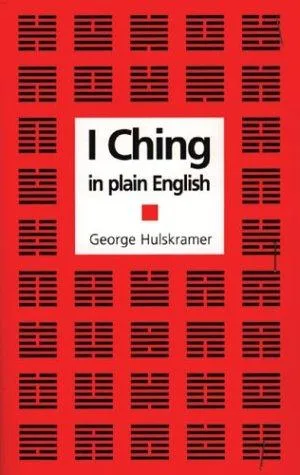
I Ching in Plain English
 63
63

I Ching in Plain English



Review by Marcus Thorne (Esoteric Sciences Reviewer) — George Hulskramer's 'I Ching in Plain English' is a masterful distillation of one of humanity's most enduring mystical texts. Hulskramer's clarity cuts through the common obfuscation, revealing the I Ching's profound cosmological and psychological insights with remarkable precision. This edition is an invaluable resource for anyone seeking to engage with its ancient oracular tradition and philosophical depth. It's particularly well-suited for modern practitioners and students who desire an authentic, yet approachable, understanding of the 'Book of Changes.' A truly illuminating rendition.
📝 Description
63
George Hulskramer's 1972 translation, 'I Ching in Plain English,' simplifies the classic Chinese divination text.
George Hulskramer's 1972 translation, 'I Ching in Plain English,' aims to make the ancient Chinese text accessible. The book focuses on clarifying the 64 hexagrams and their changing lines, which form the core of the I Ching's divination system. Hulskramer's approach deciphers the symbolic language, connecting it to underlying philosophical concepts. The translation seeks to present the I Ching not just as a tool for fortune telling, but as a guide to understanding cosmic principles and human behavior. It covers the interplay of Yin and Yang, the five elements, and the archetypal forces influencing existence.
The author's intent was to create a version that allows individuals to engage with the I Ching's wisdom directly. It is designed for those interested in personal growth, contemplation, and finding guidance through life's changes. The translation emphasizes the I Ching's potential for fostering self-awareness and a deeper connection to the patterns of transformation present in the universe. It moves away from viewing the text as an obscure relic towards understanding it as a source of ongoing insight.
This translation situates the I Ching within its long history as a foundational text of Chinese cosmology and divination. Originating in ancient China, it is a complex system that uses hexagrams, formed from combinations of solid (Yang) and broken (Yin) lines, to represent states of change and offer counsel. Its influence extends beyond mere fortune telling, deeply informing Taoist and Confucian thought, and shaping understandings of natural cycles, human destiny, and ethical conduct. The I Ching is often seen as a tool for aligning oneself with the natural order of the cosmos.
💡 Why Read This Book?
This essential guide demystifies the ancient I Ching, offering clear pathways to understanding its profound symbolism and oracular power. Ideal for seekers of self-knowledge, scholars of Eastern philosophy, and practitioners of divination, it provides practical tools for navigating life's challenges and unlocking hidden potentials. Discover the universal principles of change and growth. Read free online to begin your transformative journey.
⭐ Reader Reviews
Honest opinions from readers who have explored this book.
❓ Frequently Asked Questions
What is the I Ching?
The I Ching, or 'Book of Changes,' is an ancient Chinese divination text and philosophical work, revered for its insights into the cycles of change and the fundamental principles of the universe. It comprises 64 hexagrams, each representing a unique situation or stage of development.
How does one use the I Ching?
Traditionally, one uses yarrow stalks or coins to generate a hexagram, which is then interpreted with the aid of the text. The hexagram offers guidance and perspective on a specific question or situation, revealing potential outcomes and recommended actions.
What is the philosophical significance of the I Ching?
Philosophically, the I Ching explores Taoist and Confucian principles, emphasizing balance, harmony, the interplay of Yin and Yang, and the inevitability of change. It teaches adaptability and understanding the natural order of things.
Is the I Ching only for divination?
While renowned as an oracle, the I Ching is far more than just a fortune-telling tool. It serves as a profound philosophical guide, offering wisdom on ethics, governance, personal development, and understanding the patterns of existence.
Who was George Hulskramer?
George Hulskramer is a respected scholar and translator dedicated to making ancient mystical and philosophical texts accessible to a wider audience, preserving their essence while enhancing their readability for contemporary readers.
🔮 Key Themes & Symbolism
The Cosmic Dance of Yin and Yang
Look at the fundamental duality that governs all existence, as presented in the I Ching. This theme explores how opposing forces, such as light and dark, active and passive, male and female, are not in conflict but are in perpetual, dynamic interplay. Understanding this balance is crucial for navigating life's transitions and achieving harmony. The hexagrams themselves embody this principle, illustrating the ever-shifting equilibrium that shapes both the external world and our inner lives, offering a profound perspective on the interconnectedness of all things.
The Inevitability of Transformation
Fundamentally, the I Ching is a evidence of the ceaseless nature of change. This theme examines how life is a continuous process of flux, growth, decay, and renewal. The 64 hexagrams represent the myriad forms this transformation can take, guiding the reader to understand that resistance to change leads to stagnation, while adaptability fosters progress. It teaches acceptance of impermanence and the wisdom of aligning oneself with the natural currents of evolution, finding opportunity even in apparent endings.
Oracular Wisdom and Practical Guidance
Beyond its philosophical depth, the I Ching functions as a potent oracle, offering clear insights and practical advice for navigating personal and collective challenges. This theme focuses on the book's role as a guide, revealing hidden dynamics, potential outcomes, and the most auspicious paths forward. It empowers the reader to make informed decisions by consulting its ancient wisdom, fostering a deeper connection to intuition and the underlying order of the universe, thereby promoting mindful action and spiritual development.
💬 Memorable Quotes
Direct passages from the work, attributed to the author.
“When you are in doubt, consult the Book of Changes.”
— This underscores the I Ching's ancient role as a source of guidance and clarity, positioning it as a trusted oracle for navigating life's uncertainties.
“To know the changes is to know the Tao.”
— This profound statement links the understanding of universal cycles and transformation directly to the comprehension of the fundamental principles of the cosmos.
“The Great Image says: Heaven and Earth do not fraternize; thus the things of the world are set in order.”
— This illustrates the I Ching's cosmological framework, emphasizing the separation and order created by the distinct principles of Heaven and Earth, which in turn organizes all phenomena.
“Through the I Ching, one can know the past, present, and future.”
— This reflects the I Ching's powerful claim to offer comprehensive insight, bridging time through its understanding of cyclical patterns and their influence on human experience.
💡 Key Ideas
Editorial paraphrase of the work's core concepts — not direct quotes.
The superior man understands the changes of things.
This quote highlights the I Ching's emphasis on intellectual and spiritual development, suggesting that true wisdom lies in recognizing and adapting to the constant flux of existence.
🌙 Esoteric Significance
Tradition
The I Ching is a foundational text within the Taoist and Confucian traditions, yet its esoteric dimensions extend into broader mystical and philosophical frameworks. It is a central to Chinese metaphysical thought, deeply connected to the principles of cosmology, alchemy, and the understanding of universal forces. Its symbolic language and cyclical patterns offer a profound lens for exploring the interconnectedness of the microcosm (human being) and the macrocosm (universe), making it a vital resource for those engaged in spiritual disciplines and the pursuit of higher consciousness.
Symbolism
The hexagrams, composed of six lines each representing either Yin (broken) or Yang (solid), are the primary symbolic language of the I Ching. These binary combinations symbolize the myriad states and processes of the universe. The trigrams (three-line combinations) further refine these symbols, representing fundamental elements like Heaven, Earth, Water, Fire, and Man. The dynamic interplay and transformation between these trigrams and hexagrams illustrate concepts of cosmic order, natural cycles, and the archetypal forces that govern all phenomena, offering a body of meaning for interpretation.
Modern Relevance
In contemporary times, the I Ching continues to offer invaluable guidance for reading through the complexities of modern life. Its emphasis on adaptability, understanding change, and finding balance resonates deeply in an era of rapid technological advancement and societal flux. For seekers of personal growth, the I Ching provides a framework for self-reflection, ethical decision-making, and cultivating inner resilience. Its wisdom transcends cultural and temporal boundaries, offering timeless insights into human psychology, relationships, and the pursuit of a meaningful existence, making it a relevant tool for spiritual and philosophical exploration today.
👥 Who Should Read This Book
This meticulously translated edition is an indispensable guide for a diverse range of readers. Absolute beginners to the I Ching will find George Hulskramer's 'plain English' approach a welcoming entry point, explaining complex concepts without sacrificing their depth. Scholars of Eastern philosophy and comparative religion will appreciate the clarity and accuracy, gaining fresh perspectives on this ancient text. Dedicated practitioners of divination and esoteric arts will discover a refined tool for deepening their practice and understanding. Finally, any individual on a path of self-discovery or seeking profound wisdom to navigate life's transitions will find the I Ching in Plain English an invaluable companion for introspection and guidance.
📜 Historical Context
Originating over 3,000 years ago in ancient China, the I Ching, or 'Book of Changes,' is one of the oldest and most influential texts in East Asian history. Its roots are intertwined with shamanistic practices and early philosophical inquiries into the nature of reality. Initially, it served as a manual for divination, consulted by rulers and commoners alike to understand the will of the heavens and guide decisions. Over centuries, it absorbed and reflected the philosophical currents of its time, becoming deeply integrated with Confucianism and Taoism. Confucius himself is believed to have studied and commented on the I Ching, elevating its status from a mere oracle to a profound philosophical treatise on ethics, governance, and the human condition. This enduring text has shaped Chinese thought, art, and culture, influencing everything from medicine and martial arts to political strategy and personal development, demonstrating a remarkable resilience and adaptability across millennia.
📔 Journal Prompts
Reflect on a recent period of significant change in your life. How did you adapt, and what lessons did you learn?
Consider a situation where you felt in conflict with opposing forces. How could understanding Yin and Yang offer a new perspective?
What is one aspect of your life you wish to transform? How might the principles of the I Ching guide this transformation?
How can the concept of 'knowing the changes' enhance your decision-making process in your daily life?
Explore the idea of 'the superior man' from the I Ching. What qualities do you aspire to cultivate in yourself?
🗂️ Glossary
Hexagram
A symbol composed of six lines, representing a specific situation, concept, or stage of development in the I Ching. Each hexagram is formed by stacking two trigrams.
Trigram
A symbol composed of three lines, representing fundamental elements or concepts such as Heaven, Earth, Water, Fire, Wind, Thunder, Mountain, and Lake.
Yin
The feminine, passive, dark, and receptive principle in Chinese philosophy, often represented by a broken line in the I Ching.
Yang
The masculine, active, light, and creative principle in Chinese philosophy, often represented by a solid line in the I Ching.
Tao
The fundamental principle or 'Way' of the universe in Taoism, representing the natural order, the ineffable source of all existence, and the path of harmony.
This book appears in 3 collections
🔮 Readers Also Liked
Browse all →








More by George Hulskramer
All books →
From the “Tarot” Collection
View all →








More Free Divination & Tarot Books
View all →