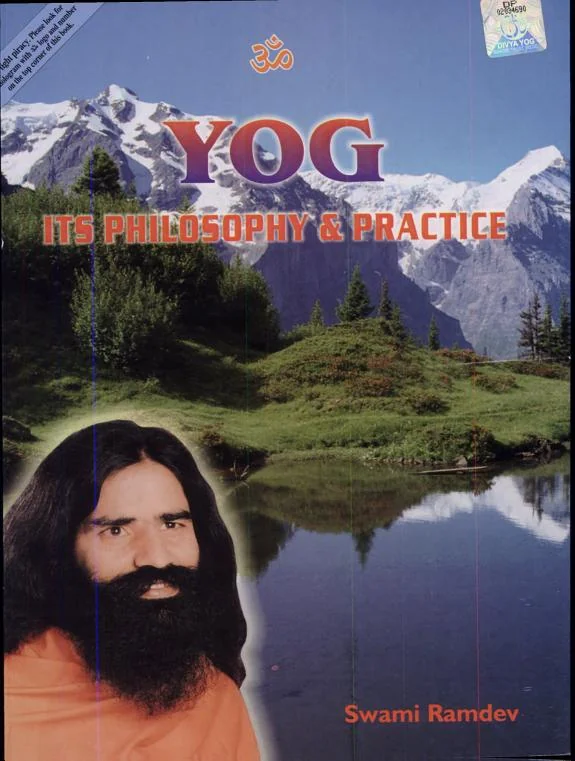
Yog Its Philosophy & Practice
 76
76

Yog Its Philosophy & Practice
Swami Ramdev’s "Yog Its Philosophy & Practice" attempts to ground the global phenomenon of Yoga in its classical Indian philosophical context. The author succeeds admirably in presenting the Eight Limbs of Yoga (Ashtanga Yoga) as an integrated system, moving the reader beyond the prevalent focus on asana. A particularly strong section details the ethical precepts of Yama and Niyama, offering practical guidance for daily life that feels more substantial than superficial self-help advice. However, the book occasionally suffers from a didactic tone, particularly when explaining complex philosophical concepts like the nature of consciousness. While striving for clarity, some explanations could benefit from greater nuance, especially for readers unfamiliar with Vedanta or Samkhya philosophy. The work's primary limitation is its earnestness, which sometimes overshadows the subtle, experiential aspects of yogic practice. Nevertheless, for its clear exposition of Yoga's ethical and philosophical framework, the book offers a valuable perspective for serious students.
📝 Description
76
Swami Ramdev's 2006 book explores Yoga's philosophy and practice beyond physical postures.
Published in March 2006, Yog Its Philosophy & Practice by Swami Ramdev examines the ancient Indian discipline of Yoga. The text moves past physical postures to address the philosophical principles and practical applications that form the complete yogic path. Ramdev's aim is to make Yoga's principles understandable for a contemporary audience, presenting them as tools for personal growth and spiritual exploration. It functions as both an initial guide and a resource for those wanting to grasp Yoga's diverse nature.
This book suits individuals beginning their Yoga study, especially those interested in its philosophical aspects beyond asanas. It will attract practitioners aiming to deepen their knowledge of yogic ethics like Yama and Niyama, and meditation methods. Students of comparative religion and Indian philosophy will find it a useful introduction to a widely followed tradition. People interested in comprehensive well-being and mental control, seeking methods with centuries of history, will also gain from its lessons.
Emerging in the mid-2000s, this work appeared during a time of increasing global fascination with Yoga, often viewed through a wellness and fitness lens. The book distinguishes itself by highlighting Yoga's origins in classical Indian philosophy and spiritual traditions, rather than focusing solely on physical benefits. It connects to a line of Indian gurus who aimed to reintroduce and standardize yogic practices for both Indian and international audiences, sometimes as a reaction to colonial interpretations or Western commercialized versions of Yoga.
💡 Why Read This Book?
• Gain a structured understanding of Patanjali's Ashtanga Yoga, learning how ethical observances like Yama and Niyama form the bedrock of advanced yogic practices, as detailed in the book's philosophical sections. • Explore the practical application of Pranayama and Dhyana, understanding their roles not just as relaxation techniques but as essential tools for mental discipline and spiritual growth, as presented by Swami Ramdev. • Discover the philosophical aim of Yoga – the union of consciousness – and how the various limbs of the practice, from asana to samadhi, are designed to facilitate this profound realization, as explained throughout the text.
⭐ Reader Reviews
Honest opinions from readers who have explored this book.
❓ Frequently Asked Questions
What is the primary focus of "Yog Its Philosophy & Practice" beyond physical postures?
The book emphasizes the philosophical and ethical dimensions of Yoga, detailing concepts like the Eight Limbs (Ashtanga Yoga) and the importance of Pranayama and Dhyana for mental and spiritual development, moving beyond a sole focus on asana.
Who is Swami Ramdev and what is his background?
Swami Ramdev is a globally recognized Yoga guru from India, known for popularizing Yoga and Ayurveda. He has established a large organization dedicated to promoting these practices, and this book reflects his approach to teaching Yoga's holistic system.
When was "Yog Its Philosophy & Practice" first published?
The book "Yog Its Philosophy & Practice" by Swami Ramdev was first published in March 2006, reflecting a period of significant global interest in Yoga.
Does the book explain Patanjali's Yoga Sutras?
Yes, the work explores foundational yogic concepts derived from classical texts, including the principles outlined by Patanjali in the Yoga Sutras, particularly the Eight Limbs of Yoga.
Is this book suitable for beginners in Yoga?
It is suitable for beginners interested in the deeper philosophical and ethical aspects of Yoga, not just the physical exercises. It provides a solid foundation for understanding the complete yogic path.
What is the core philosophical goal of Yoga as presented in the book?
The book presents the core philosophical goal of Yoga as the union of individual consciousness with universal consciousness, achieved through the systematic practice of its various limbs.
🔮 Key Themes & Symbolism
The Eight Limbs of Yoga
The work systematically unpacks Patanjali's Ashtanga Yoga, presenting the eight limbs not as separate stages but as interconnected aspects of a unified practice. It emphasizes Yama (ethical restraints) and Niyama (observances) as foundational, followed by Asana (posture), Pranayama (breath control), Pratyahara (sense withdrawal), Dharana (concentration), Dhyana (meditation), and Samadhi (absorption). This holistic view contrasts with modern interpretations often focused solely on Asana, highlighting Yoga's comprehensive system for self-realization.
Pranayama and Meditation
Swami Ramdev meticulously details the science of breath control (Pranayama) and its vital role in preparing the mind for deeper states of meditation (Dhyana). The book explains various breathing techniques and their physiological and psychological effects, positioning them as essential tools for purifying the mind, increasing vitality, and achieving mental stillness necessary for spiritual insight. This section underscores the active, disciplined nature of yogic mental training.
Philosophy of Consciousness
Central to the book is the exploration of Yoga's philosophical underpinnings, particularly its understanding of consciousness. It discusses the nature of the self (Atman) and its relationship to the universal consciousness (Brahman), drawing from Vedanta and Samkhya philosophies. The ultimate aim of Yoga, the cessation of mental fluctuations (citta-vrtti-nirodha) leading to liberation (Moksha), is presented as the logical culmination of dedicated yogic practice.
Ethical Living (Yama & Niyama)
A significant portion of the text is dedicated to the ethical framework of Yoga, specifically the ten Yamas and Niyamas. Swami Ramdev elaborates on principles such as non-violence (Ahimsa), truthfulness (Satya), contentment (Santosha), and self-study (Svadhyaya). These are presented not as abstract moral codes but as practical guidelines for cultivating a balanced, disciplined, and virtuous life, essential prerequisites for spiritual progress.
💬 Memorable Quotes
Direct passages from the work, attributed to the author.
“Yoga is not merely physical exercise, but a complete science of life.”
— This statement expresses the book's core message: Yoga is a holistic discipline encompassing physical, mental, ethical, and spiritual dimensions, intended to guide one towards a balanced and purposeful existence.
“The control of breath is the control of the mind.”
— This highlights the critical link between Pranayama and mental discipline. The work suggests that by mastering breath, practitioners can gain mastery over their thoughts, emotions, and focus, leading to inner peace.
“Ethical conduct is the foundation upon which all other yogic practices are built.”
— This emphasizes the paramount importance of Yama and Niyama. The book argues that without cultivating virtues like non-violence and truthfulness, deeper yogic states are unattainable and potentially misapplied.
“The ultimate goal of Yoga is to realize the true nature of the self.”
— This points to the spiritual objective of Yoga as described in the text: self-realization and liberation from suffering through understanding one's identity beyond the transient physical and mental states.
💡 Key Ideas
Editorial paraphrase of the work's core concepts — not direct quotes.
Concentration is the precursor to deep meditation.
This quote clarifies the progression within the Eight Limbs, illustrating how focused attention (Dharana) naturally leads to sustained meditative states (Dhyana), a key aspect of mental training discussed in the book.
🌙 Esoteric Significance
Tradition
The work is firmly rooted in the classical Yoga tradition, specifically drawing heavily from Patanjali's Yoga Sutras and implicitly from Vedanta and Samkhya philosophies. It represents a modern articulation of these ancient Indian spiritual sciences, aiming to present their esoteric principles in a way accessible to a broad audience. It departs from Western esoteric traditions like Hermeticism or Kabbalah by focusing exclusively on the Indic yogic path, though parallels in concepts like inner discipline and spiritual attainment exist.
Symbolism
Key symbols within the text include the 'lotus' (Padma), representing purity, spiritual awakening, and the unfolding of consciousness, often associated with the chakras. The 'Om' (Aum) symbol signifies the primordial sound and the ultimate reality, Brahman. The 'kundalini' serpent power is also discussed as the latent spiritual energy at the base of the spine, which yogic practices aim to awaken and direct upwards through the central channel (Sushumna nadi) towards spiritual enlightenment.
Modern Relevance
Contemporary practitioners and teachers of Yoga, particularly those seeking to move beyond purely physical training, often reference the foundational principles outlined in works like this. Modern mindfulness movements, while often secularized, echo the yogic emphasis on concentration (Dharana) and meditation (Dhyana) for mental well-being. Furthermore, the holistic approach to health integrating mind, body, and spirit continues to influence alternative and complementary medicine practitioners globally.
👥 Who Should Read This Book
• Aspiring Yoga practitioners seeking to understand the philosophical and ethical underpinnings of the discipline beyond physical postures, gaining a comprehensive view of the Eight Limbs. • Individuals interested in comparative religion and philosophy, particularly those studying Indian spiritual traditions and the historical development of Yoga as a path to liberation. • Those looking for structured guidance on mental discipline and self-awareness through meditation and breath control, who can benefit from the practical techniques described.
📜 Historical Context
Published in March 2006, "Yog Its Philosophy & Practice" emerged during a significant global surge in Yoga's popularity, largely driven by Western fitness and wellness trends. Swami Ramdev's work distinguished itself by anchoring Yoga firmly within its classical Indian philosophical and spiritual heritage, moving beyond the prevalent focus on asana. This period saw numerous books on Yoga, but few offered such a detailed exposition of Patanjali's Ashtanga Yoga framework. Ramdev's approach aligns with a broader movement in post-independence India to reclaim and re-contextualize indigenous practices. While scholars like Georg Feuerstein were also publishing comprehensive works on Yoga's history and philosophy, Ramdev's accessible style and emphasis on practical application for mass audiences provided a distinct, guru-led perspective that resonated widely, particularly within India.
📔 Journal Prompts
The practice of Ahimsa (non-violence) in daily interactions.
Reflections on the role of Pranayama in managing mental states.
The significance of Santosha (contentment) in the context of modern desires.
Identifying personal citta-vrtti (mental fluctuations) during meditation.
How Svadhyaya (self-study) can illuminate one's path towards self-realization.
🗂️ Glossary
Ashtanga Yoga
The 'eight-limbed' path of Yoga as codified by Patanjali, comprising Yama, Niyama, Asana, Pranayama, Pratyahara, Dharana, Dhyana, and Samadhi.
Pranayama
The practice of breath control, involving various techniques to regulate inhalation, exhalation, and retention, aimed at controlling vital energy (prana).
Dhyana
Meditation; a sustained and unbroken concentration on a single object or idea, leading to a state of deep absorption.
Yama
Ethical restraints or moral disciplines that govern one's interaction with the external world, including non-violence, truthfulness, and non-stealing.
Niyama
Personal observances or ethical disciplines that govern one's inner life, including purity, contentment, and self-study.
Citta-vrtti-nirodha
The cessation or control of the fluctuations of the mind, considered the primary goal of Yoga according to Patanjali.
Samadhi
A state of profound meditative absorption or enlightenment, where the individual consciousness merges with the object of meditation or the universal consciousness.
This book appears in 1 collection
🔮 Readers Also Liked
Browse all →









From the “Hatha Yoga” Collection
View all →








More Free Occult Philosophy Books
View all →